A Scenario I Would Like to See: Friendly Competition, Between Teachers’ Unions and School Administrators, to Help School Libraries Everywhere

school libraries

During the Cold War, the usual way nations compete (direct warfare) was taken off the table by the invention of the hydrogen bomb. With the alternative being mutually-assured destruction, the two sides, led by the USA and the USSR, had to find other ways to compete. Some of those ways were harmful, such as proxy wars, as happened in Vietnam. Others, however, were helpful, such as the space race. The United States put men on the Moon in order to beat the Soviet Union there, as this iconic 1969 photograph makes evident (source: NASA).

planting the flag

We are all still reaping the benefits of the technological and scientific advances made during this period, and for this purpose. The most obvious example of such a benefit is the computer you are using to read this blog-post, for computer technology had to be advanced dramatically, on both sides, in order to escape the tremendously-challenging gravity-well of the Earth.

Wouldn’t it be wonderful if other conflicts in society took beneficial forms, as happened in this historical example?

This could happen in many ways, but the one that gave me the idea for this post is the conflict between teachers’ unions and school districts’ administrators, now taking place in school districts all over the place. I think it would be awesome if this previously-harmful competition changed, to take a helpful form: book drives, to help school libraries.

Please do not misunderstand, though: I’m not talking about taxpayer money, nor union dues. My idea need not, and should not, affect the budget of any school district, nor union budget. All that need happen is for individual people — teachers and administrators  — to go home, look at their own bookshelves, and help students directly, by donating some of their already-paid-for books to school libraries.

While I make no claim to represent any organization, I am a teacher, and a member of the NEA (the National Education Association) in the United States, as well as my state and local NEA affiliates. In an effort to start this new, helpful way to compete, I will give books to the school library where I teach, next week, which is the second week of the new school year. That’s a lot easier than, well, putting men on the Moon. 

This is something we can all do. All of us in the education profession, after all, already agree that we want students reading . . . and this is something we can easily do, to work together towards that goal. School libraries need hardcover books which are student-friendly, meaning that they appeal to a young audience, on a wide variety of subjects. Both fiction and non-fiction books are helpful.

Lastly, in the hope that this idea catches on, I will simply point out one fact: helping turn this idea into a reality is as easy as sharing a link to this blog-post. 
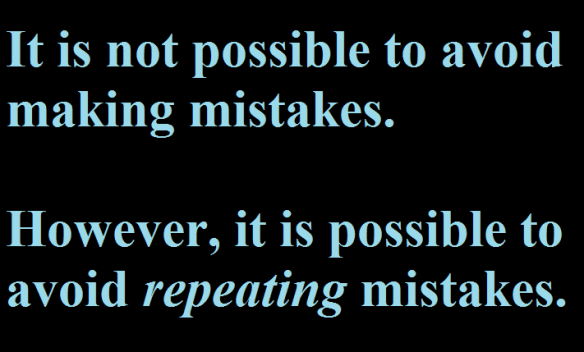
On Error

Image

error

We’re Going Back to School Tomorrow, and I’m the Teacher.

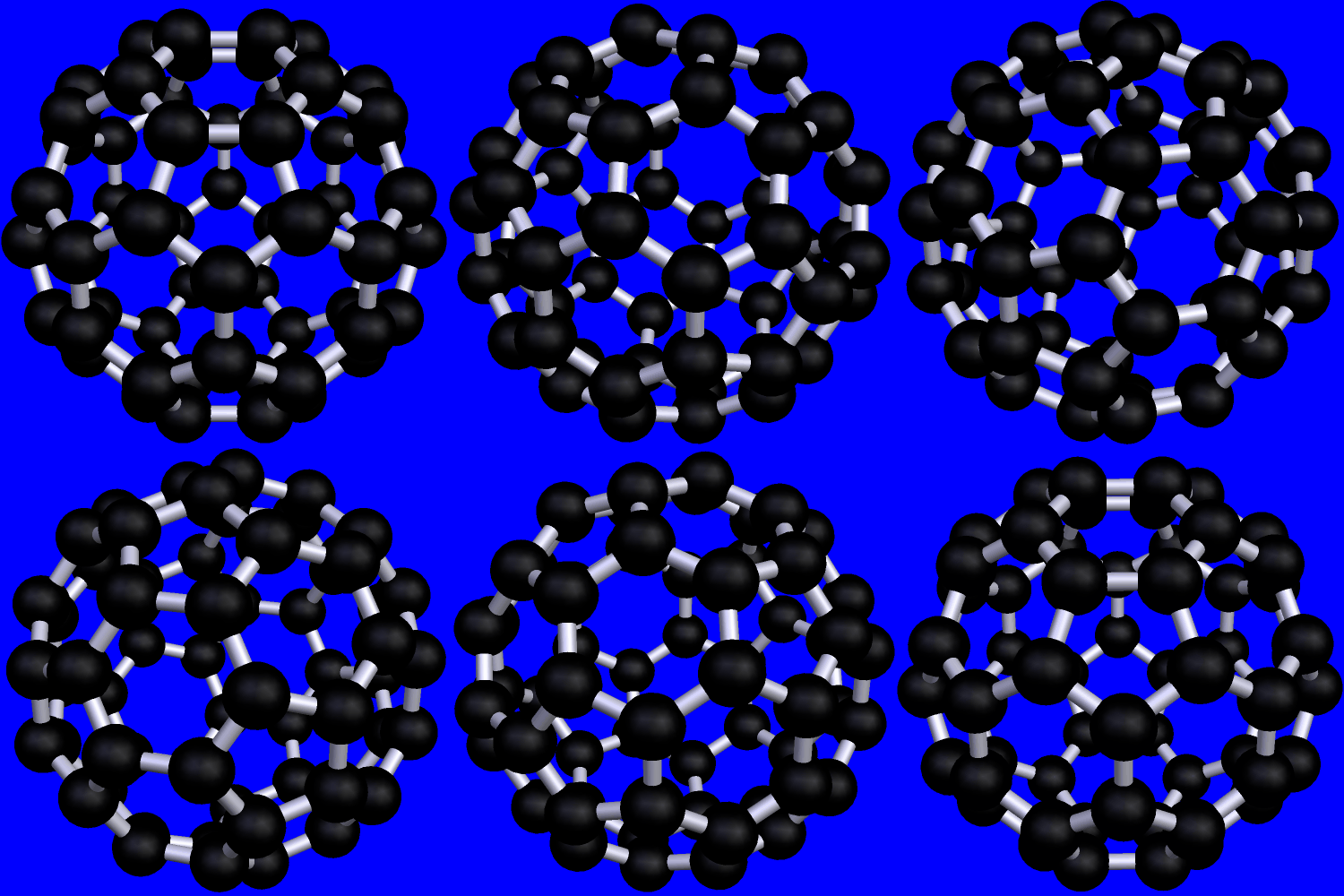
Trunc Icosa

This is my 22nd year teaching. This year, I teach in only one department. This is nice; I’ve spent much of my career in multiple departments, simply because I am certified in multiple subject areas. This year, in my building, I am one of three science teachers. Our high school has become so large that the 9th grade has been “spun off” to a new freshman campus, while remaining part of the high school, and I’m one of the teachers who gets to go to the new campus. This provides my students, my colleagues (especially at the new campus), and myself the opportunity for a fresh start, to a greater degree than is usually the case when a new school year begins.

My students are in just two subjects, this year: Physical Science, and Pre-AP Physical Science. I don’t want the students in the class without the “Pre-AP” prefix to feel that they are in a “lesser” class, in any sense of that word, so I am renaming “Physical Science,” slightly: “High School Physical Science.” It is my hope that this change in wording serves to communicate high expectations, and 9th grade is the first year of high school — which, in the USA’s public school systems, means 9th grade students must pass courses to earn credits toward graduation, usually for the first time.

In the other class, Pre-AP Physical Science, I am teaching that version of the course for the first time, but I feel well-prepared by the extensive training I had this Summer, and last school year, through my university, the school where the Summer training was held, and the College Board. Both classes will challenge students, but it is also true that the two classes will be different, for Pre-AP Physical Science have to leave students prepared to function effectively, later, in other Pre-AP and/or AP science courses. 

Physical Science is an introduction to two sciences: physics, and then chemistry, at least in my school district. It helps me that I have experience teaching both subjects as higher-level, “stand-alone” classes. In this class (both versions), we also touch on some other sciences which are also physical sciences, such as geology, astronomy, and the science of climate change. However, those sciences do not dominate these courses, as physics and chemistry do. The image above is from chemistry (and was created with Stella 4d, which you can try here), and shows a model of a sixty-atom all-carbon molecule called buckminsterfullerene, one of a class of roughly-spherical carbon allotropes called fullerenes. Mathematicians call this particular fullerene’s shape a “truncated icosahedron,” and, in sports, this same shape is known as the (non-American) “football” or “soccer ball.” Physical modes of this shape may be made with molecular model sets of various kinds, Zometools, and other materials. In both versions of my science classes this year, building models of this molecule will be one of many lab activities we will do; one of my goals this year is for my students to spend a third of their time doing labs. The legal requirement for science class time spent in lab, in my state, is at least one-fifth, so more than that is fine. Science classes helped me learn both science and mathematics, but what I remember the most is the labs. I don’t think that’s just me, either; students learn more effectively, I have observed, by conducting scientific experiments themselves, than by being “lectured at” for extended periods of time.

I’m looking forward to a good year — for all of us.

A Back-to-School Gift for GSAs Everywhere: Simple Internet Memes Explaining the Best Reason to Support Gay Rights

gay rights are human rights

Although I did make these images, they are deliberately copyright-free, and their use by Gay-Straight Alliances, or GSAs, at schools everywhere is encouraged. LGBTQ students have been tormented for far too long. Together, we can make this their best school year to date.

Gay_Rights_Are_Human_Rights

Marriage equality has (finally) been accomplished in the USA, thanks to our Supreme Court. However, suicide rates among gay teens remain extremely high, due to bullying and homophobia, especially in schools, making the work of GSAs (Gay-Straight Alliances) critically important. People should not be treated this way. Recognizing this simple fact supplies all the reason necessary to support gay rights; no argument stands against it.

gay rights are human rights 2

What Is Attempted Orthoism?

attempted orthoism

When the topic of labels for belief systems, life philosophies, and the like comes up, I find that I tend to become uncomfortable with labels which are also used by, well, anyone else. For this reason, I’ve named my own system “attempted orthoism,” which I will now try to explain.

First, I’ll deal with that elephant in the room: the Creator of the Universe, by any name. Does such an entity exist? Well, I simply don’t know, but I also realize that this could change. If there is a deity, and that entity chooses to make evidence of his/her/its existence known to me, I’ll pay attention to the evidence, and see where it leads me. This is, to me, given my present state, the only position that makes sense.

“Ortho-,” as a prefix, can mean “right” (as in a right angle), or “correct,” either one. The suffix “-ism” is used in words such as Catholicism, capitalism, materialism, socialism, Communism, Hinduism, etc. — the “-isms” are simply systems of belief and/or thought. The meaning of “attempted” is obvious, so if you put it all together, here’s what it means: I simply attempt to be correct. Less formally, I try do the right thing, in the various situations I encounter in life.

These are some of the features of attempted orthoism:

  • The desire to hold positions on various issues which are correct.
  • The desire to do the ethical thing in all situations.
  • Honesty. Lies are not helpful in any effort to be correct.
  • The willingness to admit it when I do not know something, once I realize that I do not know it.
  • The refusal to reject the possibility that supernatural entities exist, in the absence of empirical evidence for their non-existence.
  • The inability to embrace a belief in any supernatural entity, as long as no compelling, empirical evidence is found that such a being does exist.
  • Respect of the rights of others peacably disagree, on these or other issues.
  • Maintaining high standards for evidence, and acceptance of principles. This means using and testing hypotheses, reasoning logically, and guarding myself from error with a mental shield: my skepticism. To prove something to me, a mathematical proof would be an excellent approach. If you simply want me to accept that something happens provisionally, until and unless new evidence arises to disprove it, then the scientific method is the way to go. I place a premium on logic, and reasonable arguments.
  • Refusal to accept emotional arguments, or arguments from authority, for the simple reason that such methods so often lead to serious error.
  • Re-testing previously-accepted principles, for we can all fool ourselves better than anyone else.
  • Reservation of the right to question anything and/or anyone.

This is not a complete list. Attempted orthoism is a work in progress.

On Therapeutic Writing, and Putting Hexakaidekaphobia in Remission

hexadeka

When my mother died, last November 16, I wrote an obituary for her, which I was then asked (unexpectedly) to read at her funeral, as one of two eulogies. This was one of the most difficult things I have ever done, but writing it did help me (somewhat) with the immediate problem I was having dealing with grief.

After the funeral, I felt numb much of the time, for months, until May 16 arrived — exactly six months after she died — at which point my tightly-controlled emotional state shattered, leaving me in worse shape (in some ways) than I was on, say, November 17 of last year. This was unexpected, and caused significant problems, including the development of monthly hexakaidekaphobia, a morbid dread and fear of the 16th day of every month. (The word is a modification of “triskaidekaphobia,” an irrational fear of the number thirteen).

June 16 was worse than May 16 — absolutely full of PTSD attacks. (I’ve had PTSD for most of my life; my mother’s death made it worse.) Fortunately, I don’t try to hide mental health problems, as I once did — I try to find the help I need, from physicians, to deal with such problems, and, when I find things that help me, I write about them. I also have long used recreational mathematics to help me feel better when depressed.

It was in this context that mid-July arrived. I went to sleep on July 15th with the knowledge that it was extremely important for me to find better coping mechanisms before the start of school in August. When I woke up on July 16, which could have been another horrific day of severe depression, anxiety, and other problems, I did not feel those negative emotions. This does not mean I had “gotten over” the facts that my mother did die, and that I miss her terribly. However, it did mean I was experiencing grief differently: I was feeling grief, rather than letting feelings of grief control me — and there is a huge difference between the two.

That morning, July 16, I knew what I needed to do as soon as I woke up: I needed to write. For me, that generally means blogging, and that’s what happened. This “therapeutic writing,” as I call it, was helpful enough on July 16 that I continued it the next day. When I next spoke to my doctors, I told them I was doing this, and why, and they agreed that such writing (like the “mathematical therapy” I have done for years) was an excellent, helpful activity. (This “check with professionals” step is essential, and I do not recommend attempting mental health therapy without the help of at least one licensed, qualified psychiatrist, and/or other type of therapist, such as a clinical psychologist.)

Of course, I could do this therapeutic writing in a spiral notebook, and keep it private; no writing has to go on the Internet. Why, then, do I choose to post such material where anyone can see it? I first explained why I blog about mental health issues in this post, but the short version is this: I hope that my openness on this subject can help reduce the social stigma which, unfortunately, still surrounds topics related mental health. This stigma is harmful because it keeps millions of people from seeking the professional help they need. I have also found it a personally liberating experience to come out of the “closet” on such issues, for, as with other metaphorical “closets,” it is the truth that closets are not good places for people to live their lives.

School starts on August 15 — only four days from now — and I’m going to do everything I can to make that day, the next day (the formerly-dreaded 16th of the month), and the rest of the days in the school year as good as they can possibly be for my students, as well as myself. I could tell I was on the right track when I decided to write about monthly hexakaidekaphobia early this morning, but in the past tense. Before I started writing, I “warmed up” by constructing the geometric art at the top of this post, which, if you examine carefully, you will see is based on — what else? — the number sixteen. In my case, at least, mathematical therapy and therapeutic writing go hand-in-hand, and this is what I am doing to try to leave my monthly hexakaidecaphobia in the past, where it belongs.

I still miss my mother. She was once, as I am, a science teacher, and was also involved in education in many other ways. She would want me to have good school days on August 16th, September 16th, and so on, as well as the days in-between — and, to properly honor her memory, and give my students the education they deserve, I am determined to do my best to do exactly that.

Zonohedra, Zonish Polyhedra, and Another Puzzle

In a recent post, I showed many images of zonohedra, then challenged readers to figure out, from the images, what zonohedra are: polyhedra with only zonogons as faces. Zonogons, I then explained, are polygons with (A) even numbers of edges, and with opposite edges always (B) congruent and (C) parallel. Here is another collection of zonohedra. (Individual images may be enlarged with a click.)

The next set of polyhedra shown, below, are not true zonohedra (as all the ones above are), but merely “zonish polyhedra.” From examination of the pictures above and below, can you figure out the difference between zonohedra and zonish polyhedra?

When you are ready to see the solution to the puzzle, simply scroll down.

.

.

.

.

.

.

.

.

.

.

While zonohedra have only zonogons as faces, this restriction is “loosened” for zonish polyhedra. Such solids are formed by zonohedrifying non-zonohedral polyhedra, and letting at least some of the faces of the resulting polyhedra remain non-zonogonal. Zonish polyhedra  are called “zonish” because many (usually most) of their faces are zonogons, but not all of them — in each case, some non-zonogonal polygons (such as triangles and/or pentagons, with their odd numbers of edges) do appear. Non-zonogonal polygons are not required to have odd numbers of edges, of course: simply having opposite edges be parallel, but of different lengths, is enough to prevent a polygon (such as a hexagon, octagon, or decagon) from being a zonogon. 

~~~

Software credit: I used Stella 4d to make these images. This program may be tried for free at this website.

My Answers to Facebook’s “Religious Views” and “Political Views” Questions

facebook

I don’t like to use terms I did not make up myself for things as important as questions such as these, and so I don’t. Attempted Orthoism rests on a foundation of skepticism, which is a metaphorical lens I try to apply to everything. Skepticism is, of course, essential for anyone who works in science and/or science education, and I am a science teacher. This is why science plays a role in both definitions above.

A Completely Unscientific Presidential Poll

The school year is about to begin, and I’m a teacher. Right now, my school district is in the traditional “week o’ meetings” which precedes the arrival of students. Yesterday’s meetings were about using Google products to enhance instruction, and one of the new skills I learned involves using Google forms. We were encouraged to make something, such as a poll, using this online tool, so I made one for the current US presidential election. If you would like to vote in this completely unscientific poll, here’s the link:

https://goo.gl/forms/Ki2x7OLyPoQoJviJ2

This poll is “completely unscientific,” of course, because I am making no attempt to poll a representative sample of the electorate. Here’s how the poll results look so far, with 17 responses.

poll results

Some Zonohedra, and a Puzzle

Every zonohedron is a polyhedron, but not all polyhedra are zonohedra. Examples of zonohedra appear below. If you don’t already know what zonohedra are, can you figure out the definition from the examples shown, before reading the definition below the pictures?

Answer below (scroll down a bit):

.

.

.

.

.

.

.

Zonohedra are polyhedra with only zonogons as faces. A zonogon is a polygon with an even number of sides, and also with opposite sides congruent and parallel.

Software credit: I used Stella 4d to make these virtual, rotating zonohedra. This program may be tried for free at http://www.software3d.com/Stella.php.