I’d like to thank Richard, athttps://photosociology.wordpress.com/, for nominating me for the Liebster Award for blogging. It’s an honor to simply have someone choose to follow my blog, and I feel grateful every time I get a new follower, but this takes that feeling of being honored to a whole new level.
These are the guidelines for the 2018 Liebster award:
• Thank the person who nominated you • Display the award on your post • Write a small post about what makes you passionate about blogging • Provide 10 random facts about yourself • Answer the questions given to you • Nominate 5-11 other blogs for this award • Ask them creative and unique questions of your own • List the rules and inform your nominees of the award
What makes me passionate about blogging? Well, for as long as I can remember, I have been passionate about mathematics, to the point of obsession. Blogging gives me a way to record and share the results of that obsession. My blog isn’t 100% math, but mathematics-related posts outnumber everything else here by a wide margin, and it is my love of mathematics that keeps this blog going.
On to the ten random facts about myself . . .
I have Aspergers Syndrome, now officially known in the USA as high-functioning autism. I didn’t discover this until I was already in my 40s (I’m now 50), though, for which I am grateful. I see being an “Aspie” as a difference, not a disease, nor a disability.
I’m married to a wonderful woman; we celebrate our 4th wedding anniversary soon.
I’m a high school teacher. Next year will be my 24th year in the classroom. I mostly teach mathematics and the “mathy” sciences. My wife is a teacher as well; she teaches mathematics.
Strangely enough, both of my college degrees are in history. This generally puzzles people, but it’s easy enough to explain: I chose to major in something I didn’t yet know much about, and about which I was (and still am) curious. My experiences in elementary, junior high, and high school math classes were abysmal, and I didn’t care to continue that experience.
I’m not religious. The label I prefer is not “atheist” nor “agnostic,” though, but simply “skeptic.” This reflects the fact that I have two primary methods for determining what I consider to be true: mathematical proof, and the scientific method. Skepticism is essential for both.
I see my brain as an organic computer, and frequently work on re-writing my own software, usually while asleep. This is something I’ve blogged about before, as are most of the things in this list.
I started blogging on Tumblr, and came to WordPress a few years later, in 2012, to escape what I call Tumblr’s “reblogging-virus.”
My political orientation has changed over the years, and is now best captured by the term “anti-Trumpism.” I’ve also been known to call myself a “neo-Jeffersonian.”
I’m LGBTQ-friendly.
I’ve seen the fantastic band Murder By Death seven times. Here is a sample of their music, from one of their older albums. You can find much more about them athttp://www.murderbydeath.com.
Now I need to answer the questions which Richard has posed for me. I have a hunch my “Aspieness” will come out in some of these answers.
1. How straight is straight?
“For any two points, there is exactly one line which contains them.” This is a fundamental postulate of Euclidean geometry. Straightness is a characteristic of such lines.
2. What would you think I was referring to if I told you to ‘put it down’?
The contents of my hand(s), of course. If I wasn’t holding anything, I’d simply be confused, and would ask for clarification.
3. Why are swans graceful?
Swans have the characteristics they have because they evolved that way. It is human beings who have chosen to label some of those characteristics as “gracefulness.”
4. Would you be a superhero or a sidekick, and what would your name be?
I would do neither, for I have at times suffered from delusions that I had superpowers. I don’t want my mind to go there again. One example of this was a belief, years ago at a time of ridiculously high stress, that my emotional state could control the weather. If I start thinking I have superpowers again, I’ll immediately take the medication prescribed by my psychiatrist for just such an eventuality.
5. If you could remove one letter from the English alphabet, what would it be, and what consequences do you see coming from it?
I suppose I would choose the letter “c,” for the soft “c” can be replaced by the letter “s,” and the hard “c” by the letter “k.” I’m not sure what we’d do for the “ch” sound, though.
6. What was the last thing you lost and never found? What do you imagine has happened to it?
That’s my Social Security card, which I need to get replaced soon. I don’t have a clue what happened to it.
7. What significance does the number seven have to you? What memories do you associate with it?
I’ve blogged about the significance of the number seven, so I refer you to that post for the answer to this question. The only memory of the number seven I recall is when a friend of mine named Tony explained to me the ideas which later inspired that blog-post.
8. Young and completely broke or old and disgustingly rich?
Neither, by the standards of where I live (the USA). We’re middle-class. We live comfortably, but not extravagantly.
9. If a giant squirrel had commandeered your mode of transportation, whether car, moped, bike etc., and seemed to know how to make it work, what would you do to stop him?
I would assume this was a hallucination, and I would immediately take the medication I mentioned when I answered question #4, above.
10. If you had your own coat of arms, what would I expect to find on them to describe you/ your family?
Some of my ancestors were Scottish, and their clan already has a coat of arms, so I’d simply use it.
Next, here are my nominees for this award. These are all blogs I find interesting. I also deliberately chose blogs which are radically different from my own.
Now I need some questions for these fine bloggers to answer:
Do you see the current occupant of the White House as a problem? If so, what, if anything, are you doing about it?
How strong a role does mathematics play in your life?
Which of the sciences do you find most interesting, and why?
Of all the posts on your blog, which one do you think is your best work?
What food(s), if any, could you absolutely not give up for the rest of your life, even for $100,000?
What do you think of astrology?
That’s it! Thanks again to Richard for nominating me; I’m glad I took the time to write this acceptance-post. Also, congratulations to the five new nominees!
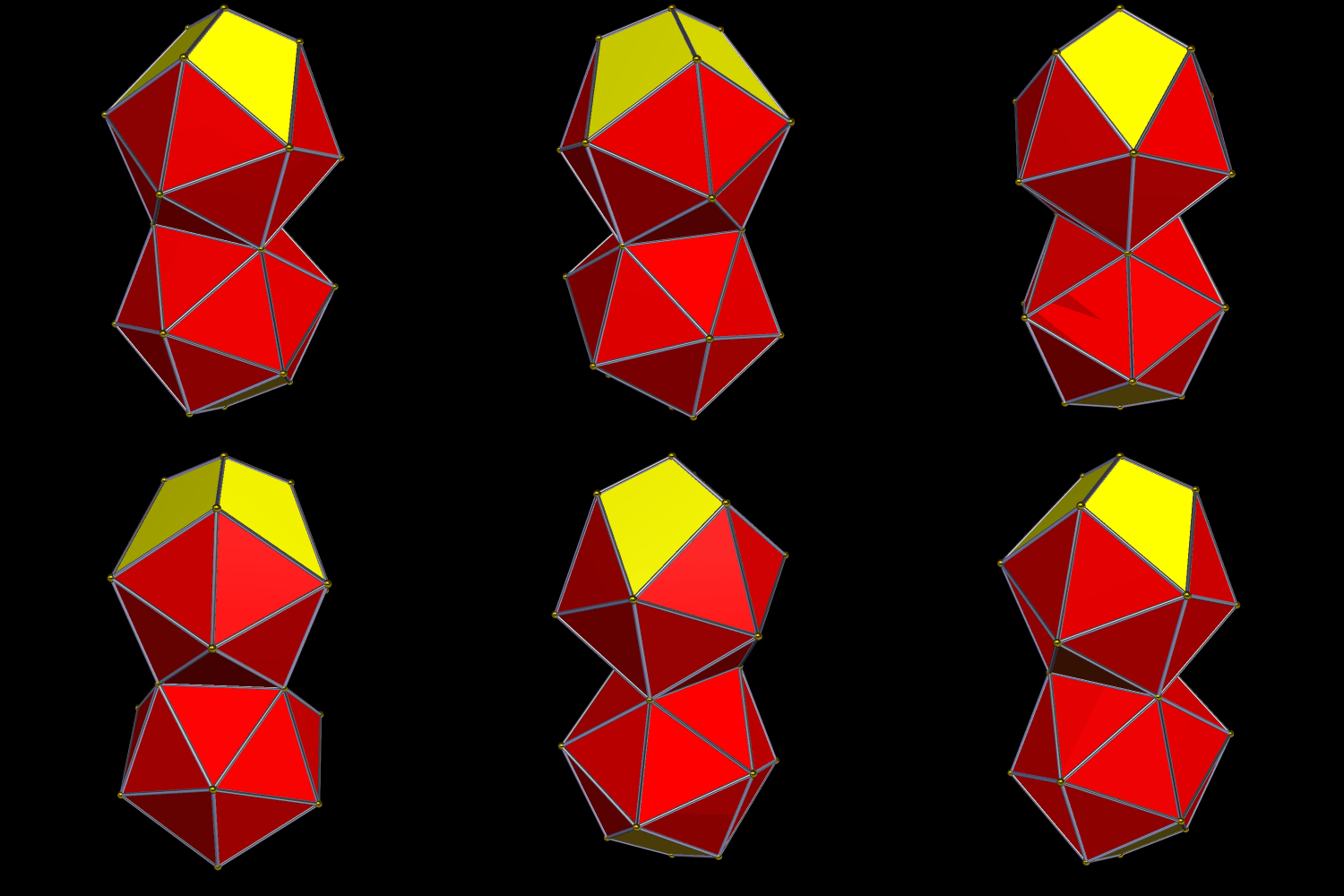
After seeing my post about what I called the “double icosahedron,” which is two complete icosahedra joined at one common triangular face, my friend Tom Ruen brought my attention to a similar figure he likes. This second type of double icosahedron is made of two icosahedra which meet at an internal pentagon, rather than a triangular face. Tom jokingly referred to this figure as “a double patty pentagonal antiprism in a pentagonal pyramid bun.”
It wasn’t hard to make this figure using Stella 4d, the program I use for polyhedral manipulation and image-creation (you can try it for free here), but I didn’t make it out of icosahedra. It was easier to make this figure from gyroelongated pentagonal pyramids, or “J11s” for short. This polyhedron is one of the 92 Johnson solids.
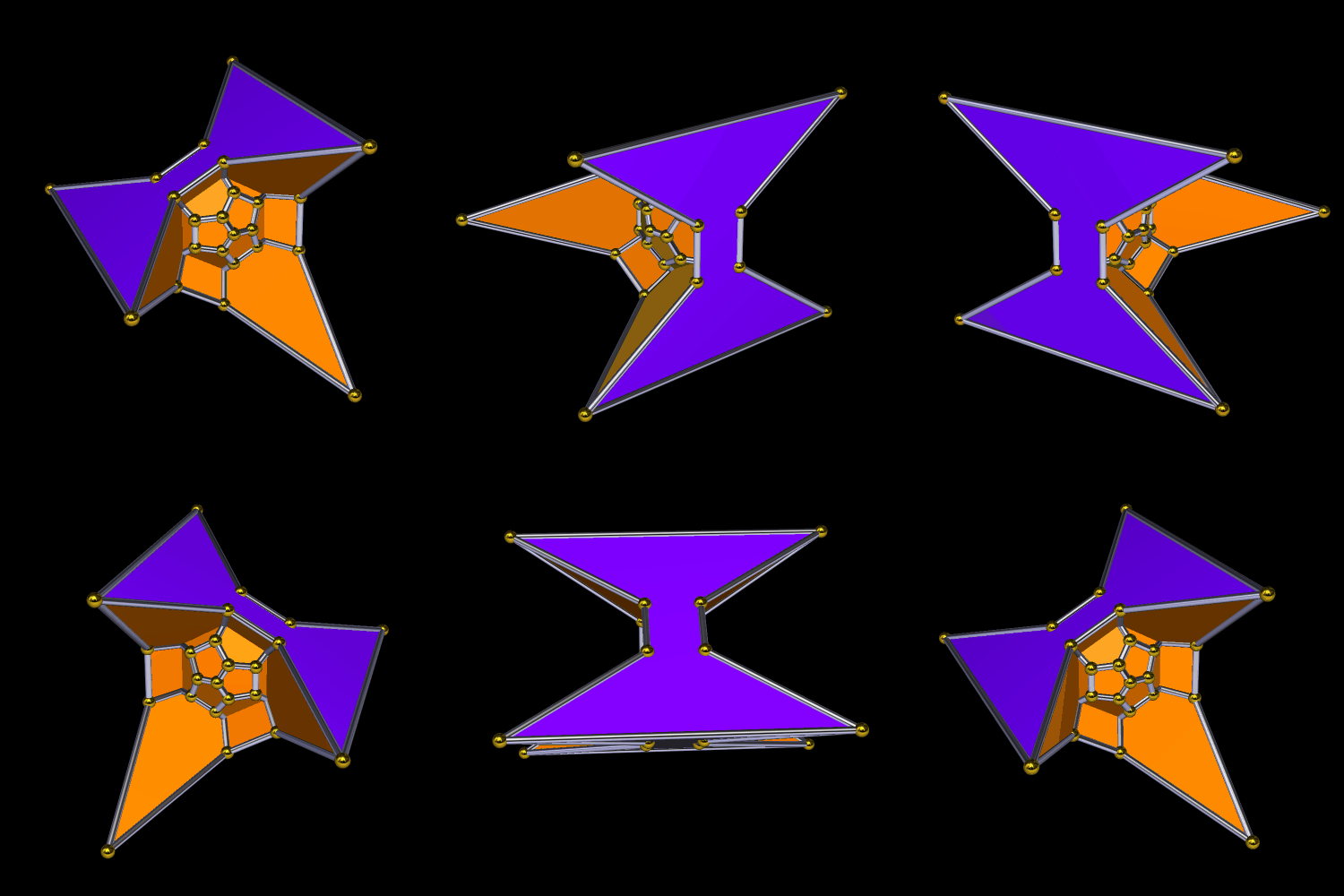
To make the polyhedron Tom had brought to my attention, I simply augmented one J11 with another J11, joining them at their pentagonal faces. Curious about what the dual of this solid would look like, I generated it with Stella.
The dual of the double J11 appears to be a modification of a dodecahedron, which is no surprise, for the dodecahedron is the dual of the icosahedron.
I next explored the stellation-series of the double J11, and found several attractive polyhedra there. This one is the double J11’s 4th stellation.
The next polyhedron shown is the double J11’s 16th stellation.
Here is the 30th stellation:
I also liked the 43rd:
The next one shown is the double J11’s 55th stellation.
Finally, the 56th stellation is shown below. These stellations, as well as the double J11 itself, and its dual, all have five-fold dihedral symmetry.
Having “mined” the double J11’s stellation-series for interesting polyhedra, I next turned to zonohedrification of this solid. The next image shows the zonohedron based on the double J11’s faces. It has many rhombic faces in two “hemispheres,” separated by a belt of octagonal zonogons. This zonohedron, as well as the others which follow, all have ten-fold dihedral symmetry.
Zonohedrification based on vertices produced this result:
The next zonohedron shown was formed based on the edges of the double J11.
Next, I tried zonohedrification based on vertices and edges, both.
Next, vertices and faces:
The next zonohedrification-combination I tried was to add zones based on the double J11’s edges and faces.
Finally, I ended this exploration of the double J11’s “family” by adding zones to build a zonohedron based on all three of these polyhedron characteristics: vertices, edges, and faces.
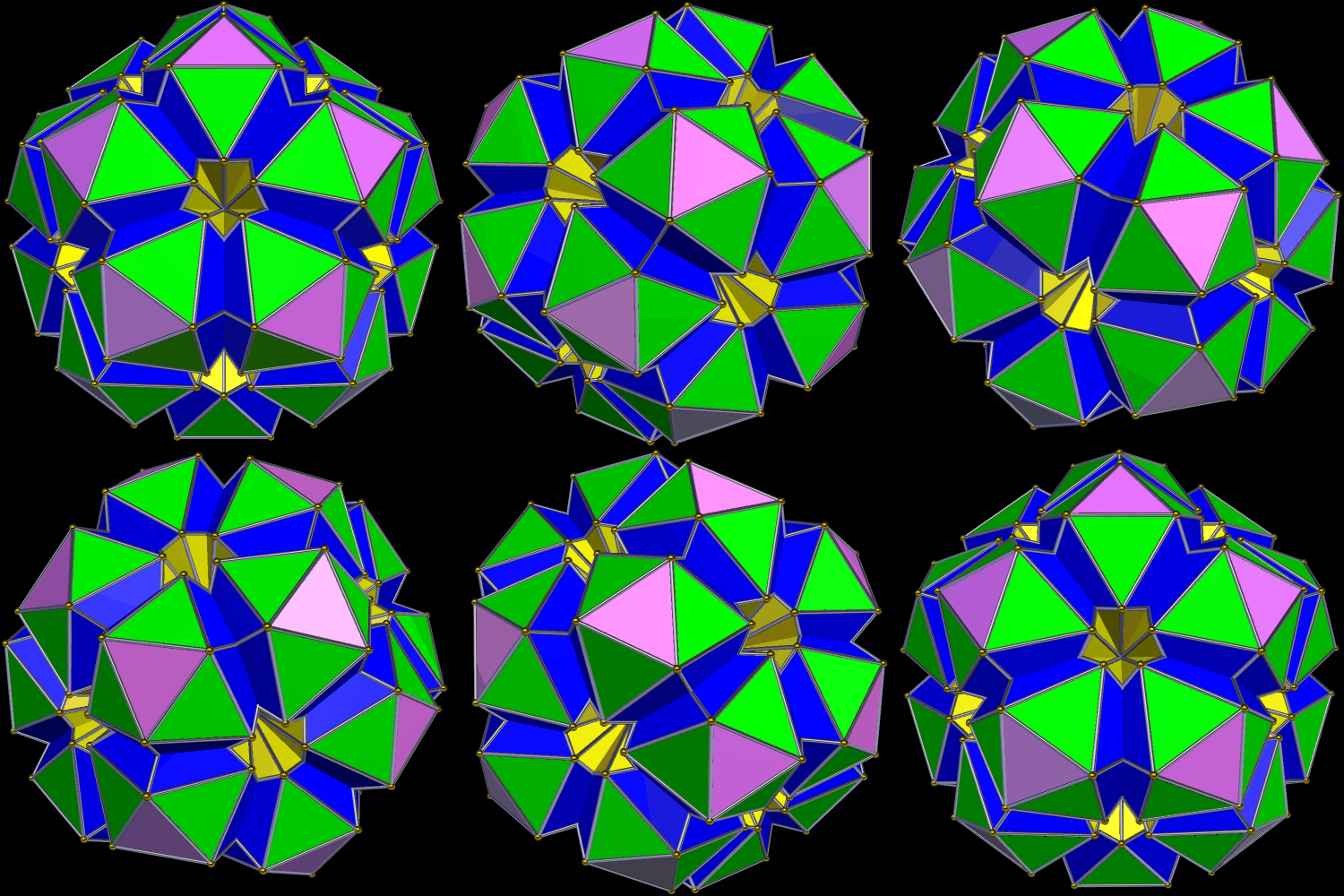
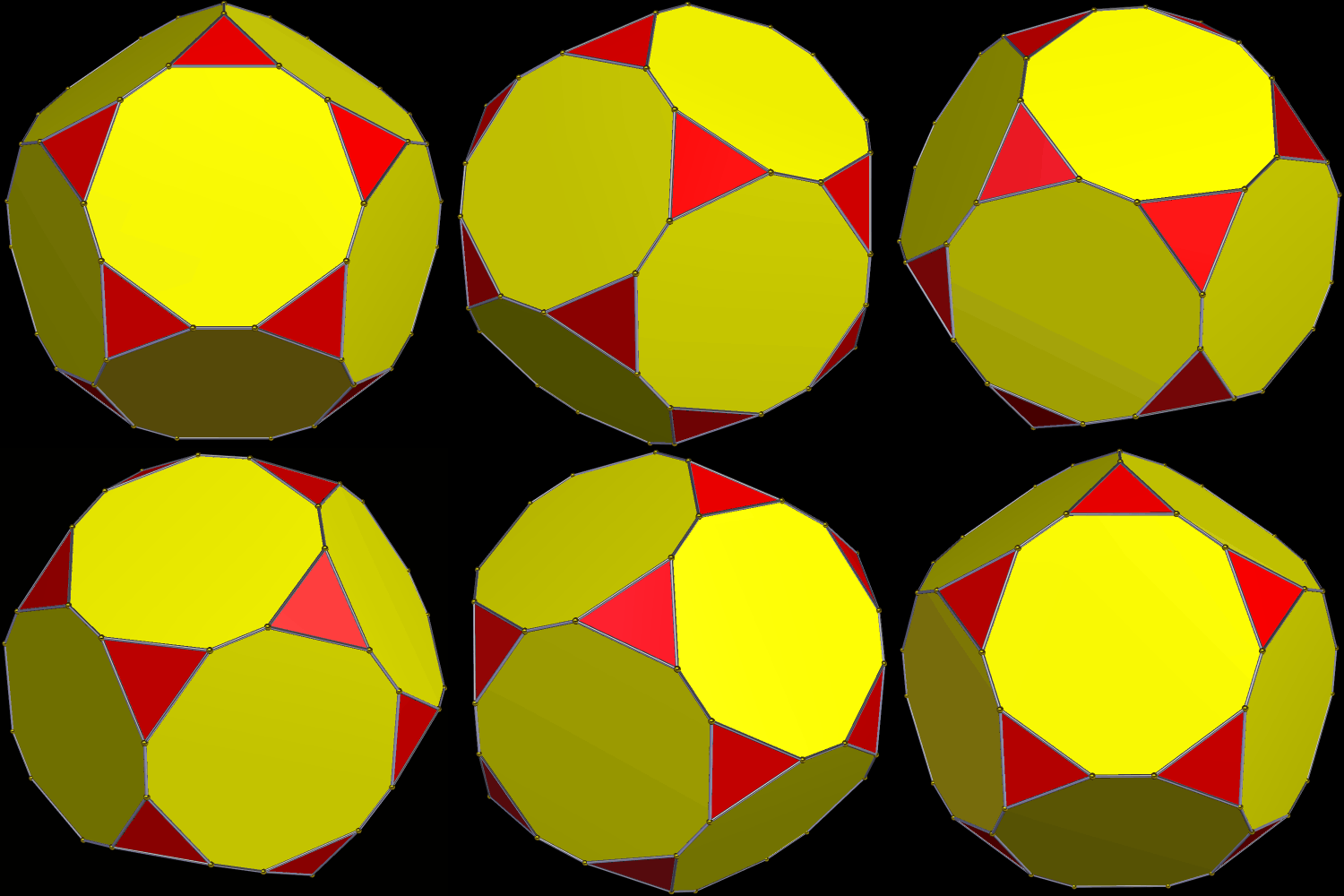
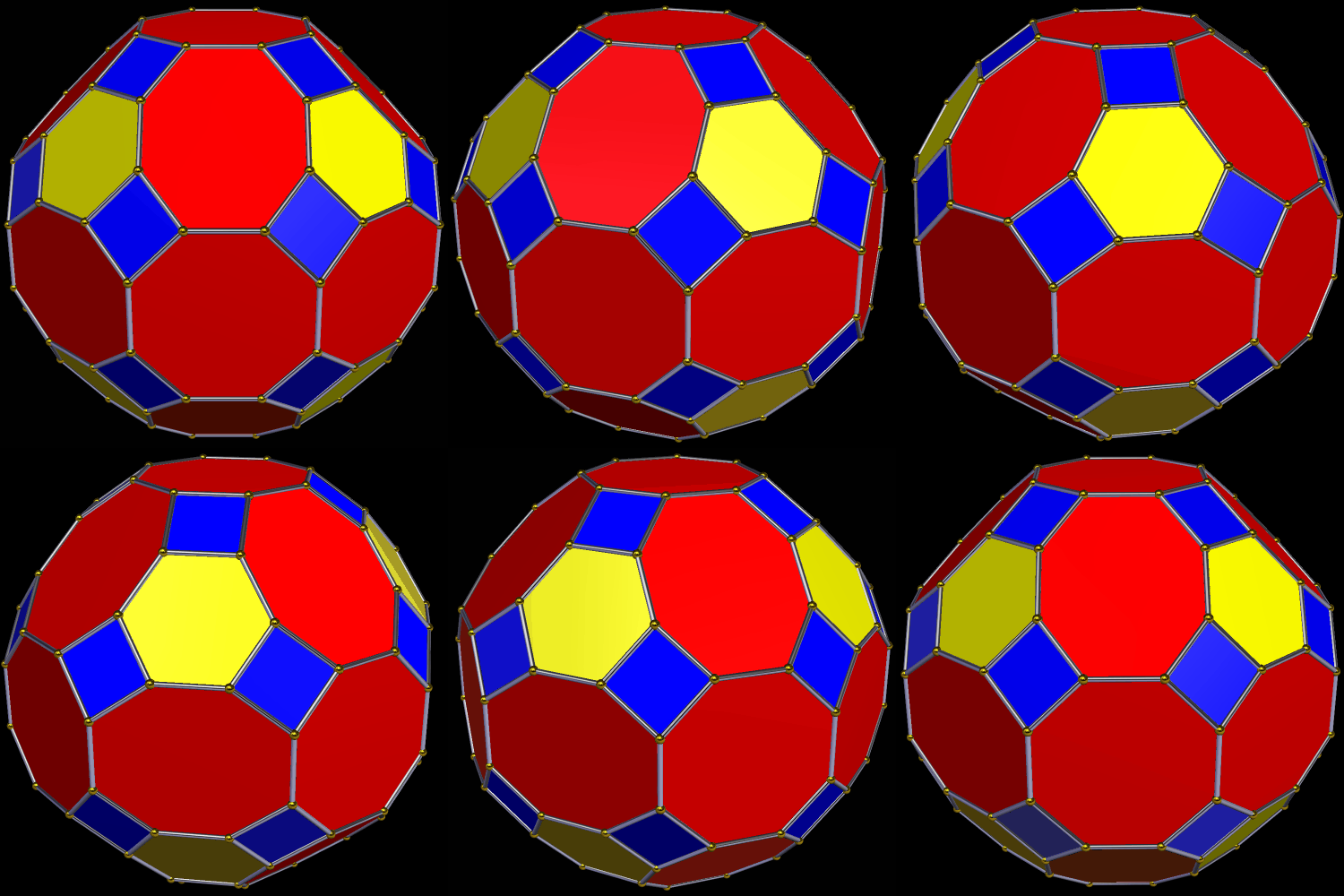
A reader of this blog, in a comment on the last post here, asked what would happen if each face of an icosahedron were augmented by another icosahedron. I was also asked what the convex hull of such an icosahedron-cluster would be. Here are pictures which answer both questions, in order.
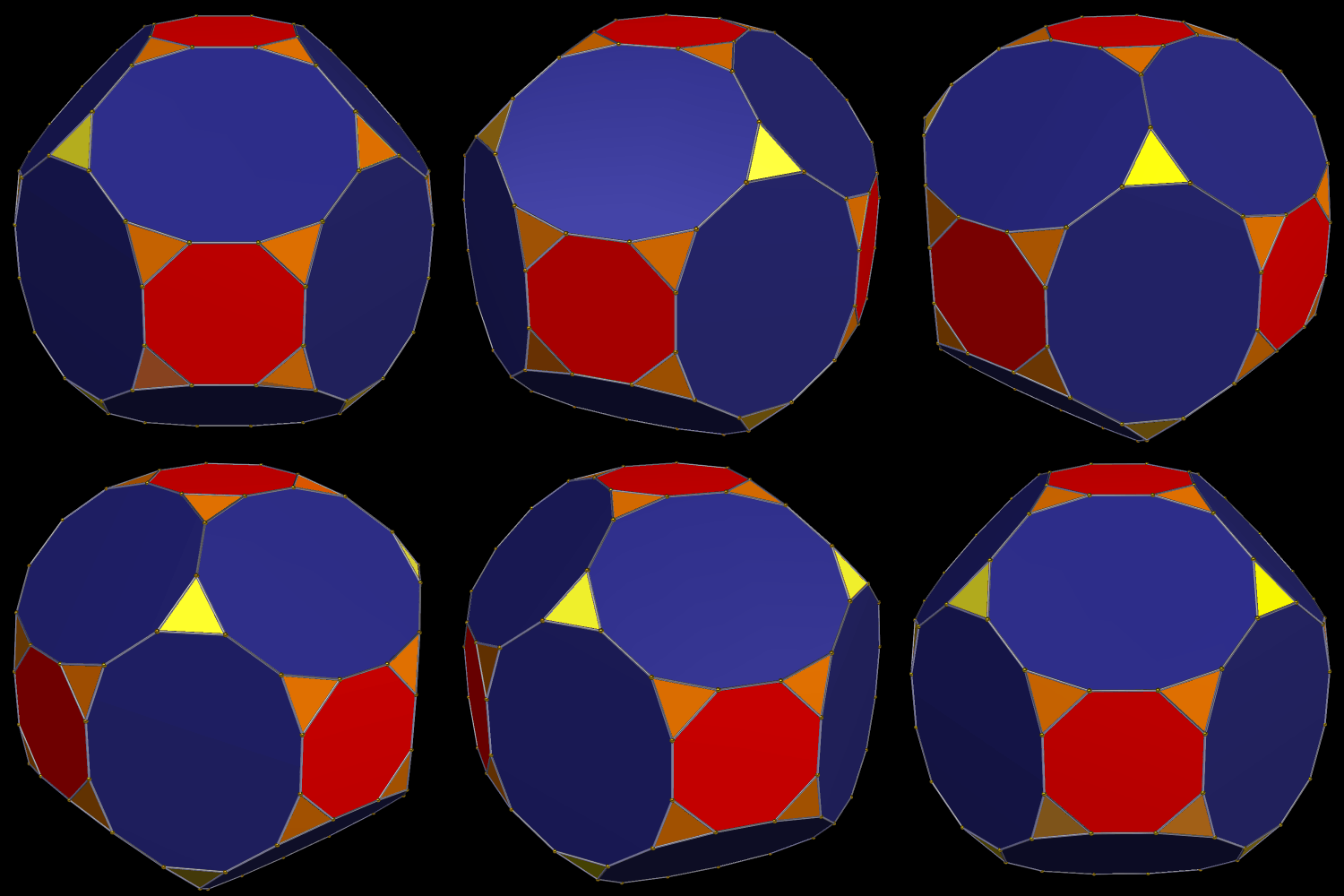
While the icosahedron augmented by twenty icosahedron forms an unusual non-convex shape, its convex hull is simply a slightly “stretched” version of the truncated dodecahedron, one of the Archimedean solids.
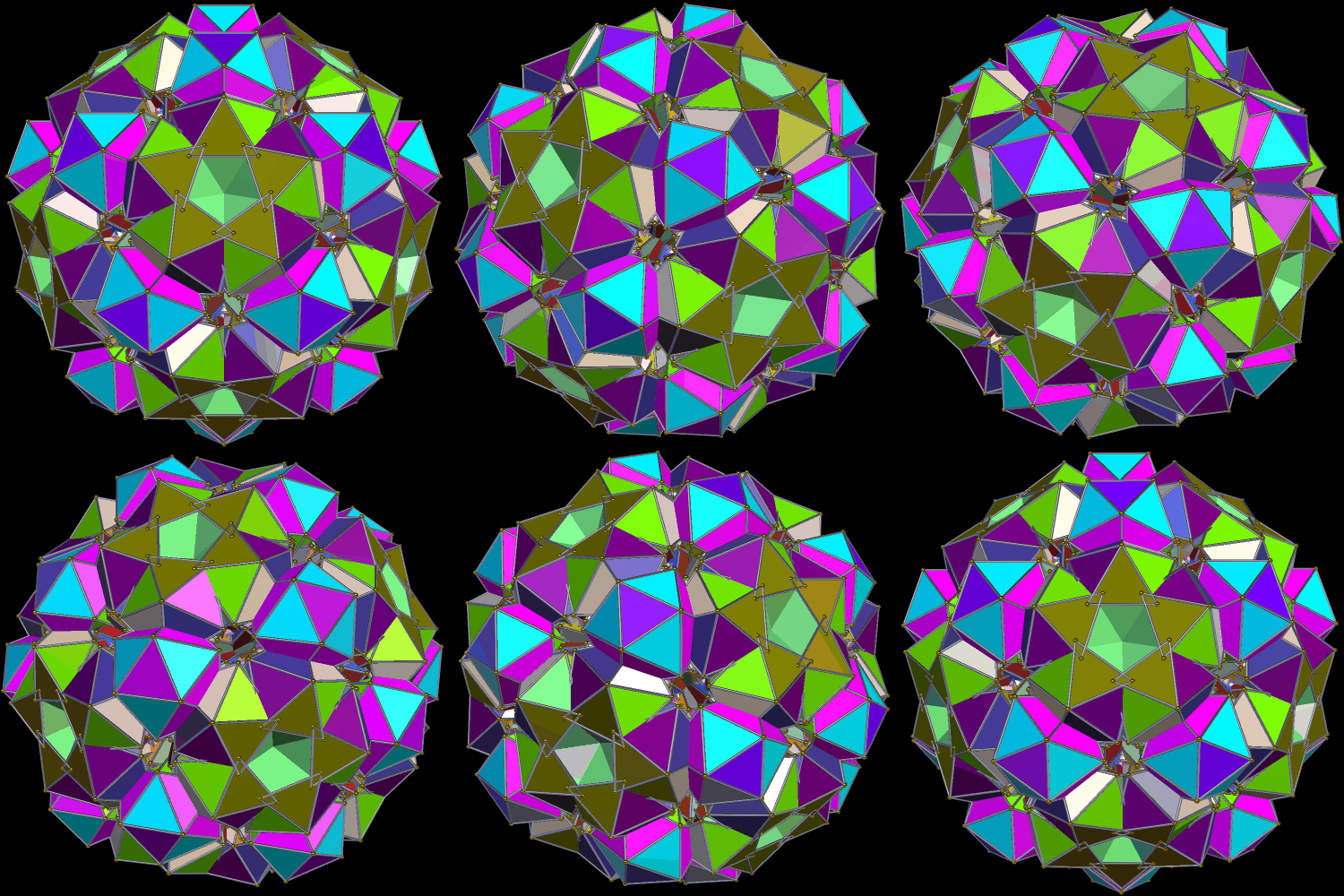
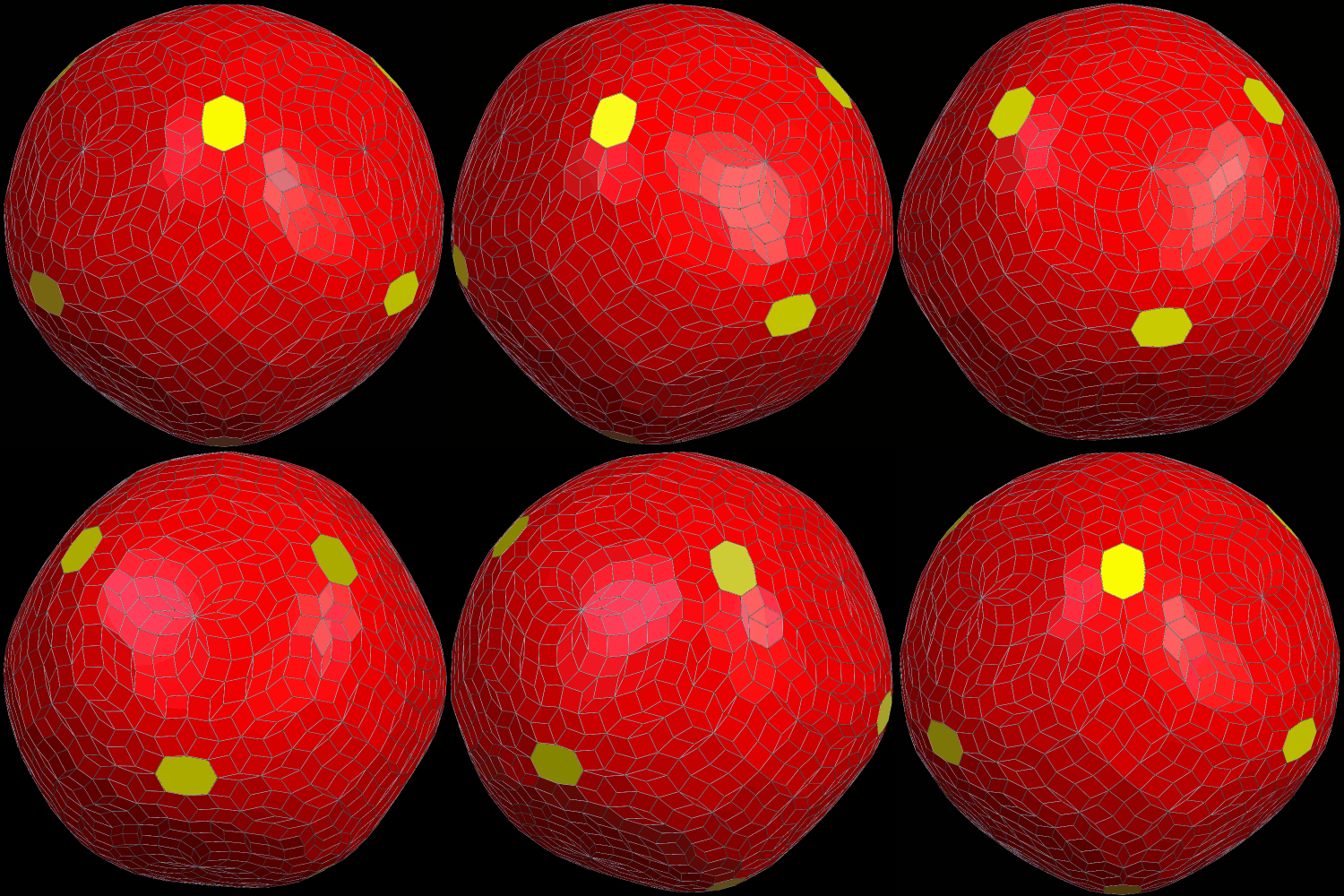
The reader who asked these questions did not ask what would happen if the icosahedron-cluster above were to be augmented, on every face, by yet more icosahedra. However, I got curious about this, myself, and created the answer: the following cluster of even-more numerous icosahedra. This could be called, I suppose, the “reaugmented” icosahedron.
Finally, here is the convex hull of this even-larger cluster. No one asked for it; I simply got curious.
To accomplish the polyhedron-manipulation and image-creation for this post, I used a program called Stella 4d: Polyhedron Navigator, which is available at http://www.software3d.com/Stella.php. A free trial download is available there, so you can try the software before deciding whether or not to purchase it.
The double icosahedron is simply an icosahedron, augmented on a single face by a second icosahedron. I thought it might be interesting to explore some transformations of this solid, using Stella 4d: Polyhedron Navigator (available here), and I was not disappointed. I used Stella to produce all the images in this post.
It is well-known that the dual of the icosahedron is another Platonic solid, the dodecahedron. Naturally, I wanted to see the double icosahedron’s dual, and here it is — a simple operation for Stella. This dual resembles a dodecahedron in its center, but gets more unusual-looking as one moves further out from its core.
I next examined stellations of the double icosahedron, but did not find any which seemed attractive enough to post, until I saw its sixteenth stellation, which features six kites as faces, in sets of three, on opposite sides of the solid.
What proved most fruitful was my examination of various zonohedra based on the double icosahedron. Here’s what I found for the zonohedron based on the faces of the double icosahedron: a large number of rhombic faces, with Northern and Southern “hemispheres” separated by an “equator” of hexagonal zonogons.
The next image is the zonohedron based on the edges of the double icosahedron.
The next zonohedron shown is based on the vertices of the double icosahedron.
All of these zonohedra have 6-fold dihedral symmetry, while the double icosahedron itself has 3-fold dihedral symmetry. The next image shows the zonohedron based on both the vertices and edges of the double icosahedron.
Zonohedrification based on vertices and faces produces the next zonohedron shown here.
The next logical step was to create a zonohedron based on the double icosahedron’s edges and faces.
Finally, here is the zonohedron based on all three characteristics: the vertices, edges, and faces of the double icosahedron.
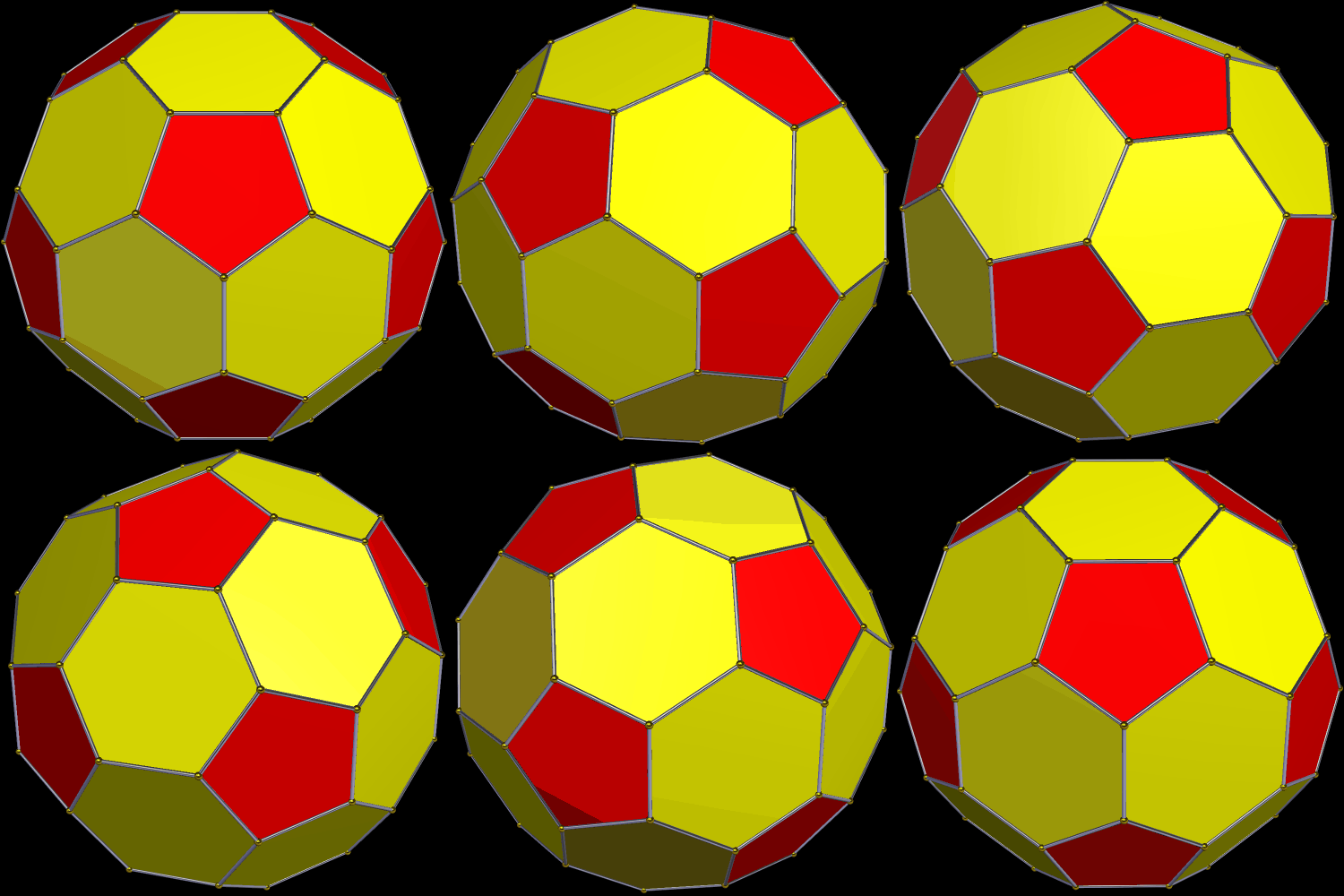
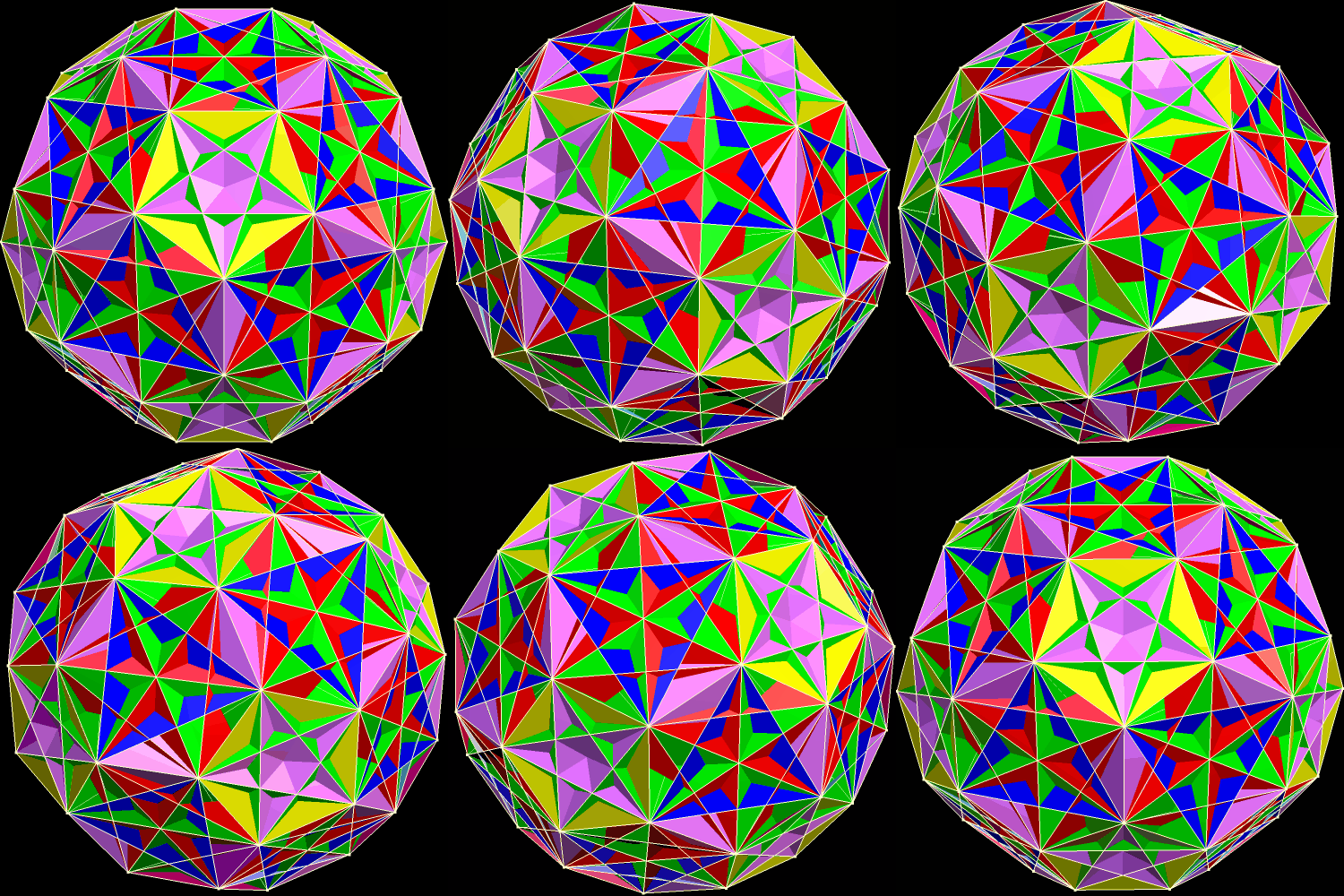
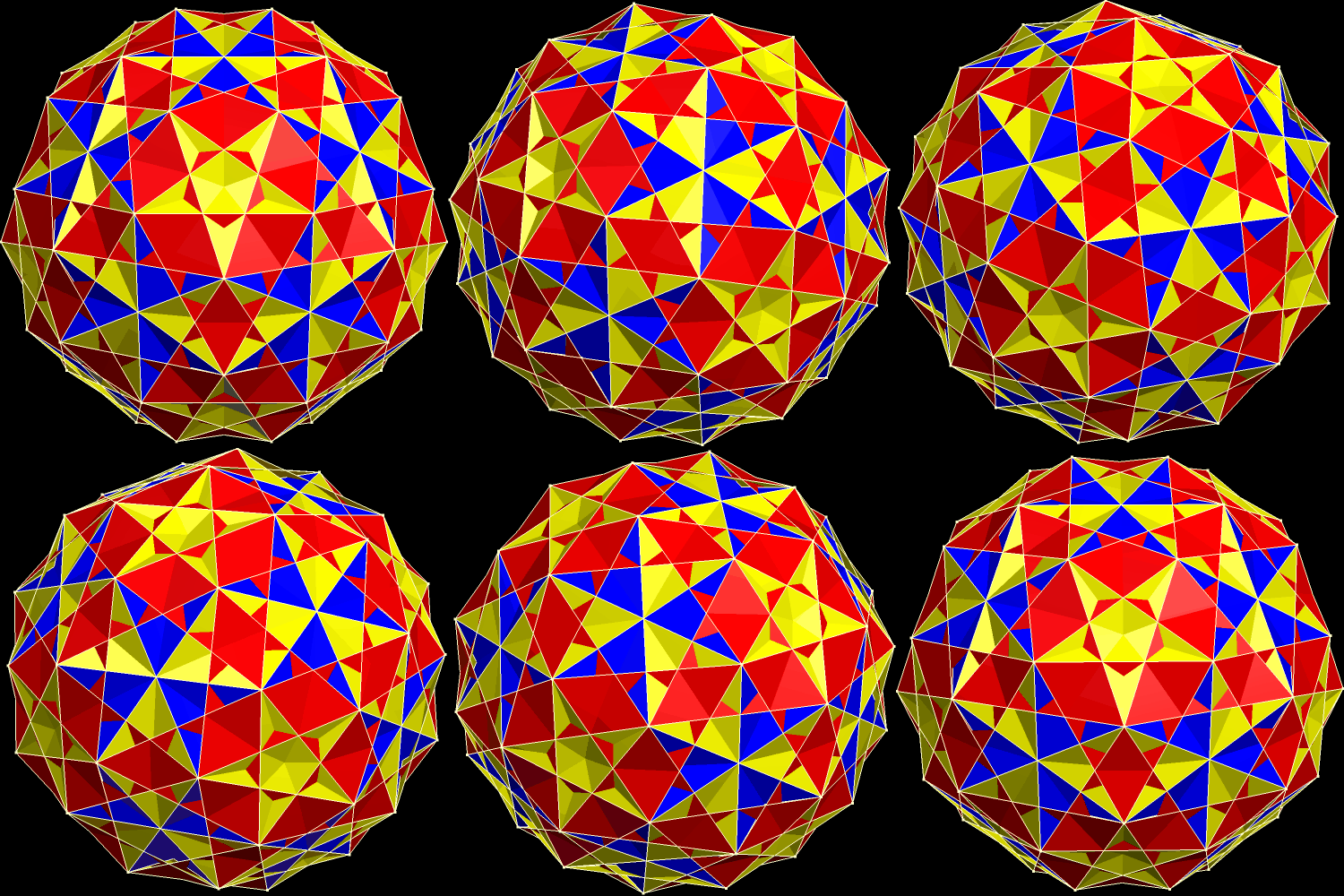
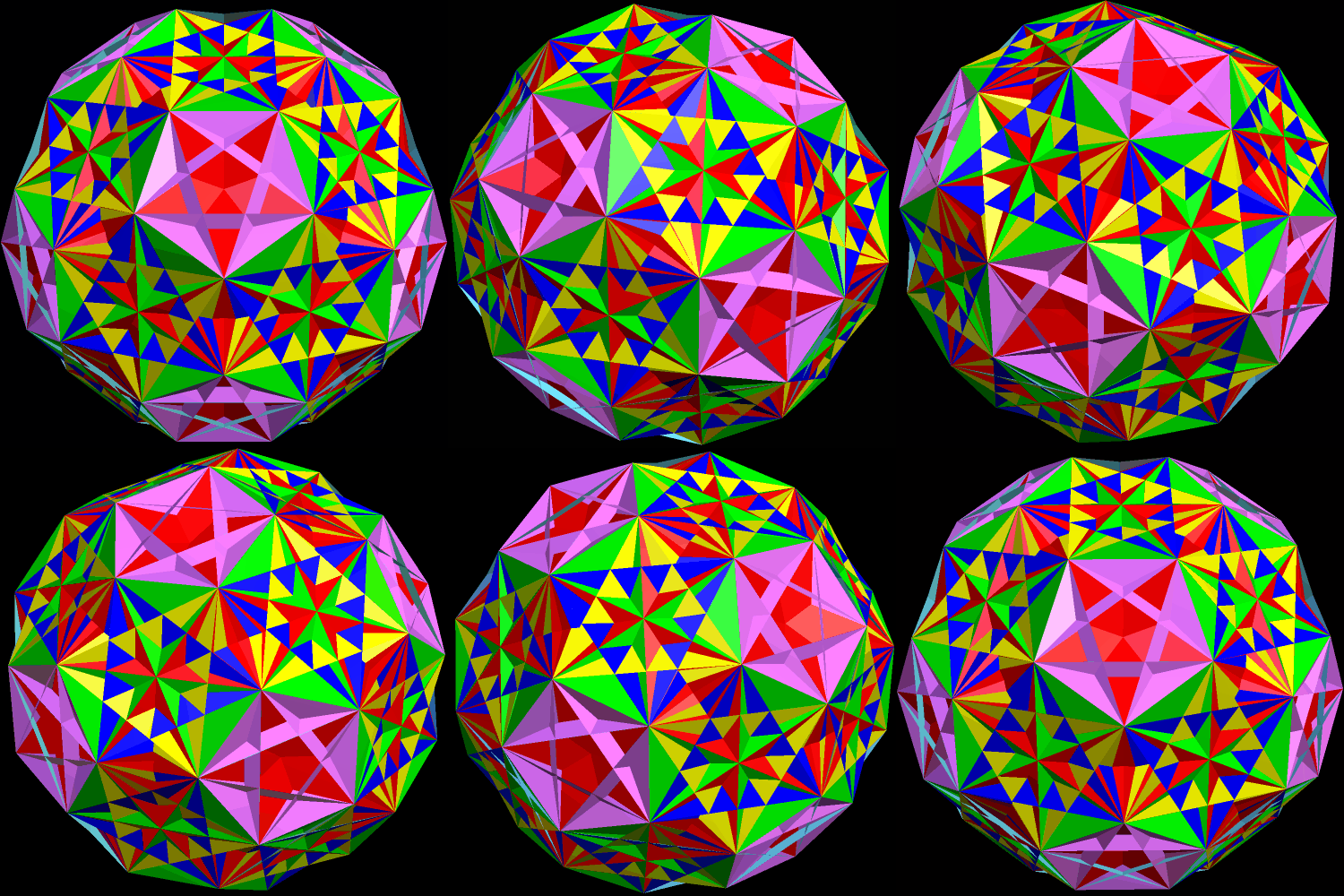
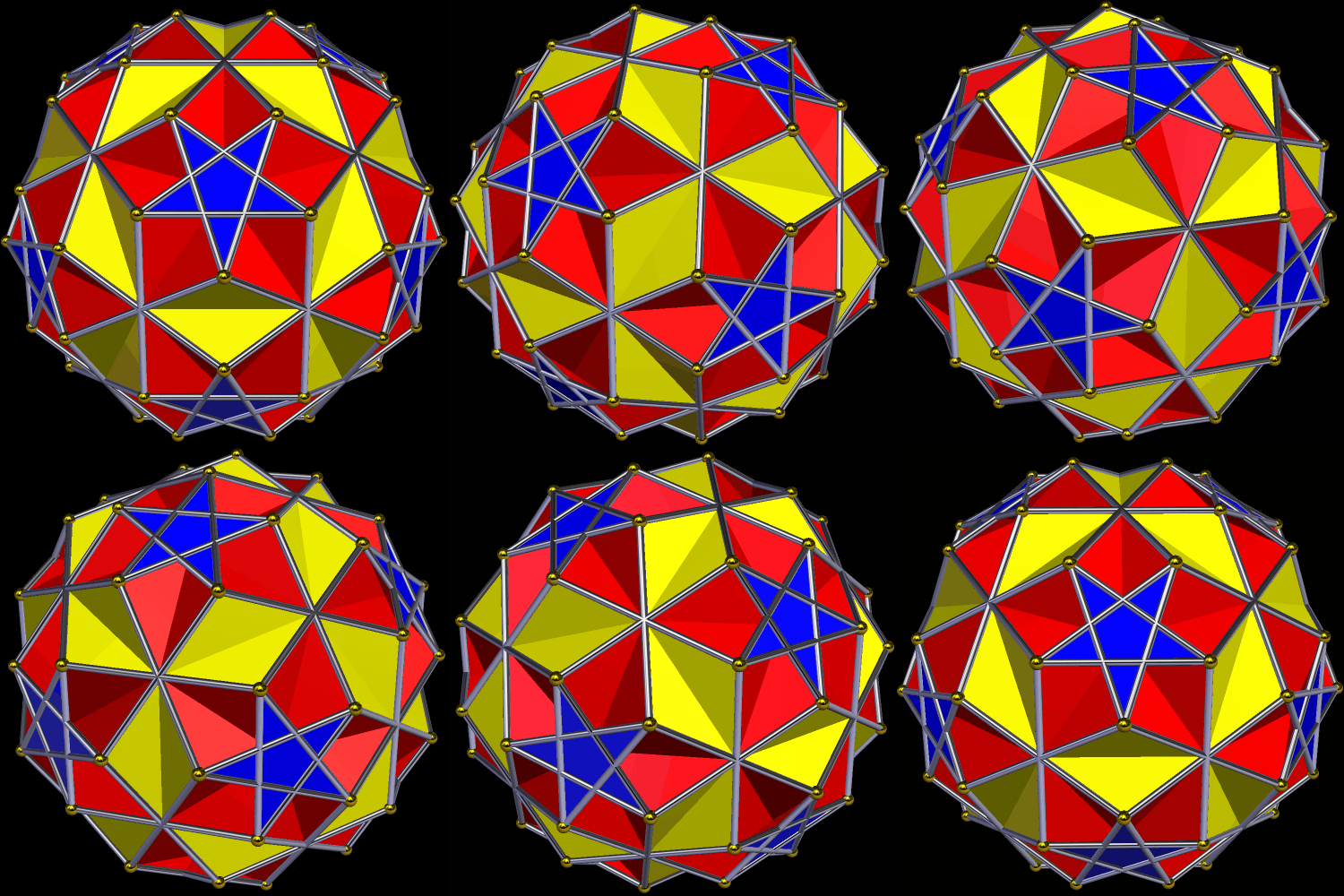
I usually only post my own work here, but today I’m giving a shout-out to the websites of a German friend of mine named Tadeusz E. Doroziński. He made this snub polyhedron with 362 faces, which I’m posting here as a sample of his work. All of its edges are of equal length. Like me, he uses Stella 4d: Polyhedron Navigator frequently (available here), and he used that program to create this polyhedron.
His two geometry-focused and polyhedron-filled websites,https://geometryka.wordpress.com/andhttp://www.3doro.de/, contain much more, including some mathematics which flies right over my head, as the saying goes. If you like the image above, or you are a fan of my own blog, I strongly recommend following the links above to check out his work. Every time I visit either of his websites, I always find something amazing.
I made this rotating virtual model using Stella 4d: Polyhedron Navigator, which you can try for yourself athttp://www.software3d.com/Stella.php. This solid is different from most two-part polyhedral compounds because an unusually high fraction of one polyhedron, the yellow octahedron, is hidden inside the compound’s other component.
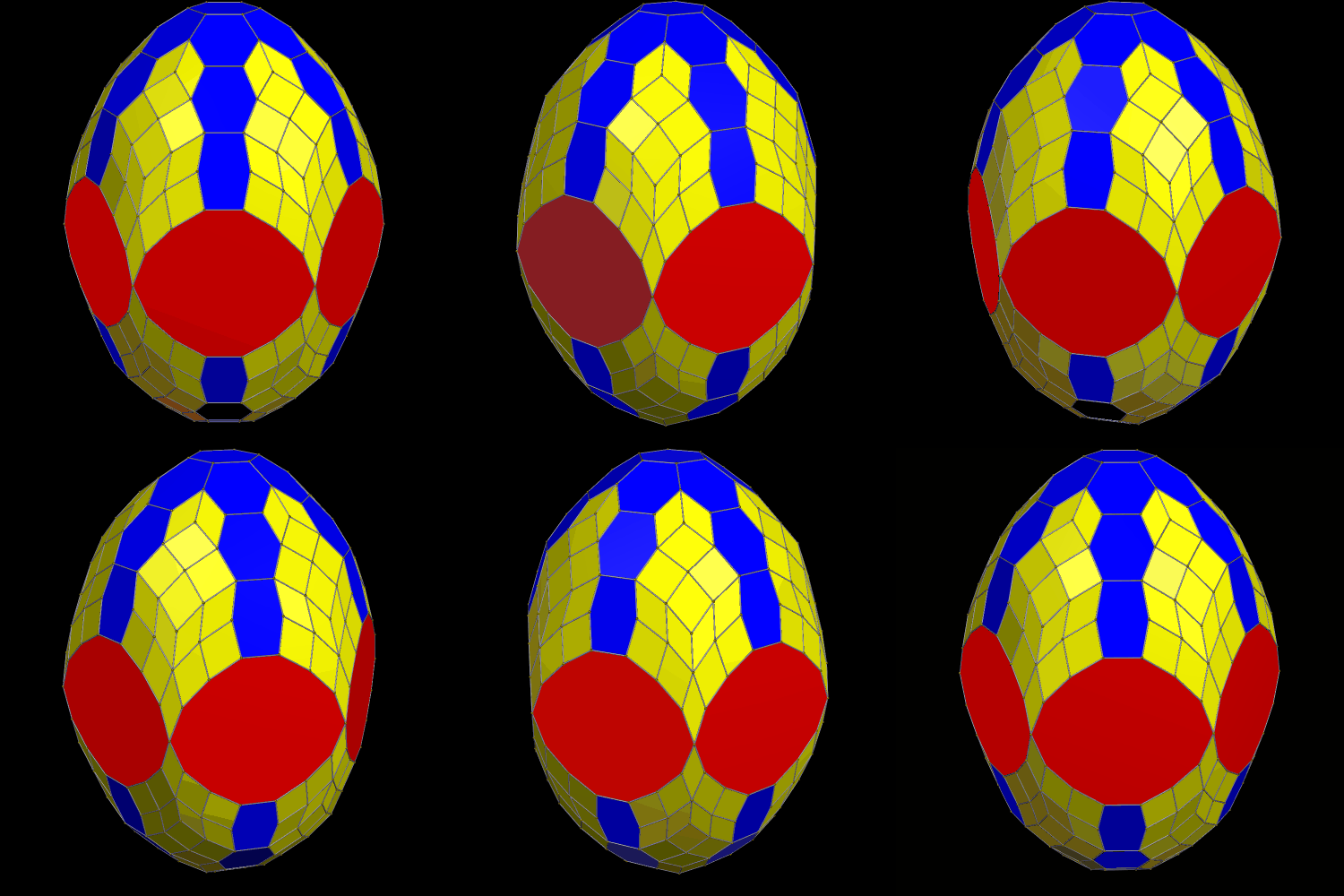
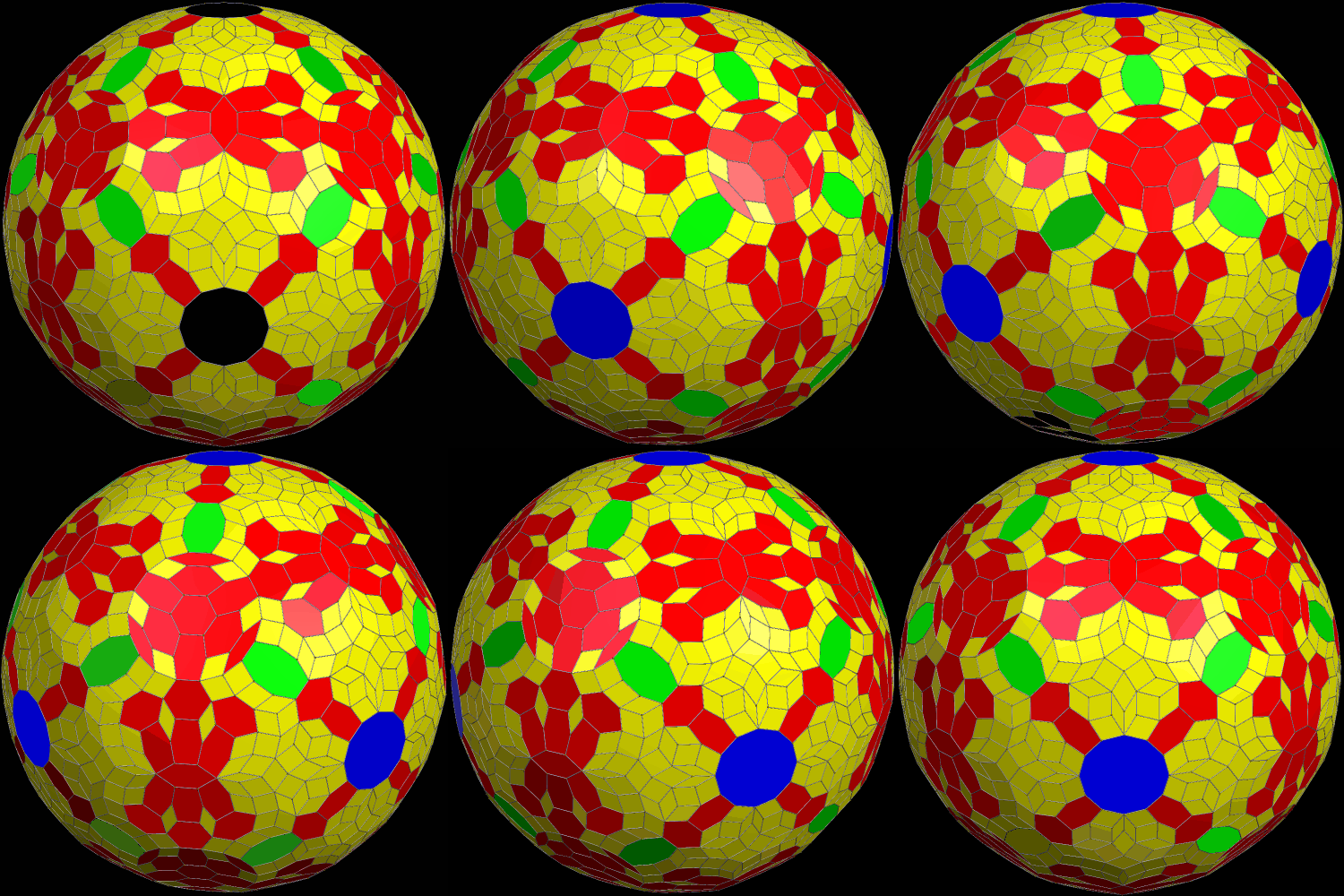
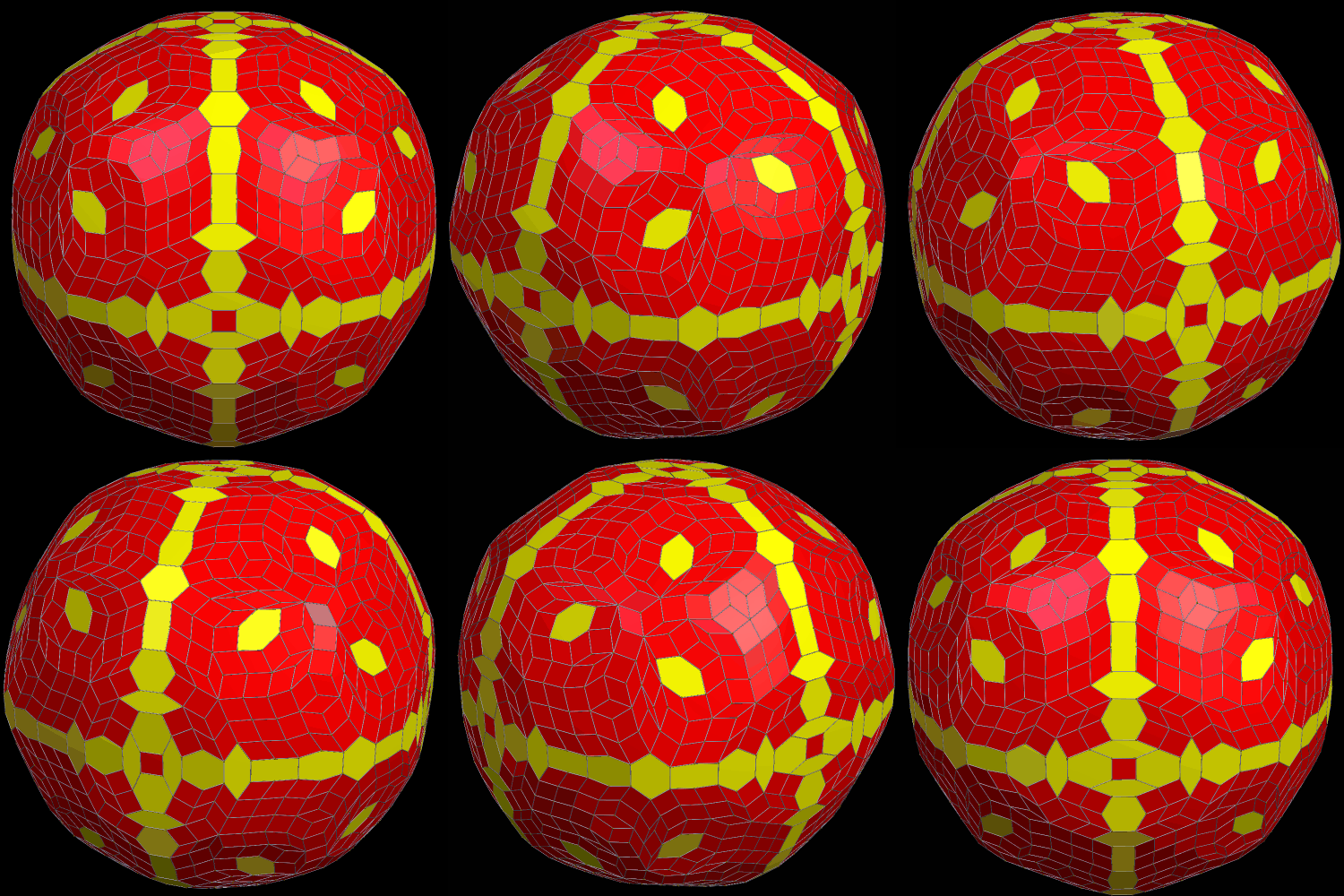
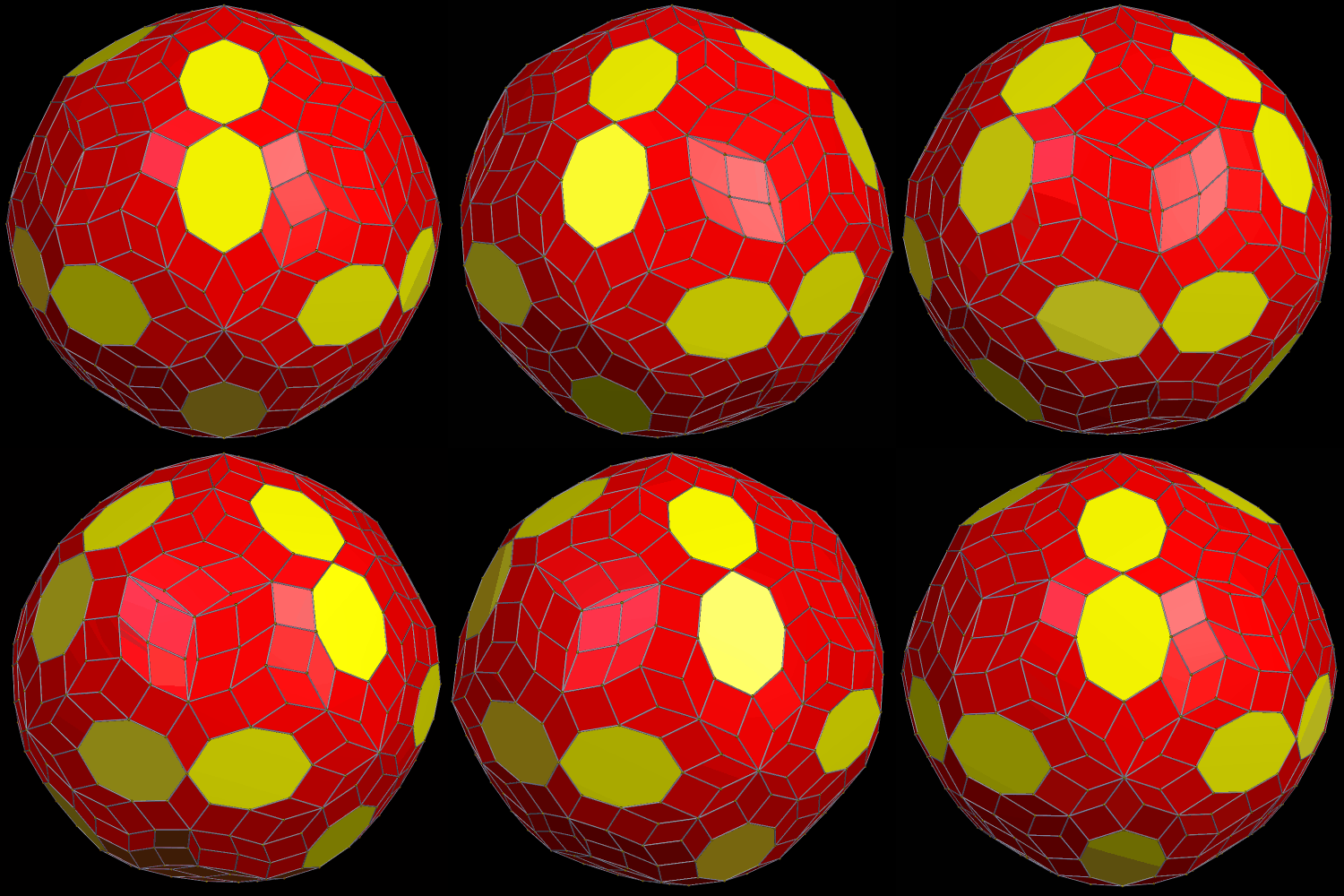
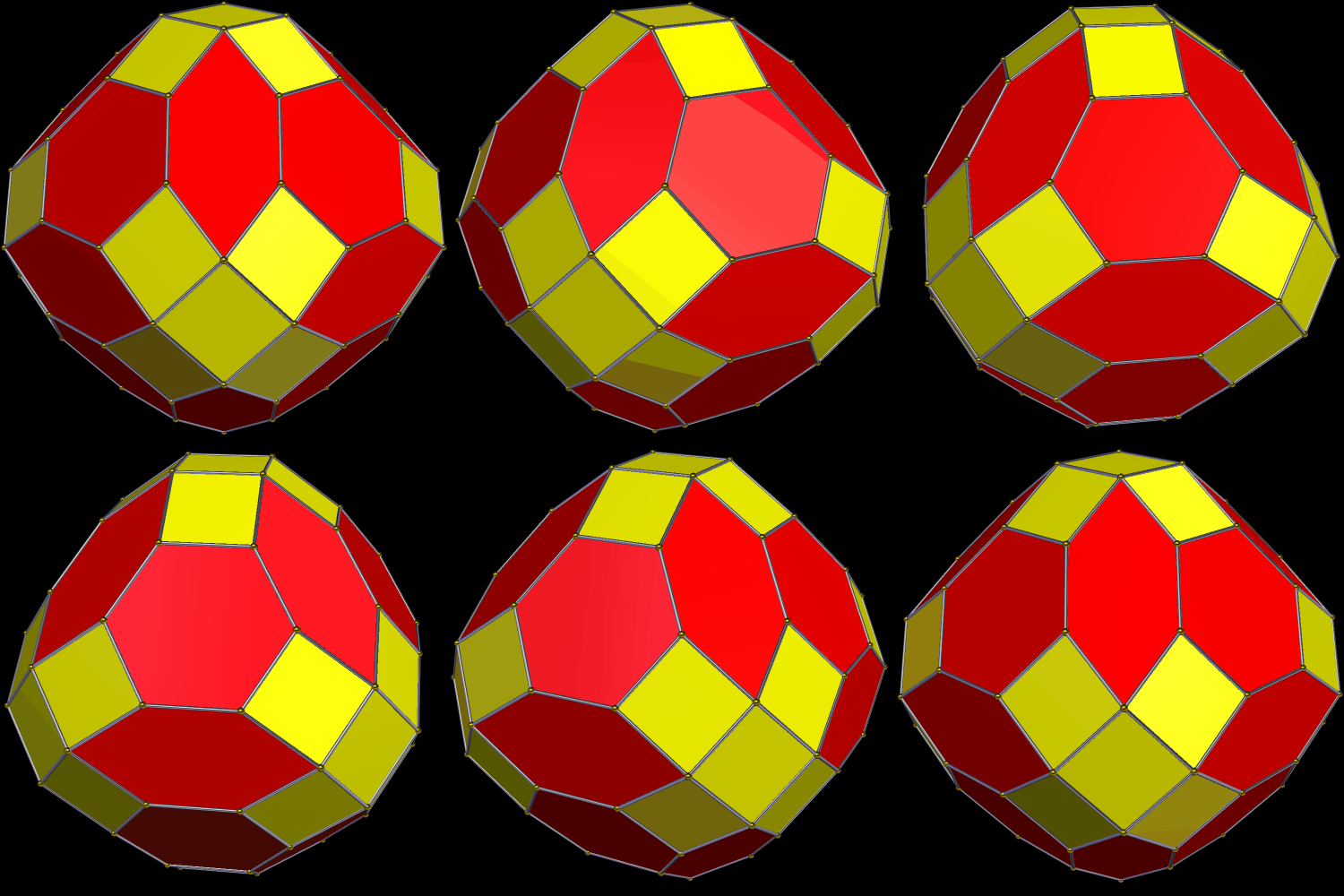
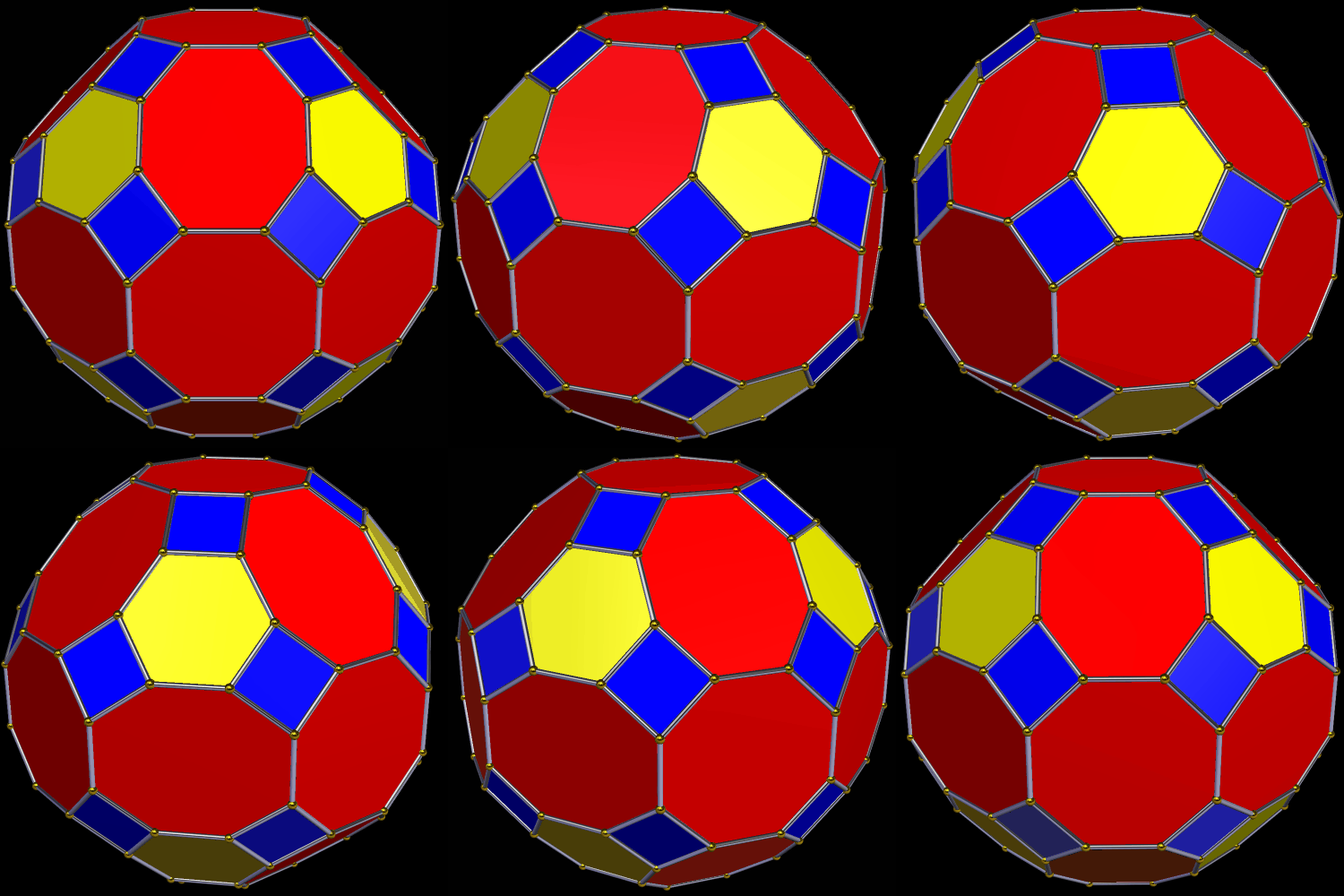
Zonohedra are a subset of polyhedra with all faces in pairs of parallel and congruent zonogons. Zonogons are polygons with sides which occur only as parallel and congruent pairs of line segments. As a consequence of this, the faces of zonohedra must have even numbers of sides.
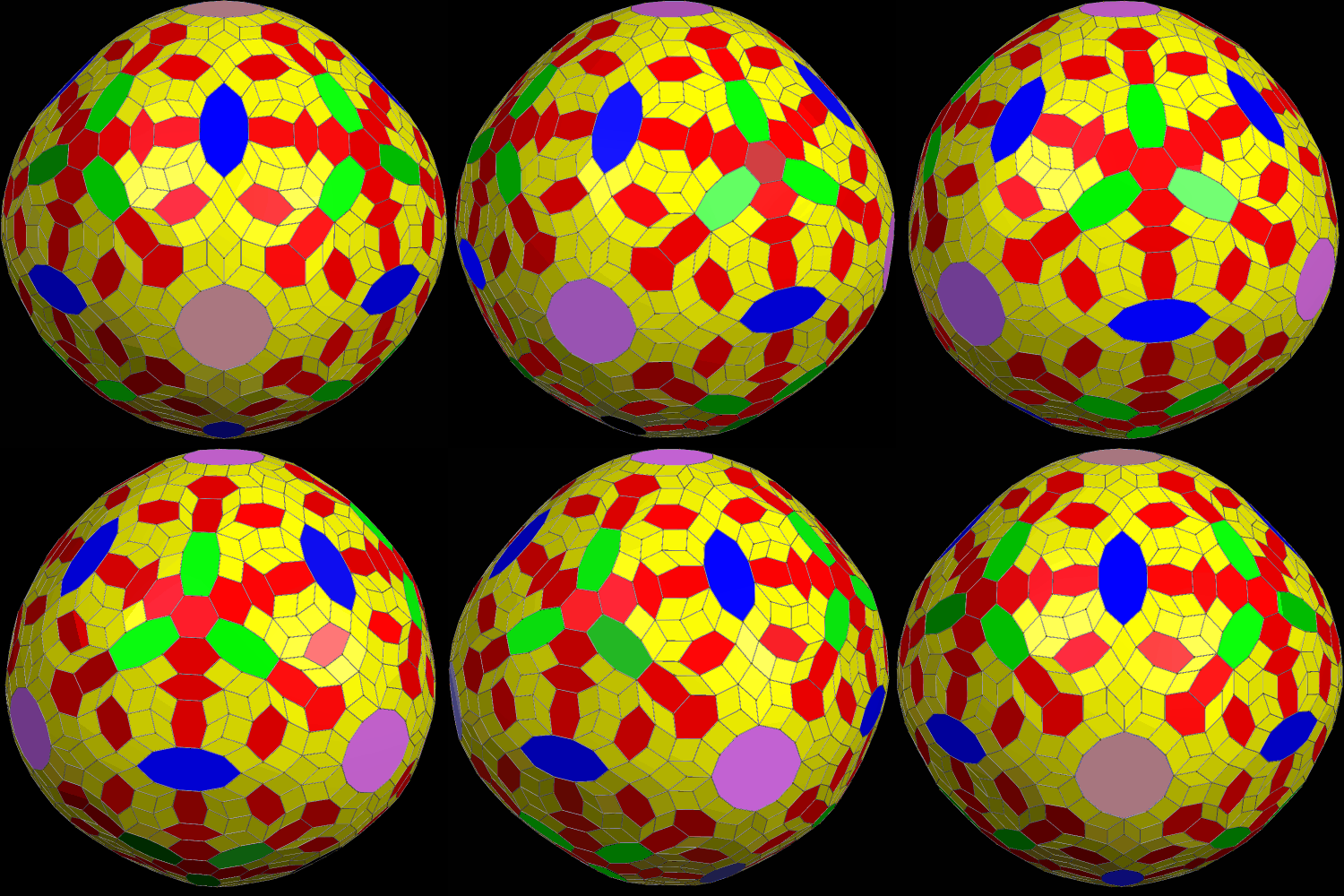
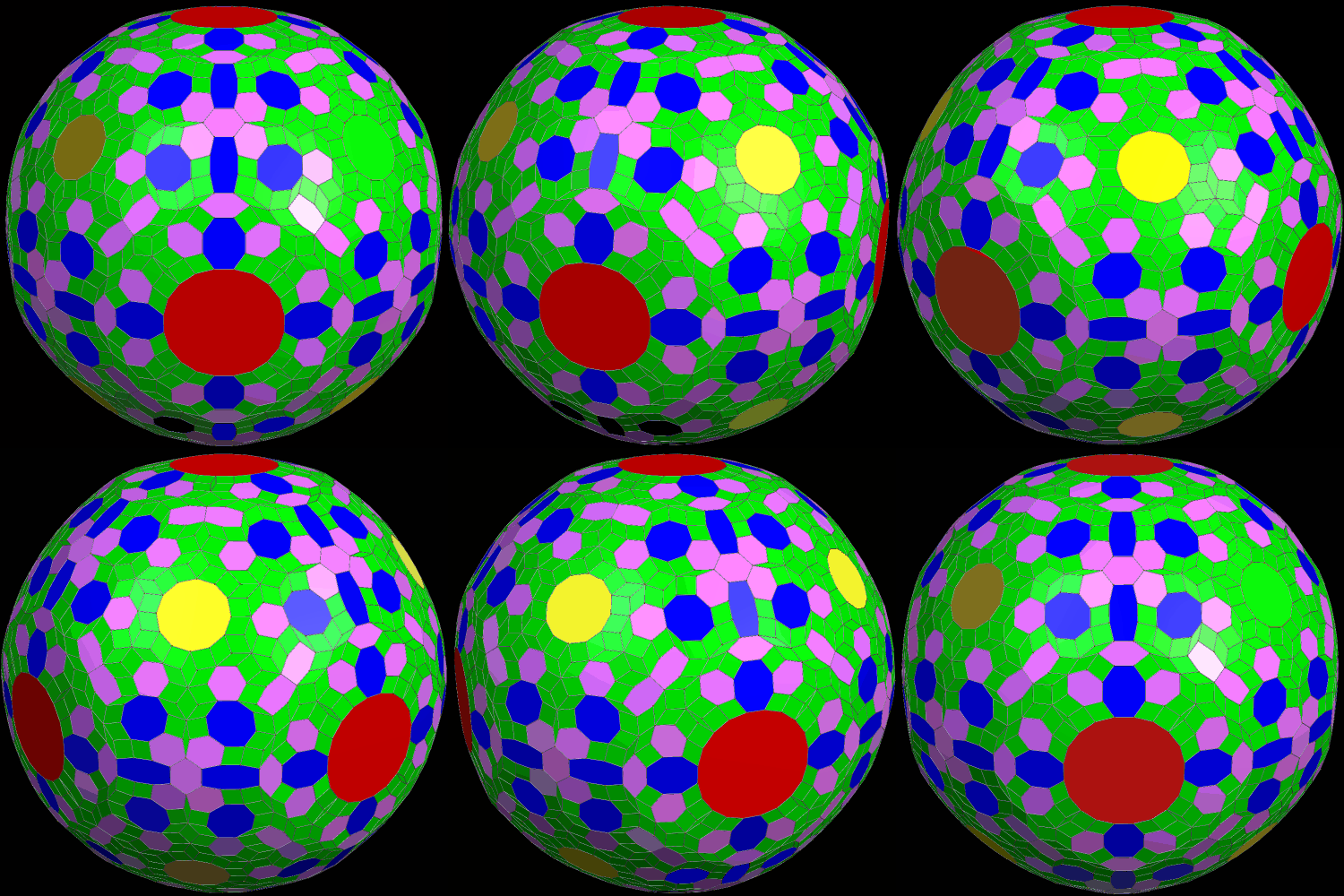
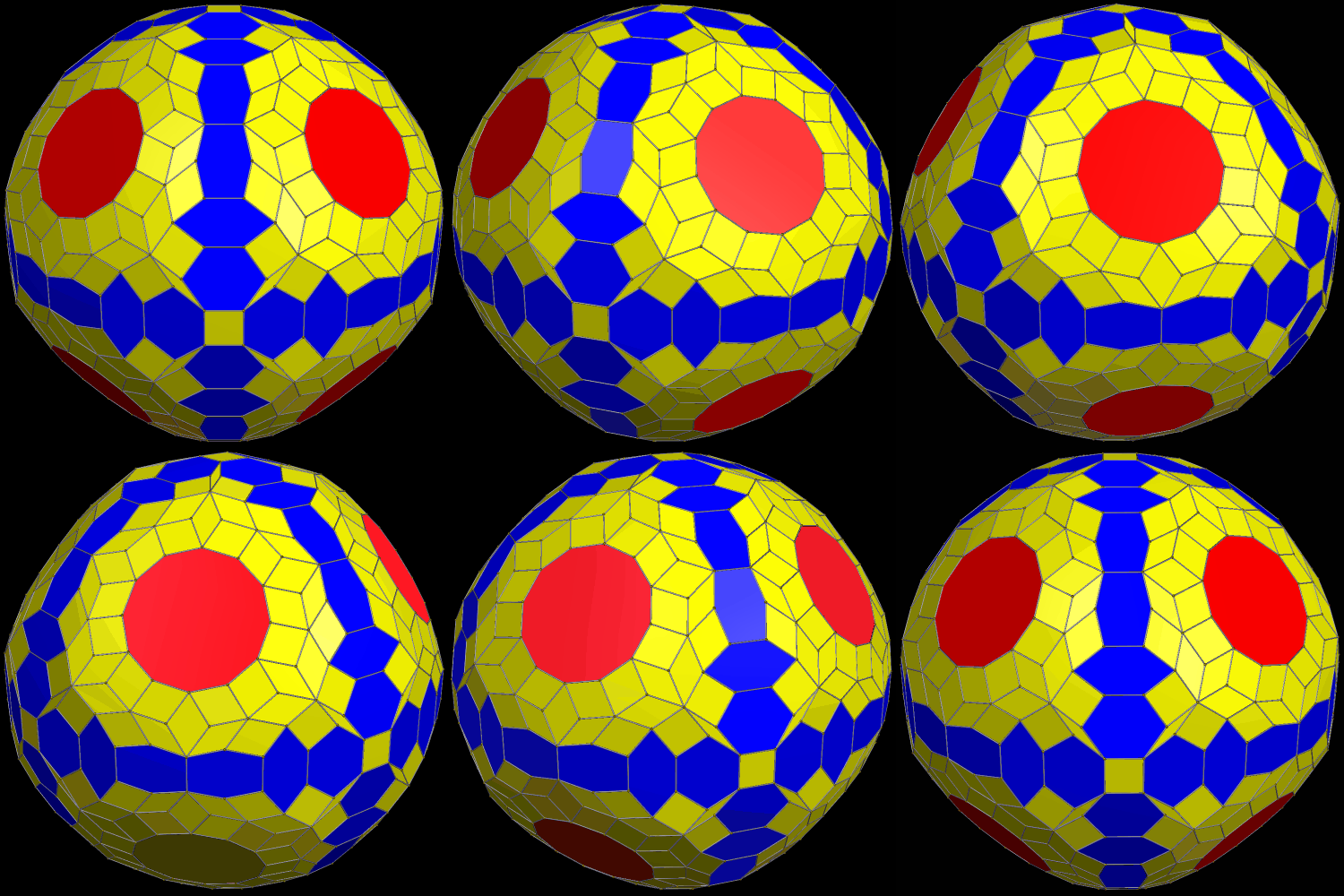
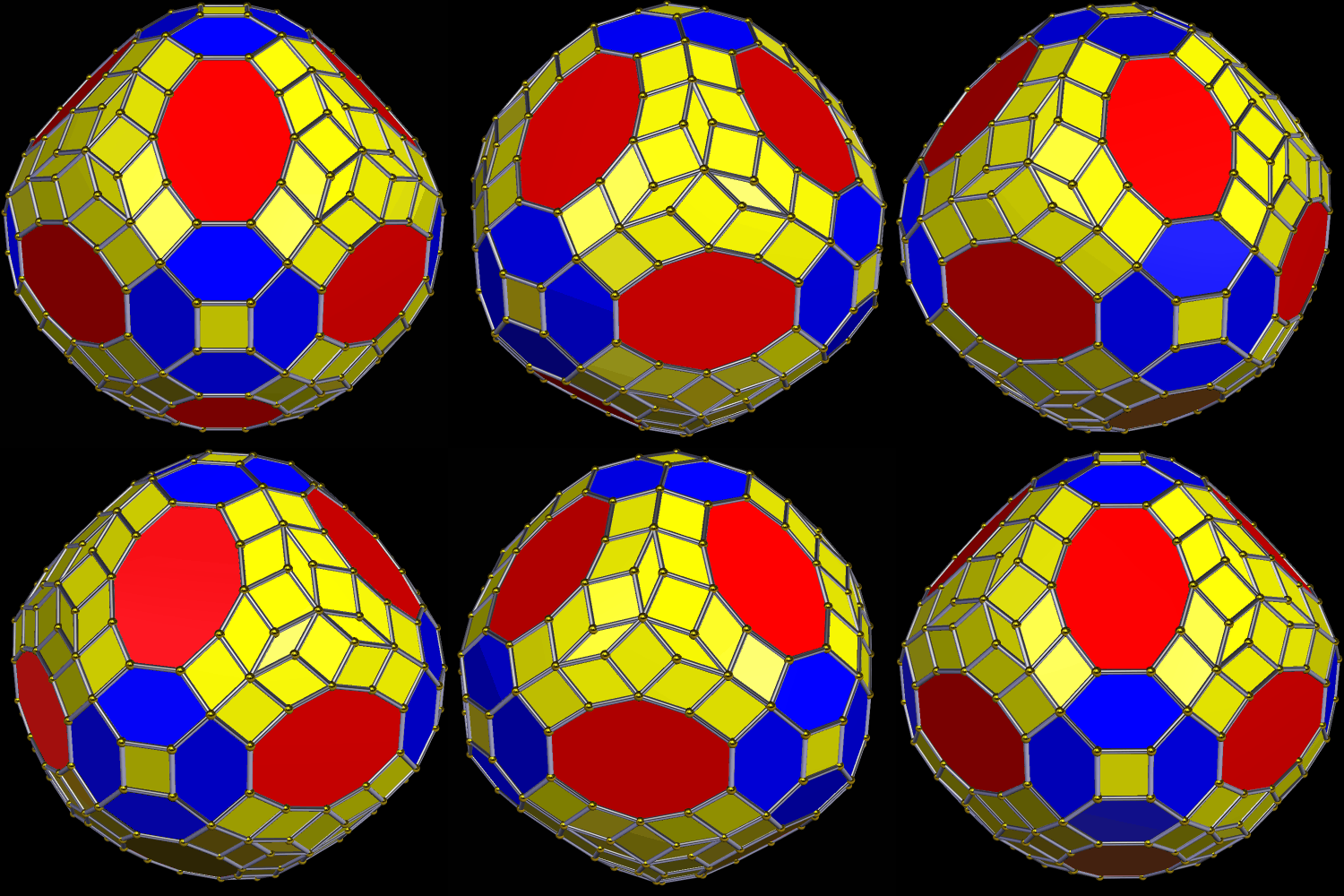
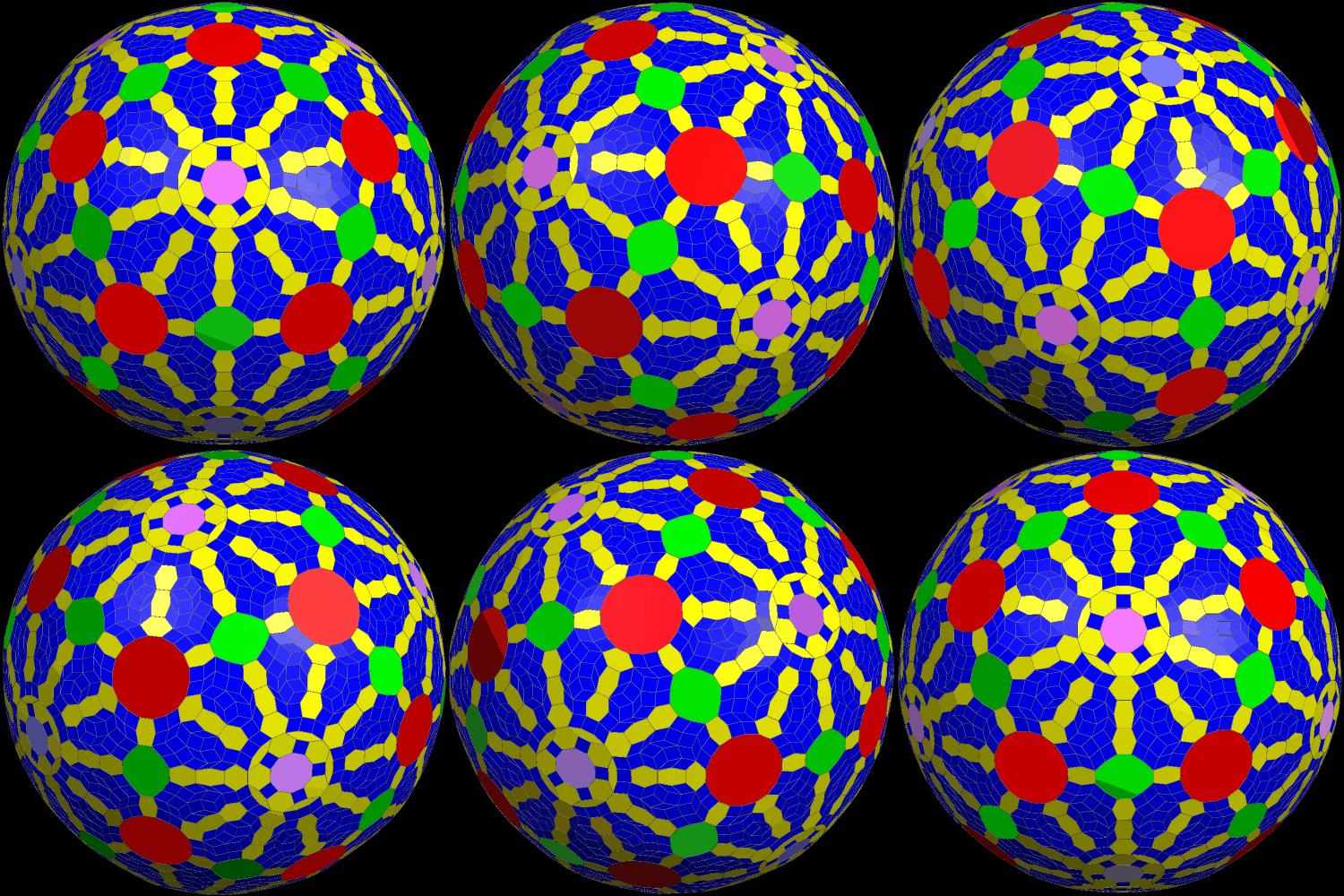
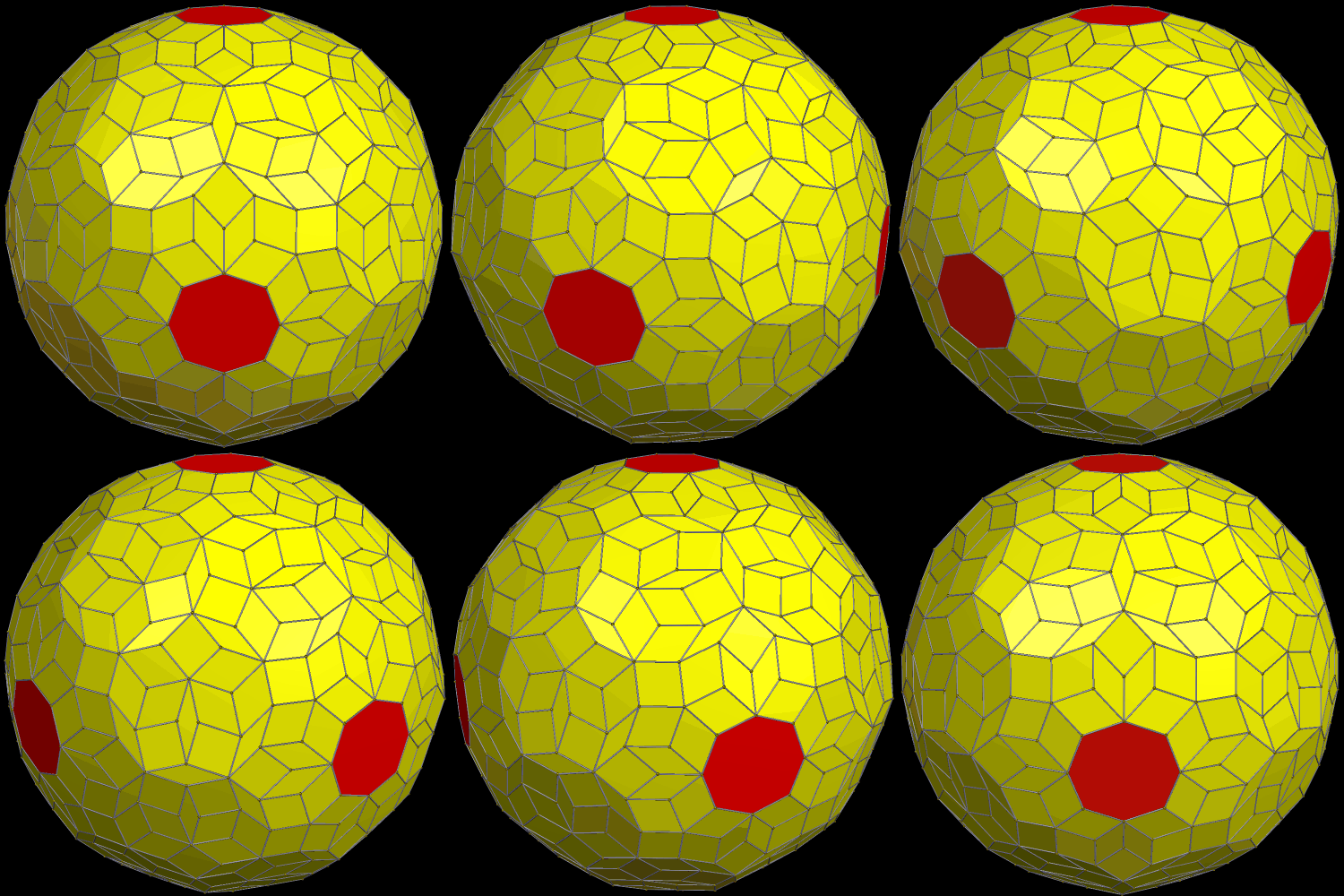
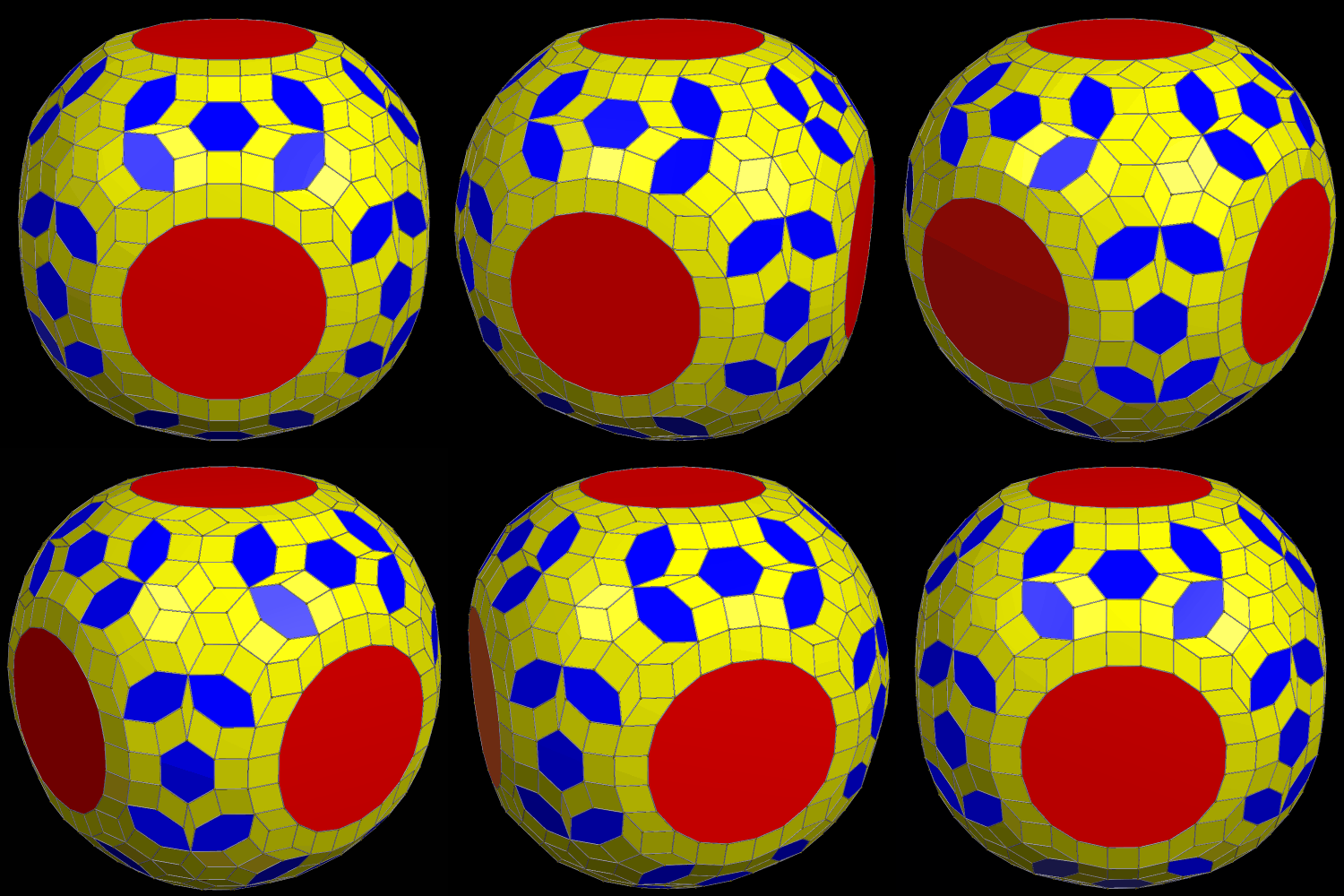
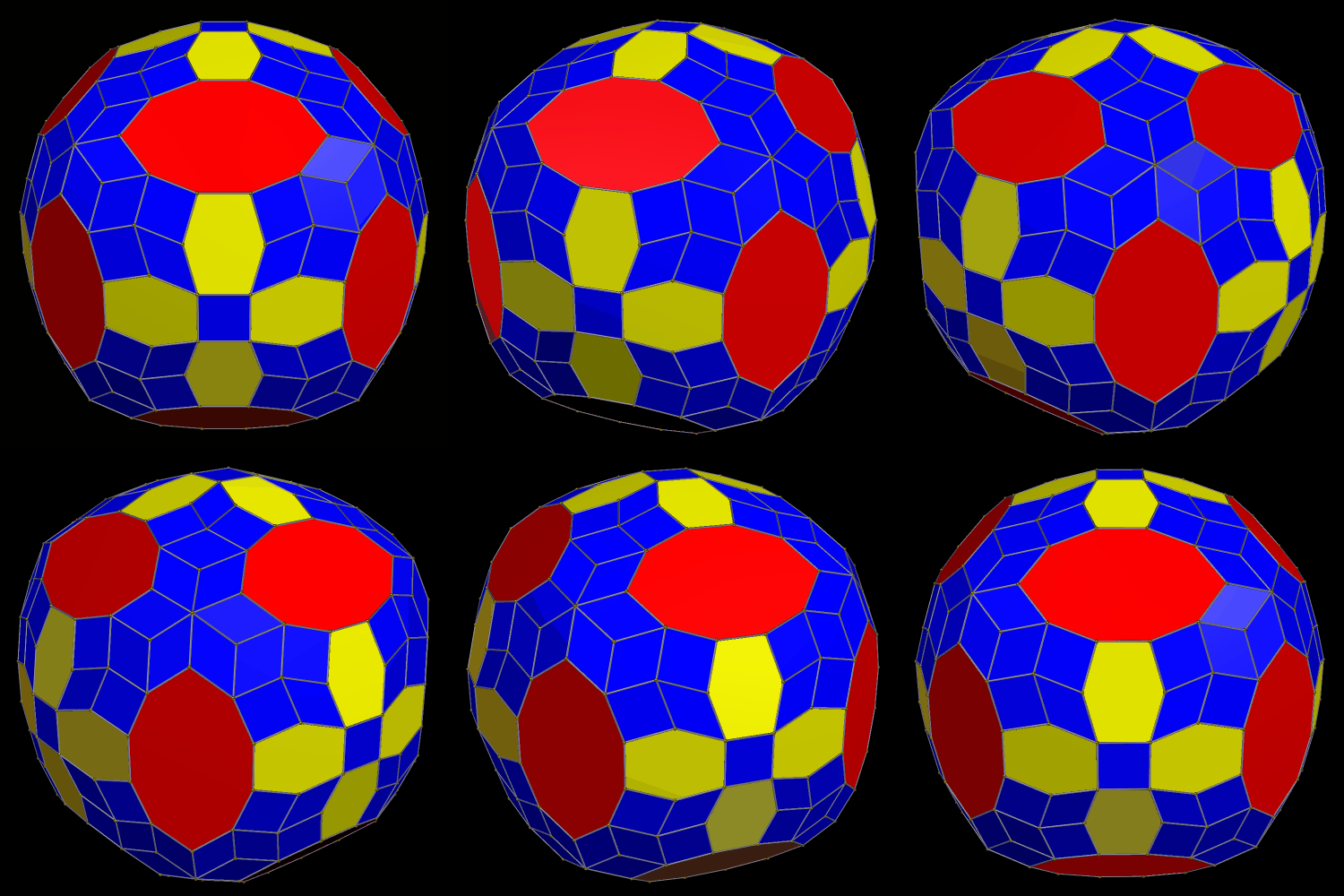
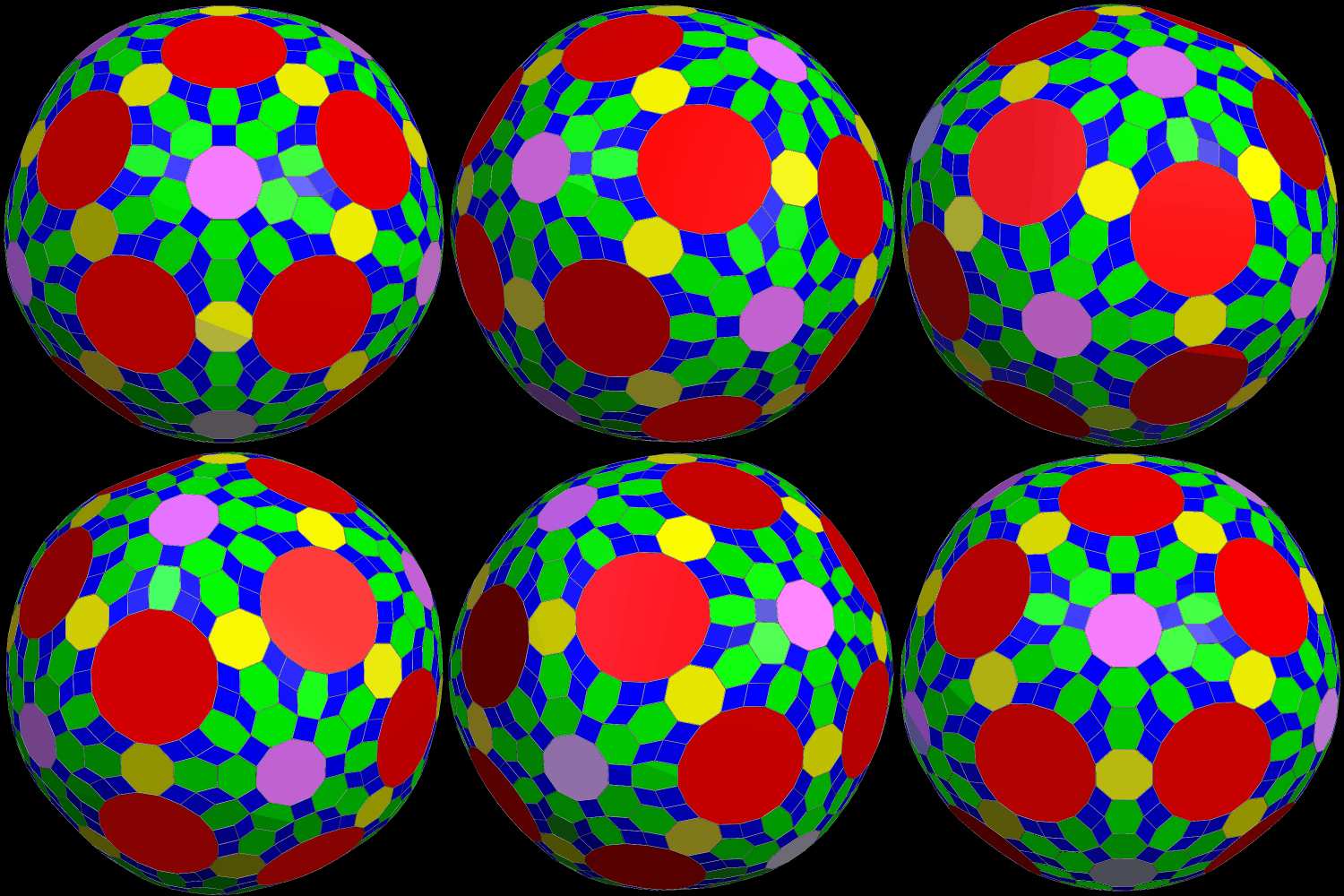
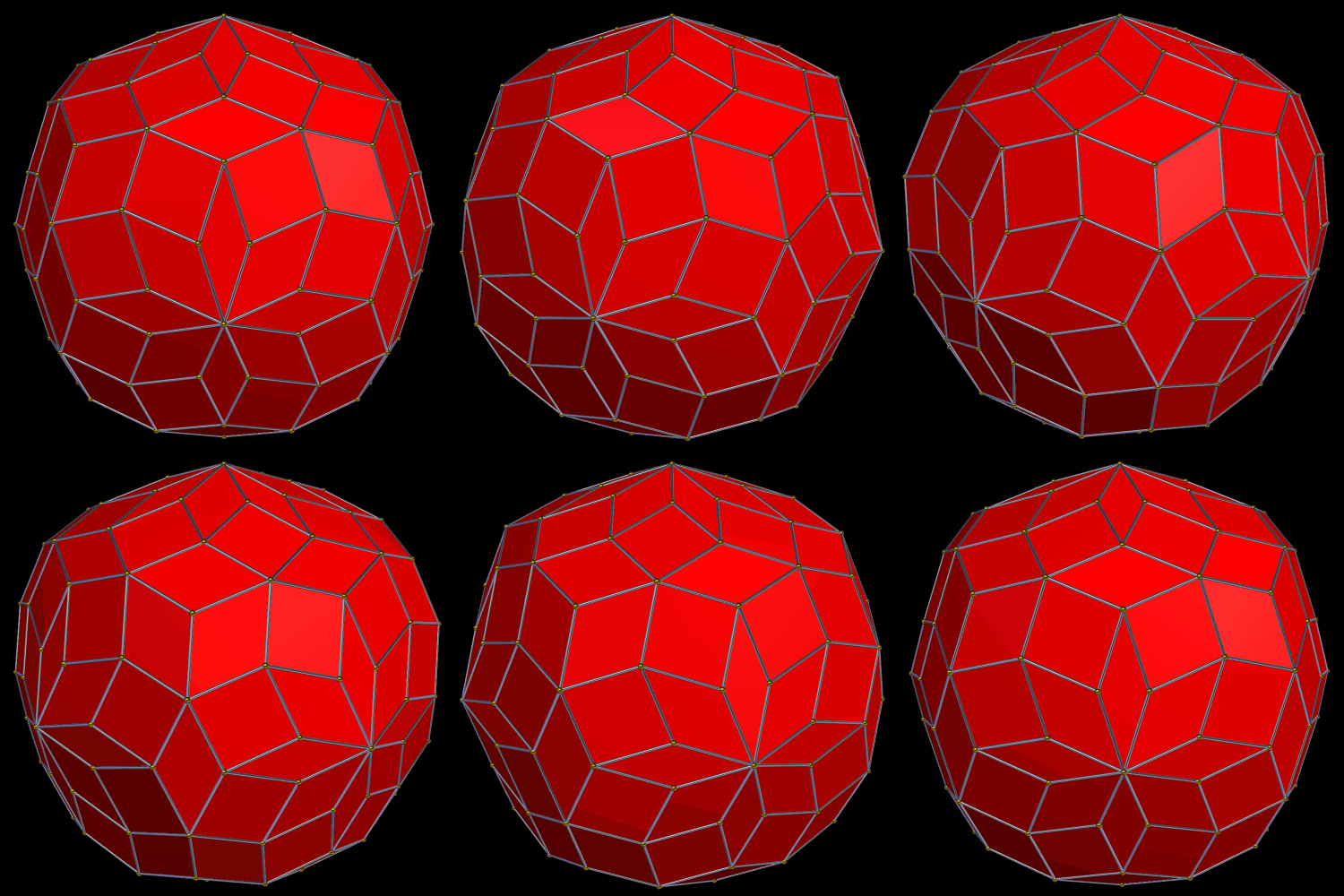
Considering all the restrictions on zonohedra, it may be surprising that there is so much variety among them. Every polyhedron shown in this post is a zonohedron. The colors are chosen so that all four-sided zonogons have one color, all six-sided zonogons have a second color, and so on.
I made all of these using Stella 4d: Polyhedron Navigator. This program may be tried for free at this website.
The polyhedron above is the truncated icosahedron, widely known as the pattern for most soccer balls. In the image below, the faces and edges have been hidden, leaving only the vertices.
To make a faceted version of this polyhedron, these vertices must be connected in novel ways, creating new edges and faces. There are many faceted versions of this polyhedron, of which seven are shown below.
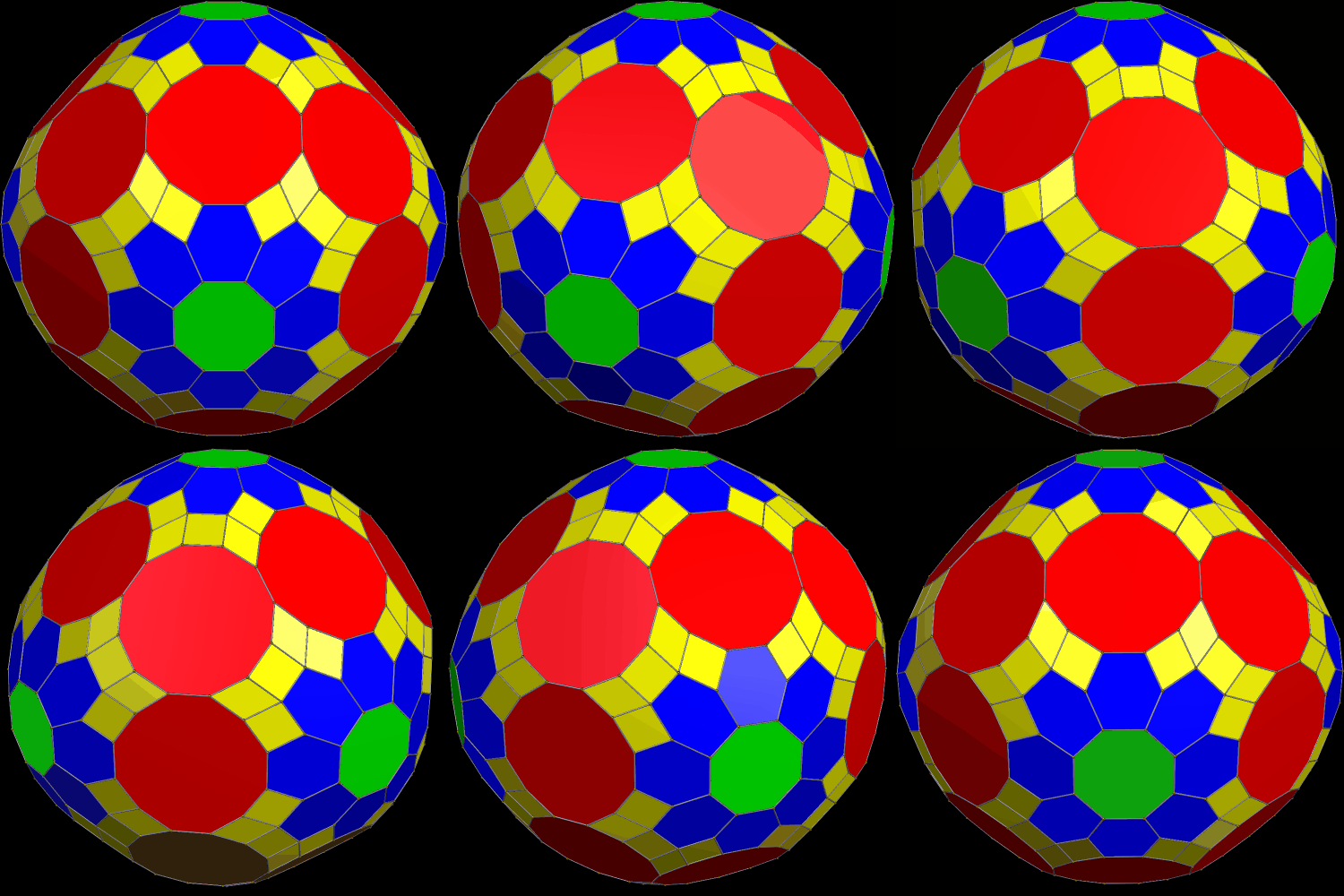
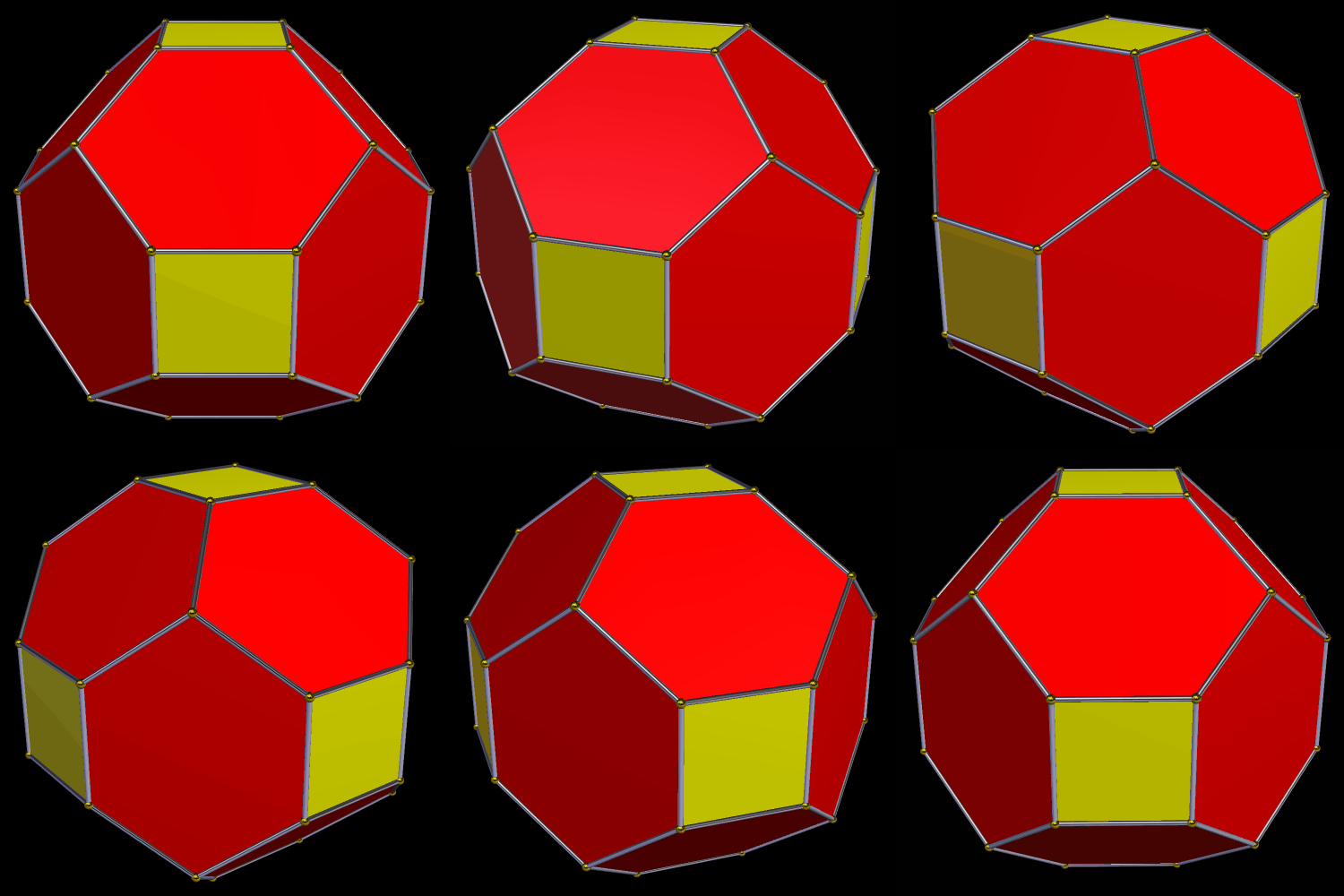
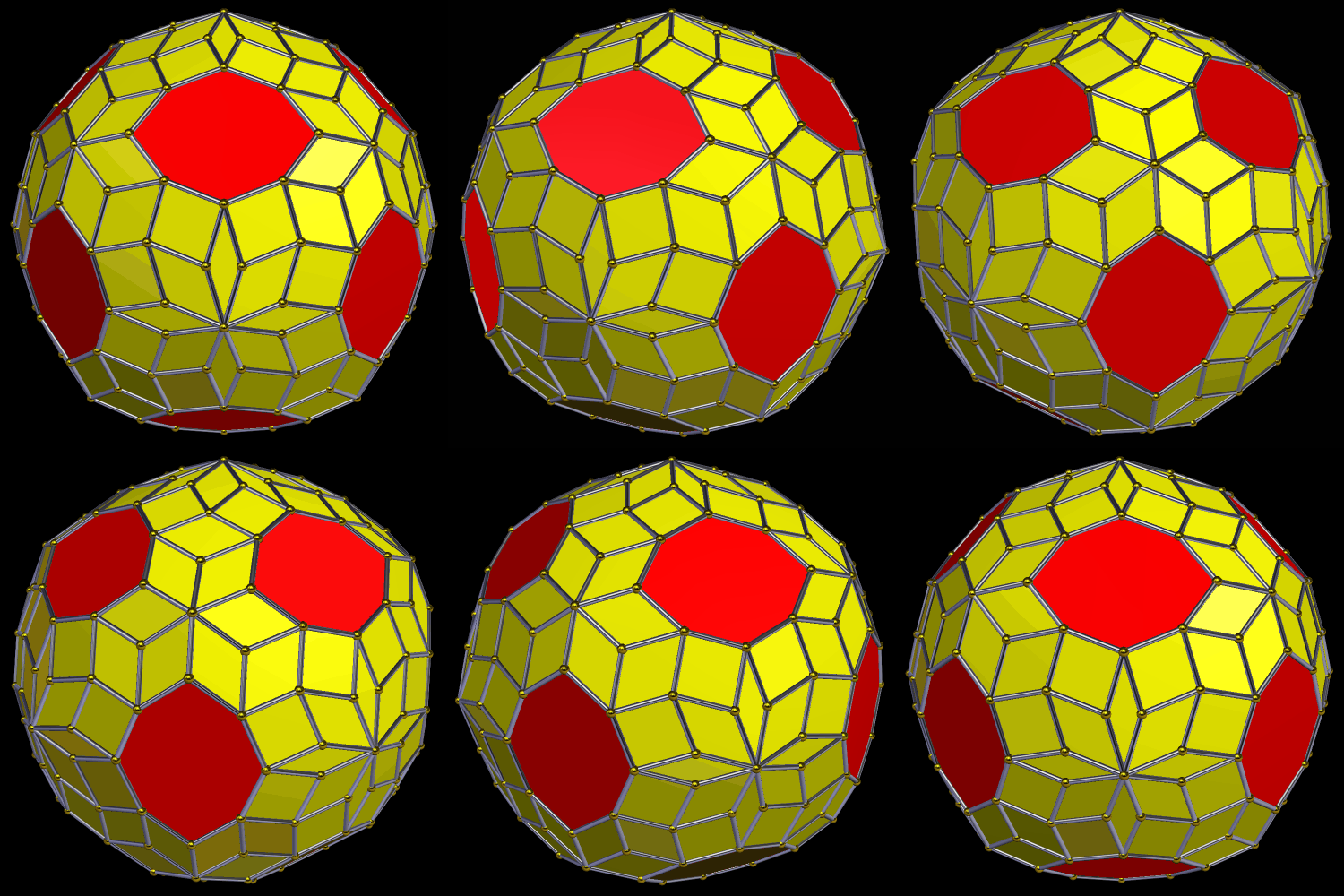
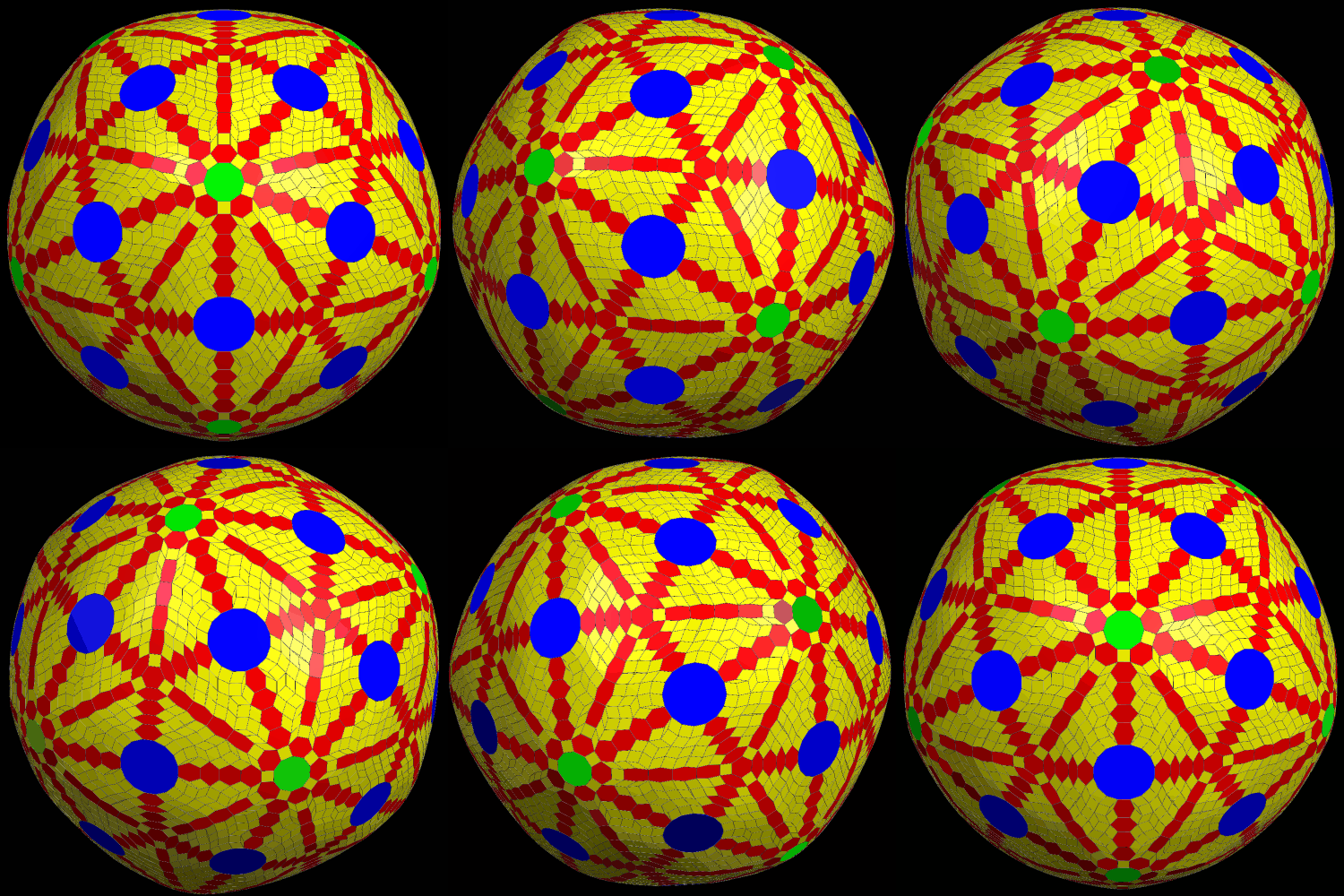
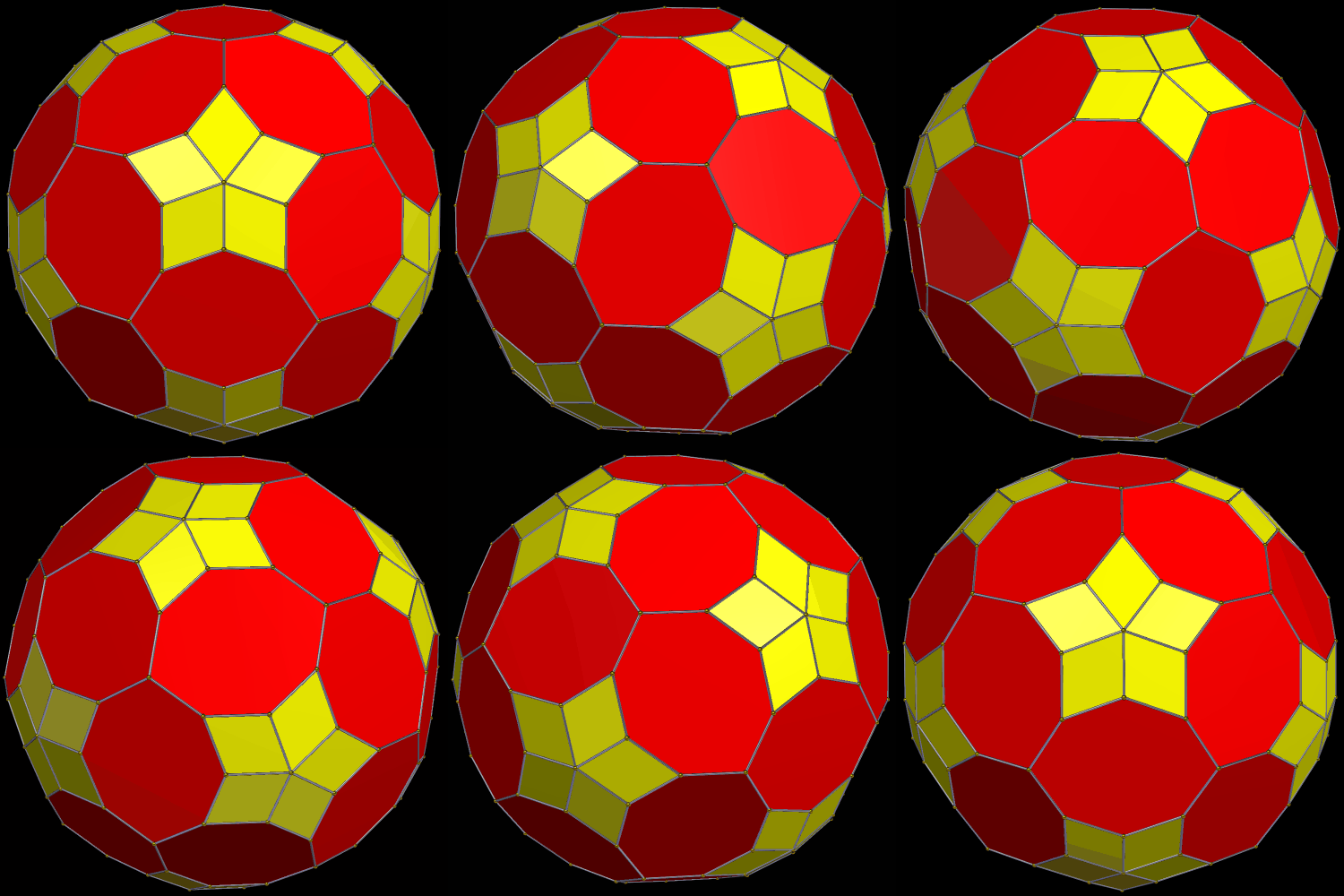
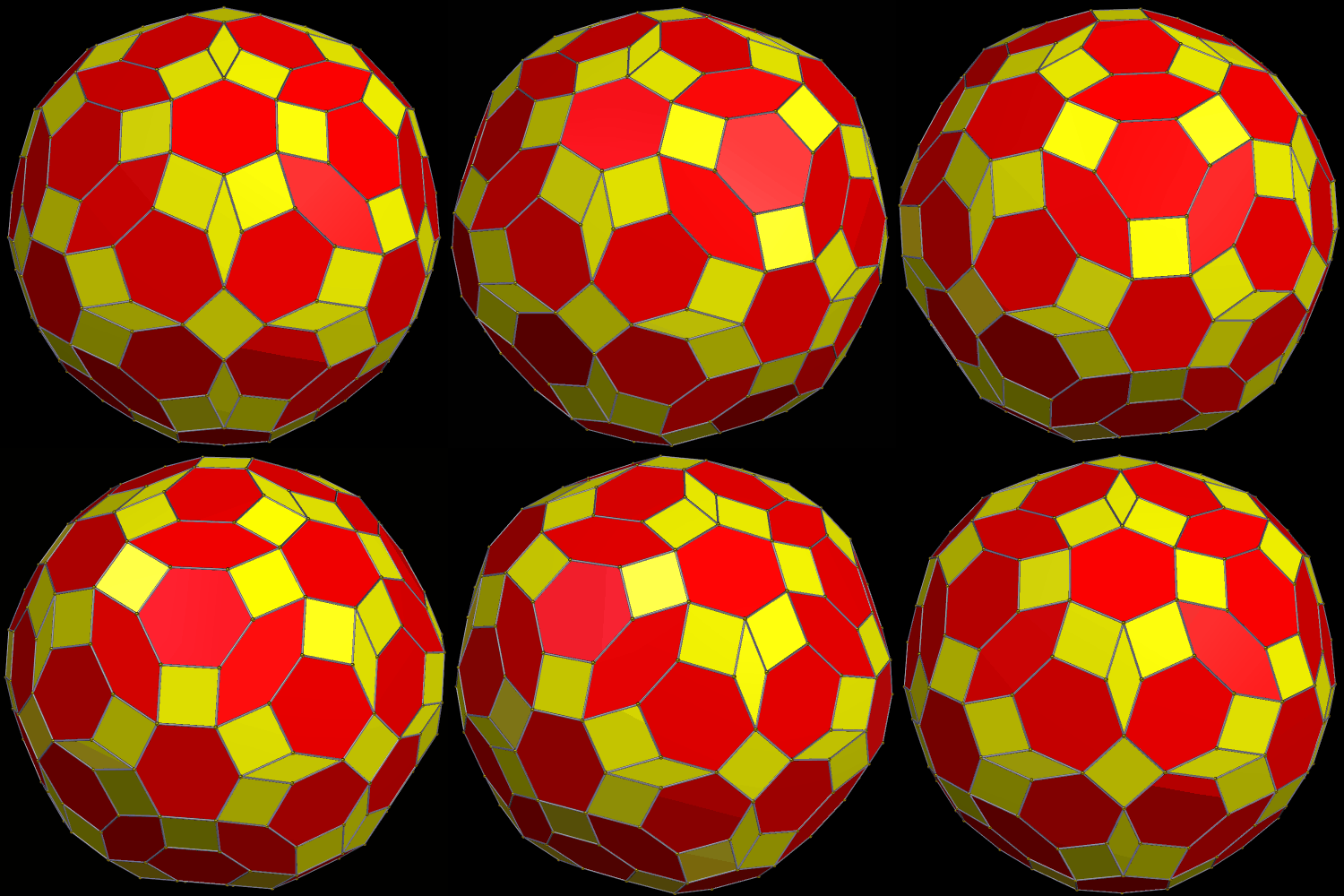
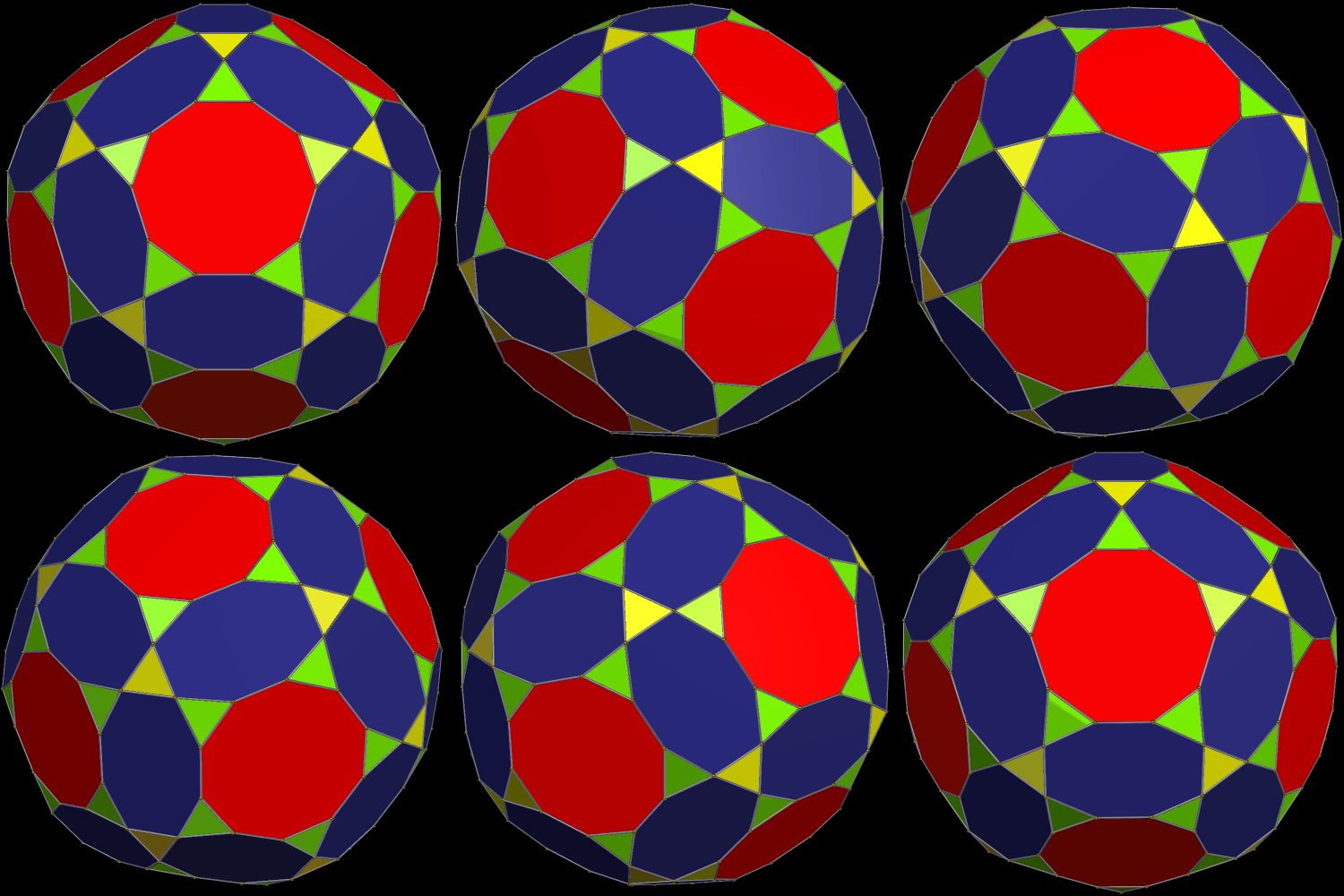
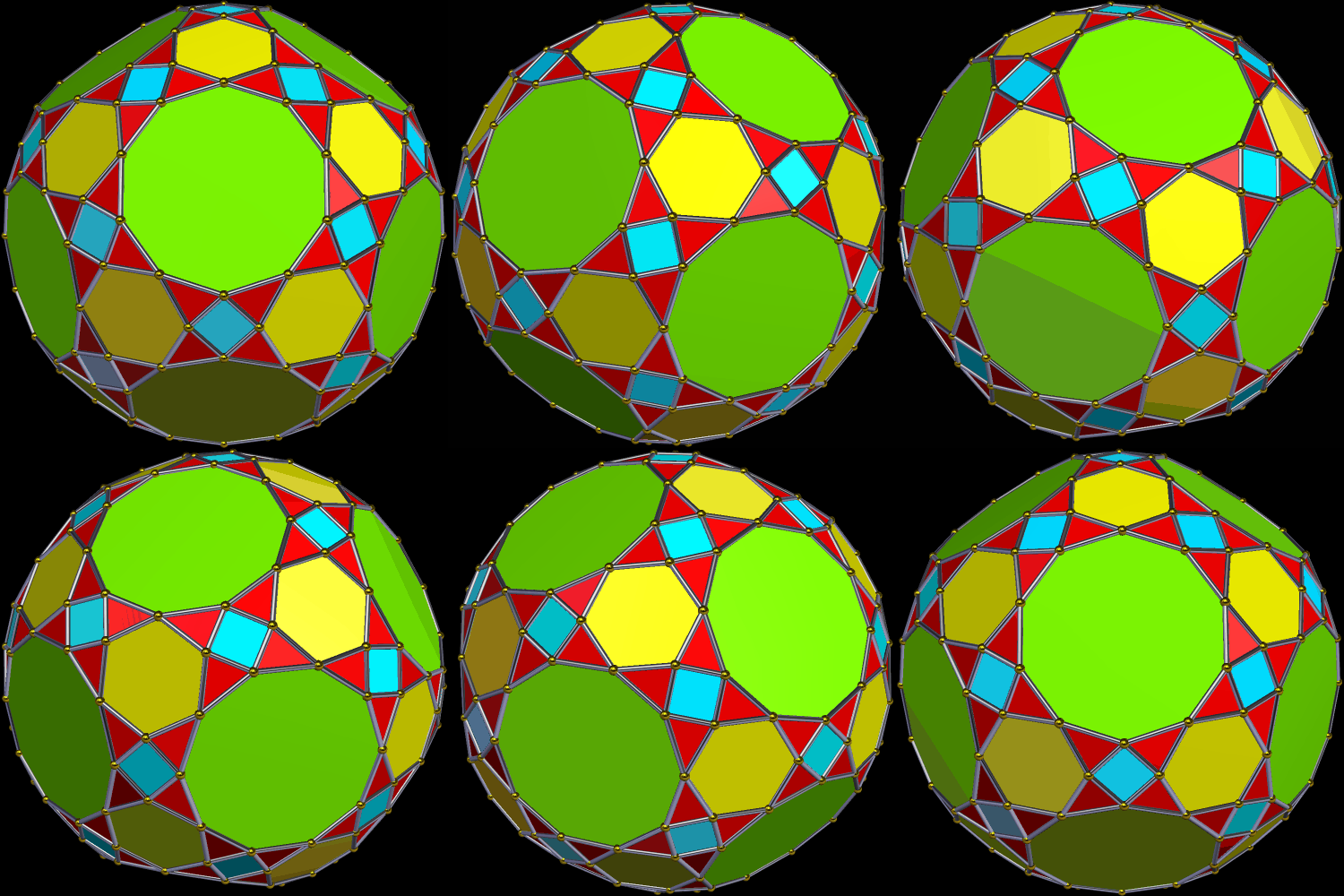
Symmetrohedra are polyhedra with some form of polyhedral symmetry, all faces convex, and many (but not all) faces regular. Here are four I have found using Stella 4d, a polyhedron-manipulation program you can try for yourself at http://www.software3d.com/Stella.php.
The second of these symmetrohedra is also a zonohedron, and is colored the way I usually color zonohedra, coloring faces simply by number of sides per face. That is why some of the red octagons in that solid are regular, while others are elongated. The other three symmetrohedra are colored by face type, with the modification that the fourth one’s scalene triangles are all given the same color.




















 RobertLovesPi.net