Simone de Beauvoir, on Oppression and War

Image

Simone de Beauvoir On Oppression and War

The Evolution of Sam Harris’s Writing

Image

The Evolution of Sam Harris's Writing

Sam Harris is my favorite author of non-fiction, but this has not always been the case. He is usually classified as one of the “Four Horsemen” (along with Richard Dawkins, Daniel Dennett, and the late Christopher Hitchens), to the point where he has remarked that some treat them as “one creature with four heads.” I’ve read books by all four men, and they are very different. Harris started as my least favorite of the four, and has become my favorite. How did this happen? Well, it took some time.

Sam Harris began his career as a writer with a book called The End of Faith, written in the wake of, and largely in response to, the 9/11 attacks of 2001.

book-cover1

Despite my atheism, I did not care for this book. It bashes Islam too much for my tastes, and Harris is still criticized for this fact, generally by people who have not read the rest of his work. Reactions like mine to this book are rare among atheists, for one simple reason: most atheists have a far less favorable view of Islam than I do. For more on that, please see my previous blog-post, and the earlier one it links to.

Islam is not the only religion criticized by Harris in his first book — not by any means. As someone who has never had a Muslim attempt to harm me, but who has suffered greatly at the hands of certain Christians, I was far more receptive to his arguments against the Christian religion. Many members of that religion noticed those arguments as well, and Harris was deluged with hate mail, much of it from enraged Christians in the USA. He wrote his second book as a response to this torrent of criticism.

book-cover2

This second book paid much less attention to Islam, and far more, as the title implies, to Christianity. I enjoyed it more, but admit that this likely has as much to do with my personal history as anything else. Still, Letter to a Christian Nation remains the only book I have ever read in a single sitting; it was so compelling that I was unwilling to stop reading it until the last page.

Both of Harris’s first books may be described as “beating the drum of atheism,” an activity which is interesting and useful only up to a certain point. To his credit as an author, he realized that writing more books which repeat this process would be waste of time. He therefore decided to move on to other subjects — and, in my opinion, his books improved greatly as a result of that decision. Here’s his next one:

moral-landscape-rev

The Moral Landscape is not a book about atheism, nor religion. Sam Harris is a neuroscientist, and this book considers human values from a scientific point of view:  questions of good and evil, and whether or not such questions can be addressed scientifically. Ethics and morality are things for which some people consider religion essential. Rather than belaboring the fact that he disagrees with this, Harris, in this book, simply makes a compelling case that such topics can indeed be addressed using the scientific method.

This was Harris’s first book after he made the excellent decision to move out, beyond his previous focus on atheism and religion. Were it not for this decision, I would not name Harris as my favorite non-fiction author. The arguments in this book are compelling, I learned much from reading it, and recommend it highly.

Harris’s fourth book tackles the topic of honesty, and its opposite:

lying_cover_184

Is there ever a situation in which lying is justifiable? Most people would say “yes.” Harris disagrees, and, in this very short book, makes a compelling argument for honesty. His move away from the “drum of atheism” continues in this book, and the rule with Harris is simple:  the further away he goes from his original topic of choice, the better his writing becomes.

This brings me to his fifth book, the amazing Free Will.

free-will

Do I have free will?  Do you?  Does Harris?  It certainly seems as if we do, but Harris takes the point of view that free will is an illusion, and supplies ample evidence to support this position. Denying free will is a dangerous game, of course, for, without free will, how can anyone be held responsible for their actions? Harris does not avoid this problem, but tackles it directly. Reading this book has had a powerful impact on how I view a great many things.

There is more of Harris to read, for those who are interested. I follow his blog regularly (http://www.samharris.org), and he has a new major book release coming soon, as well. Since he keeps getting better with each new book, I am looking forward to it with anticipation.

My Unusual View of Islam, Part II

Image

My Unusual View of Islam, Part II

For part I, please see this post: https://robertlovespi.wordpress.com/2013/03/22/my-unusual-view-of-islam/

Since publishing my first post on Islam, I’ve received a mixture of praise and criticism for it. Most of the criticism focuses on the fact that, for the most part, I discussed Muslims, rather than the religion of Islam itself, in my first post. This is true; I did do that, and I will attempt to remedy that here.

Let me make clear, though, that I do this without apology for my previous post. Muslims are ambassadors for Islam, just as Christians are ambassadors for their religion. The same can be said for other religions, or even a lack of religion. It is human nature to associate a system of belief with its adherents, and to use observations of the latter when forming opinions of the former.

I have not, however, merely become friends with many Muslims, without studying Islam itself. Because I live in the American South, it is also virtually impossible for me to avoid analyzing Islam by comparing and contrasting it with Christianity. The two forms of Christianity with which I am the most familiar are Roman Catholicism (I’m a former Catholic), and fundamentalist Protestant Christianity of the type which is very common where I live..

The two religions have a remarkable number of similarities, but important differences as well. As Abrahamic religions, both (along with Judaism, of course) are monotheistic. As one who is extremely interested in mathematics, simplicity and consistency are important and appealing to me. Viewed through this lens, Christian monotheism and Islamic monotheism are quite different.

Islam is truly monotheistic, and the deity Muslims worship is described as unlike human beings, neither male nor female, and certainly not divisible into different “persons” of the same deity. This is not the case with any form of Trinitarian Christianity. To accept the Trinity, a core Christian belief, one must accept a mathematical absurdity, for three does not equal one. Islam presents no such problem. To many Muslims (and to me), Christianity appears polytheistic, in fact. I do not have to be a Muslim, nor adhere to any of the beliefs of Islam, to appreciate greater logical and mathematical consistency.

Christianity, by contrast, is cluttered — particularly in the forms of it, such as Catholicism, where veneration of Mary and other saints plays a strong role. Clutter, in any belief system, hold little appeal for me.

The Five Pillars of Islam are also interesting to me, albeit from an outsider’s point of view. The first pillar, the shahada, is an appealingly simple statement of faith and trust: “There is no god but Allah, and Muhummad is his prophet.” As an atheist, I cannot now say this phrase aloud, and honestly believe it — but one who can, need only do so once to convert to Islam. It really is just that simple. Not only does that appeal to me on grounds of aesthetics, for I find simplicity appealing, but it is also a very welcoming aspect of the religion. If I were to recite this phrase to one of my close Muslim friends, they would accept it, and offer to help me learn more about my new religion. I do not think it likely this will ever happen, but neither do I rule it out. I have surprised myself many times before, and am not so bull-headed that I’m going to rule such a possibility out altogether. My burden of evidence, of course, remains high, and I would never even consider uttering this phrase (except when clearly quoting it) as a dishonest act. The fact remains that ease of conversion is, to me, a point in Islam’s favor. Accept the essential core beliefs with a simple and sincere sentence, and you are accepted into Islam. I like that.

The second pillar is the salat, or, as most Westerners know it, prayer five times per day. I have come across Muslims doing this in private areas, such as isolated stairwells. By contrast, American politicians never tire of trying to promote public prayer, which Jesus himself is recorded as speaking against in the Gospels. As an atheist, I do not pray. I appreciate that Muslim prayer has never been pushed on me. I certainly cannot say the same for Christian prayer.

The third pillar is the zakāt — giving alms to the poor. Christian teachings on this subject are similar. I will not criticize either religion for this practice, for I view it favorably in both contexts. There are many people in the world who need help, and I’m not going to quibble over the source of such assistance.

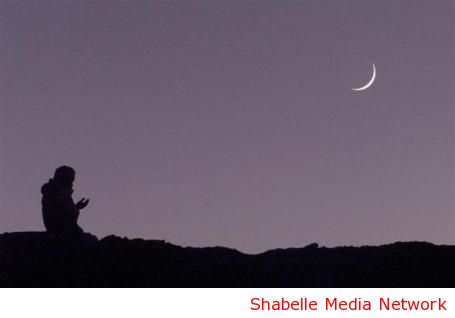
Sawm is the fourth pillar — ritual fasting. The Ramadan fast (to which the image above is related) is unlike typical Christian fasting in that it is much more strenuous. I would have an extraordinarily difficult time doing the Ramadan fast for one day, let alone a full lunar month. I do not fully understand sawm, but I have witnessed the joy of my Muslim friends during this time. It harms no one, for there are special, reasonable provisions to exempt the sick, or those who are otherwise unable, from this rigorous fast. I respect the ability to do something I do not feel I could do myself, provided it is a harmless act, as this fast is.

The fifth pillar is the hajj, or the once-per-lifetime pilgrimage to Mecca. My first exposure to this idea was in my reading of The Autobiography of Malcolm X, and his hajj was a transformative experience — one which convinced him that racism has no place in Islam, in contrast to his former beliefs.

I can, and do, find something to admire and respect in each of the Five Pillars.

There is more to Islam than the Five Pillars, of course, but they are at the core. I have been taken to task for not discussing other, less savory things found in the Koran, but no one has shown me anything which exceeds the horror of the more unsavory aspects of the Bible, such as Old Testament misogyny, homophobia, xenophobia, genocide, and sexism. The Old Testament actually requires killing disobedient children — something personally horrifying to me, as the son of an extremely abusive father, against whom rebellion was absolutely necessary for personal survival. The New Testament isn’t much better, in my view, with such things as “Slaves, obey your masters” in Ephesians, or the central narrative about God sending his son, who is somehow also God, on a suicide mission to redeem people from sin they somehow inherited from their ancestors. In my view, both books contain some pretty horrific relics of history — but moderate, reasonable Muslims and Christians, both, are moving away from such teachings, and emphasizing those which have a more positive message. Since religion isn’t going away any time soon, I’m all for seeing it transform into something more beneficial, and less harmful, and this is true of any religion.

It must be remembered that Islam is a newer religion than Christianity, by roughly seven centuries. When people describe horrors perpetrated in the name of Islam today — and yes, they are real — it would be good to consider what Christianity was like seven centuries ago, in the Dark Ages.

It’s also worth remembering that Islamic civilization is responsible for preserving much valuable knowledge from the ancient world, through the Western Dark Ages, when the candle of knowledge was very nearly extinguished.

Horrors are perpetrated — today — in the name of both religions. Many claim that this is worse, in the case of Islam, than with Christianity. To that, I respond by pointing out the problem of AIDS in Africa, made much worse by the Vatican’s stubborn opposition to the use of condoms to prevent the spread of this deadly disease. Millions are dying because of this policy. Is this as dramatic, and does it grab as many headlines, as honor killings in Afghanistan, executions in Saudi Arabia, or other such things? No, but it is every bit as deadly and harmful. There is also the horror of Christianity’s pedophilia scandals, of course. No religion has a monopoly on evil.

Some hope that the horrors of religion will finally be erased by the future ascent and dominance of atheism. Frankly, over the next several decades, I think that’s a pipe dream. The moderates within both religions are the key to making them less harmful over time, and anyone who thinks Islam has no moderates has likely fallen victim to stereotypes perpetuated by the Western media and/or politicians. Moderate Muslims are not hard to find; they vastly outnumber the fanatics, as is also the case with Christians.

Islamophobes do not see these moderates, do not appreciate their potential for reigning in the excesses of radical Islam, and often offend them with insults directed at the whole of Islam, as if it is monolithic. It is not, and these sweeping generalizations are not helpful to anyone.

Atheists and other secularists can “imagine no religion” all they want, but these imaginings are going to remain imaginary for a very long time — many generations, likely. A more realistic short-term goal is peaceful coexistence — among those of all religions, and those with none. This won’t happen without the help of moderates in multiple religions, and a reduction of hateful rhetoric from all sides.

Hate helps no one.

“You’re turning into a politician.”

Someone close to me said this recently. My response was immediate: “There’s no need to be insulting!”

However, the observation has proved to be accurate. I did not know then than I would run for, and win, an officer position in my labor union, nor did I expect to spend a day at my state capitol, lobbying against a bill in committee. I did not anticipate becoming a near-constant activist. However, all these things have happened.

I could say I’ll never run for a governmental office, but my record on pronouncements doesn’t seem to be good. I do know this much, though:  I didn’t go looking for this. Events simply happened to my co-workers and myself. We didn’t go looking for a fight.

Living through a protracted struggle isn’t easy in any line of work. Teaching is no exception. The simple fact is this, however:  we aren’t giving up.

No matter what.

My Unusual View of Islam

Image

My Unusual View of Islam

As most readers of my blog know, I am an atheist. All atheists differ, of course, and one of the ways I differ from almost all of my fellow atheists is that I have a very different view of Islam and Muslims.

I haven’t always been this way. 25 years ago, as an undergraduate, I had unconsciously allowed myself to be heavily influenced by media coverage of the Middle East. I’m embarrassed to admit now that, then, I concluded, simply and uncritically, that this entire region is chock-full of crazy people. I openly speculated that there must be some mind-affecting drug in the water there, to cause such madness as I saw on the TV news.

As I now know, TV networks are very selective about what they show. Burning American flags make the news, to the exclusion of coverage of the millions of sane, kind people in the Muslim world, for they are not viewed as newsworthy.

I will always be grateful to my Muslim friends for helping me make this transformation. They key was getting to know them, one at a time — not as Muslims, per se, but simply as people. After getting to know them, and calling them friends, falling into the type of thinking which is dominated by stereotypes quickly became impossible, for the stereotypes did not match the behavior of any of my friends. I was given a choice between believing TV, or the evidence gathered with my own eyes and ears, and that’s always an easy choice.

It is a shame, but it is true: bigotries are only lost one at a time. I am delighted to be free of my former Islamophobia.

I now have dozens of Muslim friends, all over the world. If it bothers them that I am not a believer, they politely keep that to themselves. They’re always willing to answer my questions about Islamic practices and beliefs, but never use such questions as an opportunity to try to convert me.

The contrast with Christianity, in my experience, is vivid. Of course, I do not experience Islam as one might in, say, Iran. I also do not experience Christianity as everyone else in the world, for I live in the American South, the part of the USA with the highest rates of religiosity, and a form of Christianity in ascendance which is often intolerant of others, in the extreme. Here, I have had many (but not all, of course) Christians react to my atheism quite negatively. I have to remind myself, often, that Christianity here is unusual when viewed through a world-wide lens. For example, consider evolution. Around much of the Christian world, believers have, long ago, “grown up” on the subject of evolution. Pope John Paul II himself said that he viewed it as valid. This in not the case here in the South, where Christianity often goes hand-in-hand with Creationism, a pseodoscience to which I have a quite negative reaction, due to my strong and life-long fascination with, and respect for, real science.

There is also my personal history in play here. I have suffered horrible abuse (I’ll spare you the details) at the hands of Christians, often with the abuse having specifically religious elements. By contrast, no Muslim has ever even tried to harm me, in any way.

Most Americans, of course, think “terrorist” when they hear the word Muslim. The cure for this is simple: make friends with Muslims, and discuss this with them. You’ll learn that most Muslims detest organizations such as Al-Qaeda, and are quick to disavow them. The fact is, the Christian world has its share of such people as well; they’re the types of Christian who shoot doctors and bomb women’s health clinics. Extremists can be found everywhere, and the only reason extremists are of a particular type is almost always the same:  a simple accident of birth.

Pick one hundred Christians at random, and its almost certain that you won’t find one fitting this description. Repeat this with one hundred random Muslims, and the odds against you finding a terrorist in your sample are also almost-certain.

Sometimes, people learn that I have a generally favorable view of mainstream Islam, and wonder why I don’t convert. That’s simple: I am unconvinced that any deity or deities exist, due simply to a lack of evidence, and one cannot be a Muslim without honestly believing that a single deity exists. However, I don’t need to be a Muslim to treat Muslims as actual people, and to fight the scourge of Islamophobia wherever I find it.

Unfortunately, there’s a LOT of Islamophobia out there — and it is, sadly, very strong in the loosely-knit community of atheists. I get asked, for example, to participate in “Everyone Draw Muhummad Day” on Facebook, every year. I always refuse. Is this censorship? No, it’s simply my choosing not to offend my friends for no good reason at all.

Throughout the years I have encountered many people who rabidly hate Islam, and they are usually either Christians or atheists. I try to reason with them. It usually doesn’t work, but sometimes it does, so I generally try it anyway. Hate doesn’t help anyone, and the more of it we can rid ourselves of, the better off all of us will be.

[Later edit:  part II of this post may be found right here — https://robertlovespi.wordpress.com/2013/04/07/my-unusual-view-of-islam-part-ii/]

Hello, India!

Image

Hello, India!

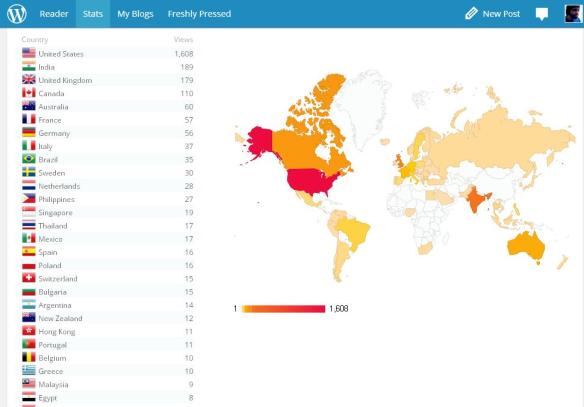
Since I’ve started blogging on WordPress, there have been several surprises, but the most puzzling to me is the recent rise in popularity of my blog in India. I live in the USA, so it’s no surprise that most hits on my blog come from here. However, I have no explanation for why India is #2.

This blog has a high math content, compared to most blogs. Might that have something to do with it?

Whatever the reason, I’m glad I have readers there.

The part of this map I don’t like involves China, Iran, and North Korea: zero hits from each nation. That has nothing to do with the content of my blog, of course, but with heavy censorship in each of those countries, all of which have notoriously bad human-rights records. In at least one of those nations (Iran), my blog has been read, but that doesn’t show up on this map because of the extreme lengths my friends in Iran have to go to simply to surf the web without detection and interference from Tehran.

I would like, someday, to visit all of these countries. In the cases of Iran, North Korea, and China, though, I’m waiting for regime changes first.

Lifesaver (2010 painting)

Image

Lifesaver

acrylic on canvas, 2010; 16′ x 20′ before slight cropping of this image

For more information about this molecule: http://en.wikipedia.org/wiki/Alprazolam

Itaumiped, My Polyhedral Asteroid City

Image

Fanciful Polyhedral Asteroid City

I’d want to live in one of the twisting pentagonal towers. Any time I invent an imaginary planet (or planetoid, in this case), I always name it “Itaumiped.” That’s an anagram for “I made it up.”

(To learn more about the software used to create this .gif, please visit http://www.software3d.com/stella.php.)

The Joy of Rediscovery

Even if you are not the first to find something, the thrill of finding it independently is still every bit as real.

So, this morning, as I often do, I’m playing with triangles.  I constructed a triangle’s incircle, using its three angle bisectors. I also constructed the perpendicular bisector of each side, in order to construct the circumcircle.

What I didn’t expect was to find each angle bisector intersecting a perpendicular bisector on the circumcircle. The three such points of intersection (N, O, P) are the  vertices of the yellow triangle below, while the original triangle, ABC, is in bold black.

Image

“Hey, that’s pretty cool,” I thought, using Geometer’s Sketchpad to move A B, and C around, to test what I was seeing. This was certainly no proof, but now I was wondering if it was an original discovery. Google, however, revealed to me that this discovery had already been made:

http://demonstrations.wolfram.com/TheIntersectionOfAnAngleBisectorAndAPerpendicularBisector/

Well, I could be upset that someone else beat me to this discovery, I suppose, but I think I’d rather take comfort in knowing someone else has already written the proof, for I really don’t feel up to that.

At least not today.

And there is joy in rediscovery. As much as in discovery? Well, no, of course not, but life can be such that no joy should be overlooked. When you know something, and no one taught it to you, but you found it out yourself, does that not make you happy? It certainly works for me.

How I Found the Nagel Line While Playing with Triangles

Several days recently swirled down the drain in a depression-spiral. Needing a way out, I spent my Saturday morning playing with triangles, after first getting plenty of sleep. It worked. This technique, however, probably would not transfer to those who are not geometry obsessives. Perhaps any favorite activity would work? I leave that to others to explore.

Here’s what I did that worked for me:

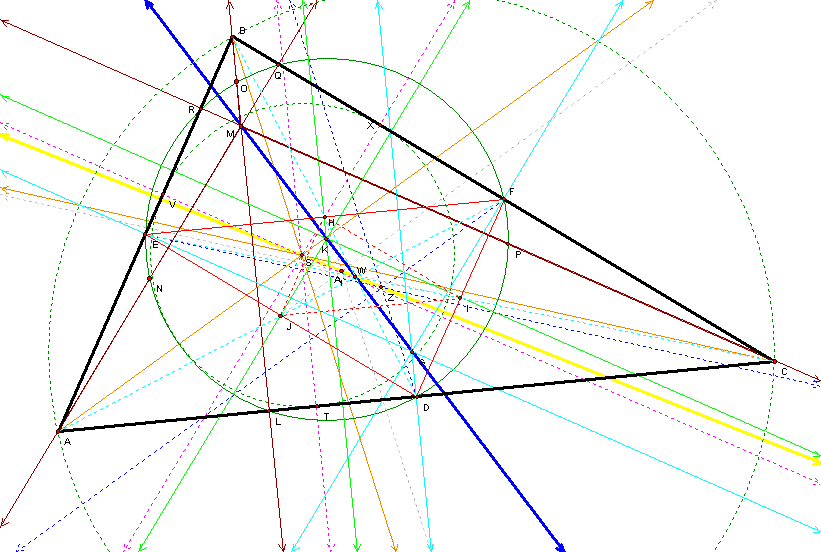
ImageThe original triangle is ABC, and is in bold black. The bold blue line is its Euler Line, and contains the orthocenter (M), circumcenter (G), nine-point center (K), and centroid (point W). It does not, however, contain the incenter (S).

It struck me as odd that the incenter would be different in this way, so I investigated it further. It is the point of concurrence of the three angle bisectors of a triangle. On a lark, I constructed the midsegments of triangle ABC, forming a new, smaller triangle, shown in red. When I then found the incenter of this smaller triangle (Z), it appeared to be collinear with S and W. I checked; it was, and this line is shown in bold yellow. Moreover, the process could be continued with even smaller midsegment-triangle incenters, and they were also on this yellow line.

I wondered if I had discovered something new, and started to check. It didn’t take long to find out that Nagel had beaten me to it. The Nagel line is the official name of this yellow line I stumbled upon, and here is my source:  http://mathworld.wolfram.com/NagelLine.html — but, as far as I know, I did discover that these midsegment-derived points also lie on the Nagel line.

Someone else may have known this before, of coruse. I don’t know, and it doesn’t matter to me, for I had my fun morning playing with triangles, and now feel better than I have in days.

[Side note:  this is my 100th post, and I’d like to thank all my readers and followers, and also thank, especially, those who encouraged me to try WordPress to get a fresh start after Tumblr-burnout. It worked!]