A Platonic/Catalan Compound and Its Dual, a Platonic/Archimedean Compound

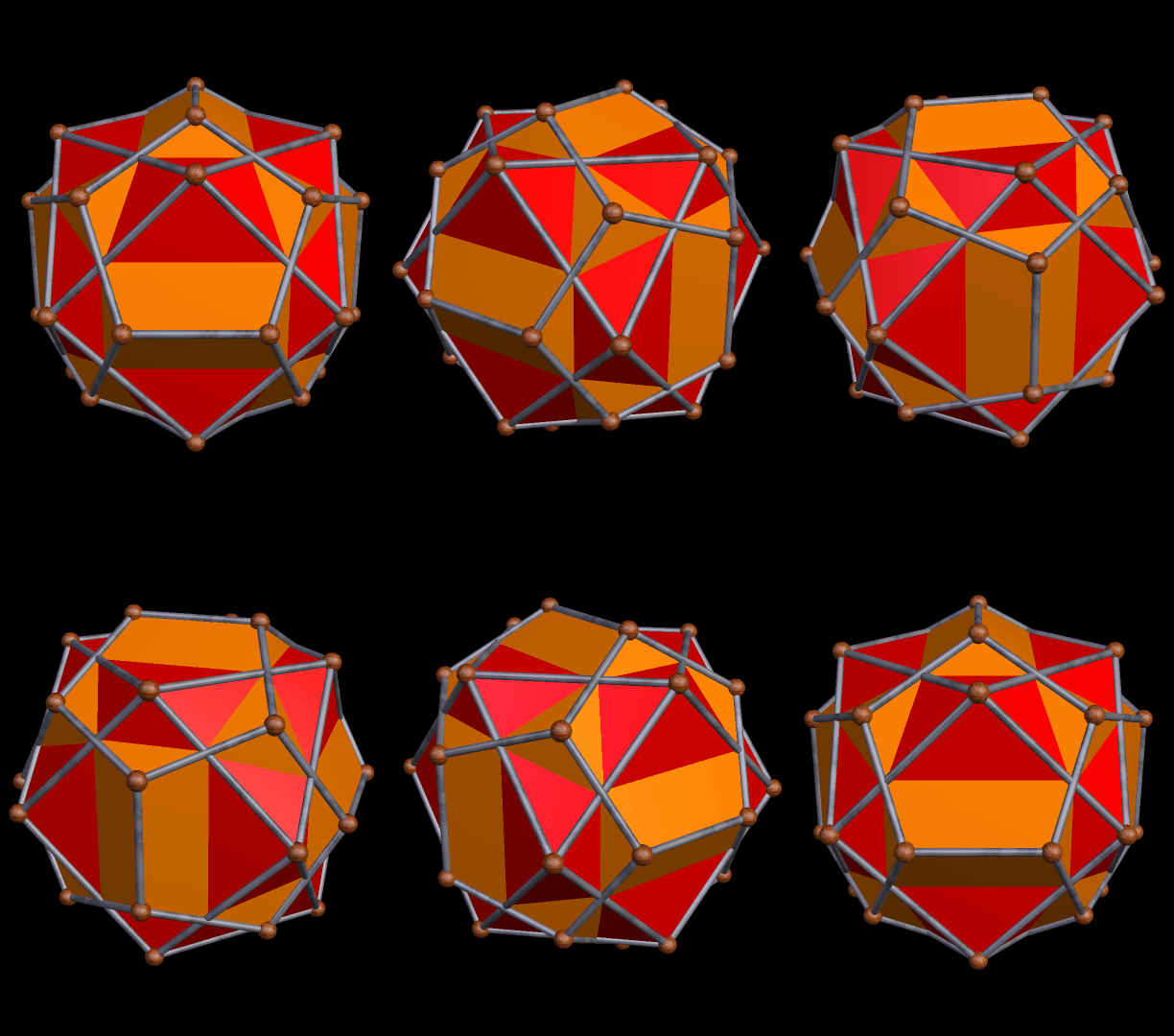
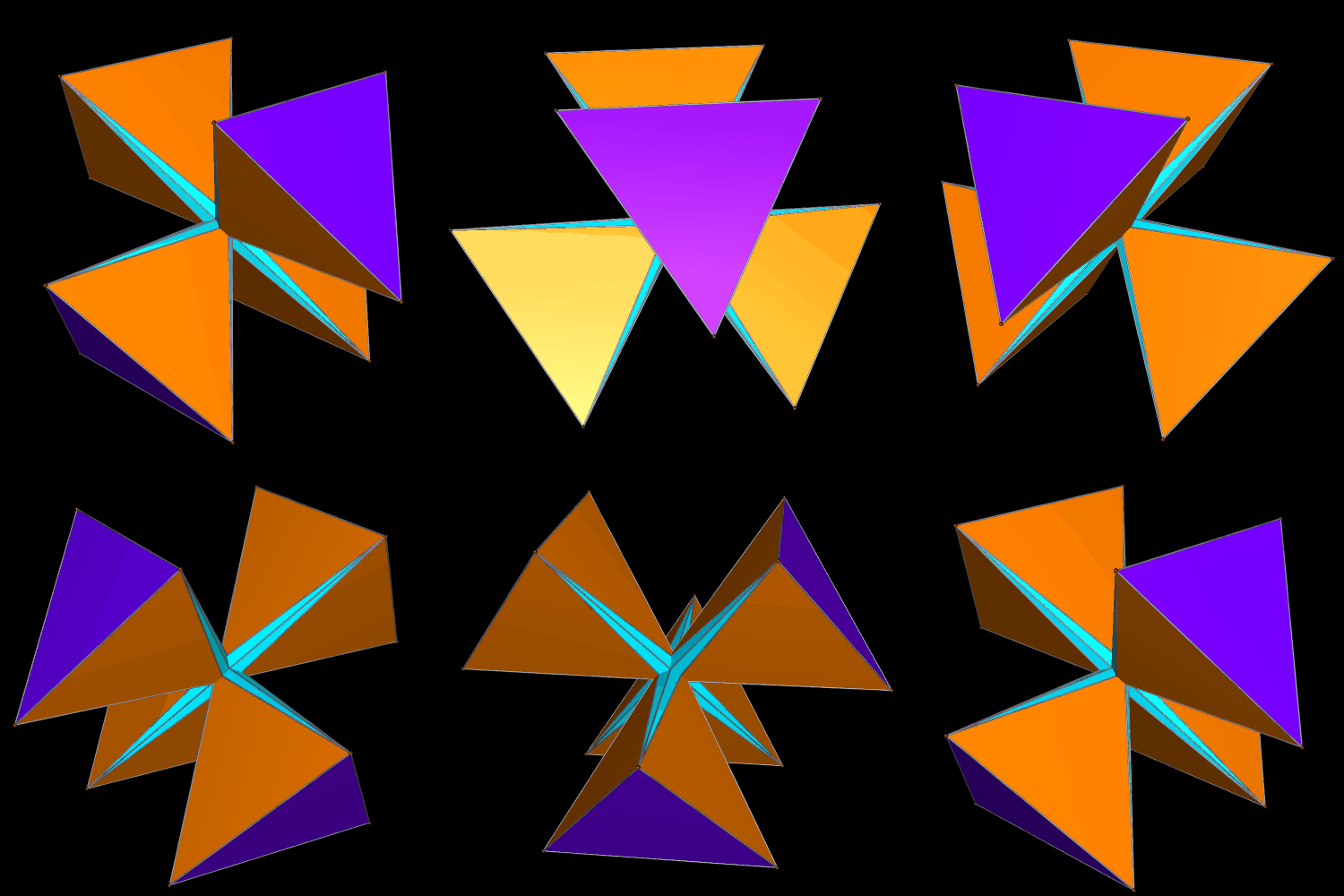
Compound of Rhombic Dodeca and Icosa

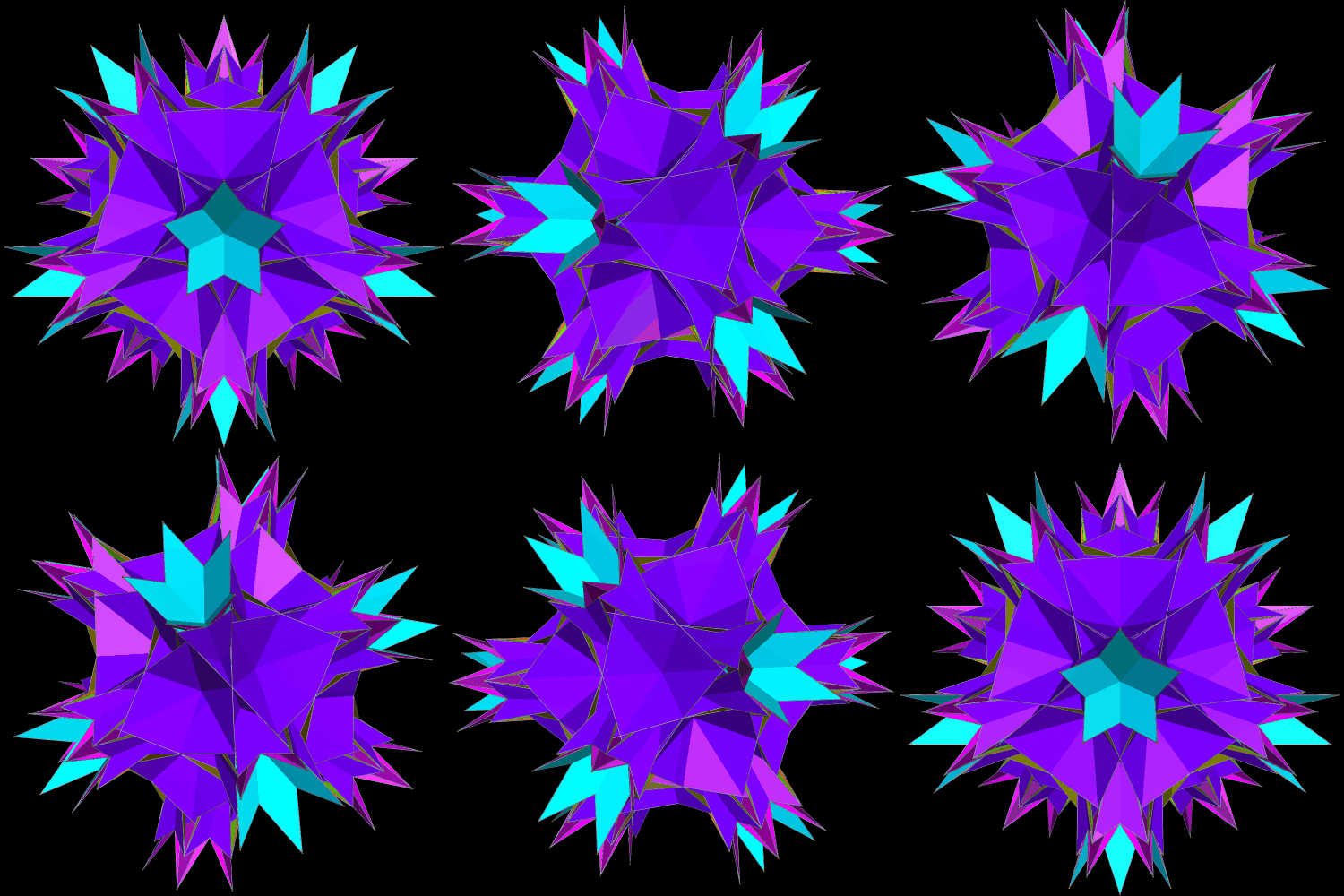
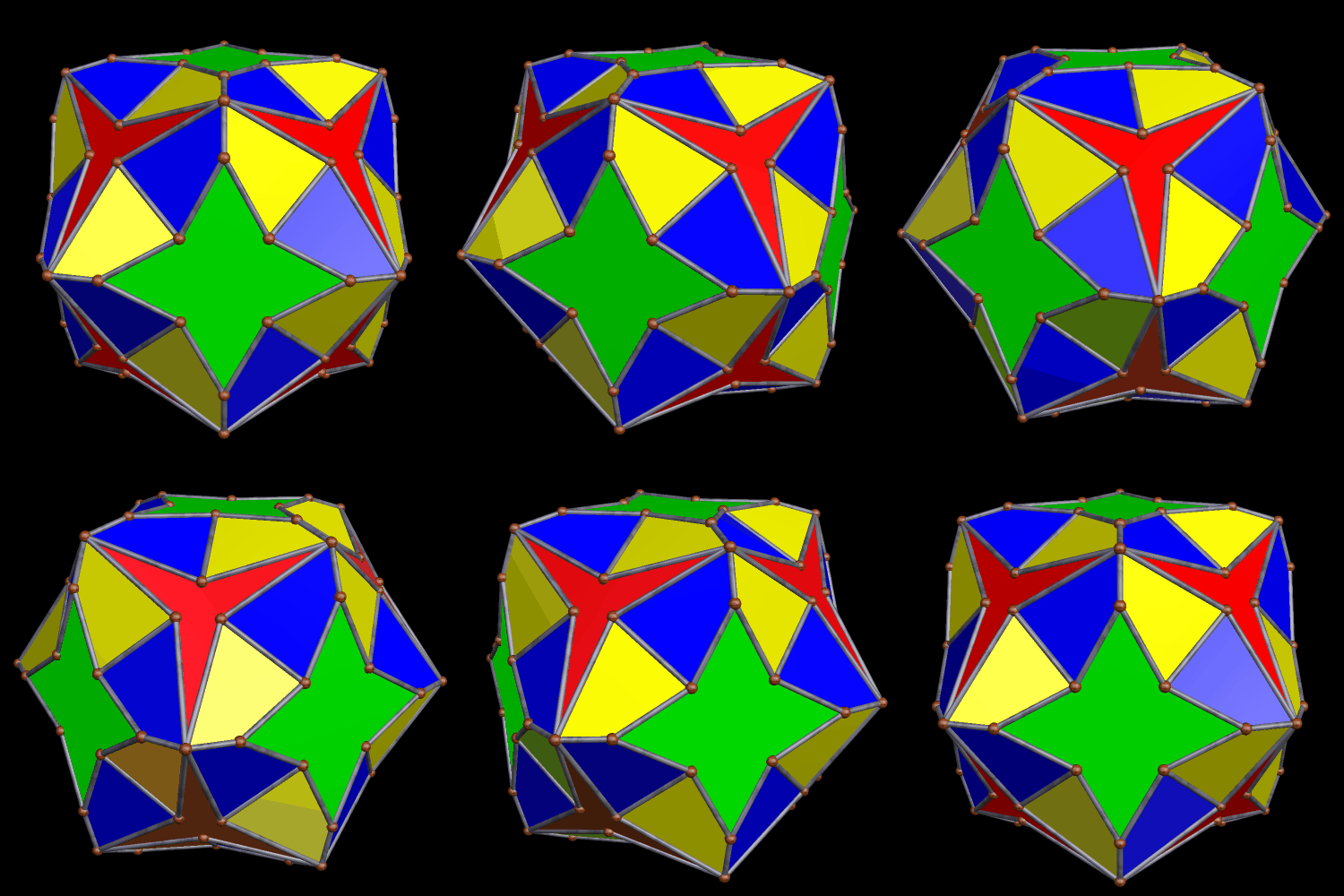
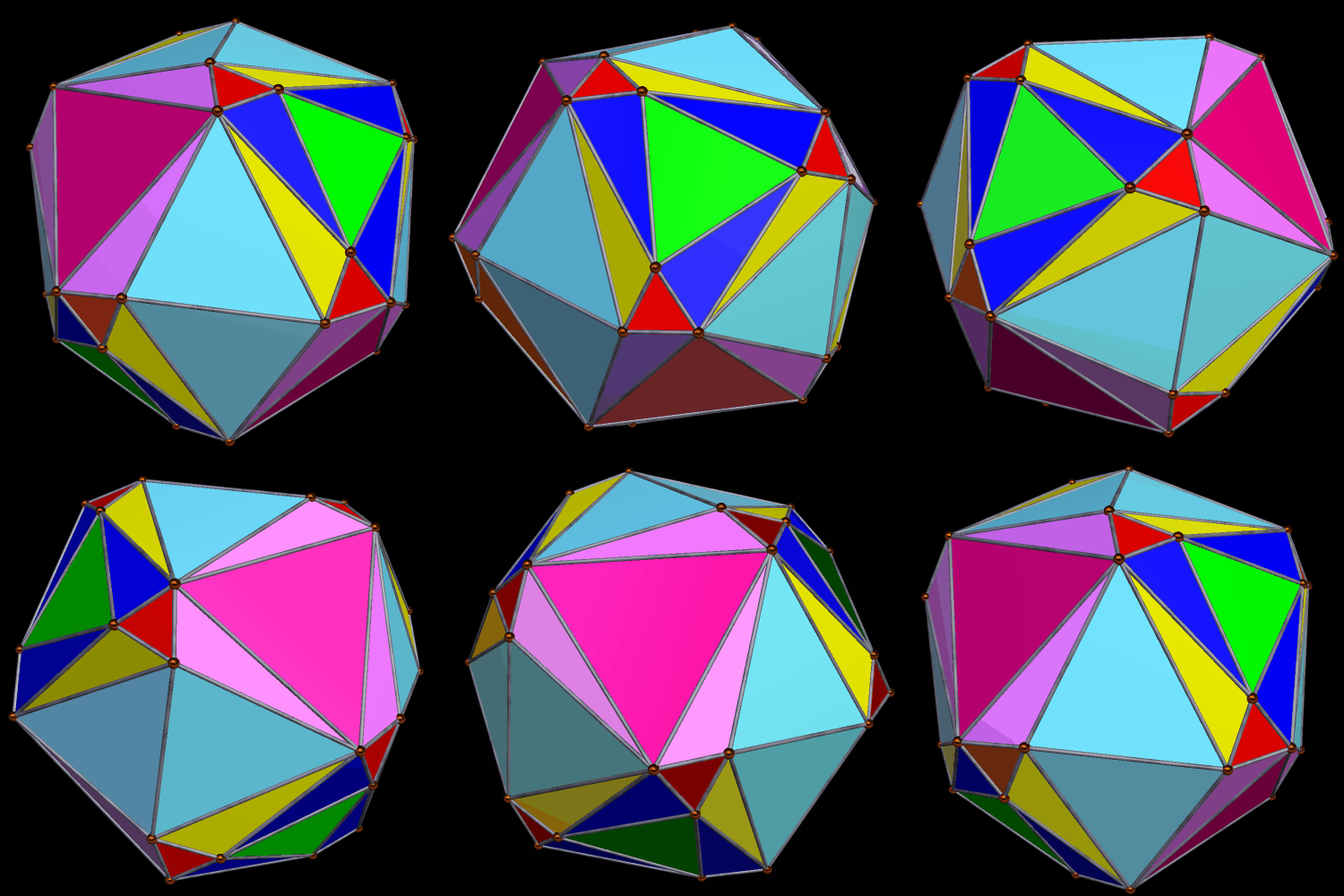
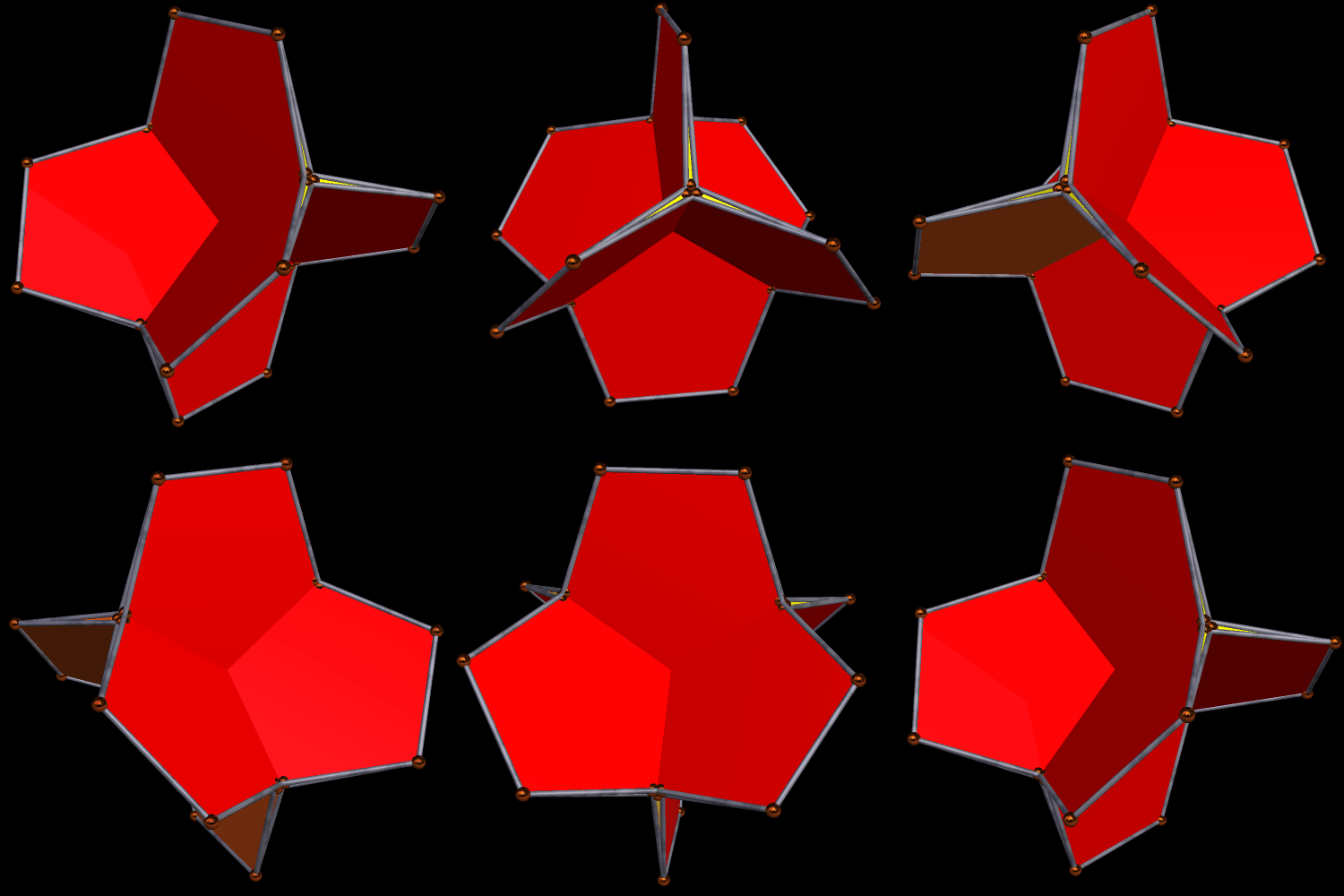
Shown above: the compound of the icosahedron and the rhombic dodecahedron. Below is its dual, the compound of the dodecahedron and the cuboctahedron.

Compound of Dodeca and Cubocta

Both these compounds were created using the “add/blend polyhedron from memory” function in Stella 4d: Polyhedron Navigator. To check out this program for yourself, just follow this link.

A Rhombic Enneacontahedron, Augmented with Sixty Rhombic Dodecahedra, Along with Its Dual

REC augmented with 60 RDs

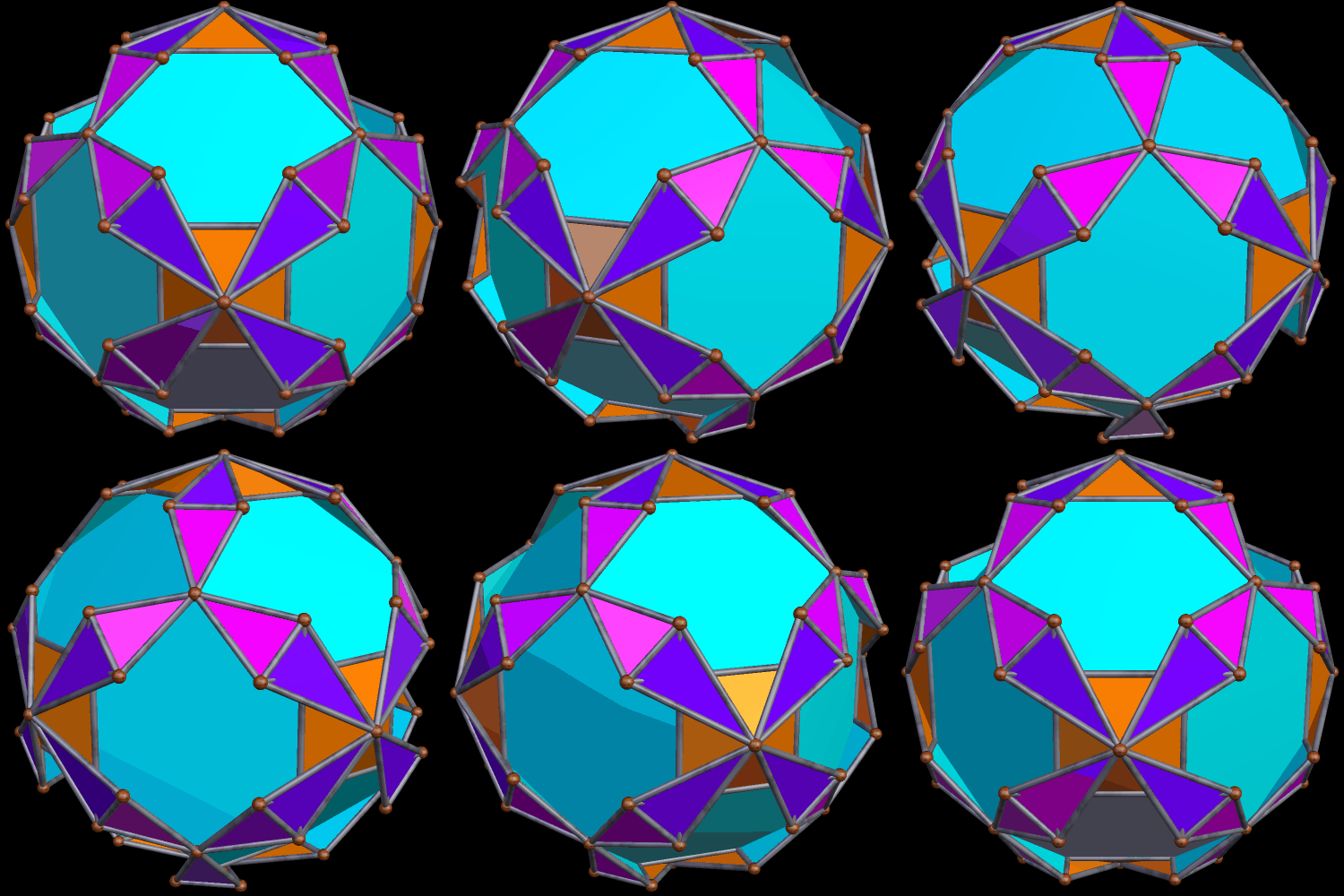
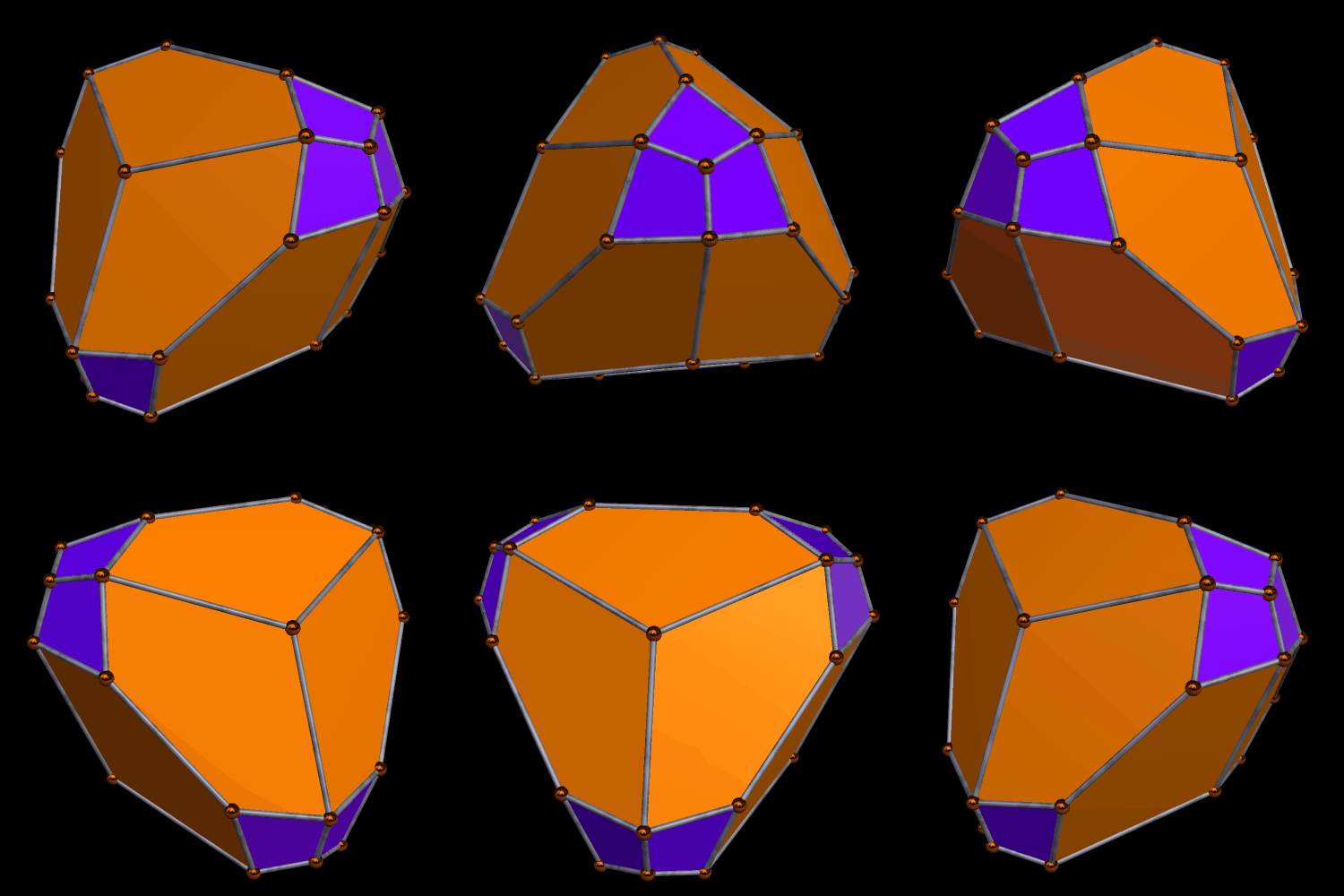
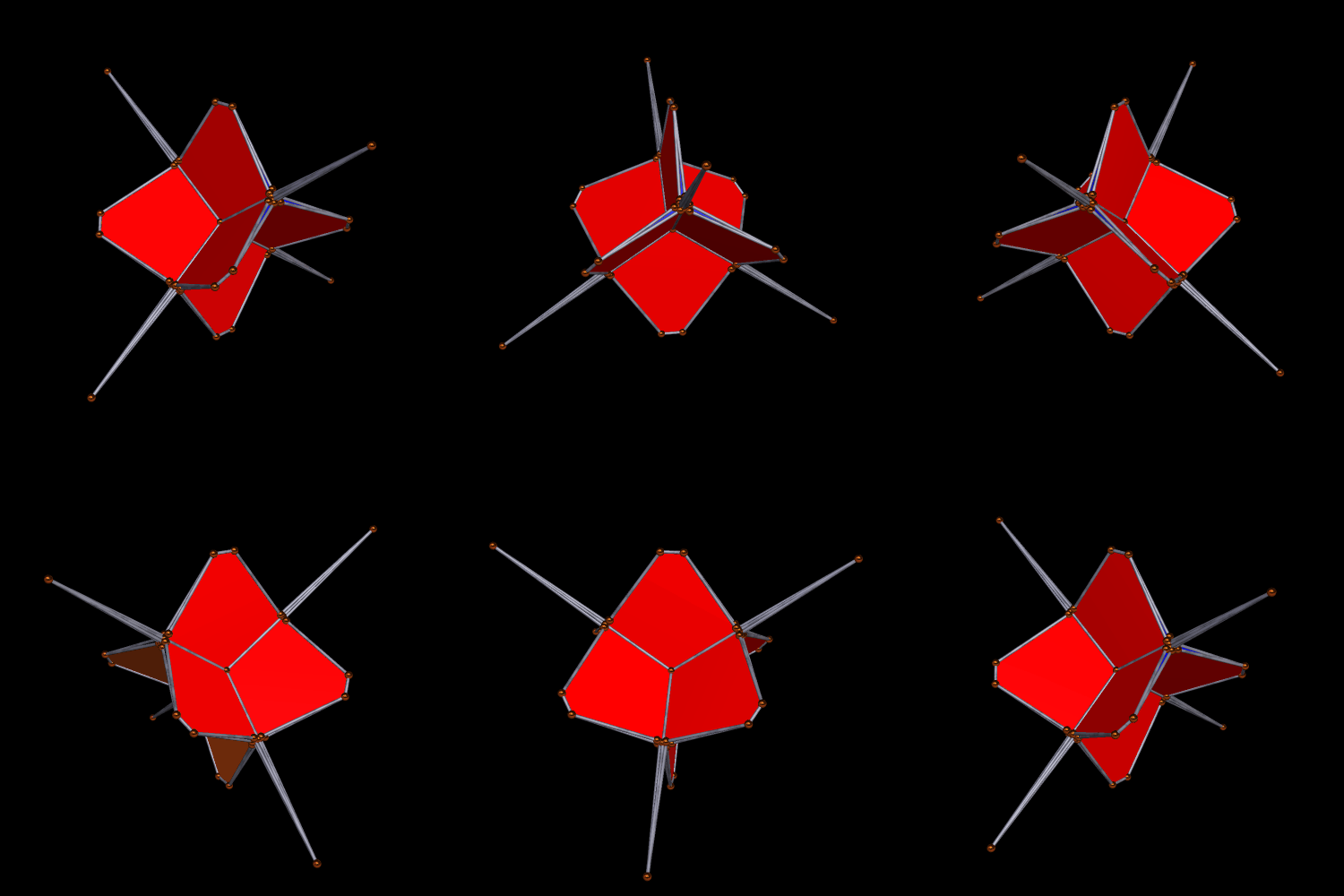
The dual to this cluster-polyhedron appears below. Both virtual models were created using Stella 4d: Polyhedron Navigator, software available here.

REC augmented with 60 RDs -- its amazing dual

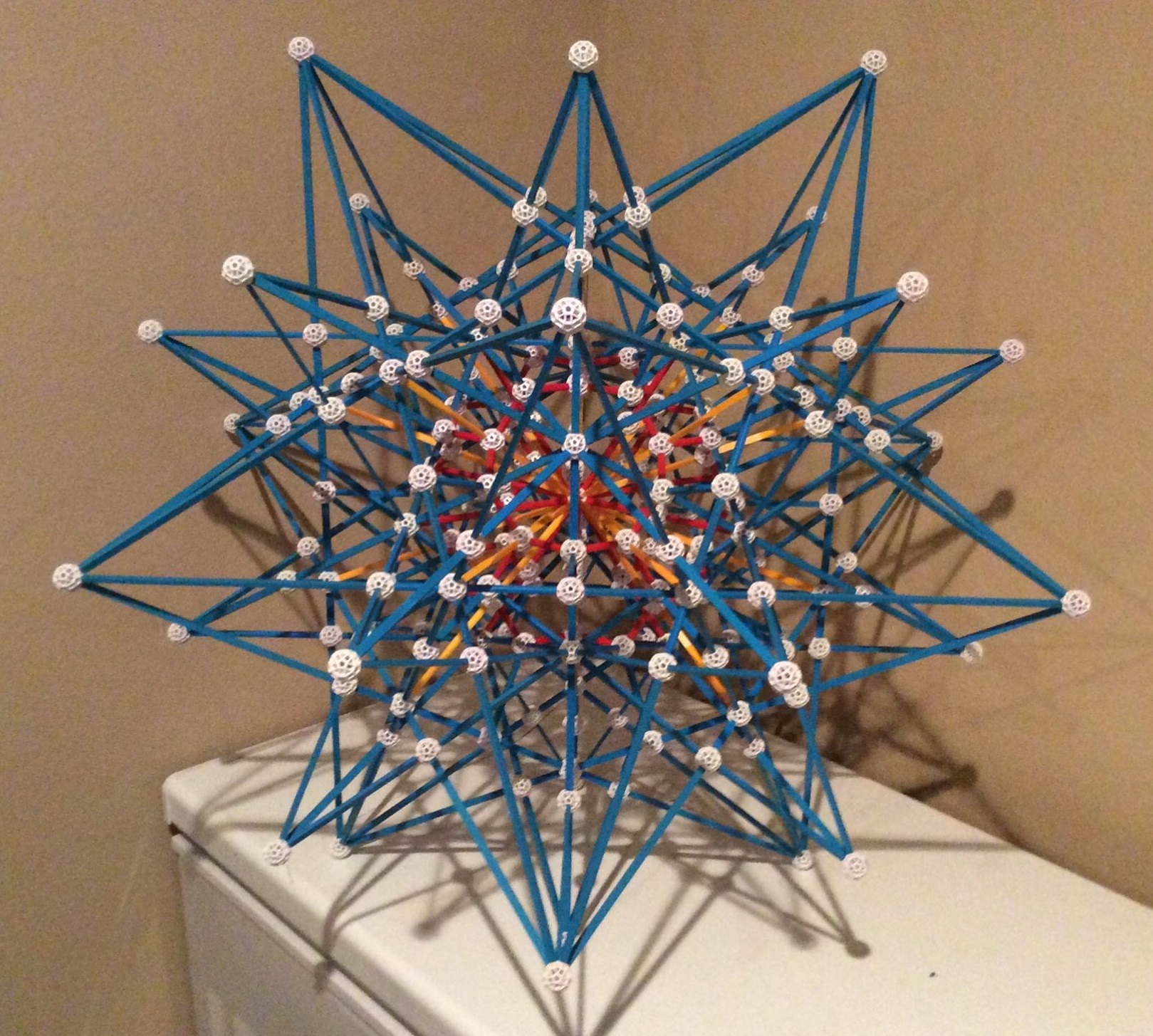
A Special Type of Compound, Built with Zome, of the Great and Small Stellated Dodecahedra

For years, I have used Zometools (sold here:  http://www.zometool.com) to teach geometry. The constructions for the icosahedron and dodecahedron are easy to teach and learn, due to the use of short reds (R1s) and medium yellows (Y2s) for radii for the two of them, as shown below, with short blue (B1) struts as edges for both polyhedra.

10865862_10204218181029594_3308928268978197013_o

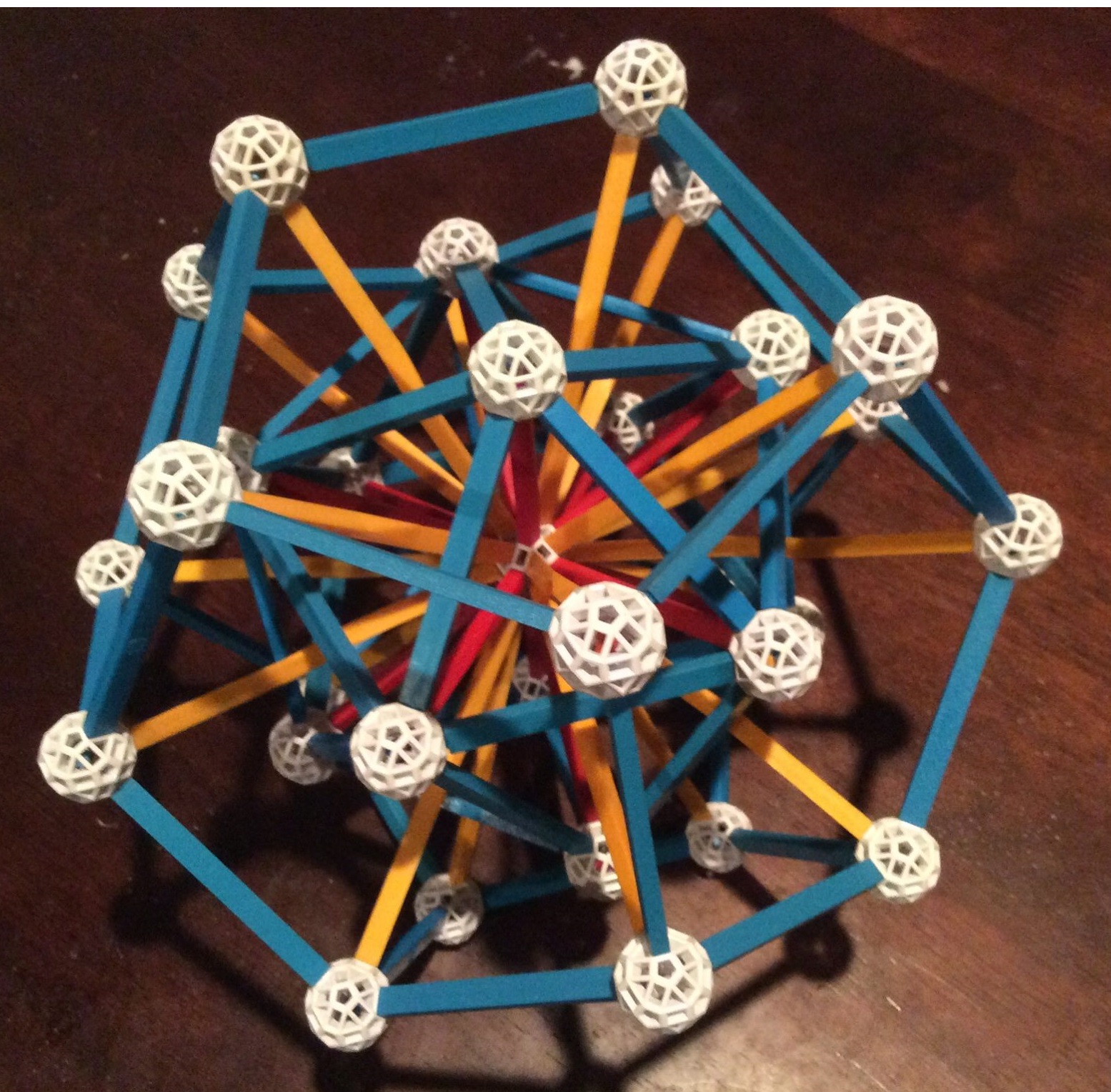
Unexpectedly, a student (name withheld for ethical and legal reasons) combined the two models, making this:

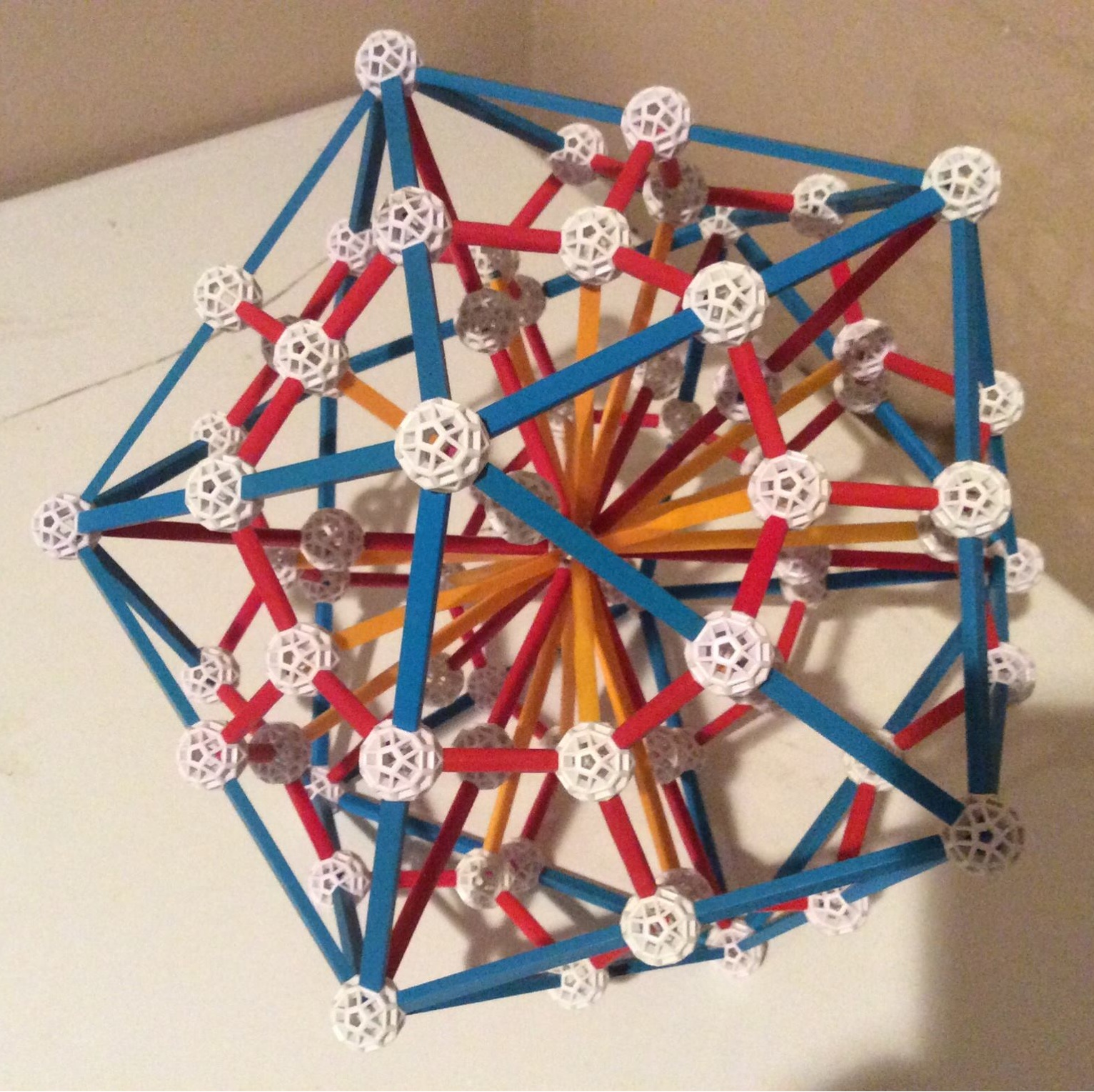
1401165_10204218146948742_4605456240300721240_oI saw it, and wondered if the two combined Platonic solids could be expanded along the edges, to stellate both polyhedra, with medium blues (B2s), to form the great and small stellated dodecahedron. By trying it, I found out that this would require intersecting blue struts — so a Zomeball needed to be there, at the intersection. Trying, however, only told me that no available combination would fit. After several more attempts, I doubled each edge length, and added some stabilizing tiny reds (R0s), and found a combination that would work, to form a compound of the great and small stellated dodecahedron in which both edge lengths would be equal. In the standard (non-stellated) compound of the icosahedron and dodecahedron, in which the edges are perpendicular, they are unequal in length, and in the golden ratio, which is how that compound differs from the figure shown directly above.

Here’s the stabilized icosahedral core, after the doubling of the edge length:

10865862_10204218180989593_3871605705756535601_oThis enabled stellation of each shape by edge-extension. Each edge had a length twice as long as a B2 added to each side — and it turns out, I discovered, that 2B2 in Zome equals B3 + B0, giving the golden ratio as one of three solutions solution to x² + 1/x = 2x (the others are one, and the golden ratio’s reciprocal). After edge-stellation to each component of the icosahedron/dodecahedron quasi-compound, this is what the end product looked like. This required assembling the model below at home, where all these pictures were taken, for one simple reason: this thing is too wide to fit through the door of my classroom, or into my car.

10847334_10204218153268900_1020271669763339706_o

Here’s a close-up of the central region, as well.

closeup

A Polyhedral Journey, Beginning with the Snub Cube / Pentagonal Isositetrahedron Base/Dual Compound

The snub cube and its dual make an attractive compound. Since the snub cube is chiral, its chirality is preserved in this compound.

Penta Icositetra & snub cube compound

If you examine the convex hull of this compound, you will find it to be chiral as well.

Convex hull of snub cube& dual compound

Here is the mirror image of that convex hull:

Convex hull mirror image

These two convex hulls, of course, have twin, chiral, duals:

dual of Convex hull of snub cube& dual compound

Dual of Convex hull mirror image

The two chiral convex hulls above (the red, blue, and yellow ones), made an interesting compound, as well.

Compound of enantiomorphic pair not dual

This is also true of their chiral duals:

Compound of enantiomorphic pair

I next stellated this last figure numerous times (I stopped counting at ~200), to obtain this polyhedron:

Stellated Compound of enantiomorphic pair dual

After seeing this, I wanted to know what its dual would look like — and it was a nice polyhedron on which to end this particular polyhedral journey.

dual of Stellated Compound of enantiomorphic pair dual

I  make these transformations of polyhedra, and create these virtual models, using a program called Stella 4d. It may be purchased, or tried for free, at http://www.software3d.com/Stella.php.

An Unusual Presentation of the Icosahedron/Dodecahedron Base/Dual Compound

Leonardo Icosahedron

In this model, the usual presentation of the icosahedron/dodecahedron dual compound has been altered somewhat. The “arms” of star pentagons have been removed from the dodecahedron’s faces, and the icosahedron is rendered “Leonardo-style,” with smaller triangles removed from each of the faces of the icosahedron, with both these alterations made to enable you to see the model’s interior structure. Also, the dodecahedron is slightly larger than usual, so that its edges no longer intersect those of the icosahedron.

This model was made using Stella 4d, software you can obtain for yourself, with a free trial download available, at http://www.software3d.com/Stella.php.

A Collection of Unusual Polyhedra

In the post directly before this one, the third image was an icosahedral cluster of icosahedra. Curious about what its convex hull would look like, I made it, and thereby saw the first polyhedron I have encountered which has 68 triangular faces.

68 triangles Convex hull

Still curious, I next examined this polyhedron’s dual. The result was an unusual 36-faced polyhedron, with a dozen irregular heptagons, and two different sets of a dozen irregular pentagons.

dual of 68 triangles Convex hull -- this dual has 36 faces including 12 heptagons and 12 each of two types of pentagon

Stella 4d (the program I used to make all these images), which is available at http://www.software3d.com/Stella.php, has a “try to make faces regular” function, and I tried to use it on this 36-faced polyhedron. When making the faces regular is not possible, as was the case this time, it sometimes produce surprising results — and this turned out to be one of these times.
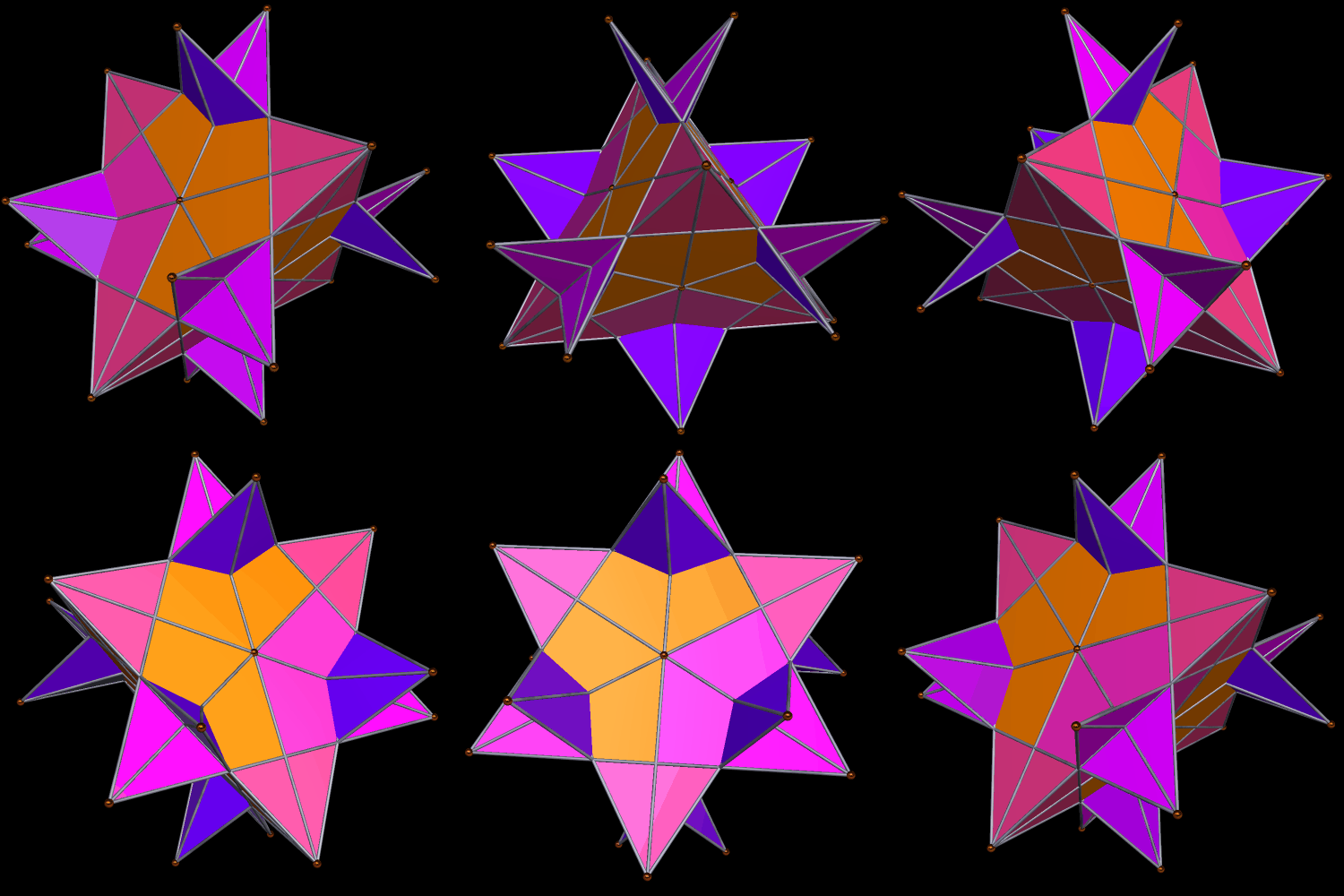
dual of the 68-triangle polyhedron after 'try to make faces regular' used

The next thing I did was to examine the dual of this latest polyhedron. The result, a cluster of tetrahedra and triangles, was completely unexpected.
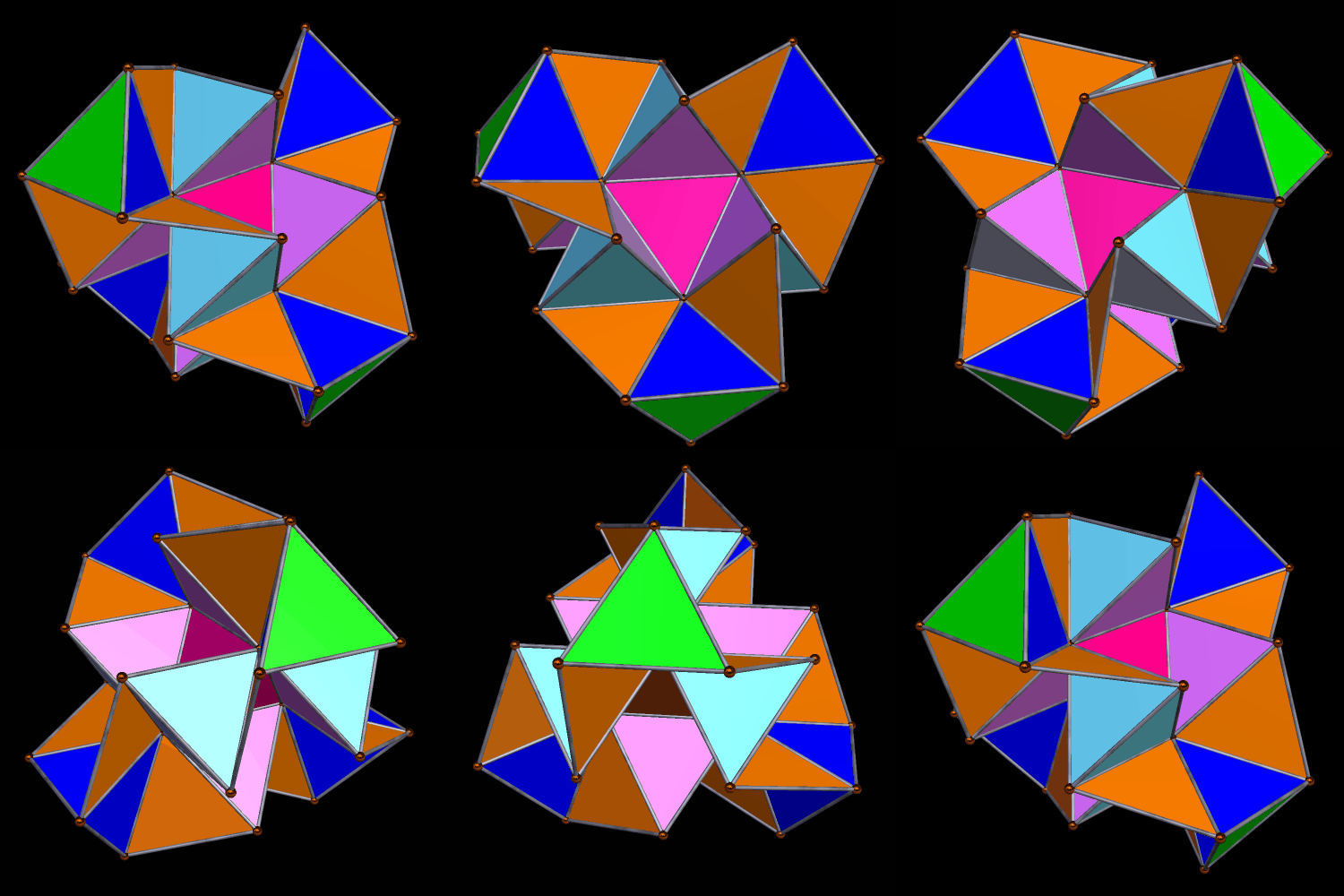
dual of the dual of the 68-triangle polyhedron after 'try to make faces regular' used

The next alteration I performed was to create the convex hull of this cluster of triangles and tetrahedra.
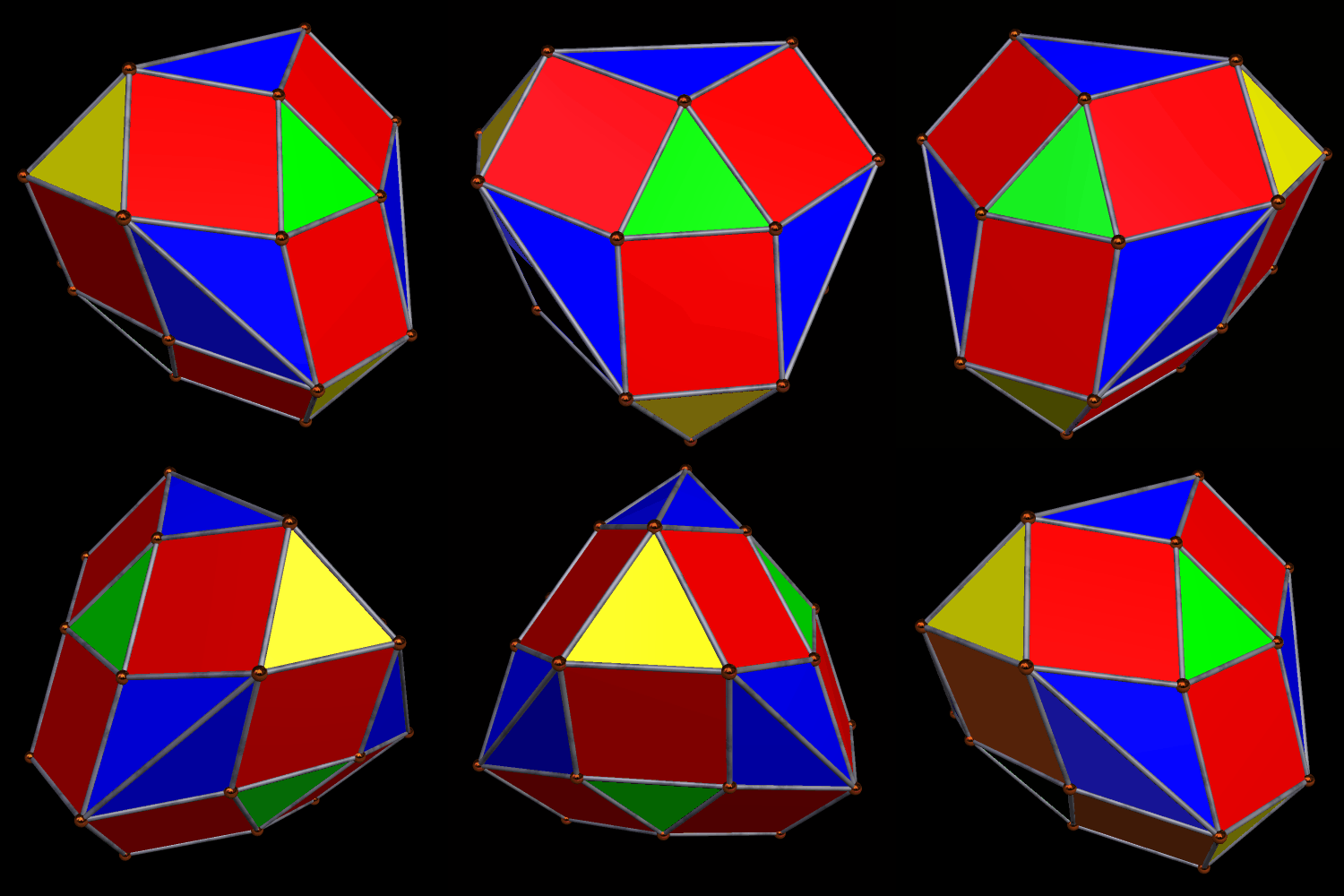
Convex hull of that triangular mess

Having seen that, I wanted to see its dual, so I made it. It turned out to have a dozen faces which are kites, plus another dozen which are irregular pentagons.

dual of the Convex hull of that triangular mess 12 kites and 12 irregular pentagons

Next, I tried the “try to make faces regular” function again — and, once more, was surprised by the result.
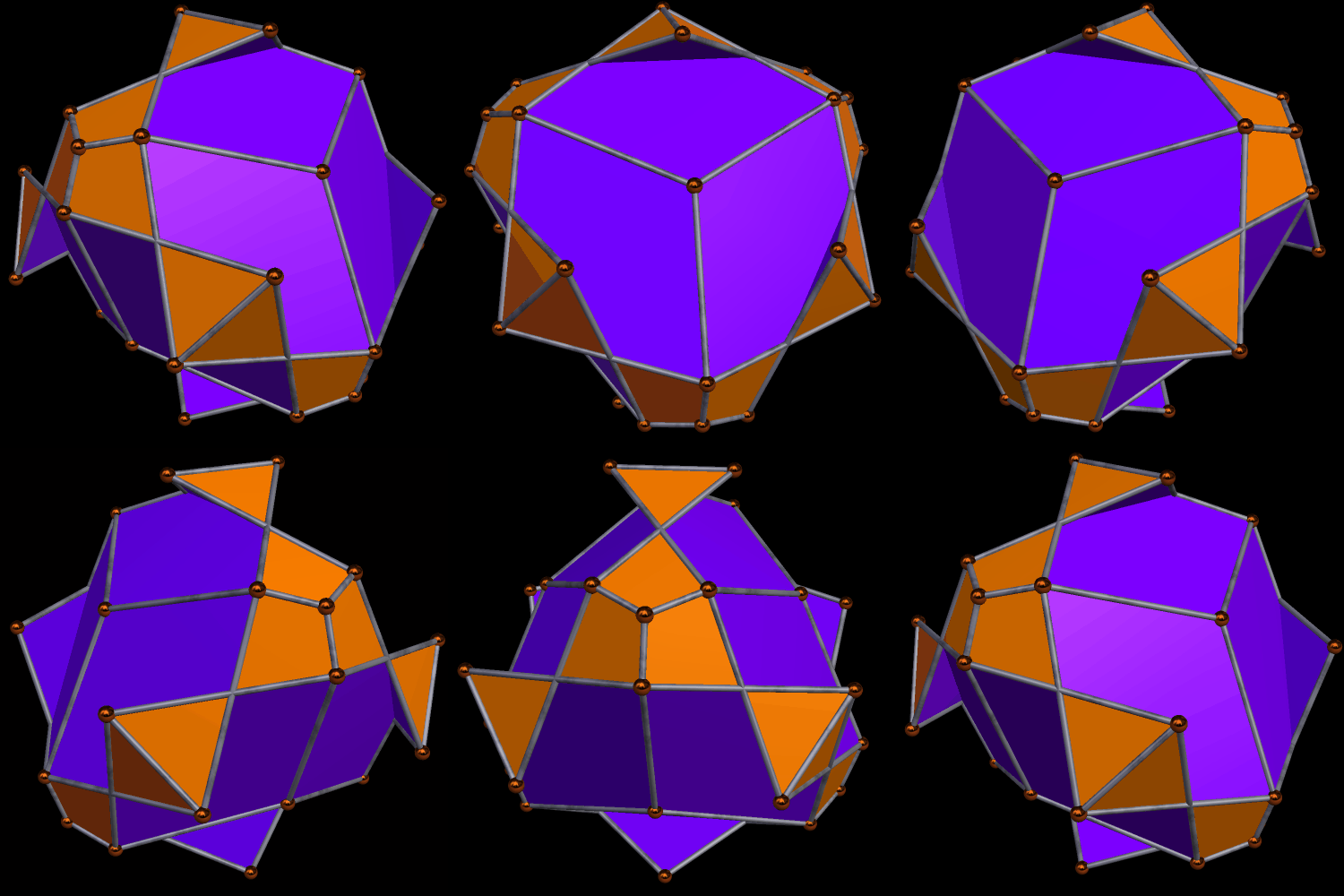
dozen kites and dozen pentagons after 'try to make faces regular' used

Out of curiosity, I then created this latest polyhedron’s convex hull. It turned out to have four faces which are equilateral triangles, a dozen other faces which are isosceles triangles, and a dozen faces which are irregular pentagons.

Convex hull Z

Next, I created the dual of this polyhedron, and it turns out to have faces which, while not identical, can be described the same way: four equilateral triangles, a dozen other isosceles triangles, and a dozen irregular pentagons — again. To find such similarity between a polyhedron and its dual is quite uncommon.
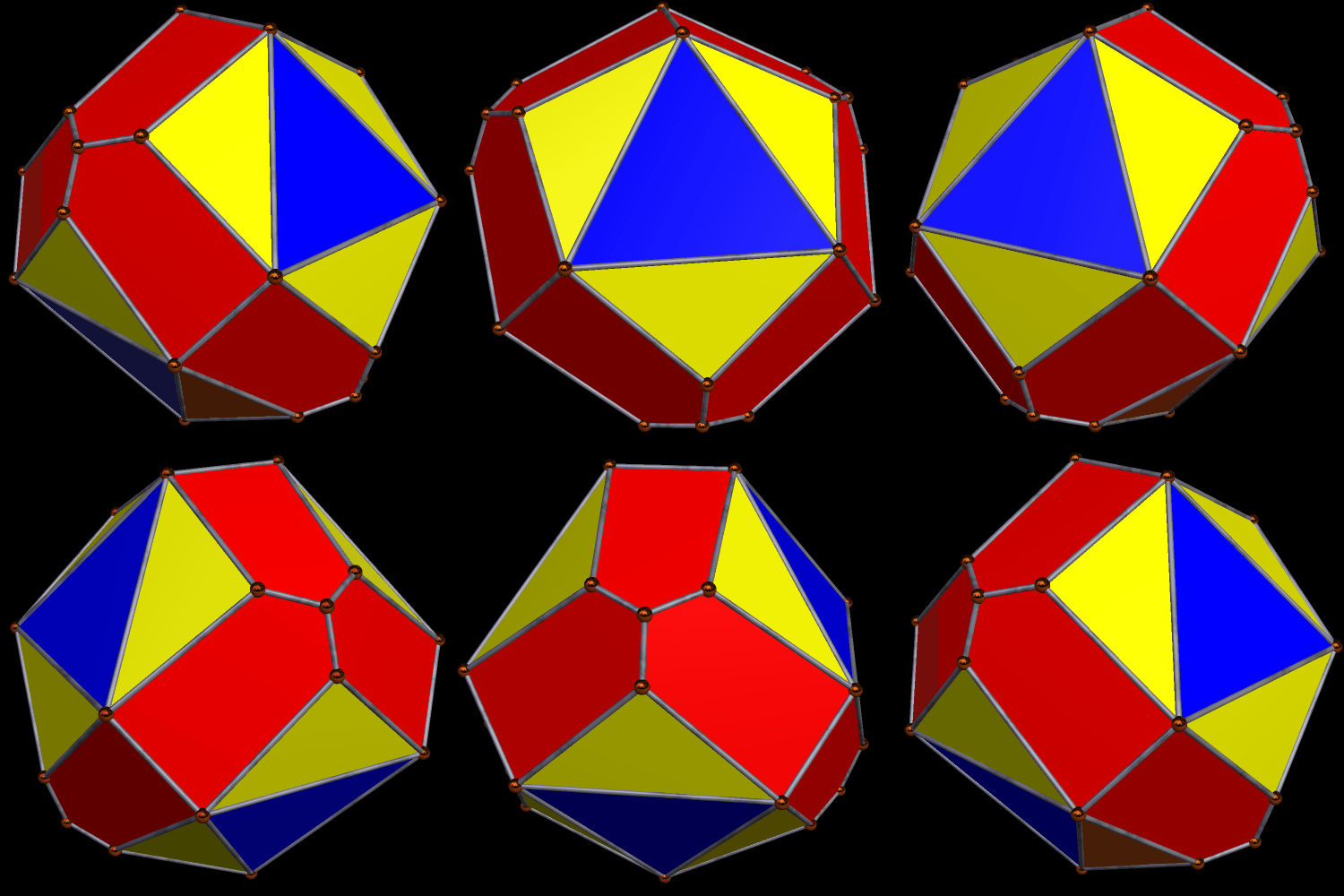
dual of Convex hull Z

I next attempted the “try to make faces regular” function, once more. Stella 4d, this time, was able to make the pentagons regular, and the triangles which were already regular stayed that way, as well. However, to accomplish this, the twelve other isosceles triangles not only changed shape a bit, but also shifted their orientation inward, making the overall result a non-convex polyhedron.
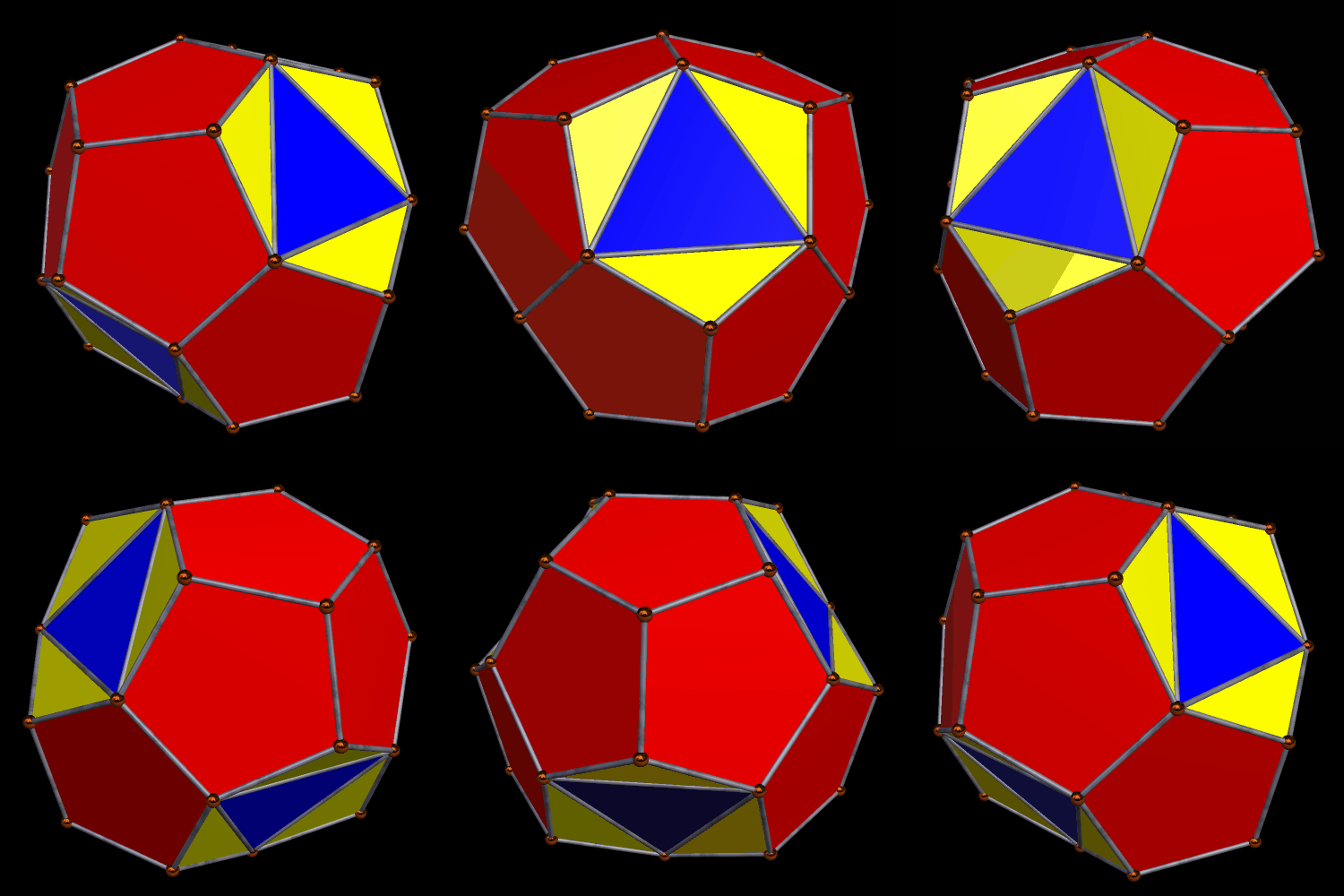
TTMFR

Having a non-convex polyhedron on my hands, the next step was obvious: create its convex hull. One more, I saw a polyhedron with faces which were four equilateral triangles, a dozen other isosceles triangles, and a dozen regular pentagons.

Convex hull

I then created the dual of this polyhedron, and, again, found myself looking at a polyhedron with, as faces, a dozen irregular pentagons, a dozen identical isosceles triangles, and four regular triangles. However, the arrangement of these faces was noticeably different than before.
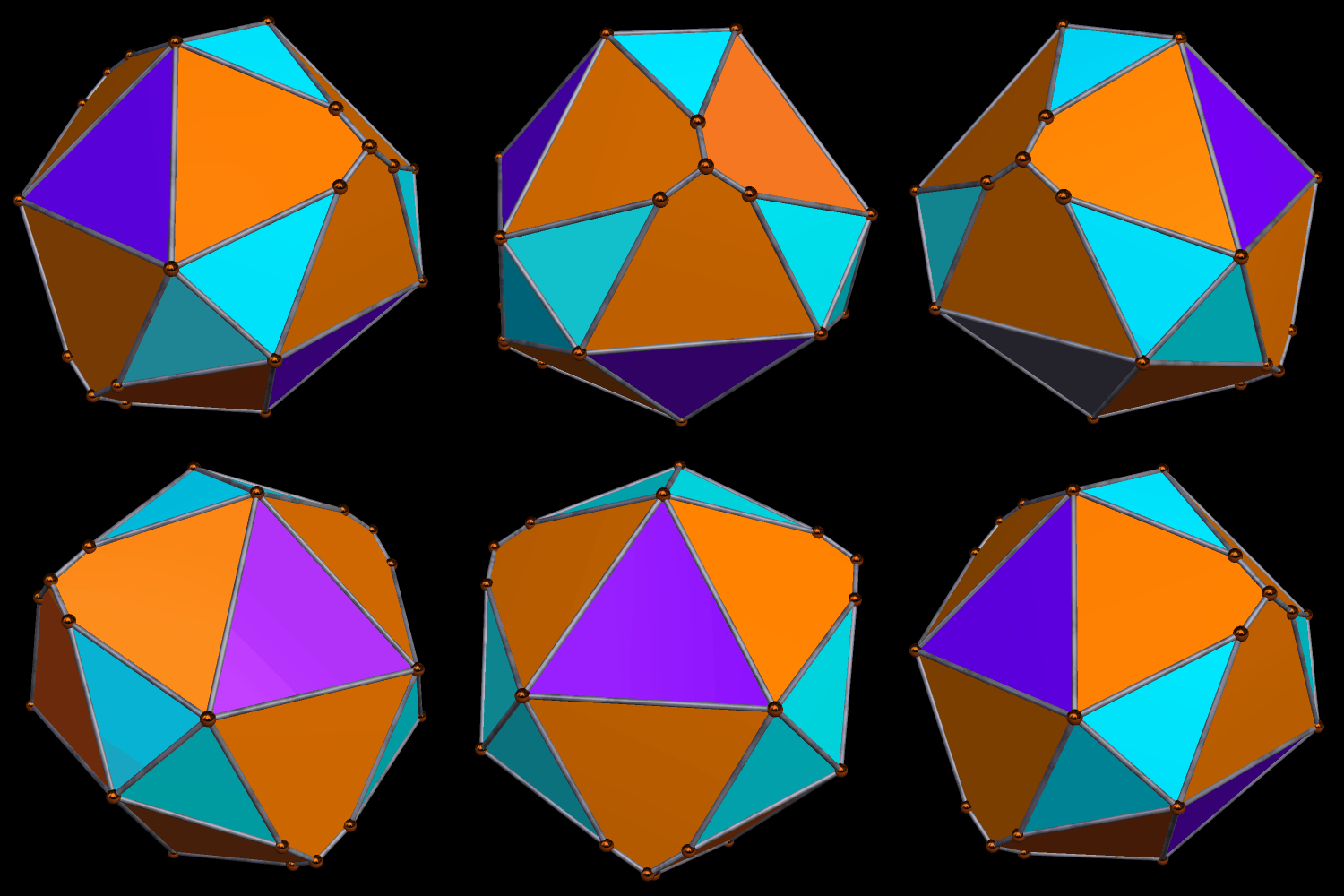
latest Convex hull

Given this difference in face-arrangement, I decided, once more, to use the “try to make faces regular” function of Stella 4d. The results were, as before, unexpected.

TTMFRA

Next, I created this latest polyhedron’s dual.

TTMFRA dual

At no point in this particular “polyhedral journey,” as I call them, had I used stellation — so I decided to make that my next step. After stellating this last polyhedron 109 times, I found this:

109 stellationsTTMFRA dual

I then created the dual of this polyhedron. The result, unexpectedly, had a cuboctahedral appearance.
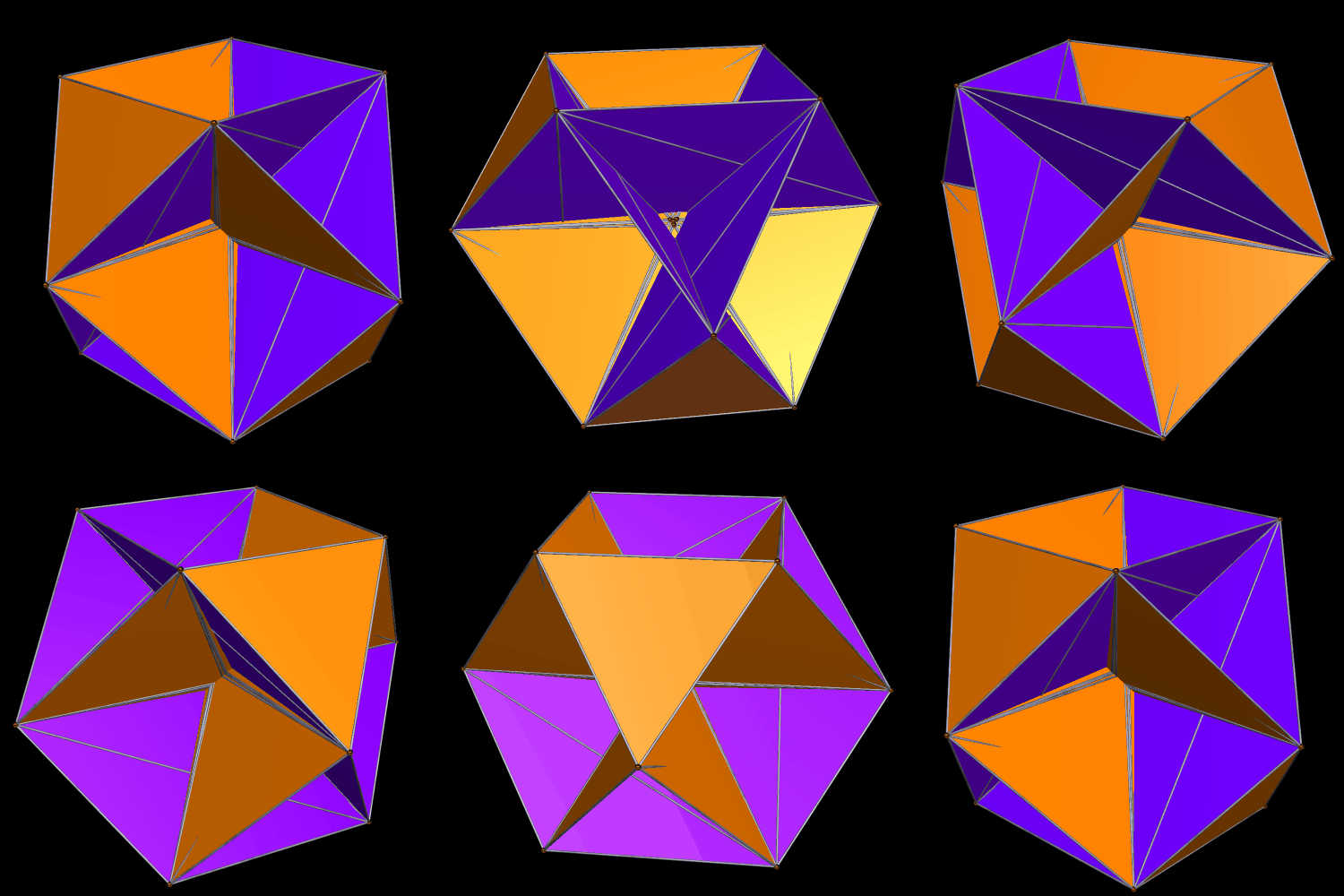
Faceted Dual

A single stellation of this latest polyhedron radically altered its appearance.
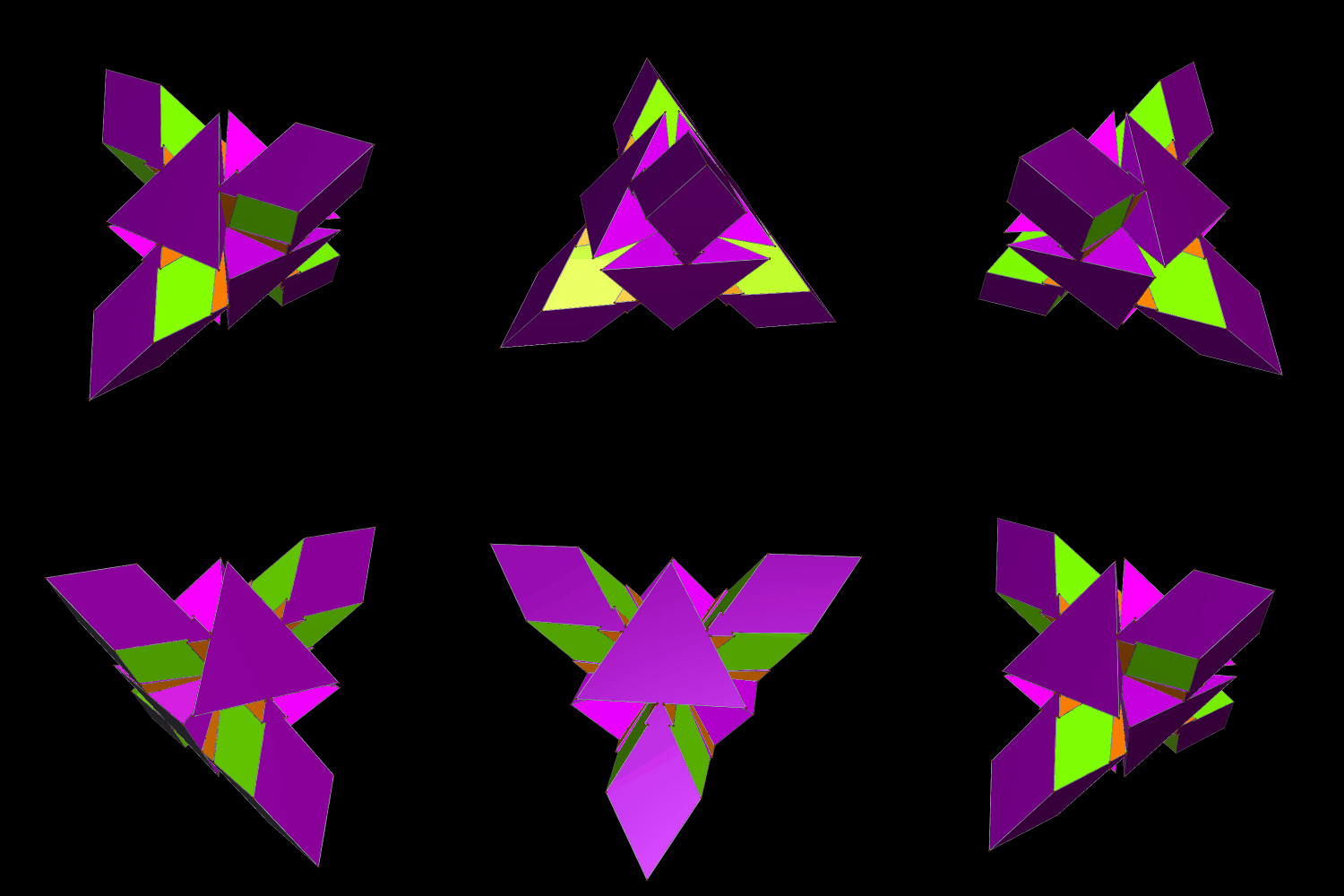
stellation Faceted Dual

My next step was to create the dual of this polyhedron.
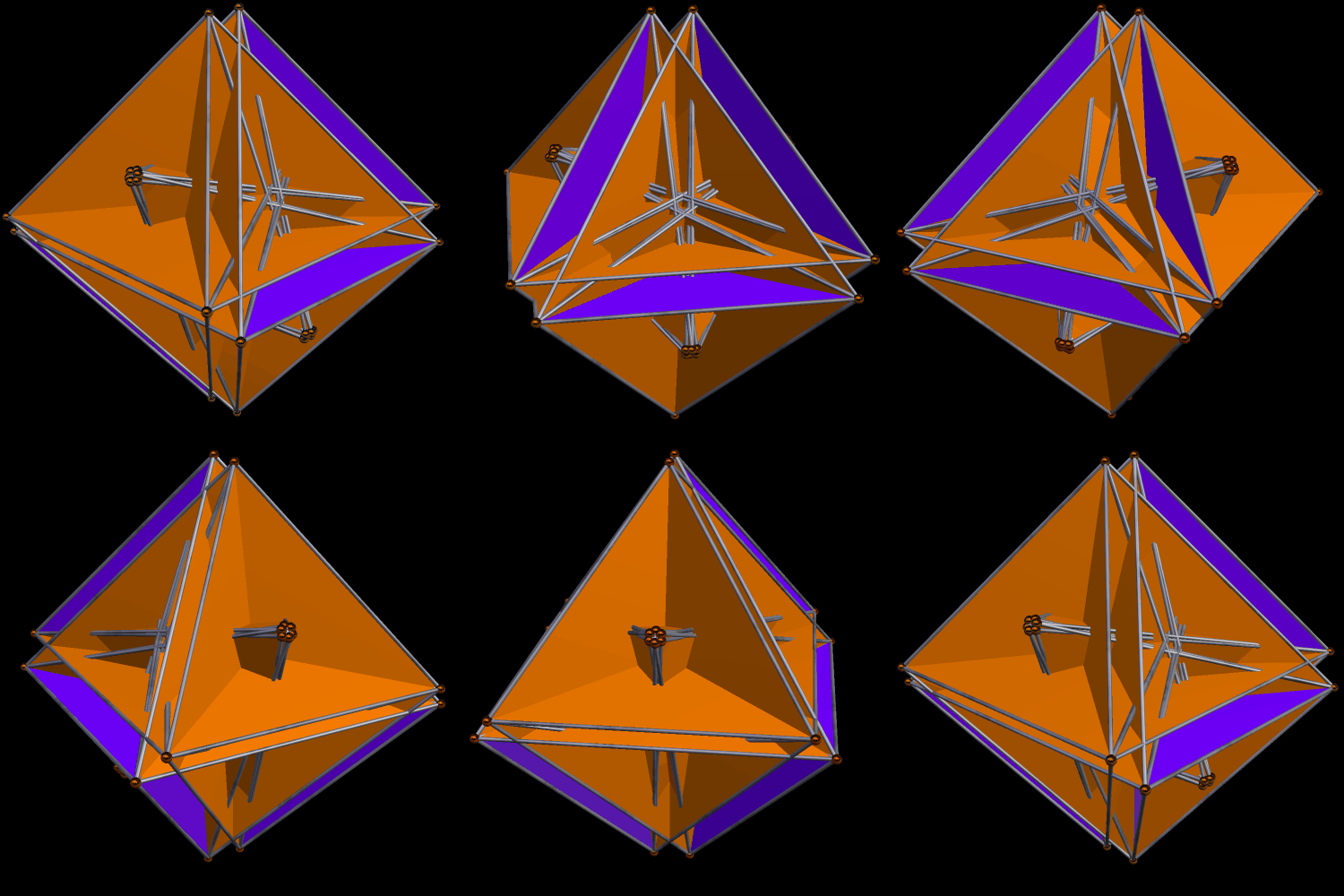
dual Faceted Stellated Poly

This seemed like a good place to stop, and so I did.
A Polyhedral Investigation, Starting with an Augmentation of the Truncated Octahedron

If one starts with a central truncated octahedron, leaves its six square faces untouched, and augments its eight hexagonal faces with trianglular cupolae, this is the result.

AUGMENTED TRUNCTAED OCTAHEDRON

Seeing this, I did a quick check of its dual, and found it quite interesting:

DUAL OF AUGMENTED TRUNCATED OCTAHEDRON

After seeing this dual, I next created its convex hull.

Convex hull x

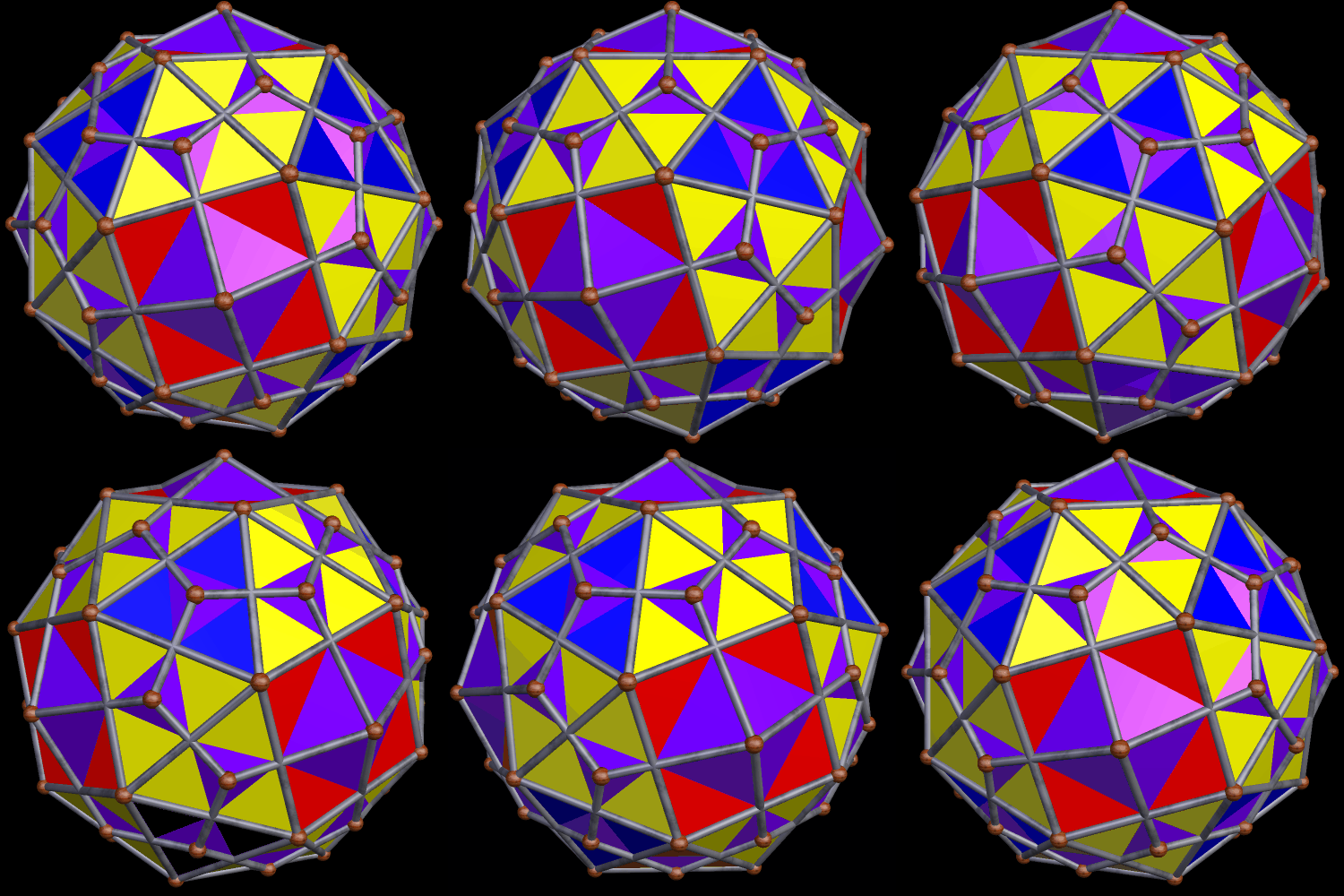
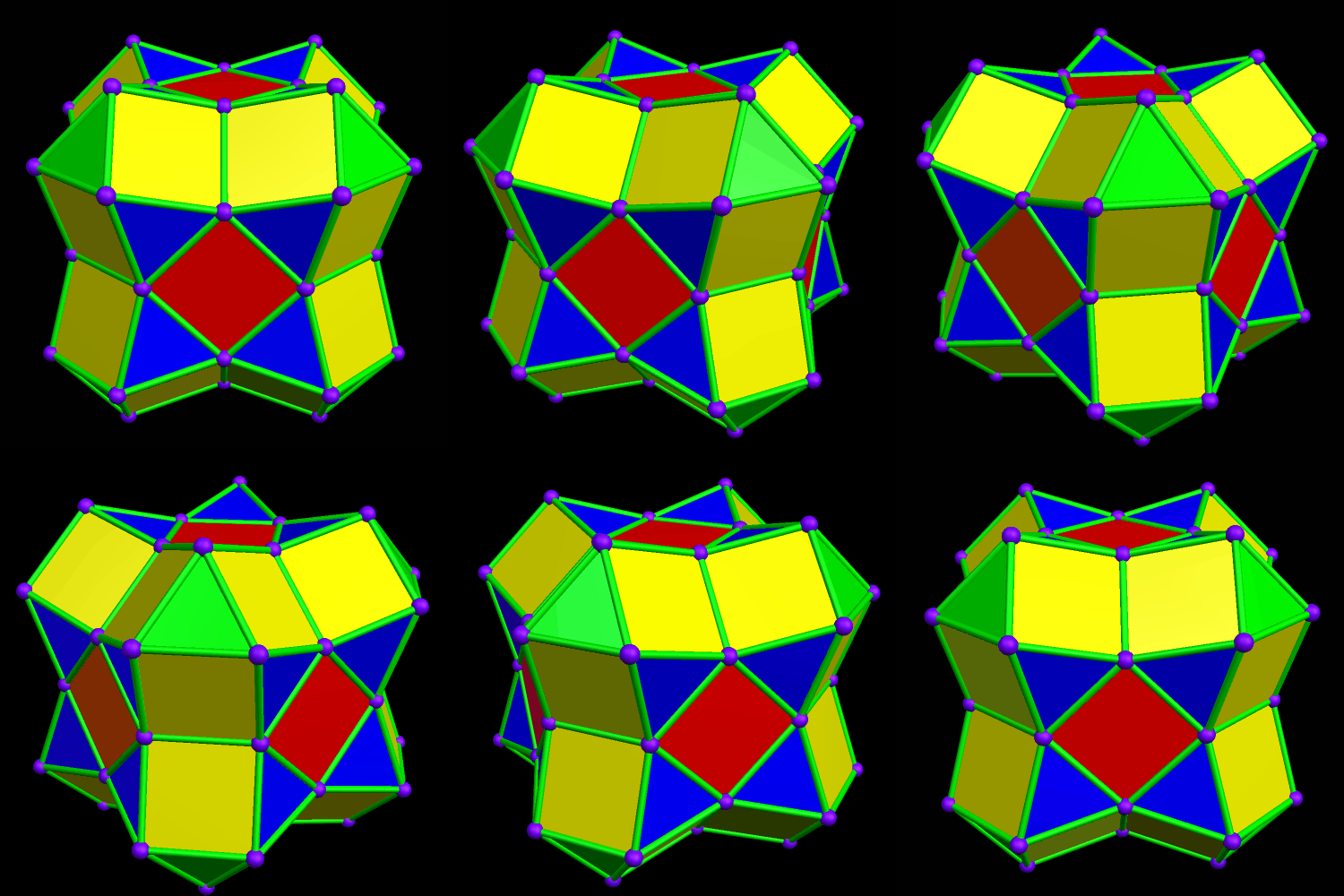
After seeing this convex hull, I next creating its dual:  one of several 48-faced polyhedra I have found with two different sets of twenty-four kites as faces, one set in six panels of four kites each, and the other set consisting of eight sets of three kites each. I think of these recurring 48-kite-faced polyhedra as polyhedral expressions of a simple fact of arithmetic: (6)(4) = (8)(3) = 24.

48 KITES AGAiN

I use Stella 4d (available at http://www.software3d.com/Stella.php) to perform these polyhedral transformations. The last one I created in this particular “polyhedral journey” is shown below — but, unfortunately, I cannot recall exactly what I did, to which of the above polyhedra, to create it.

Convex hull OF AUGMENTED CUBOCTAHEDRON

An Alteration of the Icosahedron/Dodecahedron Compound

Dual of Convex hull

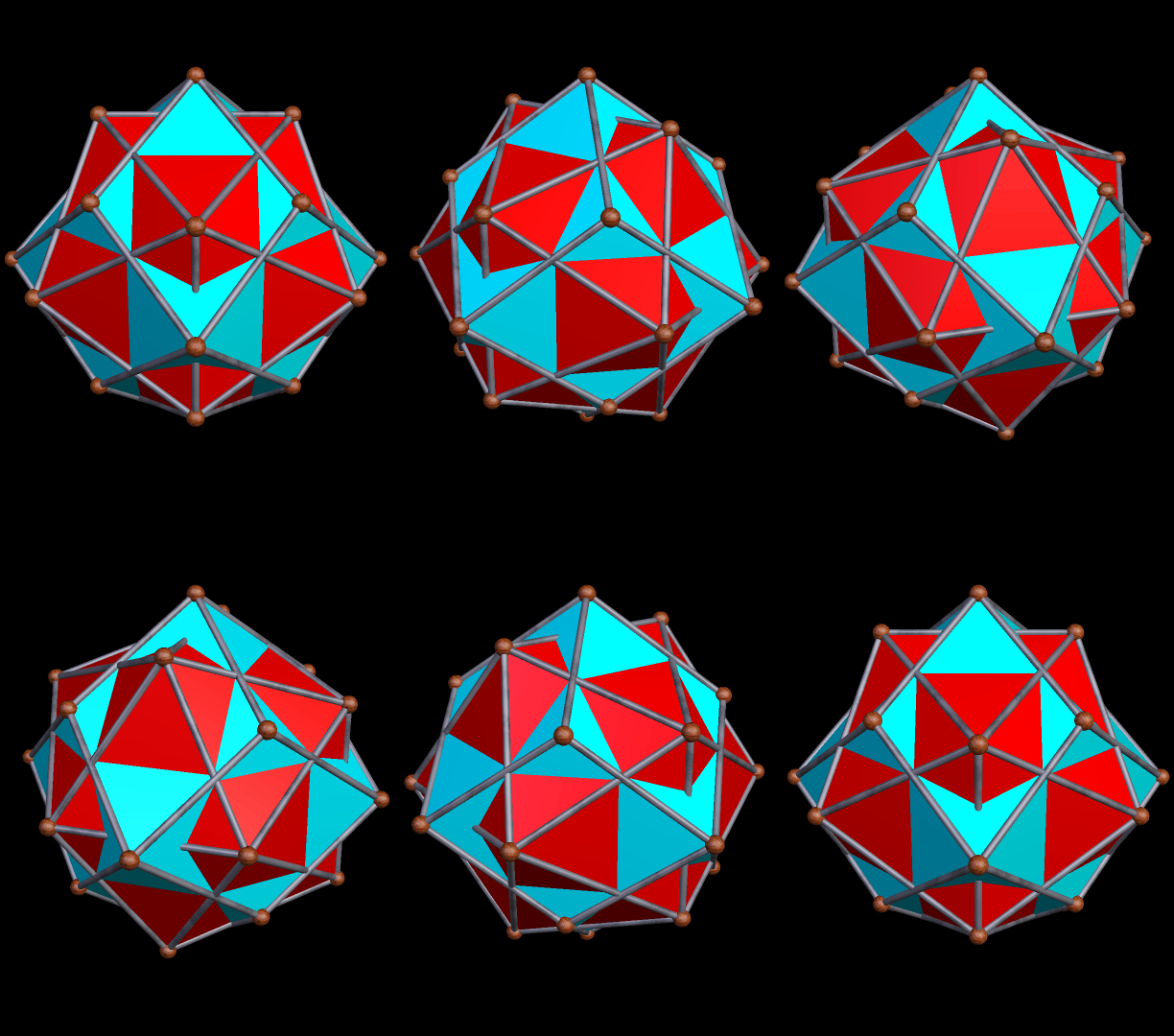
The dual of the icosahedron is the dodecahedron, and a compound can be made of those two solids. If one then takes the convex hull of this solid, the result is a rhombic triacontahedron. One can then made a compound of the rhombic triacontahedron and its dual, the icosidodecahedron — and then take the convex hull of that compound. If one then makes another compound of that convex hull and its dual, and then makes a convex hull of that compound, the dual of this latest convex hull is the polyhedron you see above.
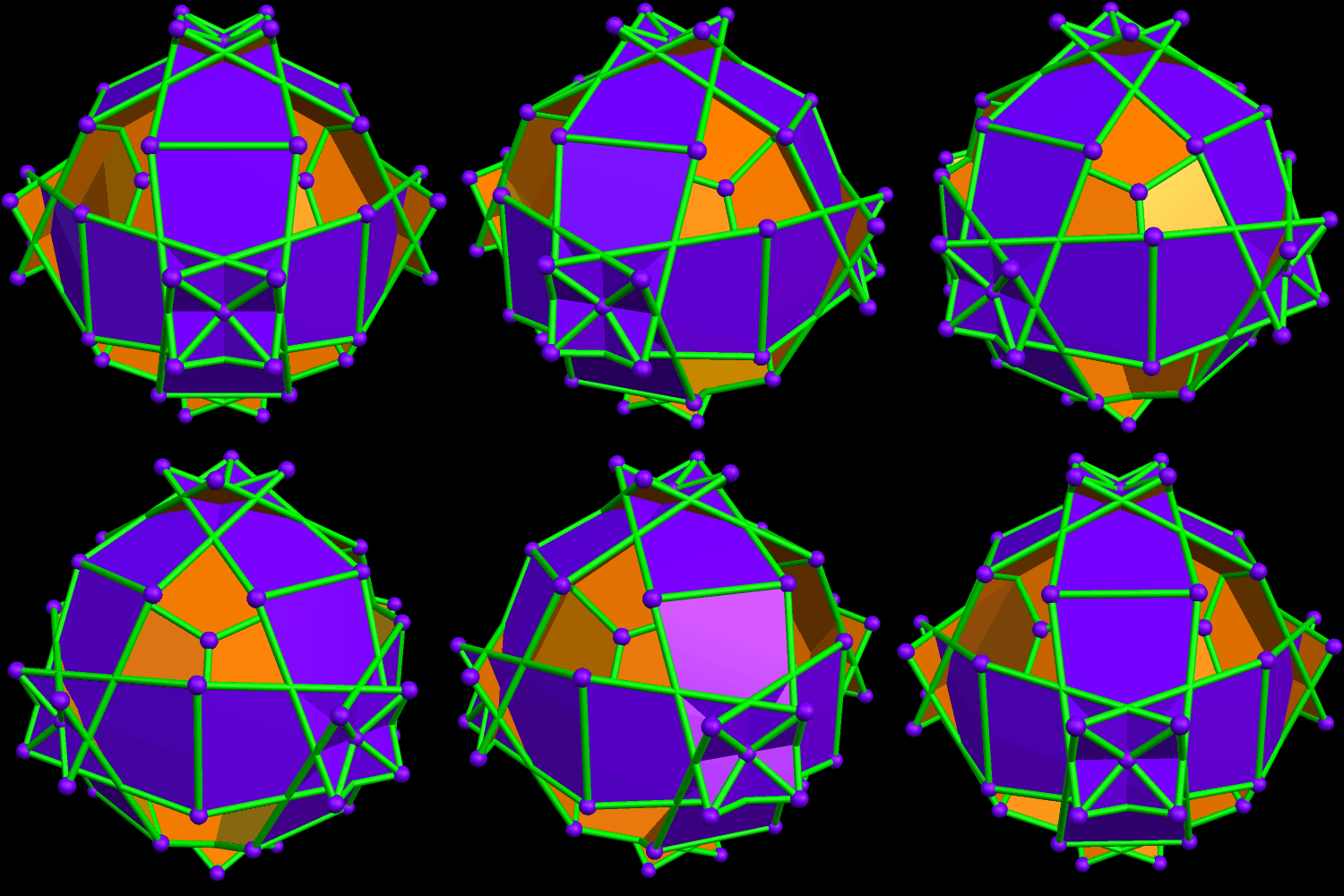
I did try to make the faces of this solid regular, but that attempt did not succeed.

All of these polyhedral manipulations were were performed with Stella 4d:  Polyhedron Navigator, available at http://www.software3d.com/Stella.php.

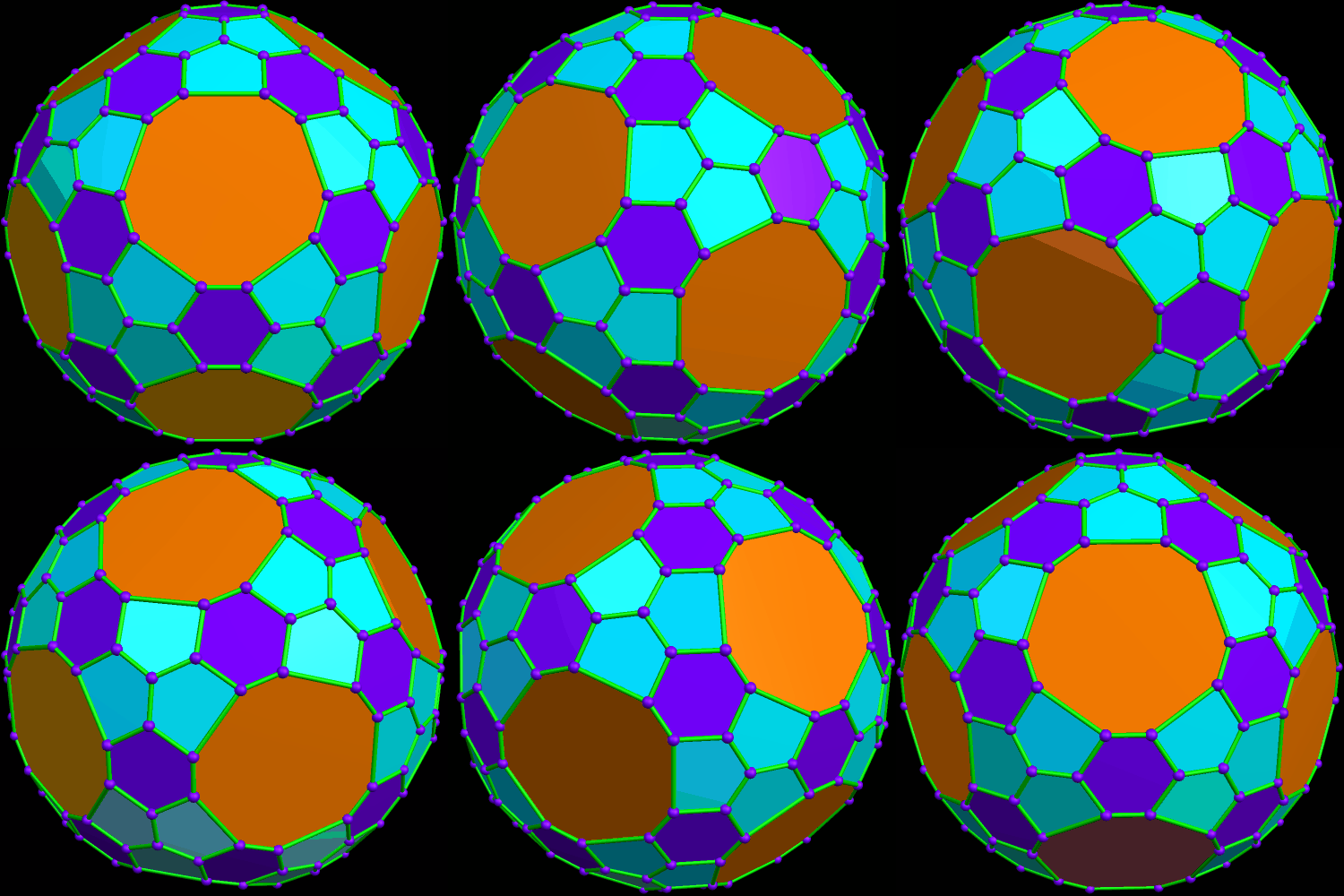
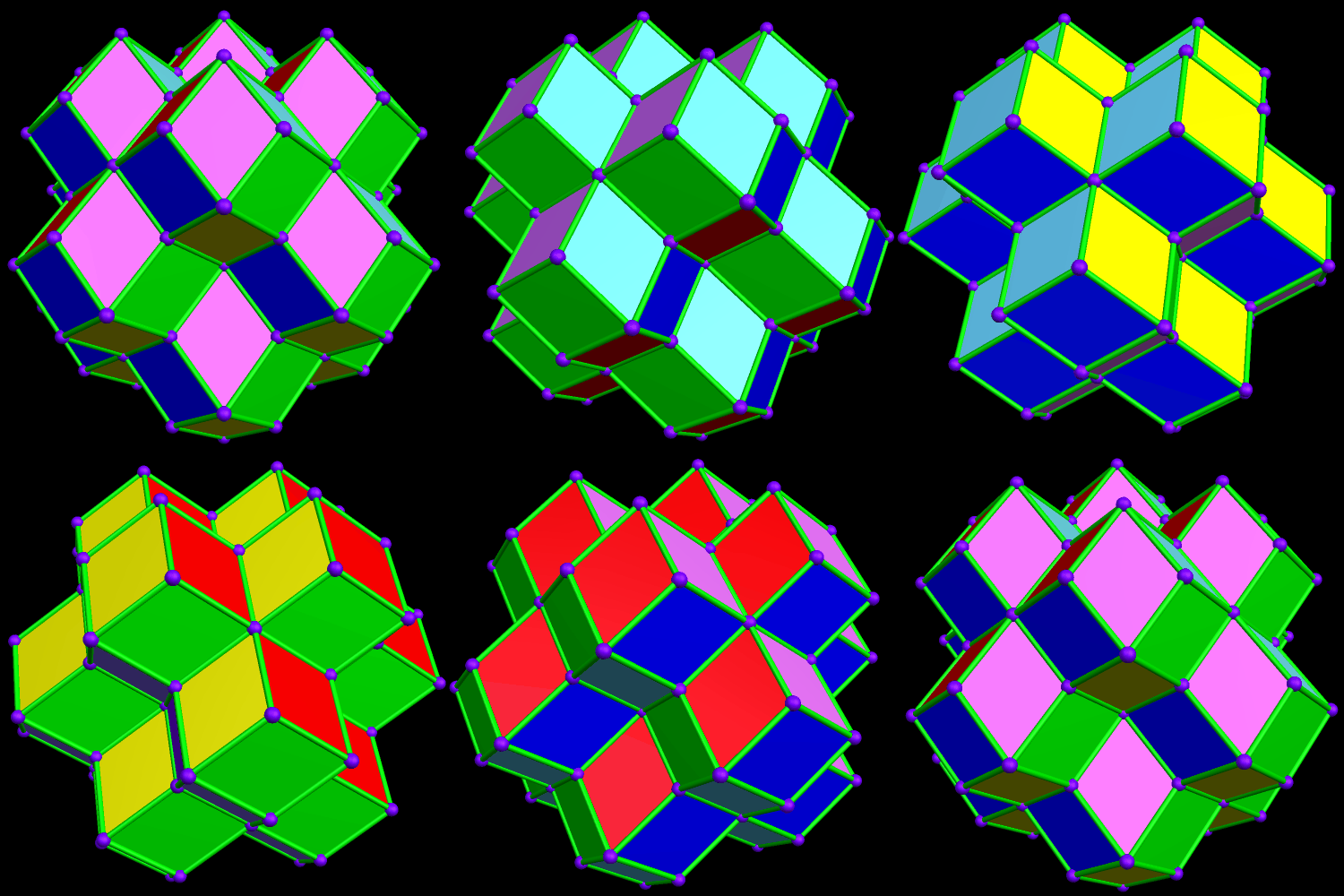
A Polyhedral Demonstration of the Fact That Nine Times Thirty Equals 270, Along with Its Interesting Dual

30 times 9 is 270

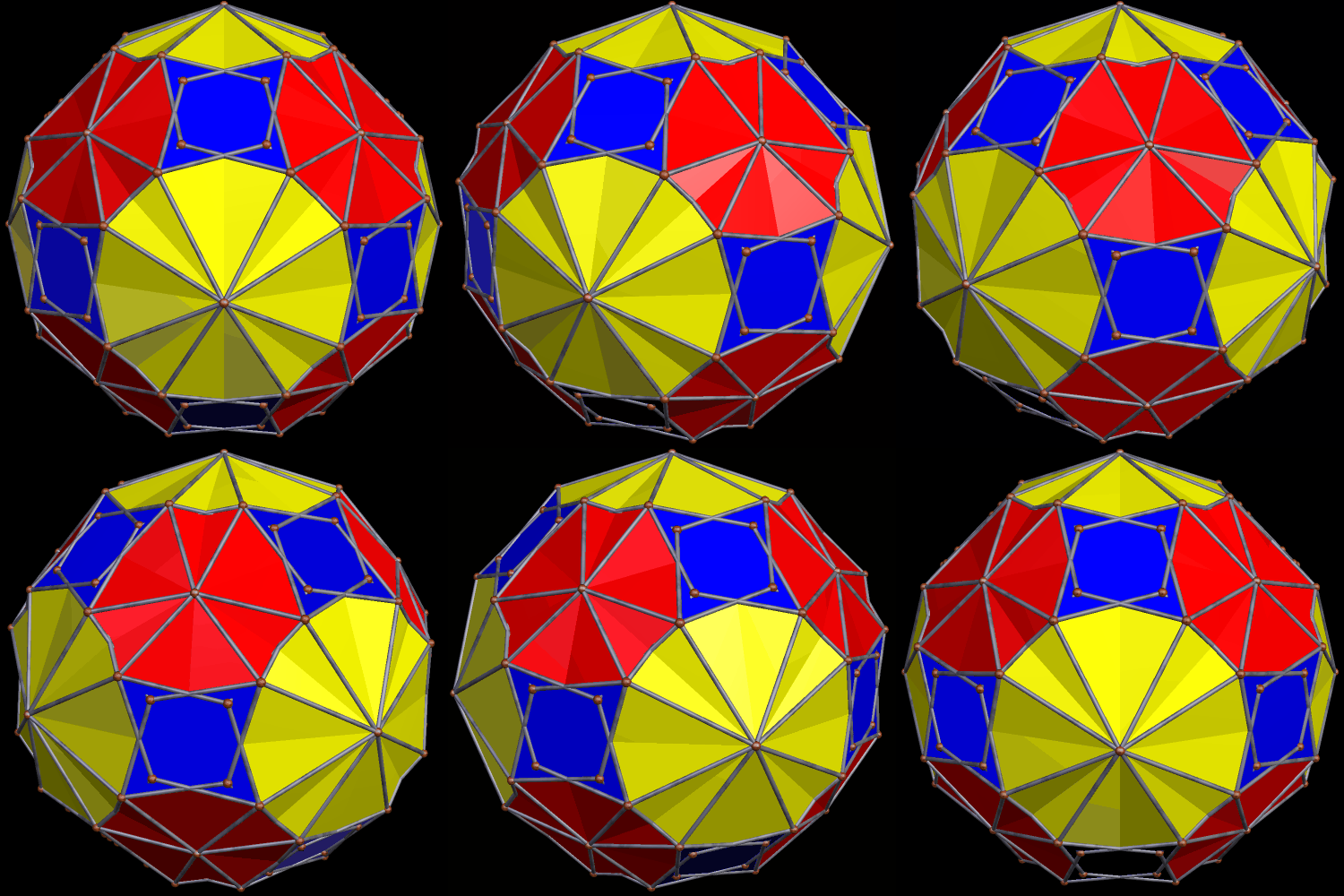
It would really be a pain to count the faces of this polyhedron, in order to verify that there are 270 of them. Fortunately, it isn’t necessary to do so. The polyhedron above is made of rhombus-shaped panels which correspond to the thirty faces of the rhombic triacontahedron. Each of these panels contains nine faces: one square, surrounded by eight triangles. Since (9)(30) = 270, it is therefore possible to see that this polyehdron has 270 faces, without actually going to the trouble to count them, one at a time.

The software I used to make this polyhedron may be found at http://www.software3d.com/Stella.php, and is called Stella 4d. With Stella 4d, a single mouse-click will let you see the dual of a polyhedron. Here’s the dual of the one above.

30 times 9 is 270 -- the dual

This polyhedron is unusual, in that it has faces with nine sides (enneagons, or nonagons), as well as fifteen sides (pentadecagons). However, these enneagons and pentadecagons aren’t regular — yet — but they will be in the next post.

A Cluster of Thirteen Rhombic Dodecahedra, and Three Other Related Polyhedra

13 Rhombic Dodeca

One of the thirteen rhombic dodecahedra in this cluster cannot be seen, for it is hidden in the middle. The other twelve are each attached to a face of the central rhombic dodecahedron.

If one then creates the convex hull of this cluster — the smallest convex polyhedron which can contain it — this is the result:

Convex hull before TTMFR

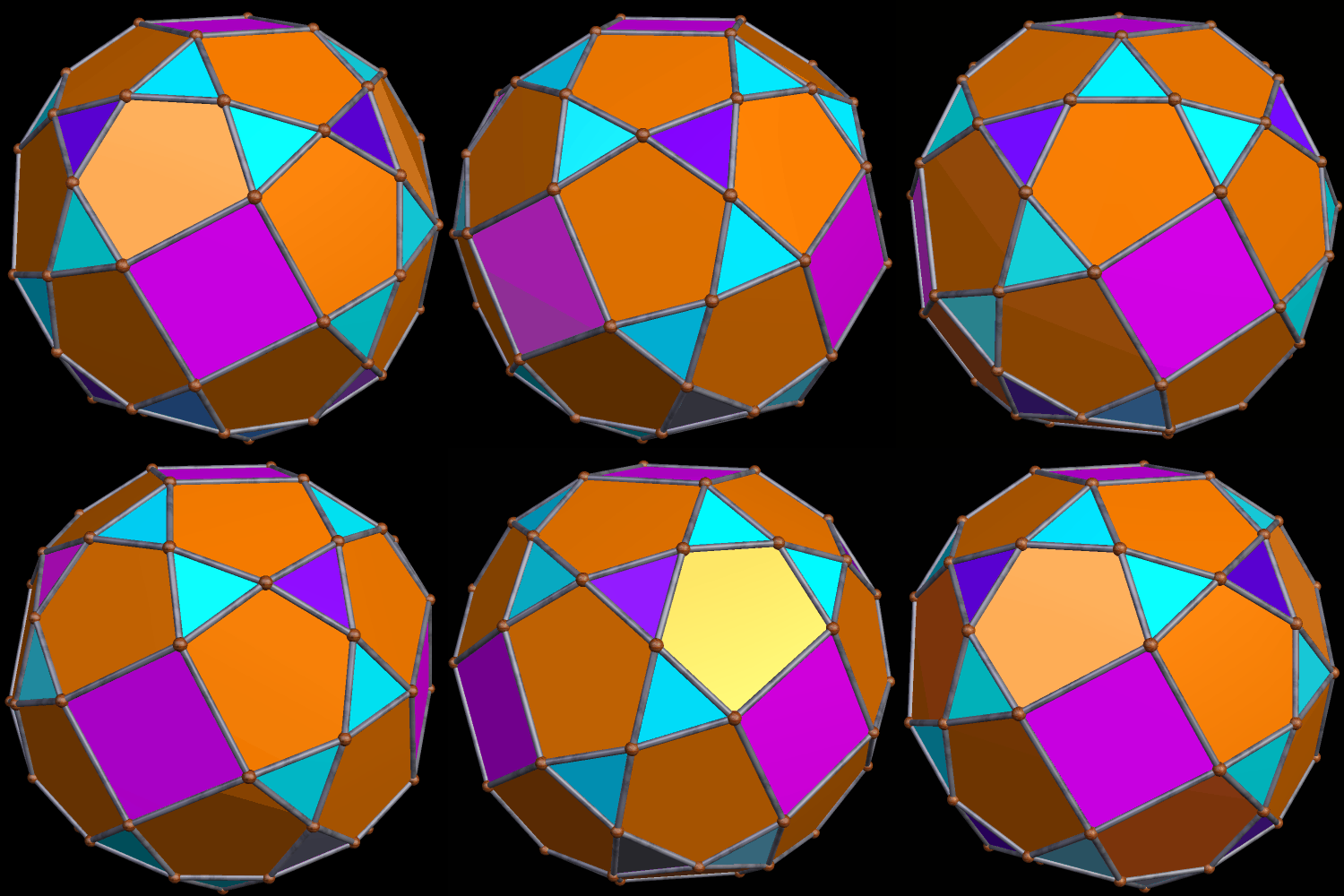
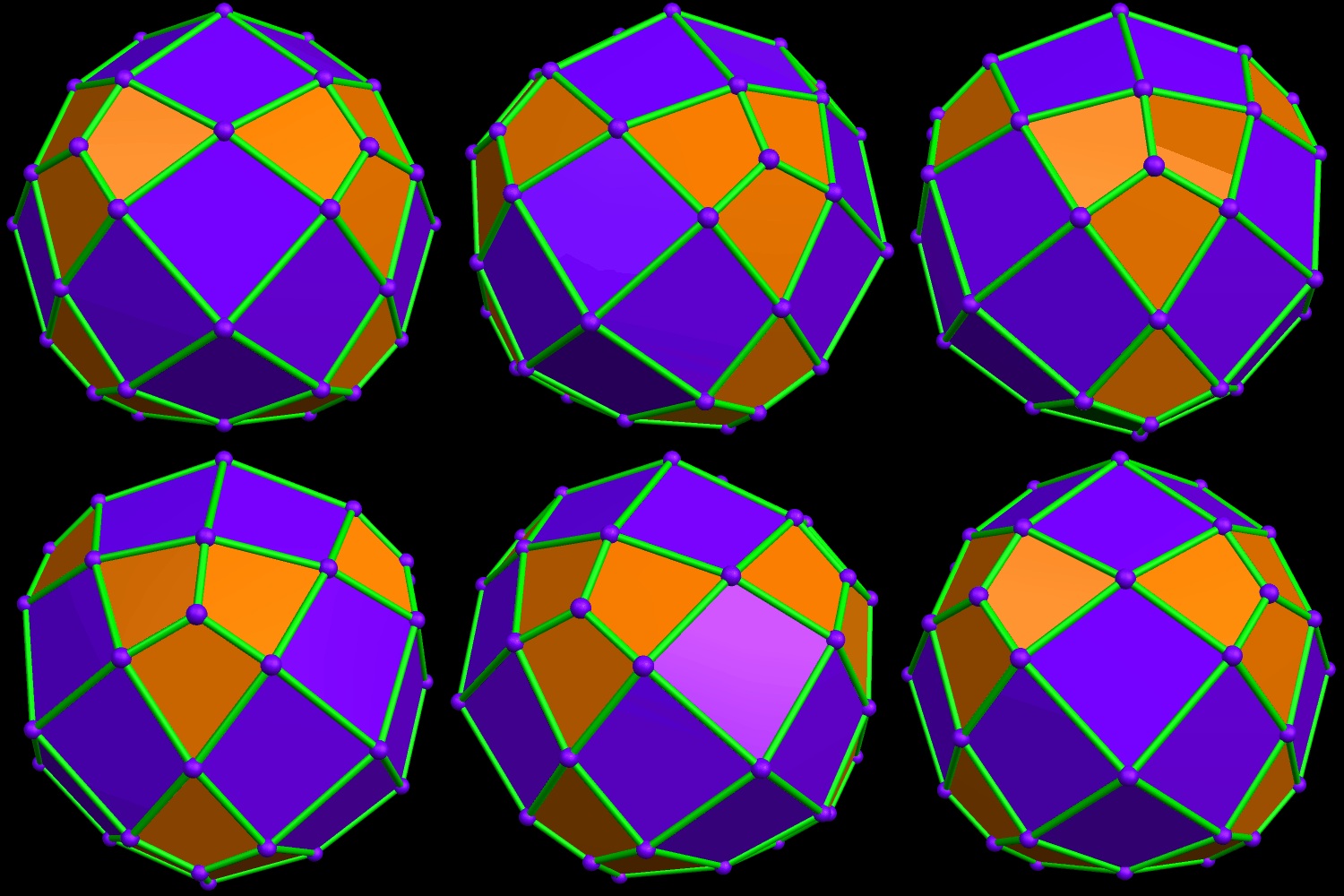
This polyhedron has fifty faces:  the six square faces of a cube, the eight triangular faces of an octahedron, the twelve rhombic faces of a rhombic dodecahedron, and twenty-four rectangles to fill the gaps between the other faces.

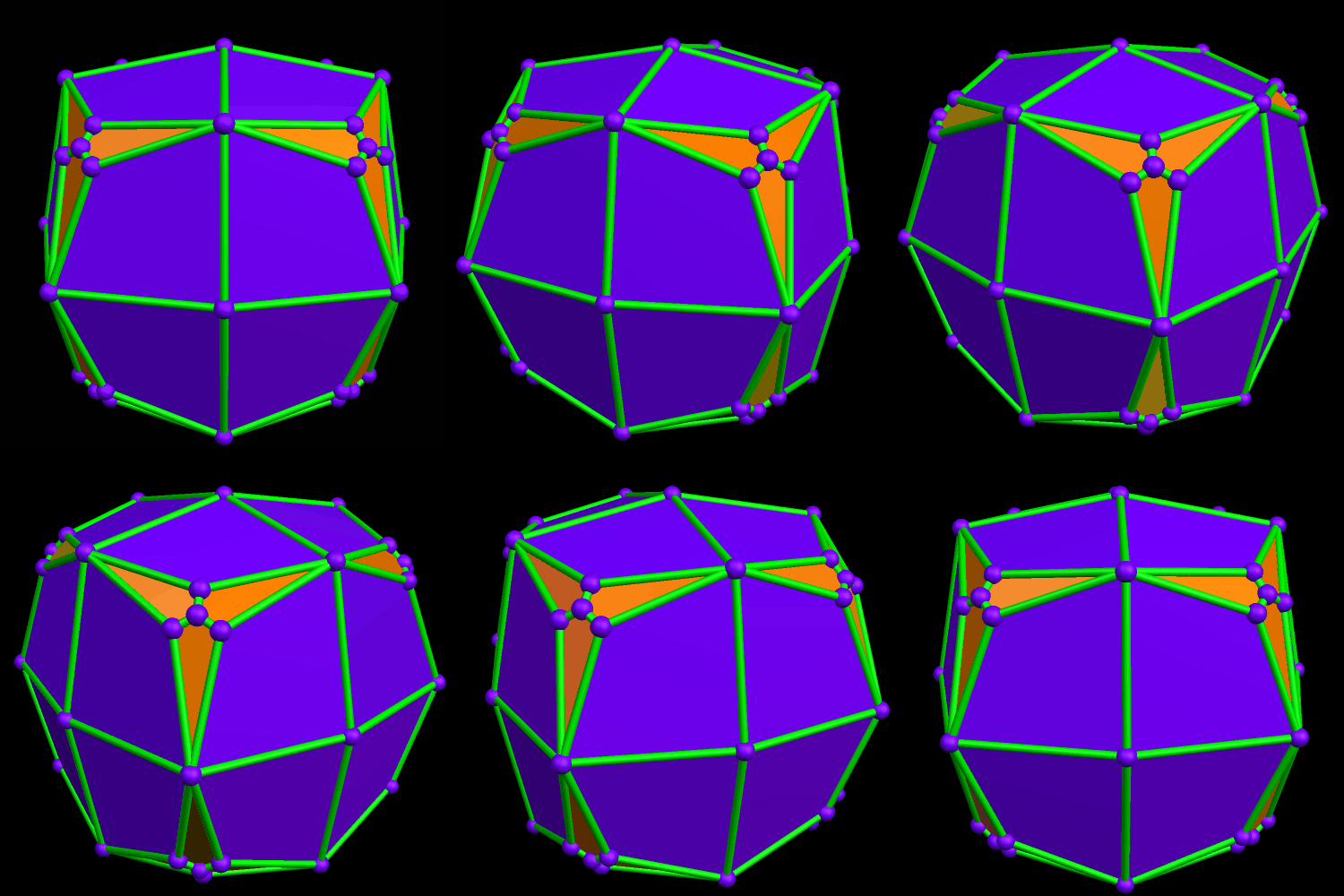
This fifty-faced polyhedron also has an interesting dual, with 48 faces, all of which are kites. Half of these 48 kites are of one type, and arranged into eight panels of three kites each, while the other half are arranged into six panels of four kites each:

48 kites

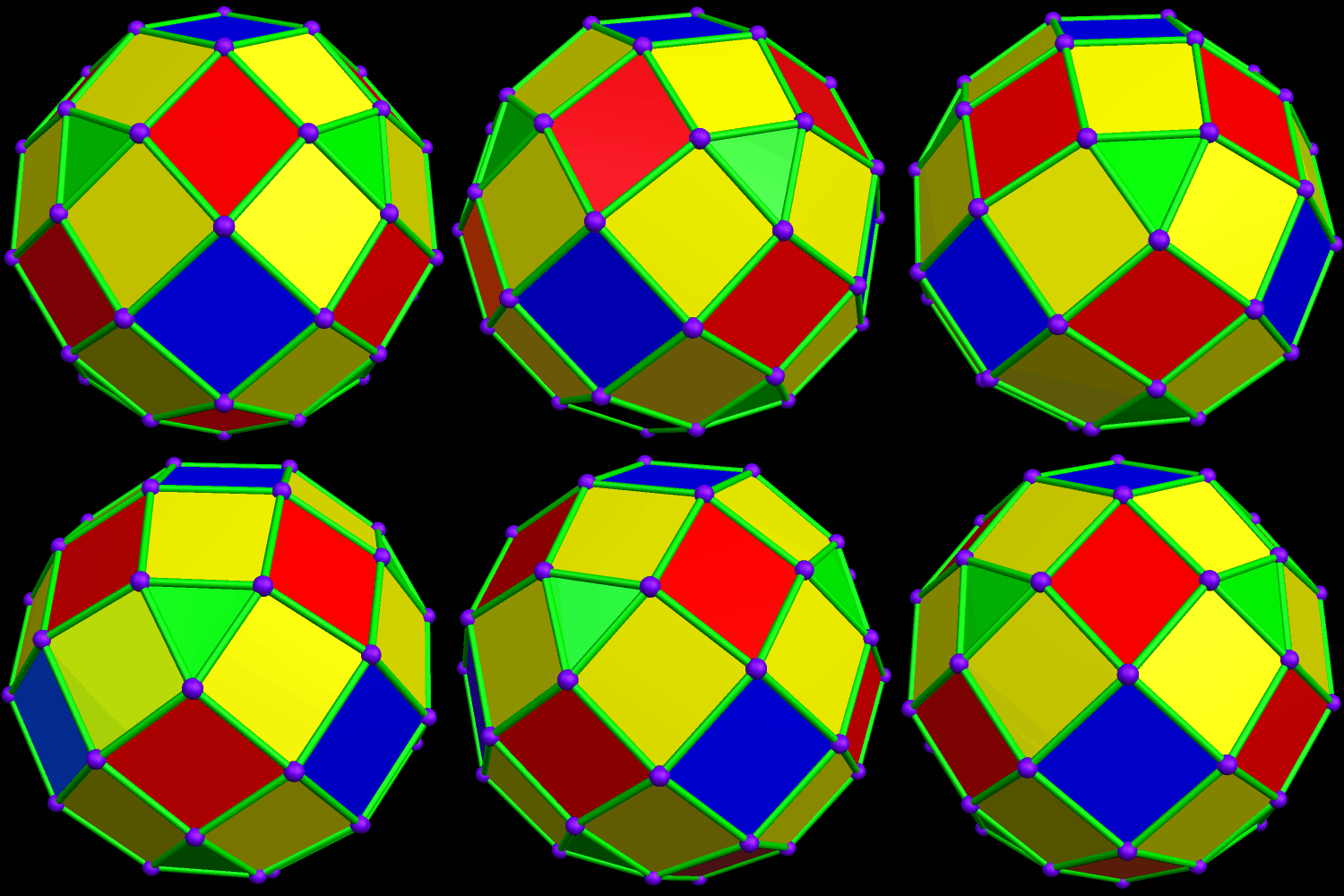
Returning to the fifty-faced polyhedron, two images above, here is what happens if one tries to make each face as regular as possible:

Unnamed

In this polyhedron, the six squares are still squares, the eight triangles are still regular, and the twelve rhombi are still rhombi, although these rhombi are wider than before. The 24 rectangles, however, have now been transformed into isosceles trapezoids.

[Software credit:  see http://www.software3d.com/Stella.php for more information about Stella 4d, the program I use to make these rotating images. A free trial download is available at that website.]