A Polyhedron Featuring 180 Kites as Faces, Plus Related Polyhedra

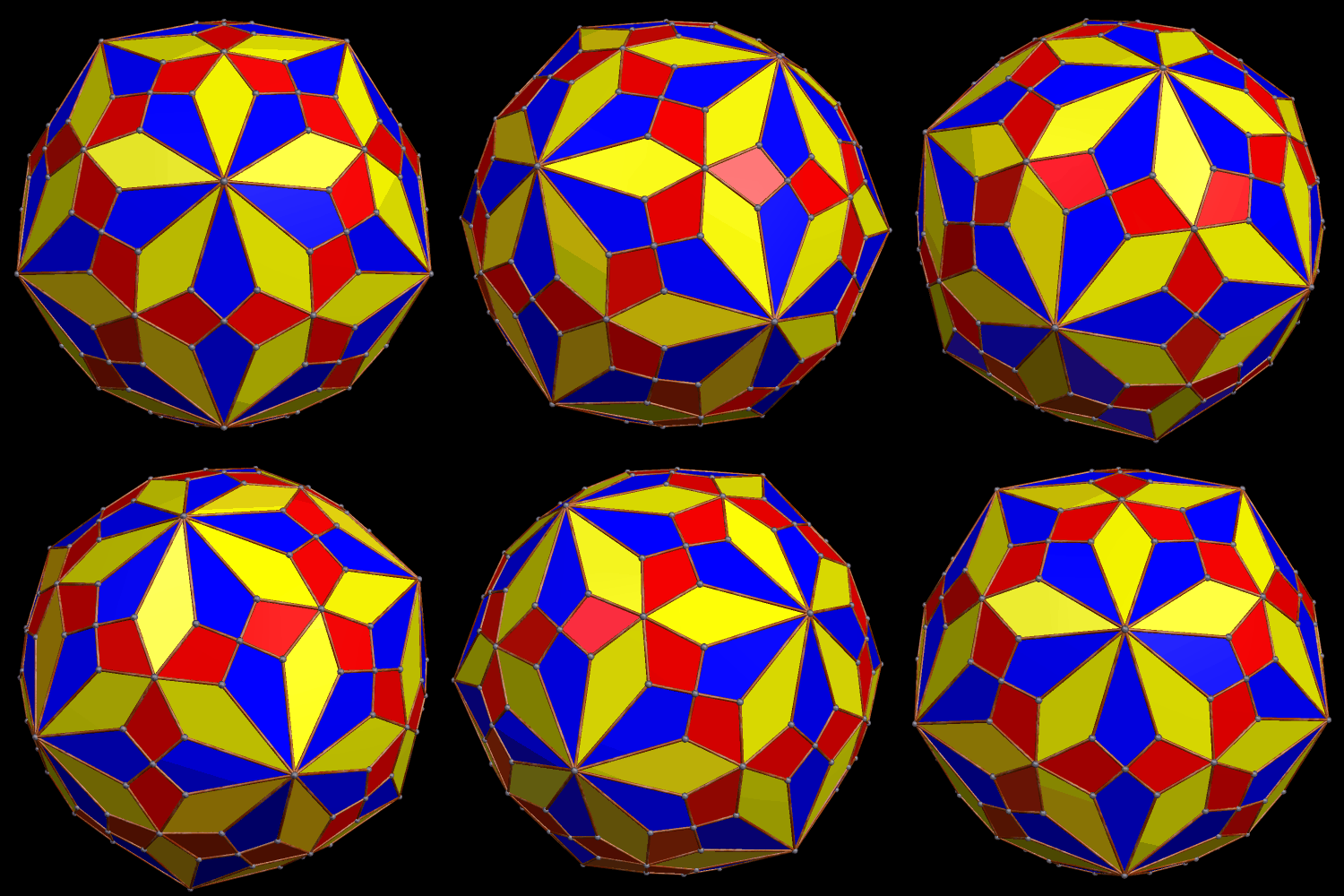
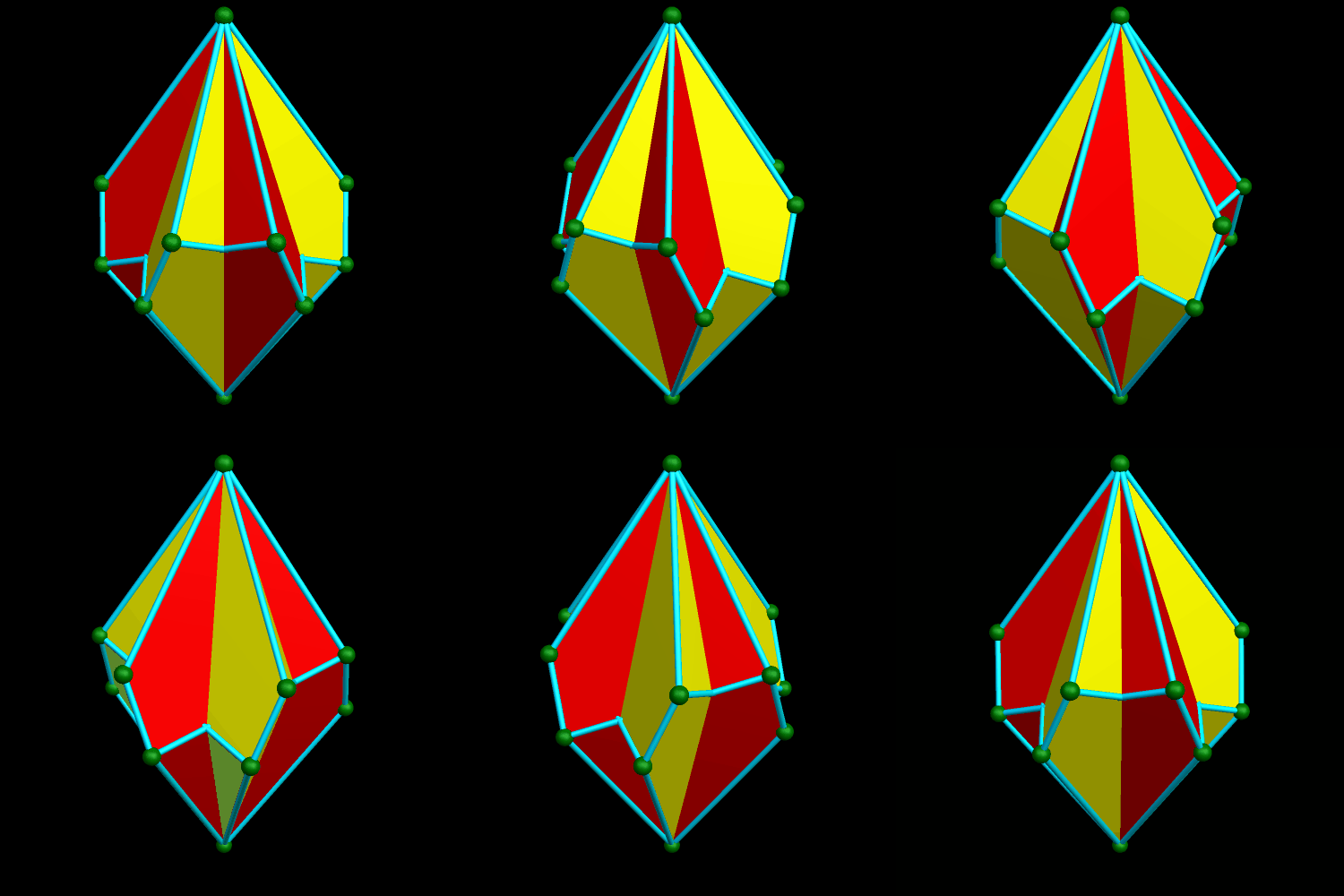
If one starts with the great rhombicosidodecahedron, then makes a compound of it, and its dual, and then forms the convex hull of that compound, this is the result:

180 kites 60&60&60

This polyhedron has 180 faces, all of them kites. What’s more, there are equal numbers — sixty each — of the three different types of kites in this polyhedron.

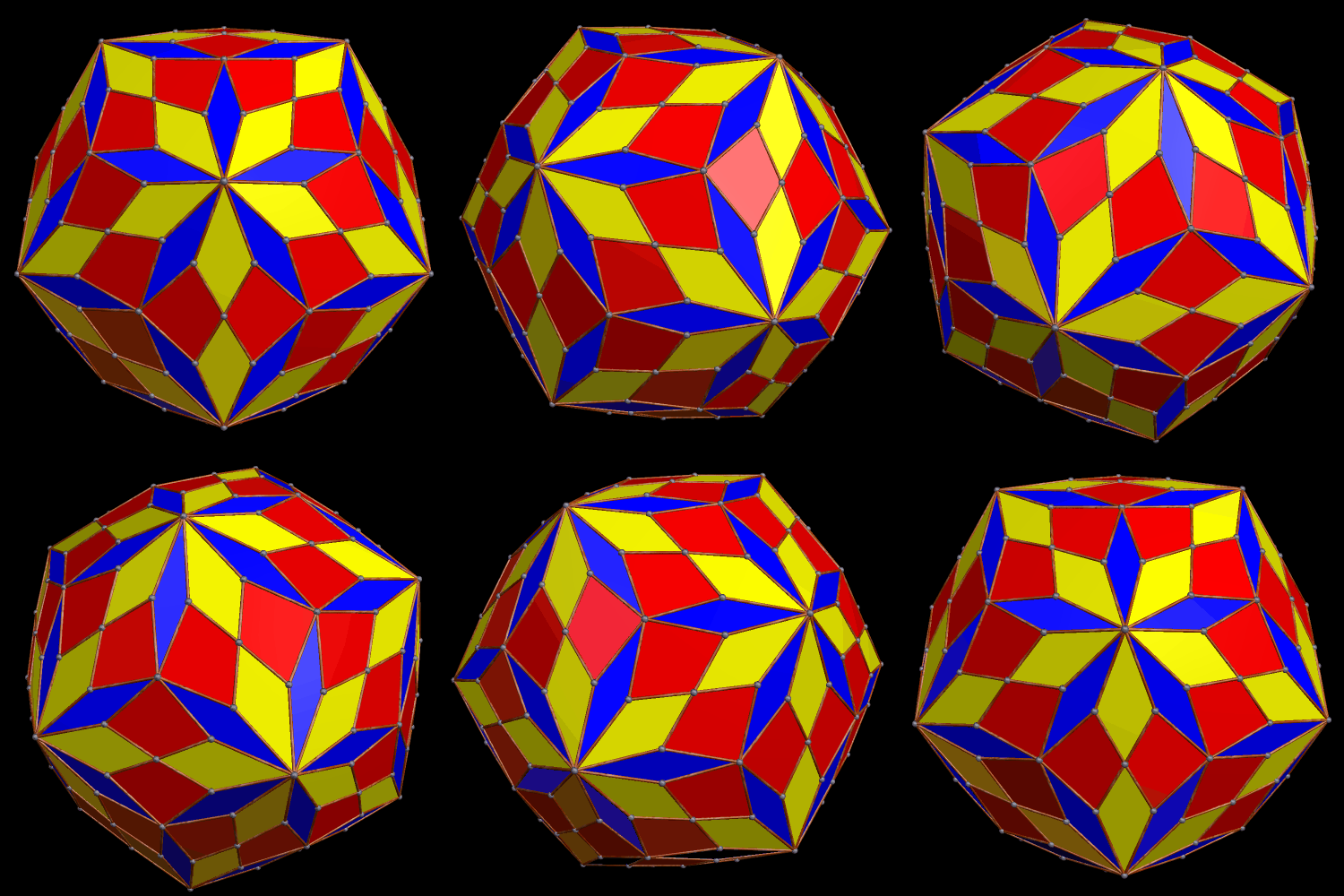
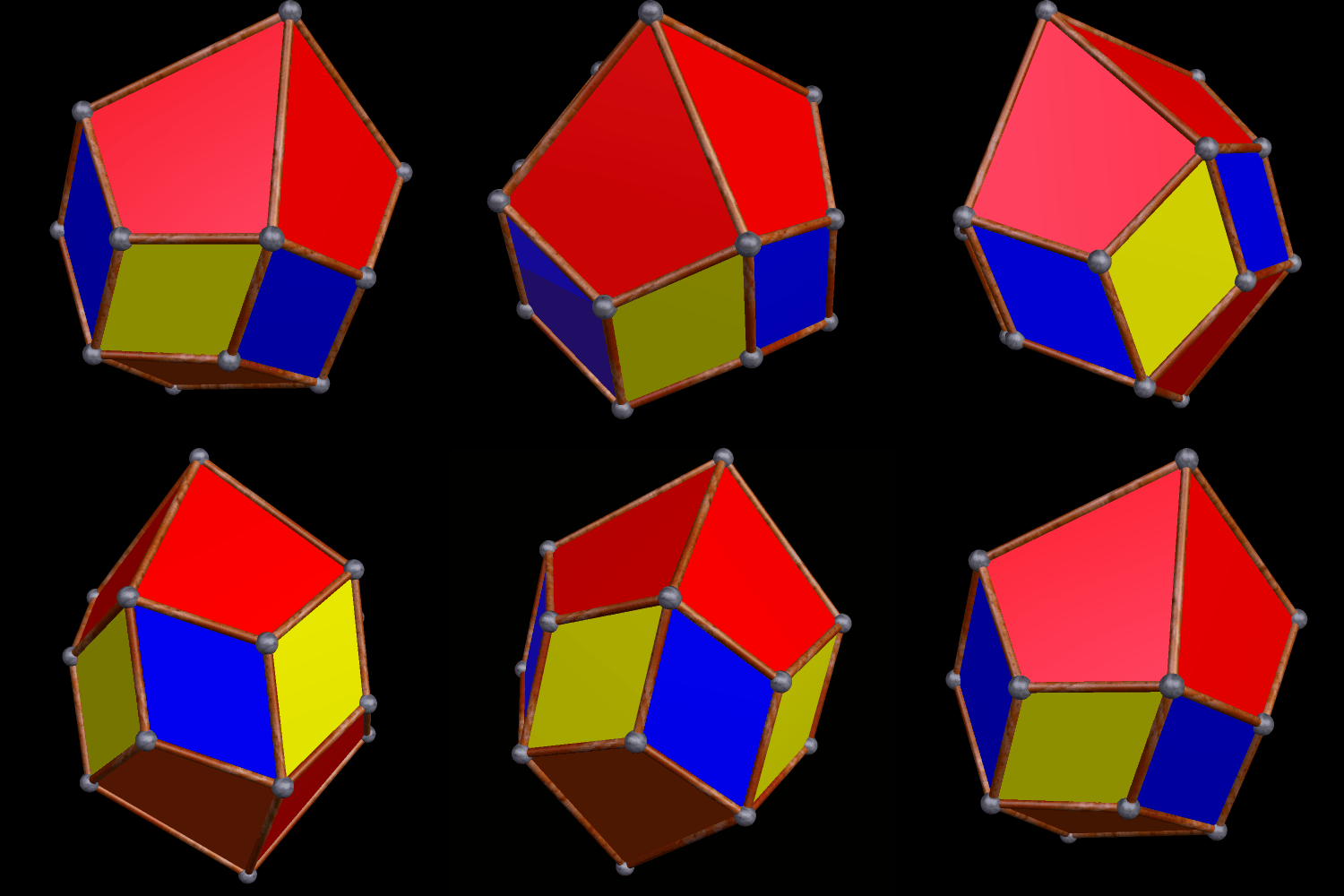
It also has an interesting dual:

180 kites 60&60&60 the dual

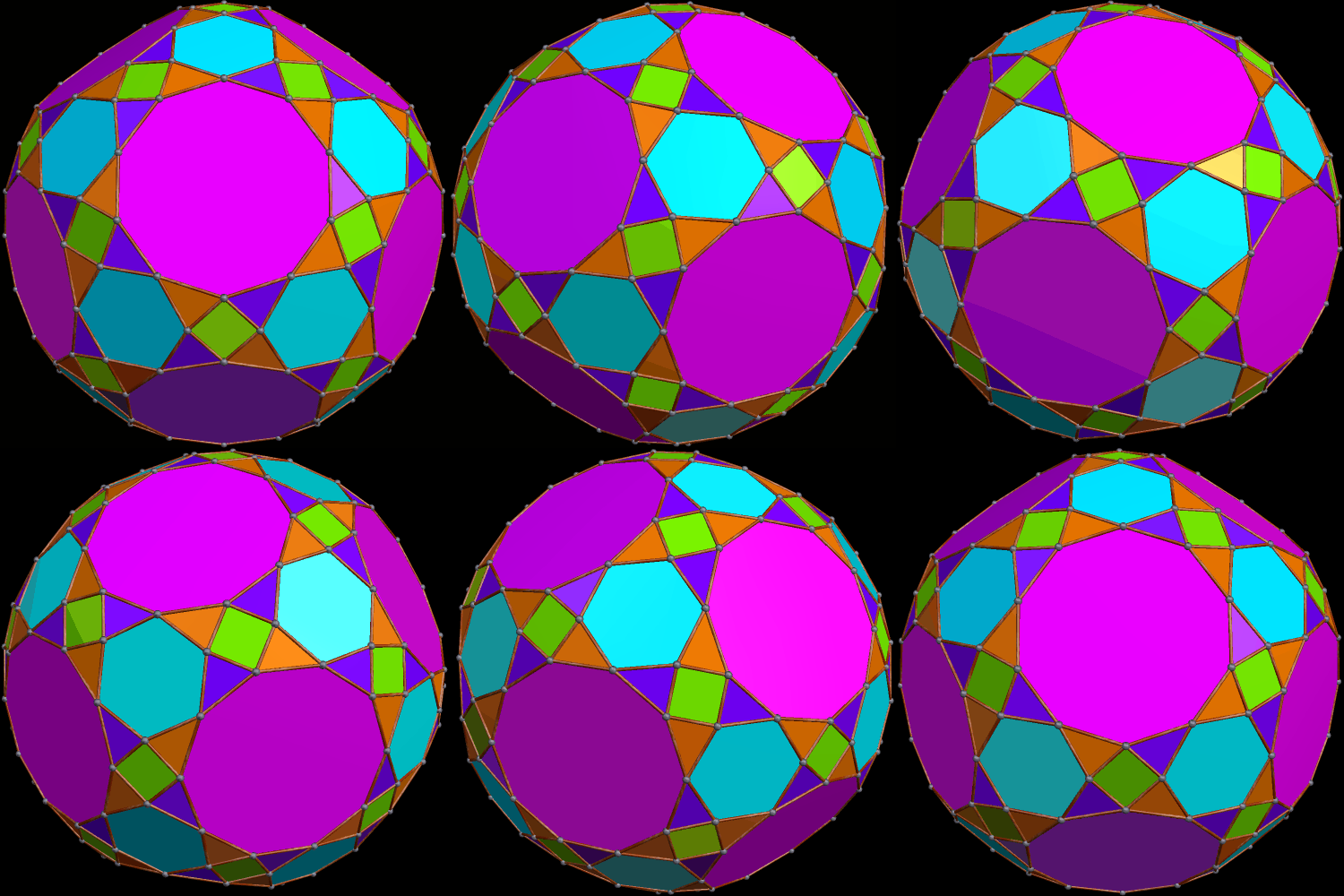
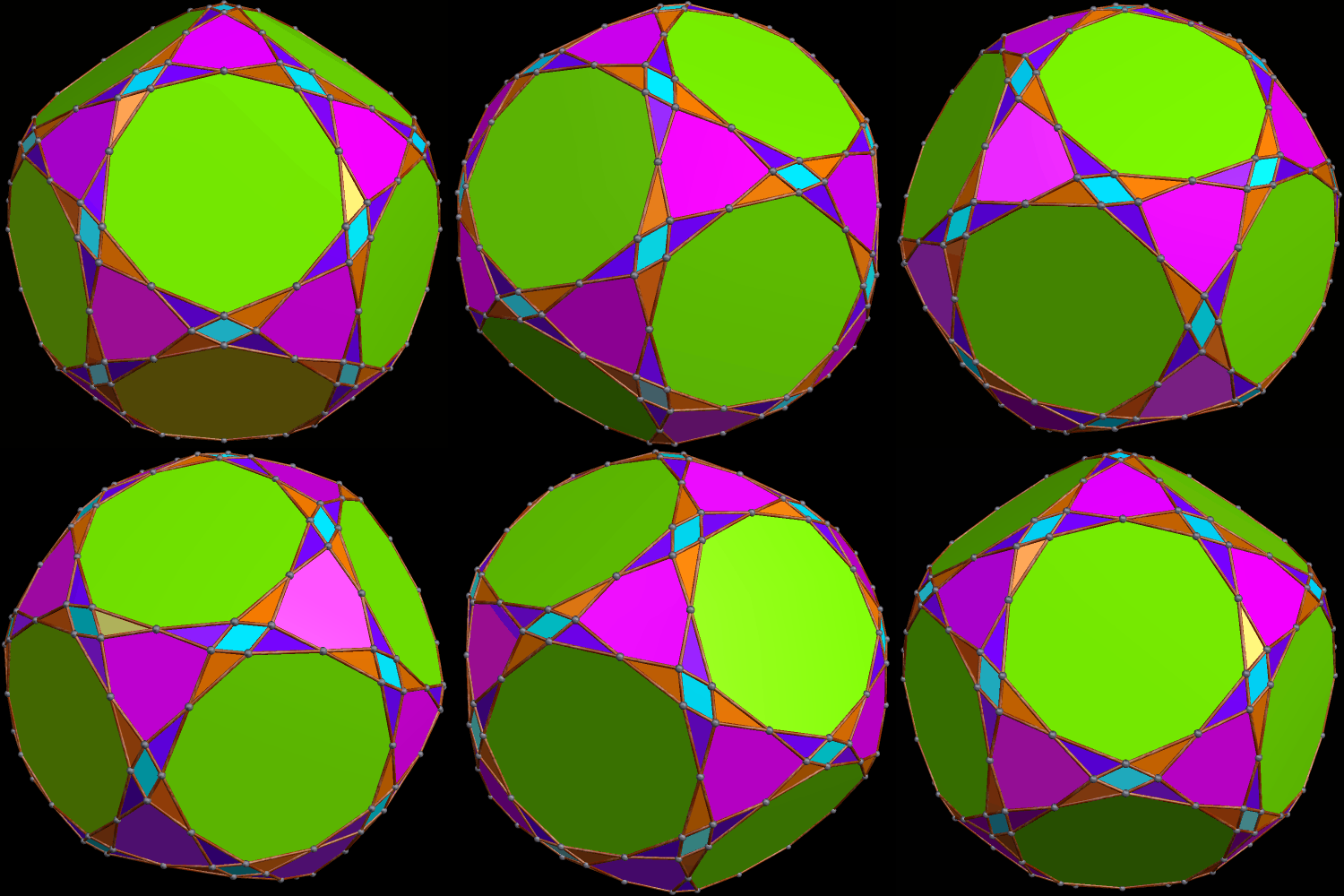
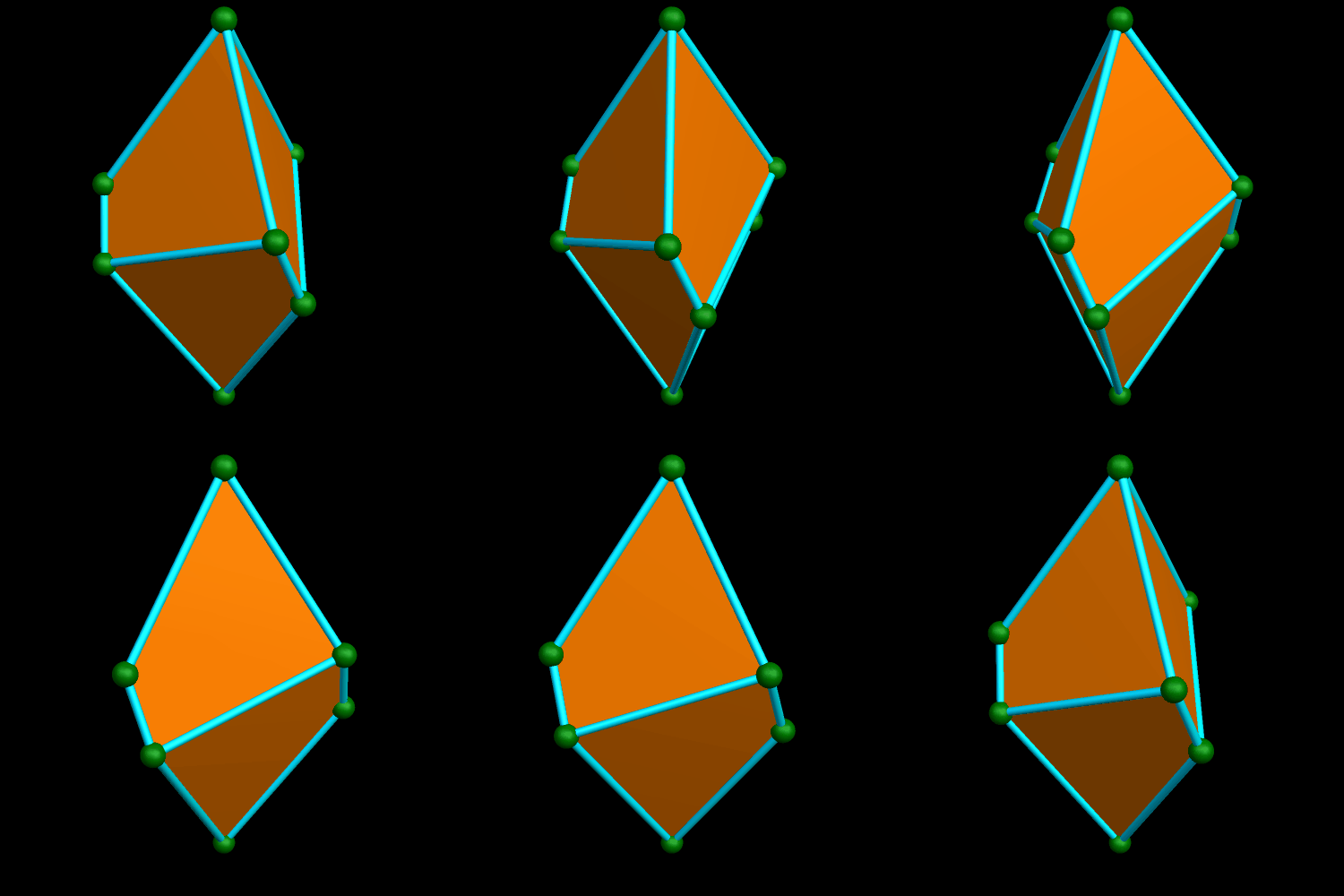
These virtual polyhedral models were created using Stella 4d: Polyhedron Navigator, which you can buy, or try for free, right here. Stella contains a “try to make faces regular” function, and here is what appears if that operation is applied to the dual shown above:

180 kites dual with TTMFR

The dual of this figure is similar to the original polyhedron at the top of this post, featuring 180 kites, again: sixty each, of three different types:

180 kites with TTMFR

My Third Solution to the Zome Cryptocube Puzzle

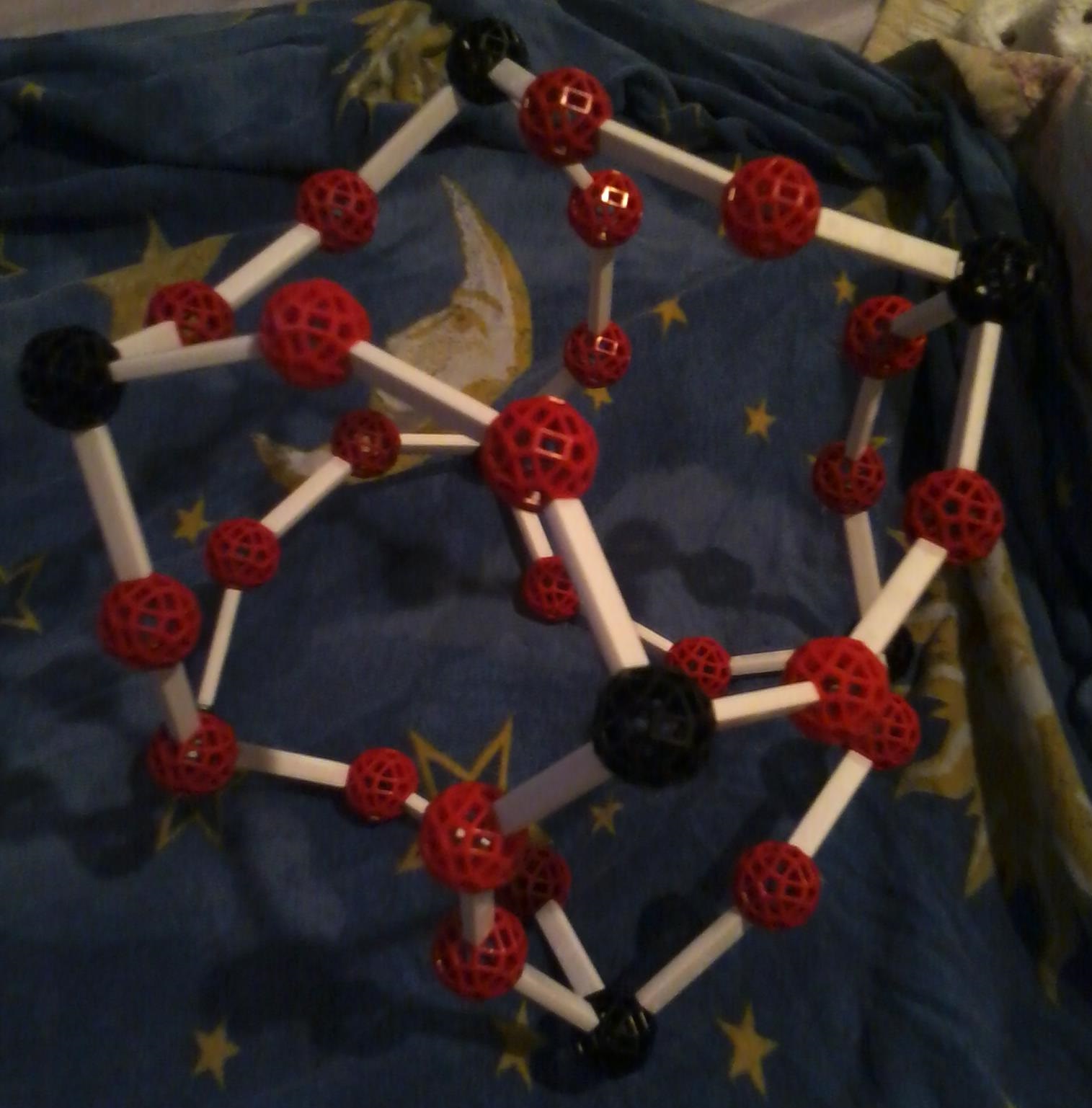
The President of the Zometool Corporation, Carlos Neumann, gave me a challenge, not long ago: find a solution to the Zome Cryptocube puzzle which uses only B0s, which I call “tiny blue struts.” For the Cryptocube puzzle, though, these “blue” struts actually appear white. Carlos knows me well, and knows I cannot resist a challenge involving Zome. Here is what I came up with, before the removal of the black cube, which is what the Zome Cryptocube puzzle starts with.

150923_0000

In a “pure” Crypocube solution, the red Zomeballs would also be white — not just the “blue” struts. However, when Carlos issued this challenge, I was at home, with all the white Zomeballs I own located at the school where I teach — so I used red Zomeballs, instead, since I had them at home, and did not wish to wait.

Here’s what this Cryptocube solution looks like, without the black cube’s black struts. You can still “see” the black cube, though, for the black Zomeballs which are the eight corners of the black cube are still present. As is happens, this particular Cryptocube solution has pyritohedral symmetry — better known as the symmetry of a standard volleyball.

150923_0001

While the Cryptocube puzzle is not currently available on the Zome website, http://www.zometool.com, it should be there soon — hopefully, in time for this excellent Zome kit to be bought as a Christmas present. Once a child is old enough so that small parts present no choking hazard, that child is old enough to start playing with Zome — and it is my firm belief that such play stimulates the intellectual growth of both children and adults. As far as a maximum age where Zome is an appropriate Christmas gift, the answer to that is simple: there isn’t one.

Also: while I do openly advertise Zome, I do not get paid to do so. I do this unpaid advertising for one reason: I firmly believe that Zome is a fantastic product, especially for those interested in mathematics, or for those who wish to develop an interest in mathematics — especially geometry. Also, Zome is fun!

Five Polar Polyhedra

Most polyhedra I post have cuboctahedral, tetrahedral, or icosidodecahedral symmetry, or some pyritohedral or chiral variation of one of these symmetry-types. These, however, are exceptions. I call them “polar polyhedra” because they each have an identifiable “North Pole” and “South Pole,” which are, in three of these five images, at the ends of their axes of rotation.

cub isomorph polar and chiral Compound of enantiomorphic pair

polar and chiral cubic isomorpth

Dual Morph 50.0%

polar polyhedrarhombus-elongated trapezohedron with n = 4

These rotating images were created using Stella 4d, software you may try for yourself, right here.

Sixty and Sixty: A Chiral Polyhedron, as well as the Compound of It, and Its Own Reflection

60 and 60 -- chiral

This polyhedron is chiral, meaning that (unlike many well-known polyhedra) it exists in “left-handed” and “right-handed” forms — reflections of each other. These “reflections” are also called enantiomers. I call this polyhedron “sixty and sixty” because there are sixty faces which are irregular, purple quadrilaterals, as well as sixty faces which are irregular, orange pentagons.

I stumbled upon this polyhedron while playing around with Stella 4d: Polyhedron Navigator, software you can try right here. For those who research polyhedra, I know of no better tool.

To see the other enantiomer, there is a simple way — just hold a mirror in front of your computer screen, with it showing the image above, and look in the mirror!

With any chiral polyhedron, it is possible to make a compound out of the two enantiomers. Here is what the compound looks like, for this “sixty and sixty” polyhedron cannot be seen this way, so here is an image of it, also created using Stella 4d.

60 and 60 chiral --Compound of enantiomorphic pair

One of Many Faceted Rhombicosidodecahedra

Faceted Rhombicosidodeca the dual of the 32nd stellation of the strombic hexaconta

This was created by making the dual of the 32nd stellation of the strombic hexacontahedron, which is itself the dual of the rhombicosidodecahedron. This technique for finding facetings works because faceting is the reciprocal function of polyhedral stellation.

I did this using Stella 4d, which you can try for yourself, for free, at http://www.software3d.com/Stella.php.

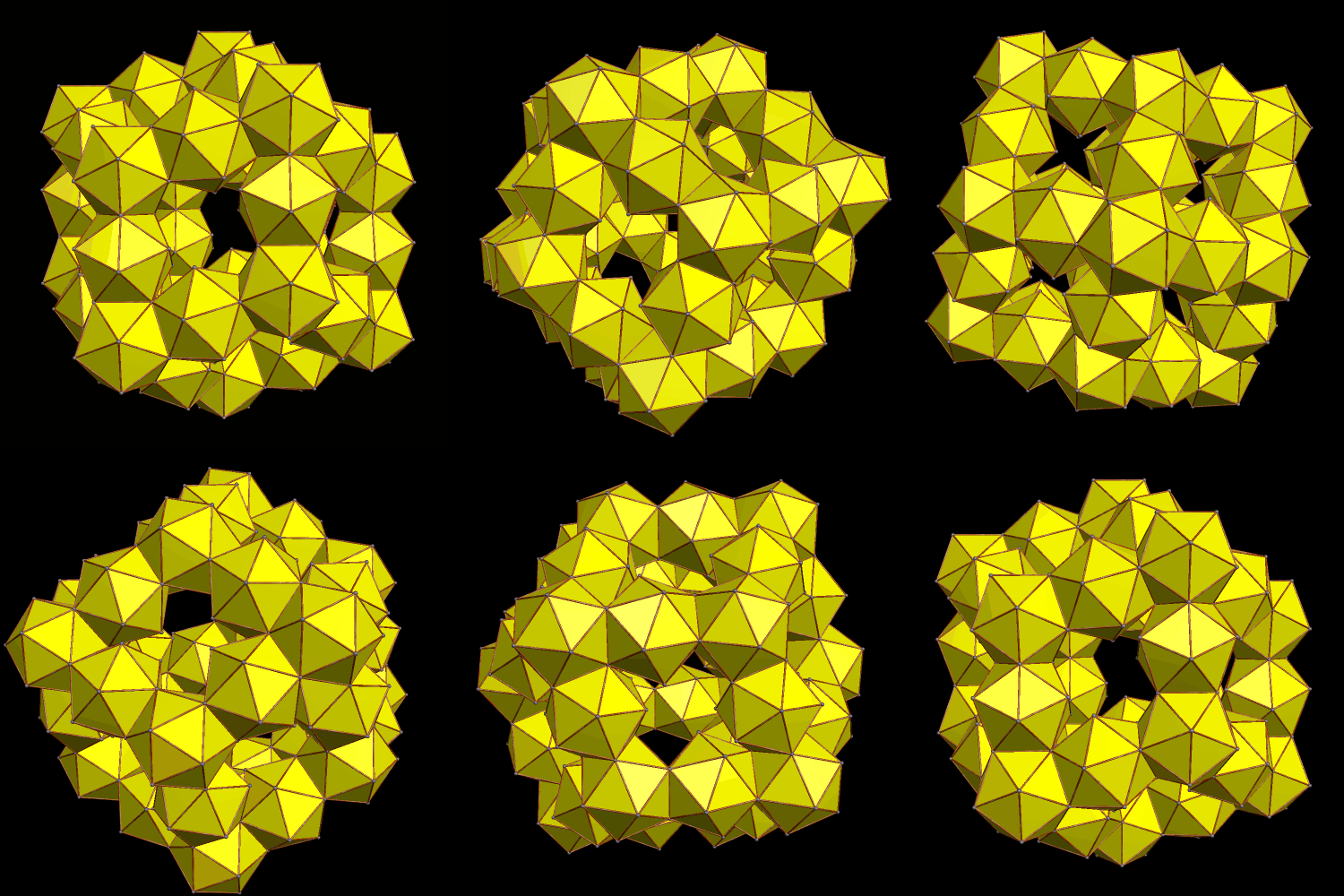
A Rhombic Ring of Icosahedra, Leading to a Rhombic Dodecahedron Made of Icosahedra

As it turns out, eight icosahedra form this rhombic ring, by augmentation:

Rhombic ring of Icosa

Measured from the centers of these icosahedra, the long and short diagonal of this rhombus are in a (√2):1 ratio. How do I know this? Because that’s the only rhombus which can made this polyhedron, a rhombic dodecahedron, dual to the cuboctahedron.

RD of Augmented Icosa

This rhombic dodecahedral cluster of icosahedra could be extended to fill space, since the rhombic dodecahedron itself has this property, an unusual property for polyhedra. Whether space-filling or not, the number of icosahedron per rhombic-dodecahedron edge could be increased to 5, 7, 9, or any greater odd number. Why would even numbers not work? This is a consequence of the fact that opposite faces of an icosahedron are inverted, relative to each other; a pair of icosahedra (or more than one pair, producing odd numbers > 1 when added to the vertex-icosahedron) must be attached to the one at a rhombic-dodecahedron-vertex to make these two inversions bring the triangular face back around to its original orientation, via an even number of half-rotations, without which this consruction of these icosahedral rhombi cannot happen.

Here’s another view of this rhombic dodecahedron, in “rainbow color” mode:

RD of Augmented Icosa RB

All images above were produced using Stella 4d, software which may be tried for free right here.

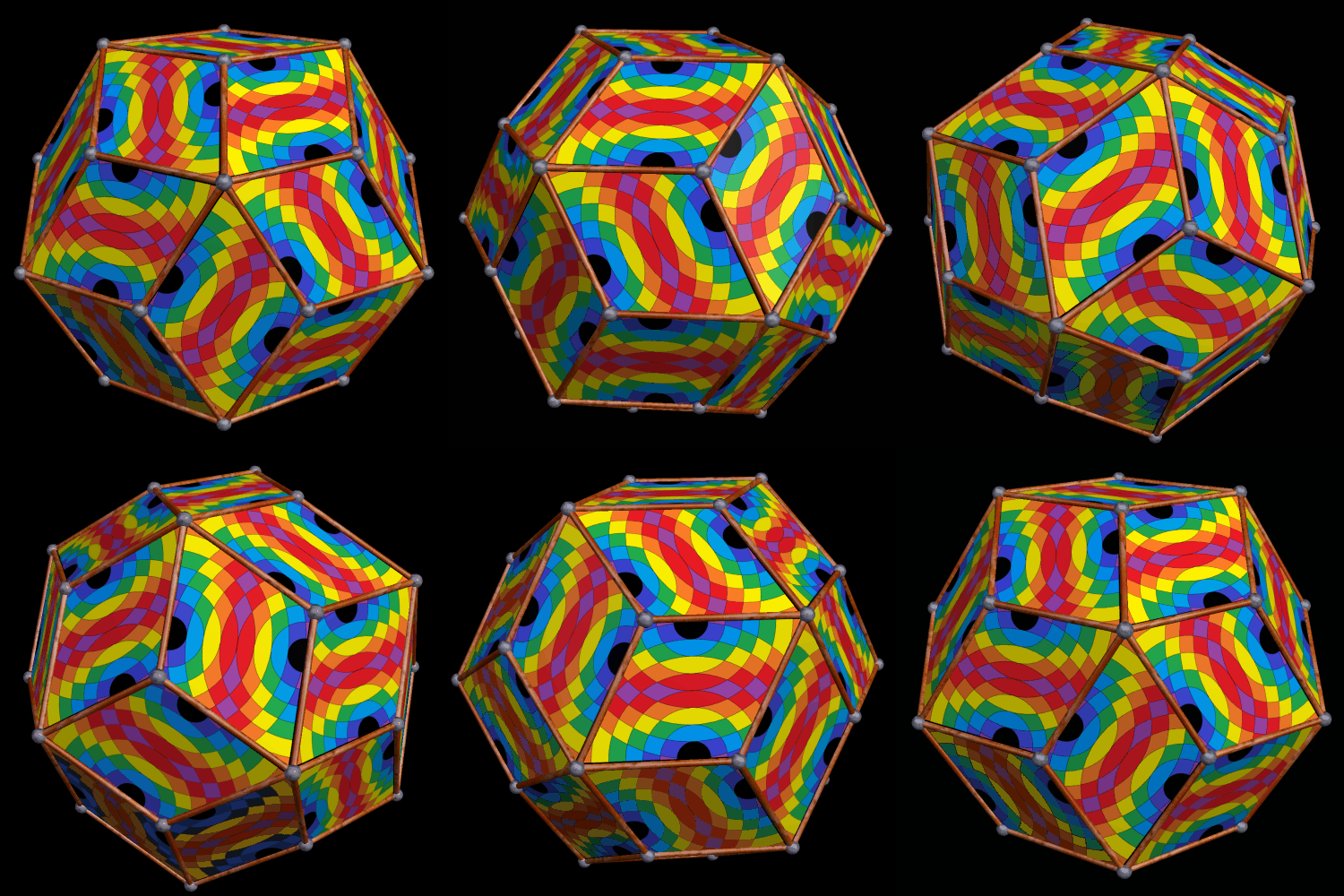
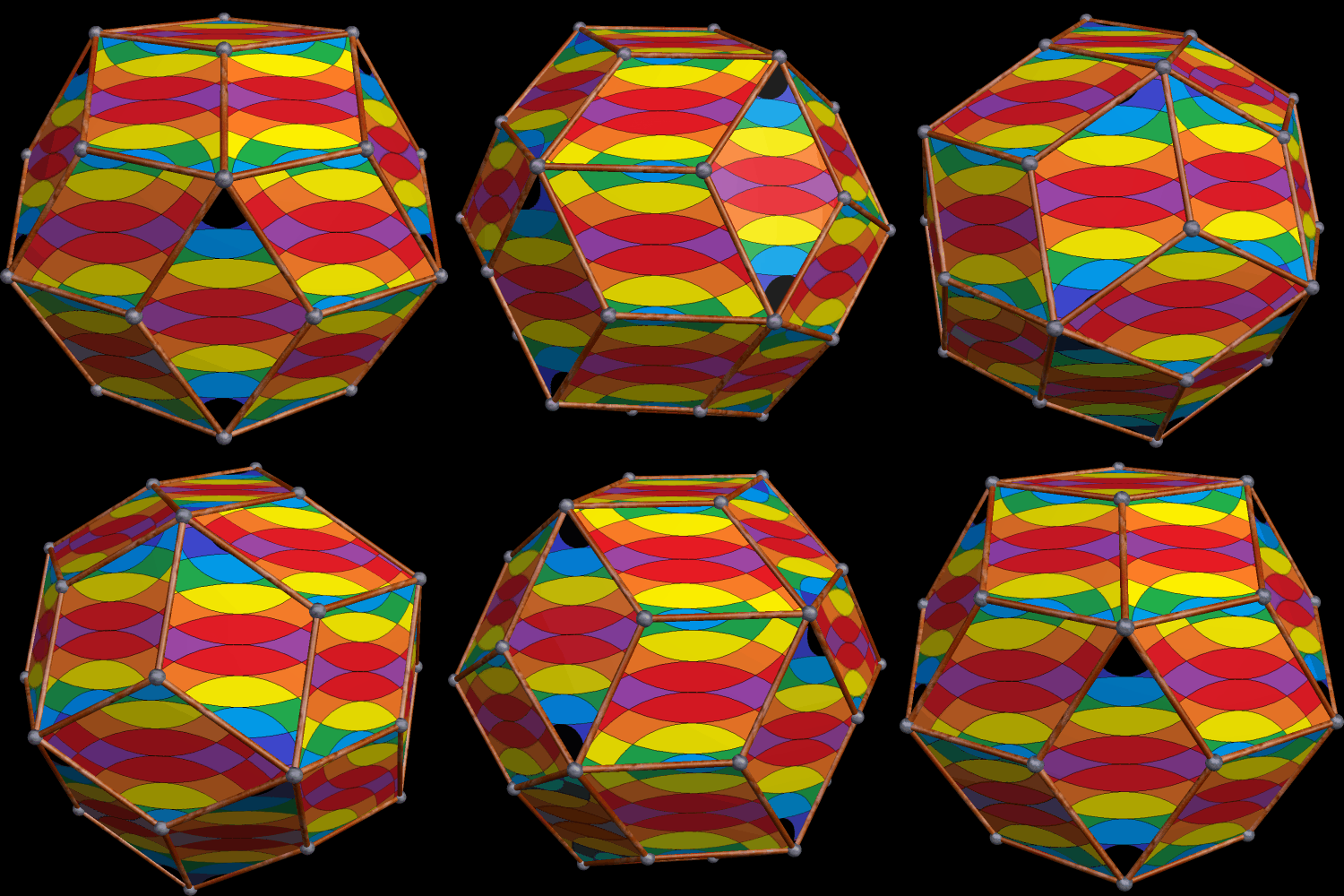
Two Versions of a Slowly Rotating Rhombic Triacontahedron, Adorned with Spectral Patterns on Each Face

Rhombic Triaconta

It took three programs to make this. First, outlines of the “double rainbow” patterns on each face were constructed using Geometer’s Sketchpad. A screenshot from that program was then pasted into MS-Paint, which was used to add color to the outline of the pattern on each face. Next, the colorized image was projected onto each face of a rhombic triacontahedron, using Stella 4d: Polyhedron Navigator — the program that put this all together, and what I used to generate the rotating .gif above. Stella is available at http://www.software3d.com/Stella.php, with a free trial download available.

Interestingly, while this polyhedron itself is not chiral, the coloring-pattern of it, shown above, is.

With only small modifications, Stella can produce a very different version:

Rhombic Triaconta

Which one do you like better?

Geometry Problem Involving Two Circles (See Comments for Solution)

This is a puzzle I made up not long ago. After trying to solve it for a bit (no success yet, but I haven’t given up), I decided to share the fun.

A small circle of radius r is centered on a large circle of radius R. It is a given that 0 < r < R. In terms of r and R, what fraction of the smaller circle’s circumference lies outside the larger circle?

two circles

I am 90% certain there is an extremely simple way to do this, using only things I already know. It’s frustrating that the answer isn’t simply leaping out of the computer screen, at me. For simple math problems, that’s what usually happens . . . so either this is merely deceptively simple, or I am missing something.

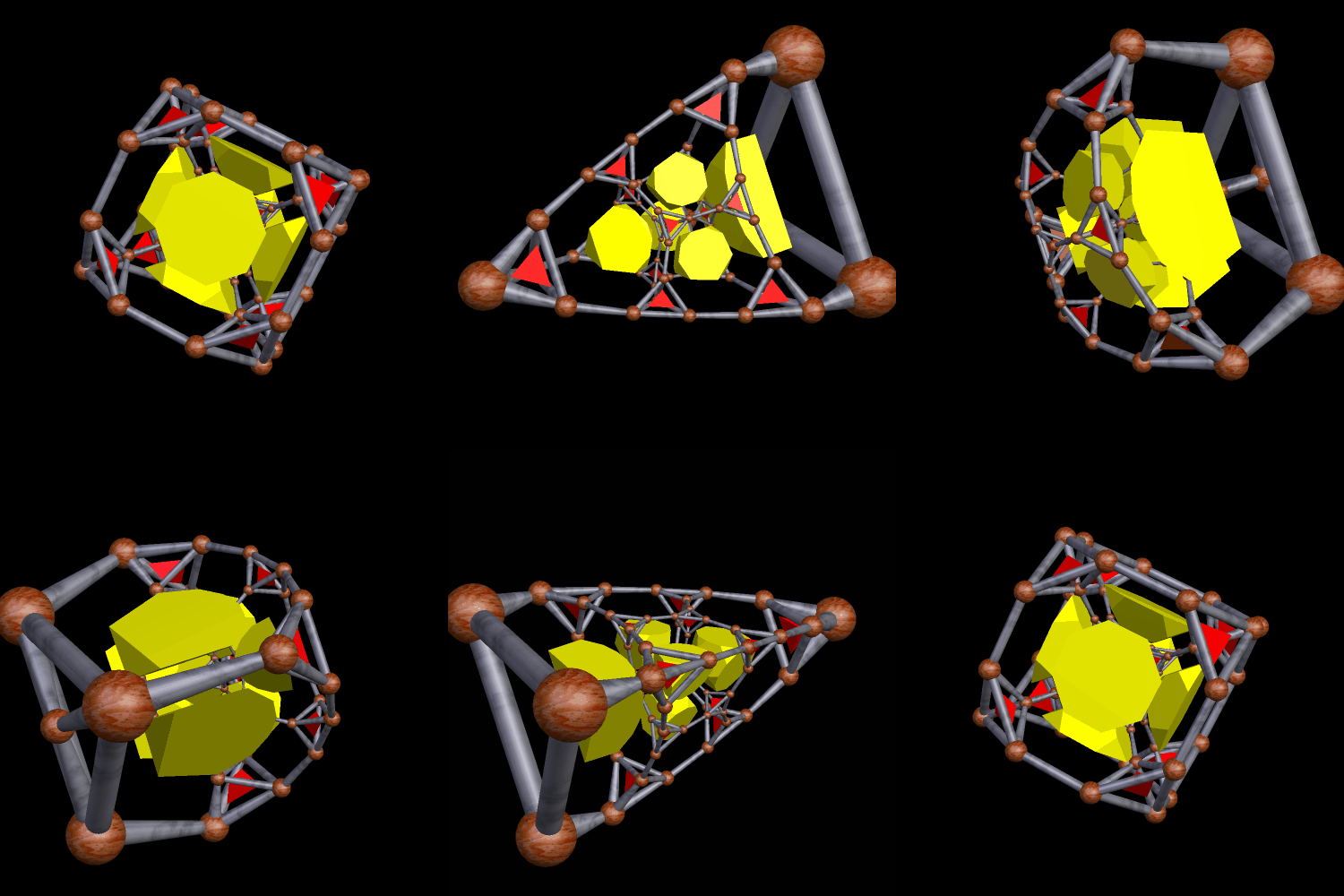
Two Views of the Truncated Tesseract

19 truncated tesseract orthogonal projection

The figure above, rotating in hyperspace, is an orthogonal projection of a four-dimensional polychoron known as the truncated tesseract. It is analogous to the truncated cube, one of the Archimedean solids. The image below is of the same figure, but is shown as a perspective projection.

19-Tat perspective projection

Both images were created using Stella 4d, software you can buy (with a free trial download available, first) at http://www.software3d.com/Stella.php. It’s great software, and a friend of mine wrote it — but no, he doesn’t pay me to give his program free advertising, as some have wondered.

One Dozen Precious Metal Cubes: A Problem Involving Geometry, Chemistry, and Finance (Solution Provided, with Pictures)

The troy ounce is a unit of mass, not weight, and is used exclusively for four precious metals. At this time, the prices per troy ounce, according to this source for current precious metal prices, for these four elements, are:

  • Gold, $1,094
  • Palladium, $600
  • Platinum, $965
  • Silver, $14.82

(As a side note, it is rare for platinum to have a lower price per troy ounce than gold, as is now the case. I would explain the reasons this is happening, except for one problem: I don’t understand the reasons, myself, well enough to do so. Yet.)

A troy ounce equals 31.1034768 grams, but, for most purposes, 31.103 g, or even 31.1 g, works just fine.

Also, as you can see here, these “troy elements” are all in one part of the periodic table. This is related to the numerous similarities in these elements’ physical and chemical properties, which is itself related, of course, to the suitability of these four elements for such things as jewelry, coinage, and bullion.

1371846764_periodic_table_of_elements

To determine the volume of a given mass of one of these metals, it is also necessary to know their densities, so I looked them up, using Google (they are not listed on the periodic table above):

  • Gold, 19.3 g/cm³
  • Palladium, 11.9 g/cm³
  • Platinum, 21.46 g/cm³
  • Silver, 10.49 g/cm³

In chemistry, of course, one must often deal with elements (as well as other chemicals) in terms of the numbers of units (such as atoms or molecules), except for one problem: this is absurdly impractical, due to the outrageously small size of atoms. Despite this, though, it is necessary to count such things as atoms in order to do much chemistry at all, so chemists have devised a “workaround” for this problem: when counting units of pure chemicals, they don’t count such things as atoms or molecules directly, but count them a mole at a time. A mole is defined as a number of things equal to the number of atoms in exactly 12 grams of pure carbon-12. To three significant figures, this number is 6.02 x 10²³. To deal with moles, since atoms have differing masses, we need to know the molar mass (mass of one mole) of whatever we are dealing with to convert, both directions, between moles and grams. Here are the molar masses of the four troy-measured elements, as seen on the periodic table above, below each element’s symbol.

  • Gold, 196.97 g
  • Palladium, 106.42 g
  • Platinum, 195.08 g
  • Silver, 107.87 g

I’ve given these numbers  as the information needed to solve the following problem: rank one dozen precious metal cubes (descriptions follow) by ascending order of volume. There are three cubes each of gold, palladium, platinum, and silver. Four of the twelve (one of each element) have a mass of one troy ounce each. Another four each have a value, at the time of this writing, of $1,000. The last set of four each contain one mole of the element which composes the cube, and, again, there is one of each of these same four elements in the set.

If you would like to do this problem for yourself, the time to stop reading is now. Otherwise (or to check your answers against mine), just scroll down.

.

.

.

.

.

.

.

.

.

.

.

In the solutions which follow, a rearrangement of the formula for density (d=m/v) is used; solved for v, this equation becomes v = m/d. In order, then, by both volume and edge length, from smallest to largest, here are the twelve cubes:

Smallest cube: one troy ounce of platinum

One tr oz, or 31.103 g, of platinum would have a volume of v = m/d = 31.103 g / (21.46 g/cm³) = 1.449 cm³. A cube with this volume would have an edge length equal to the its volume’s cube root, or 1.132 cm. (This explanation for the calculation of the edge length, given the cube’s volume, is omitted in the items below, since the mathematical procedure is the same each time.)

Second-smallest cube: $1000 worth of gold

Gold worth $1000, at the time of this posting, would have a troy mass, and then a mass in grams, of $1000.00/($1,094.00/tr oz) = (0.914077 tr oz)(31.103 g/tr oz) = 28.431 g. This mass of gold would have a volume of v = m/d = 28.431 g / (19.3 g/cm³) = 1.47 cm³. A cube with this volume would have an edge length of  1.14 cm.

Third-smallest cube: $1000 worth of platinum

Platinum worth $1000, at the time of this posting, would have a troy mass, and then a mass in grams, of $1000.00/($965.00/tr oz) = (1.0363 tr oz)(31.103 g/tr oz) = 32.231 g. This mass of platinum would have a volume of v = m/d = 32.231 g / (21.46 g/cm³) = 1.502 cm³. A cube with this volume would have an edge length of  1.145 cm.

Fourth-smallest cube: one troy ounce of gold

One tr oz, or 31.1 g, of gold would have a volume of v = m/d = 31.1 g / (19.3 g/cm³) = 1.61 cm³. A cube with this volume would have an edge length of 1.17 cm.

Fifth-smallest cube: one troy ounce of palladium

One tr oz, or 31.1 g, of palladium would have a volume of v = m/d = 31.1 g / (11.9 g/cm³) = 2.61 cm³. A cube with this volume would have an edge length of 1.38 cm.

Sixth-smallest cube: one troy ounce of silver 

One tr oz, or 31.103 g, of silver would have a volume of v = m/d = 31.103 g / (10.49 g/cm³) = 2.965 cm³. A cube with this volume would have an edge length of 1.437 cm.

Sixth-largest cube: $1000 worth of palladium

Palladium worth $1000, at the time of this posting, would have a troy mass, and then a mass in grams, of $1000.00/($600.00/tr oz) = (1.6667 tr oz)(31.103 g/tr oz) = 51.838 g. This mass of palladium would have a  volume of v = m/d = 51.838 g / (11.9 g/cm³) = 4.36 cm³. A cube with this volume would have an edge length of  1.63 cm.

Fifth-largest cube: one mole of palladium

A mole of palladium, or 106.42 g of it, would have a volume of v = m/d = 106.42 g / (11.9 g/cm³) = 8.94 cm³. A cube with this volume would have an edge length of 2.07 cm.

Fourth-largest cube: one mole of platinum

A mole of platinum, or 195.08 g of it, would have a volume of v = m/d = 195.08 g / (21.46 g/cm³) = 9.090 cm³. A cube with this volume would have an edge length of 2.087 cm.

Third-largest cube: one mole of gold

A mole of gold,  or 196.97 g of it, would have a volume of v = m/d = 196.97 g / (19.3 g/cm³) = 10.2 cm³. A cube with this volume would have an edge length of  2.17 cm.

Second-largest cube: one mole of silver

A mole of silver, or 107.87 g of it, would have a volume of v = m/d = 107.87 g / (10.49 g/cm³) = 10.28 cm³. A cube with this volume would have an edge length of 2.175 cm.

Largest cube: $1000 worth of silver

Silver worth $1000, at the time of this posting, would have a troy mass, and then a mass in grams, of $1000.00/($14.82/tr oz) = (67.48 tr oz)(31.103 g/tr oz) = 2099 g. This mass of gold would have a volume of v = m/d = 2099 g / (10.49 g/cm³) = 200.1 cm³. A cube with this volume would have an edge length of  5.849 cm.

Finally, here are pictures of all 12 cubes, with 1 cm³ reference cubes for comparison, all shown to scale, relative to one another.
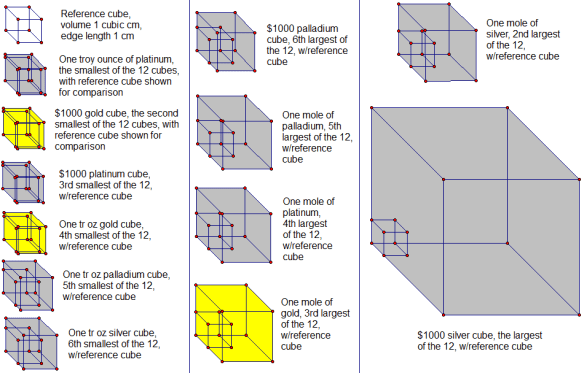
dozen cubes

A third of these cubes change size from day-to-day, and sometimes even moment-to-moment during the trading day, if their value is held constant at $1000 — which reveals, of course, which four cubes they are. The other eight cubes, by contrast, do not change size — no precious metal prices were used in the calculation of those cubes’ volumes and edge lengths, precisely because the size of those cubes is independent of such prices, due to the way those cubes were defined in the wording of the original problem.