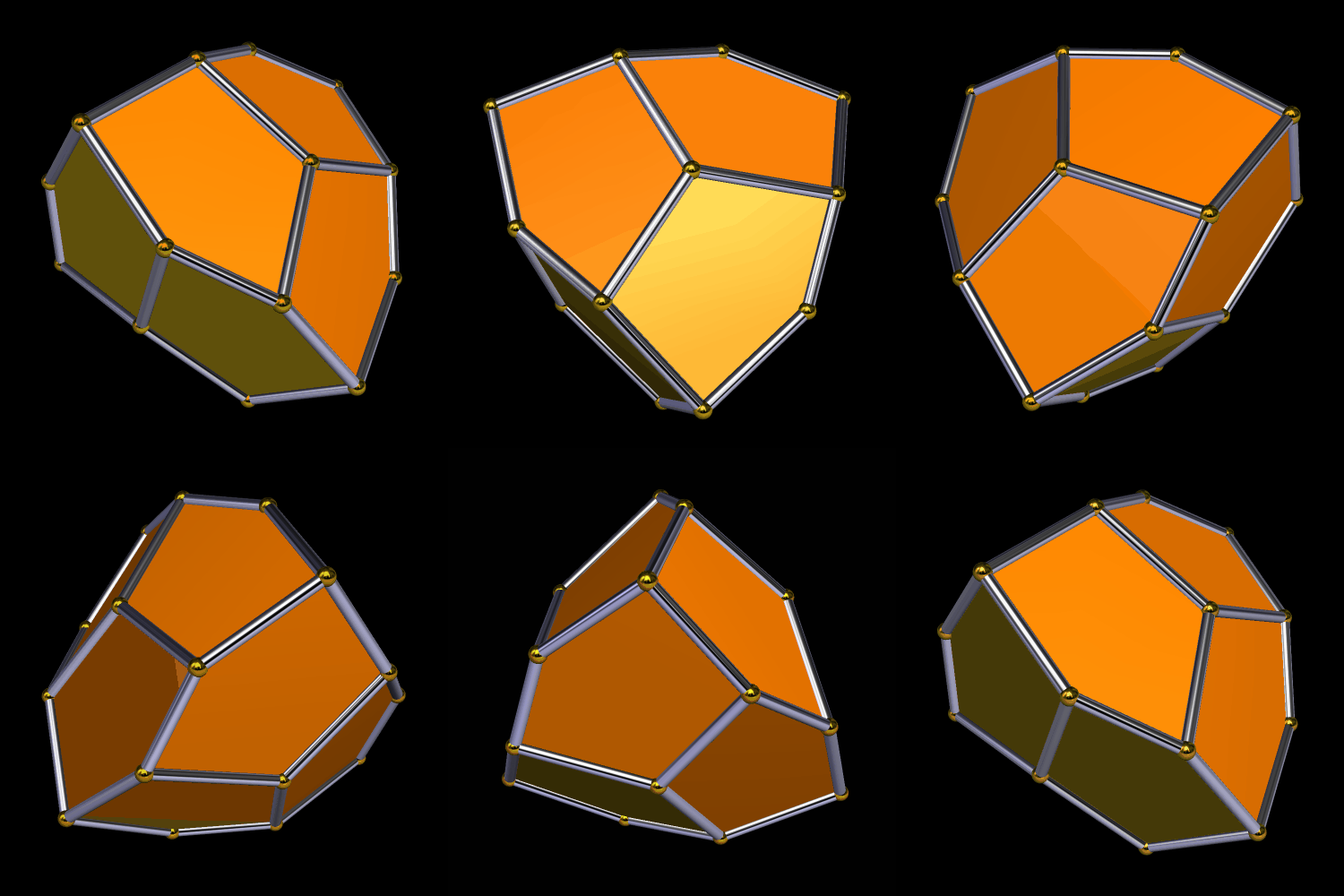
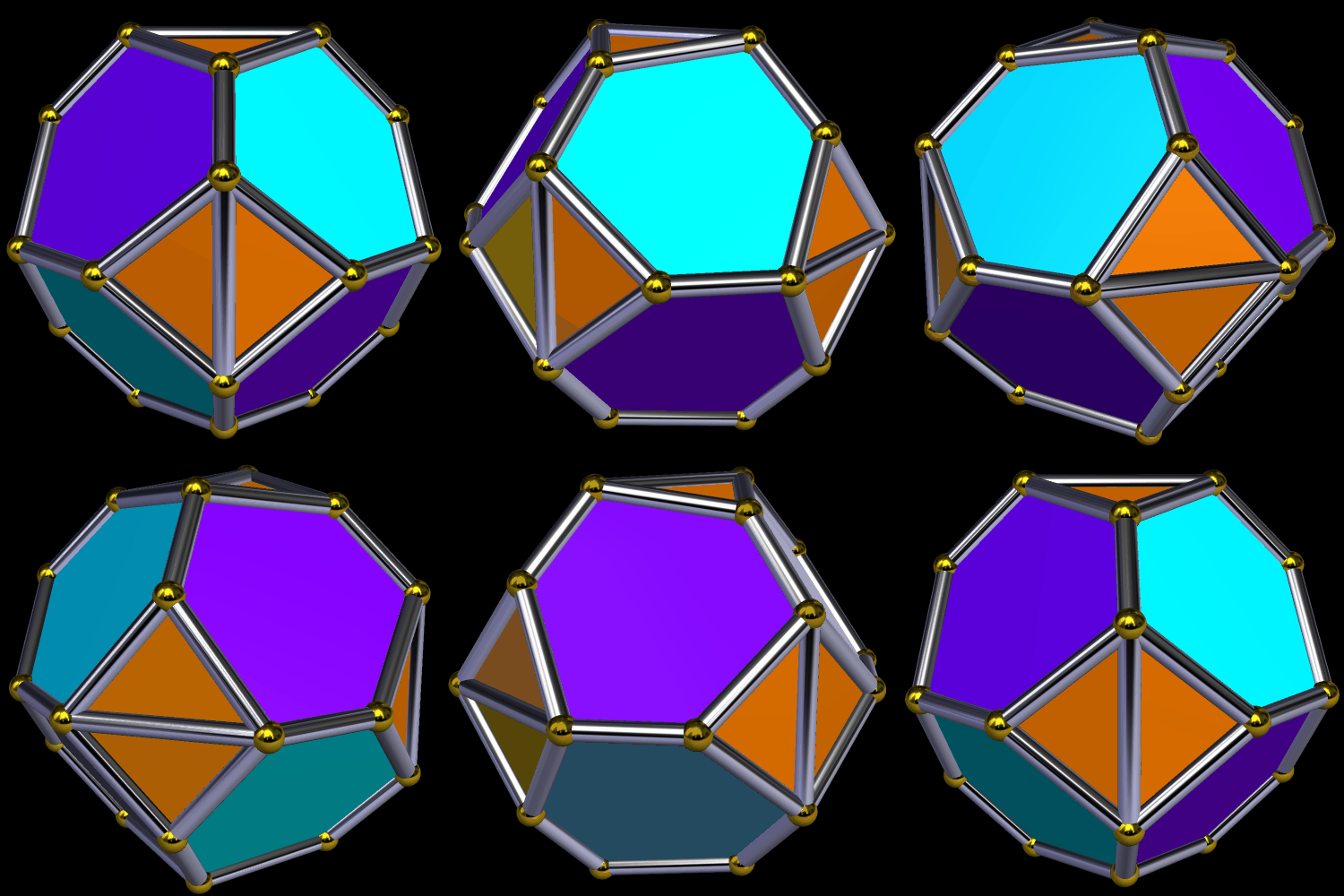
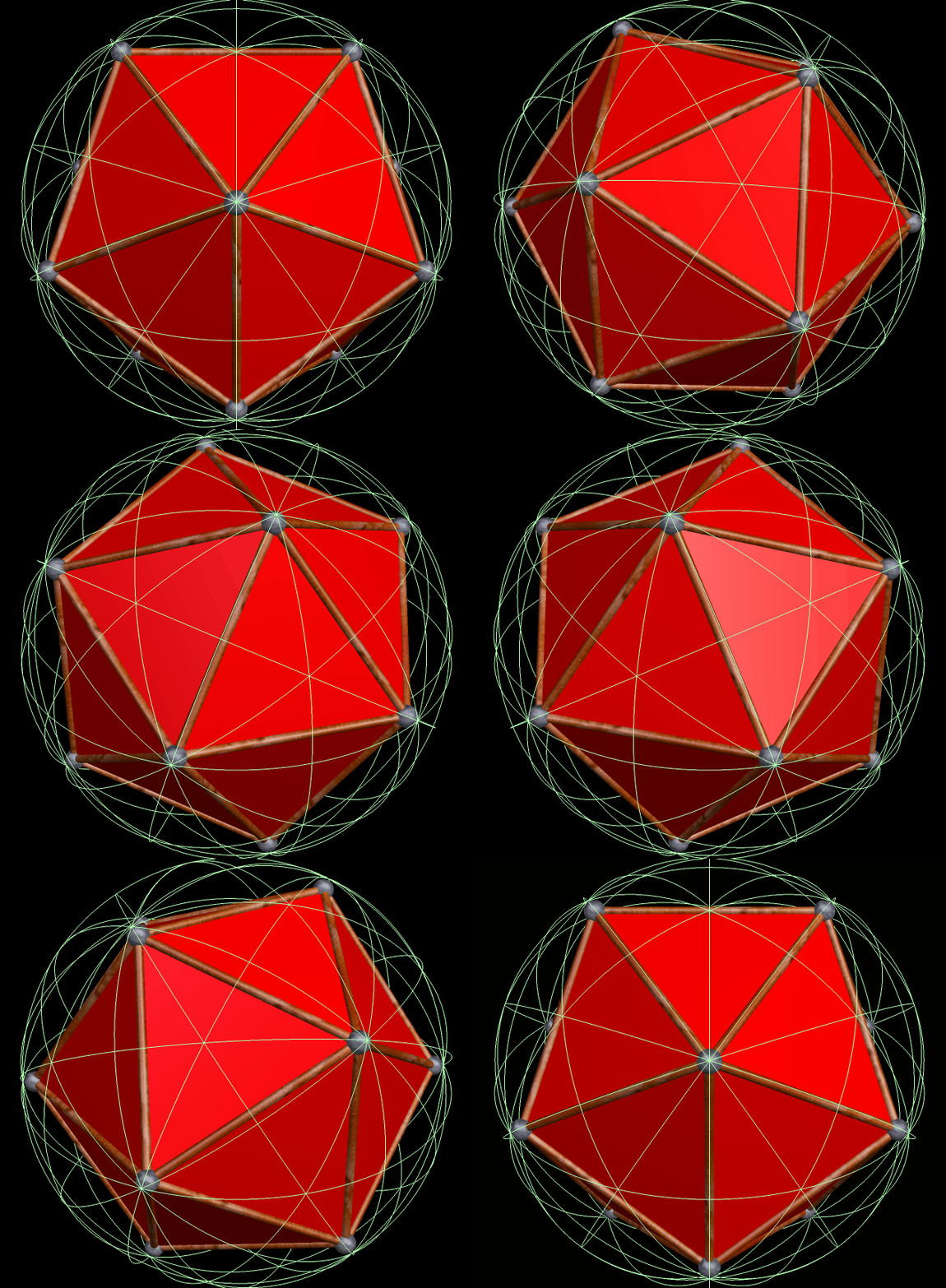
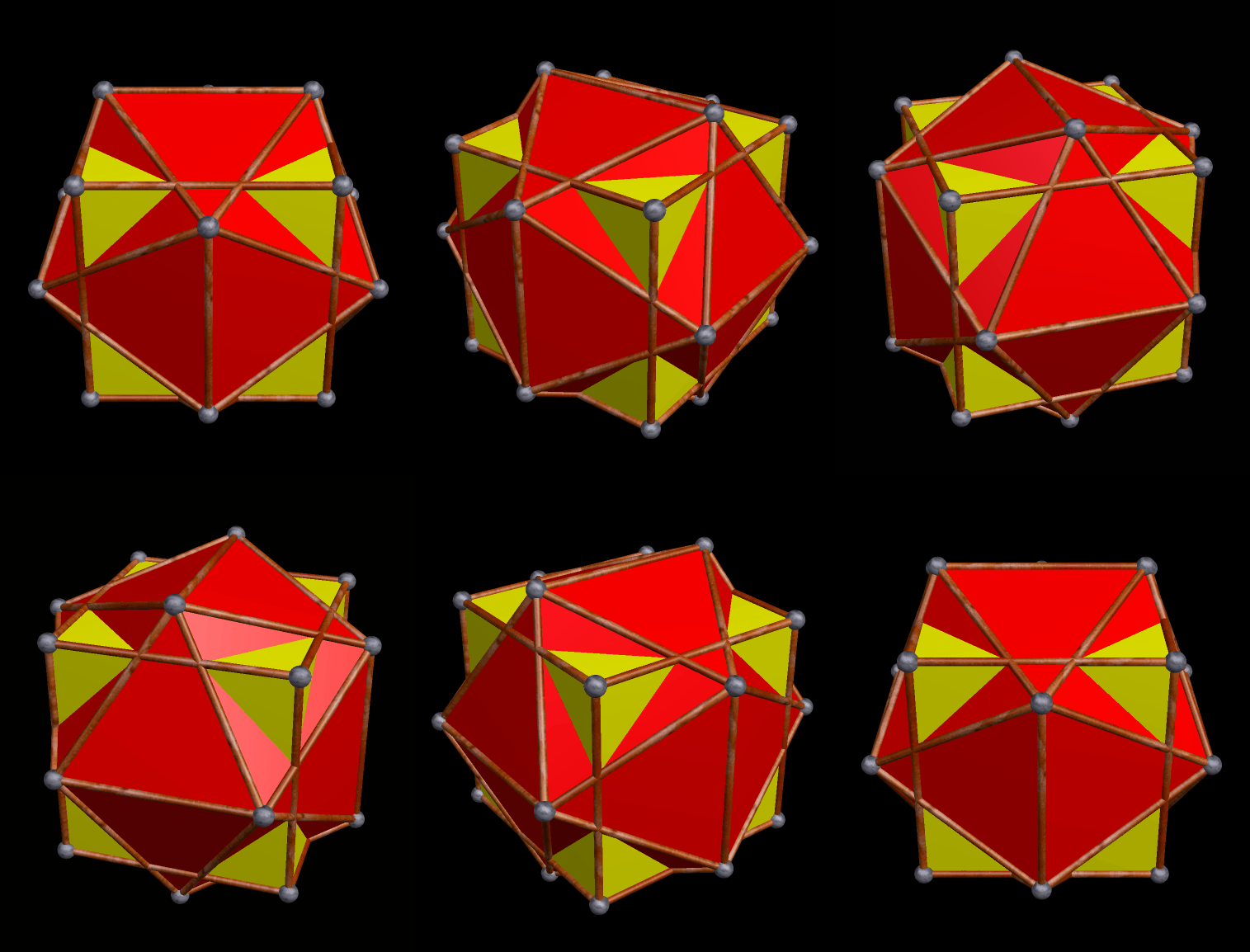
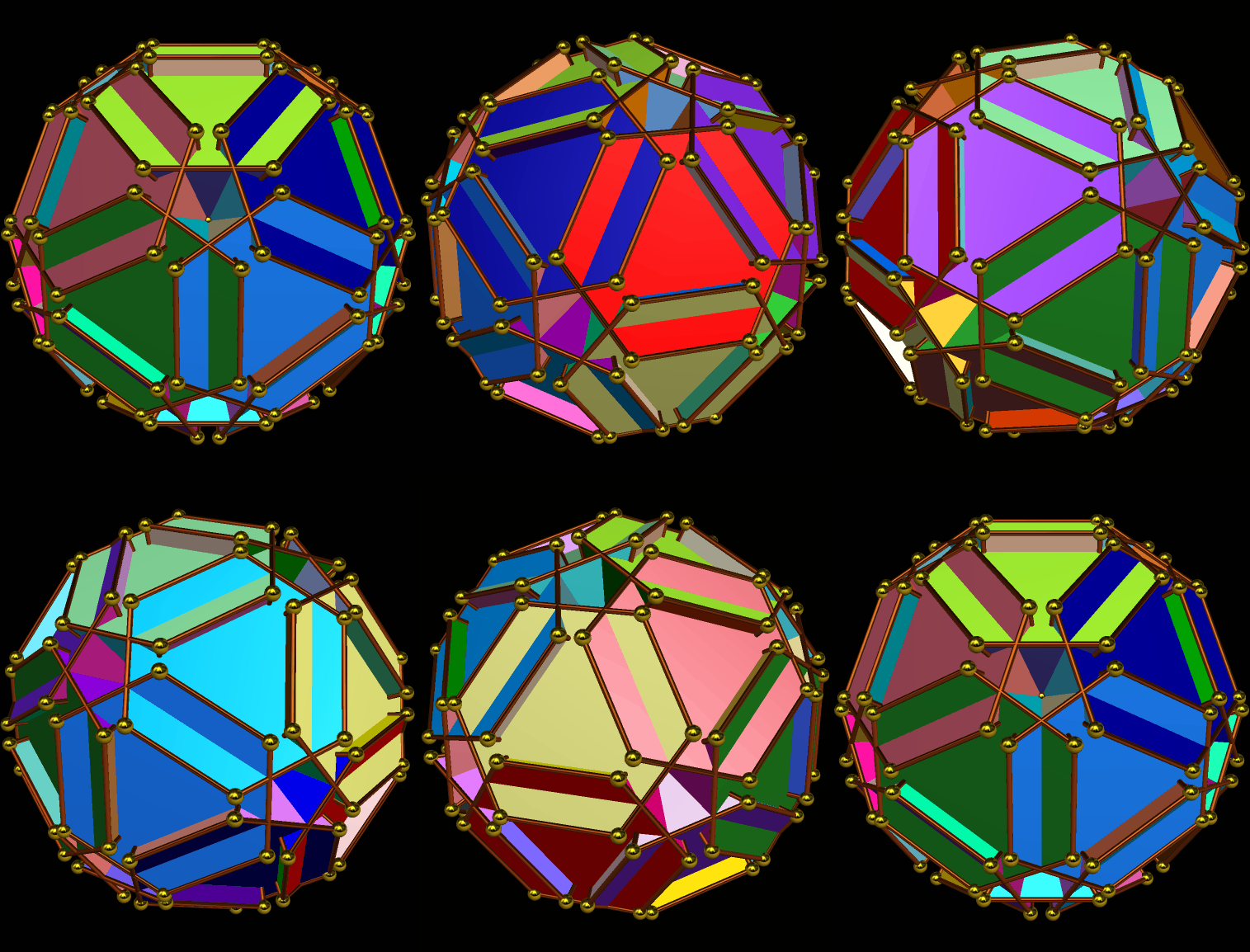
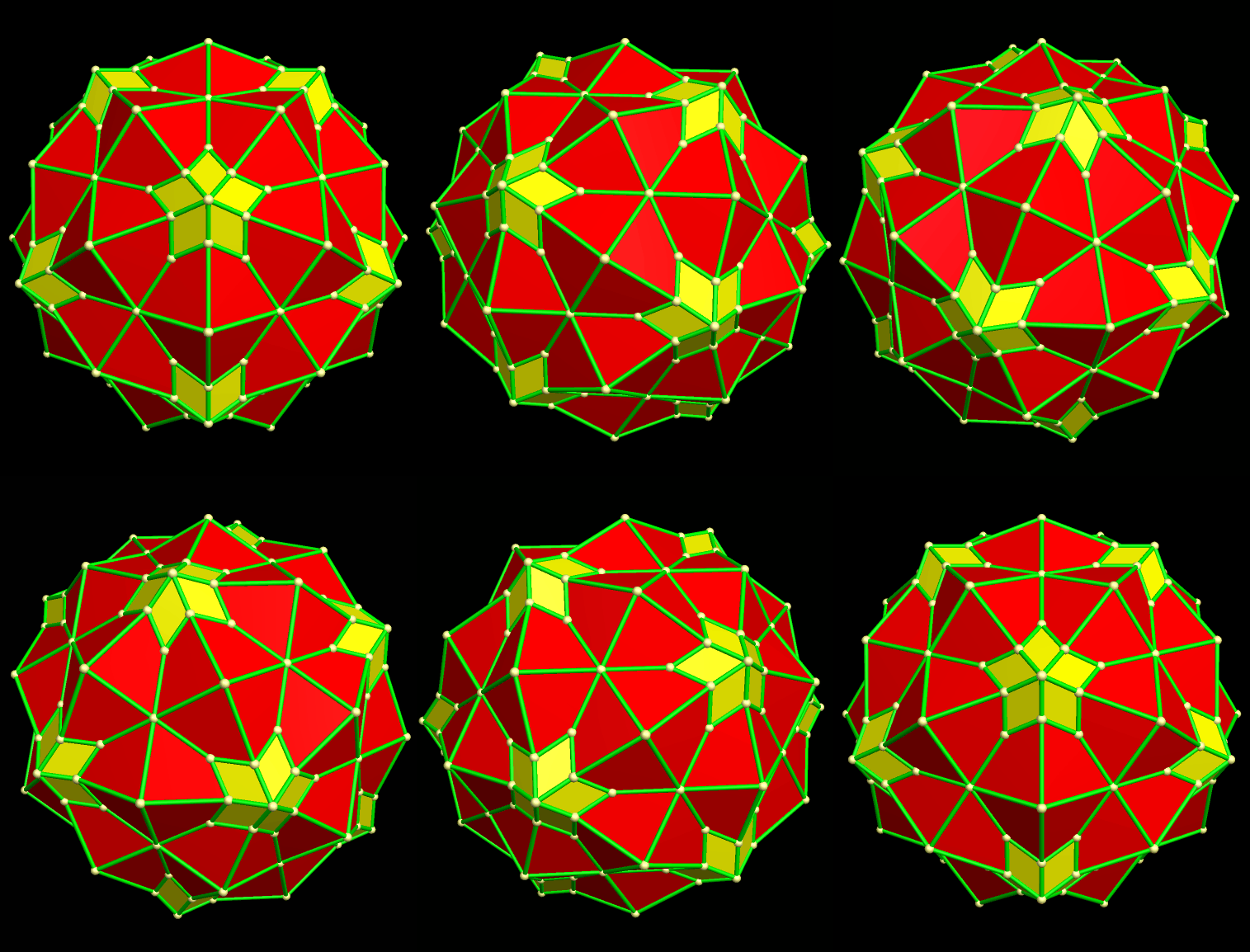
A Polyhedral Journey, Beginning with Face-Based Zonohedrification of an Icosahedron

To begin this, I took an icosahedron, and made a zonish polyhedron with it, with the new faces based on the zones of the existing faces. Here’s the result.

1 face-based zonish icosahedron

Next, I started stellating the polyhedron above. At the sixth stellation, I found this. It’s a true zonohedron, and the first polyhedron shown here is merely “zonish,” because one has triangles, and the other does not. (One of the requirements for a polyhedron to be a zonohedron is that all its faces must have an even number of sides.)

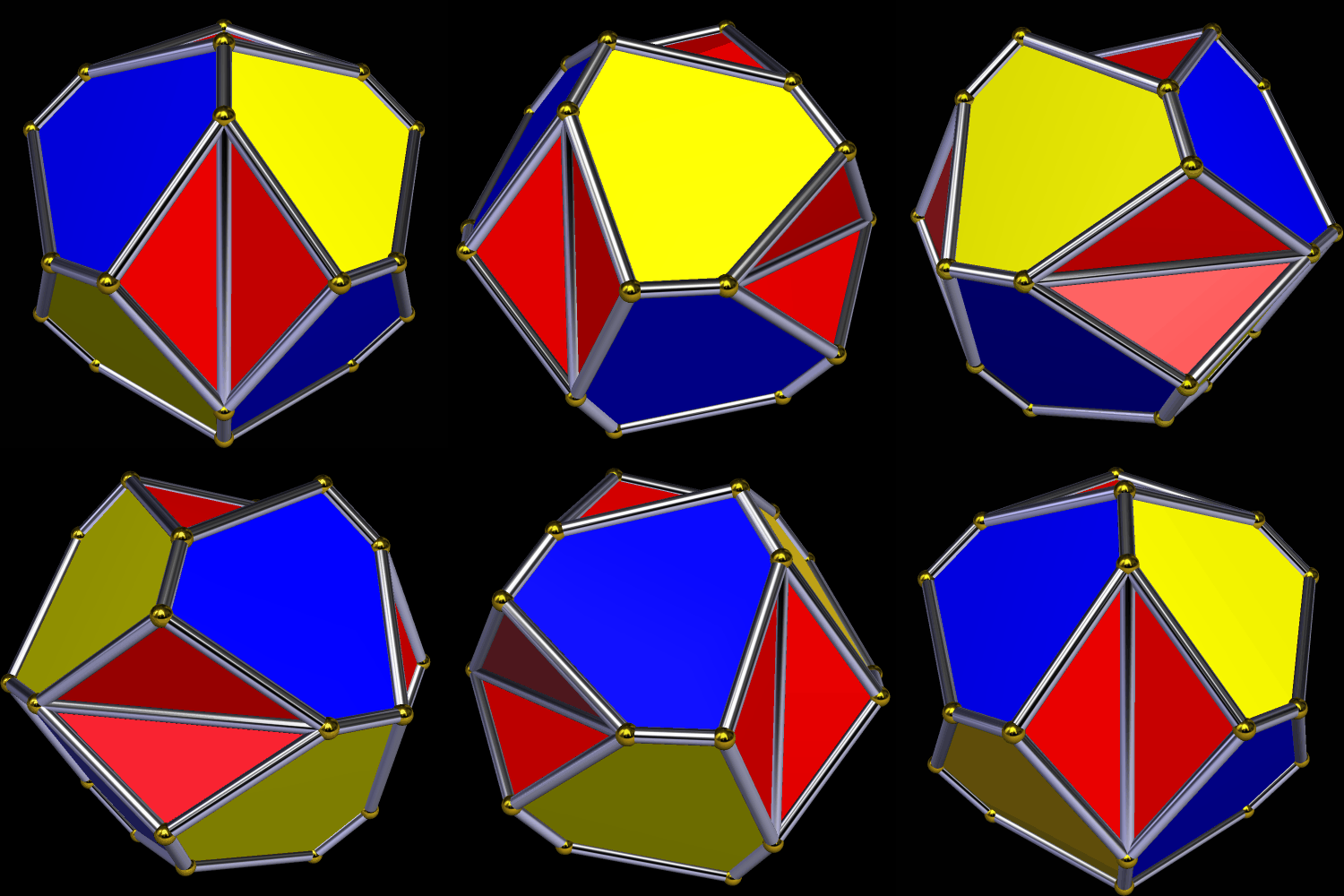
2 6th stellation face-based zonish icosahedronAfter that, I kept stellating, finding this as the 18th stellation of the first polyhedron shown here.

3 18th stellation face-based zonish icosahedron

With this polyhedron, I then made its convex hull.
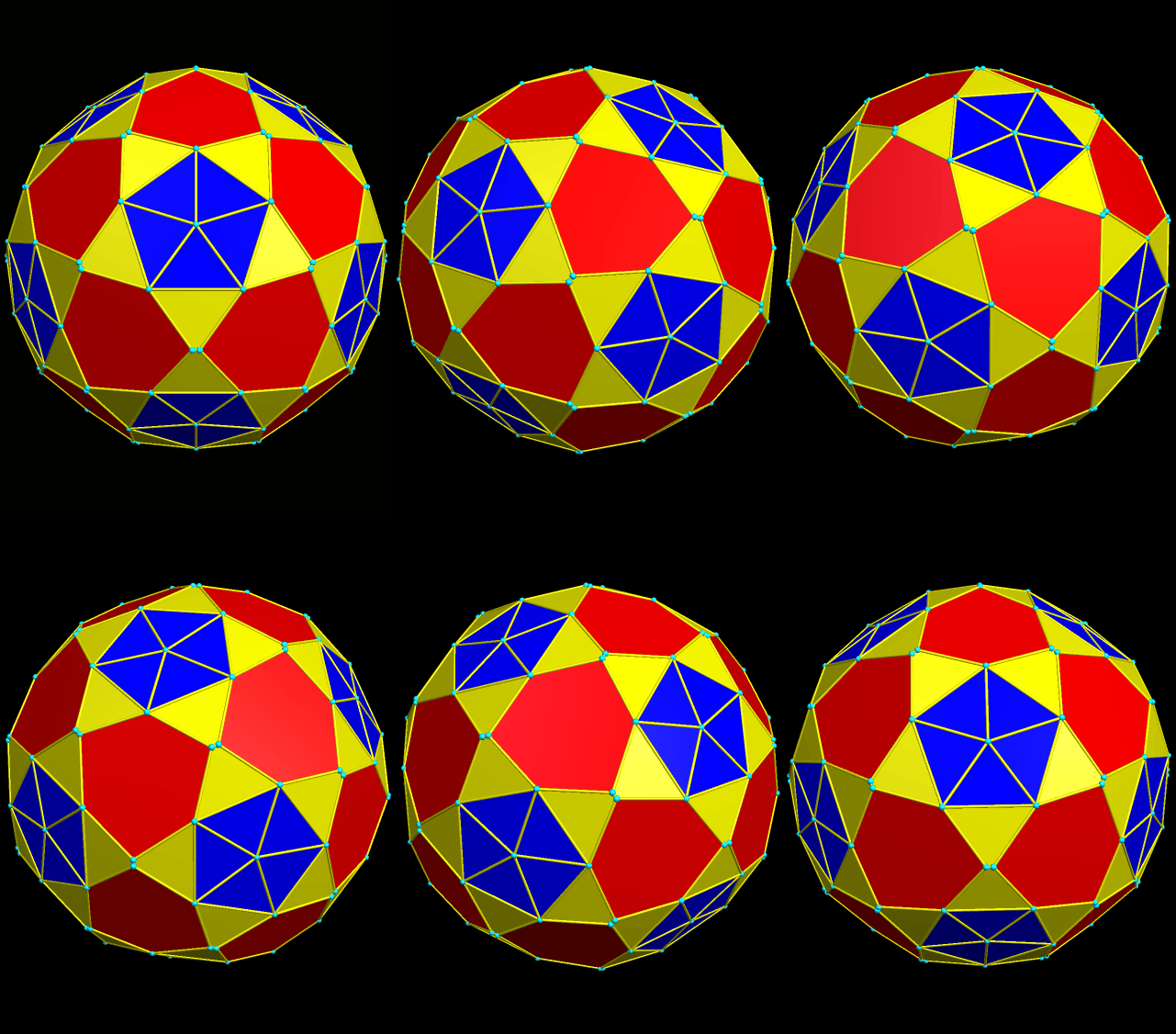
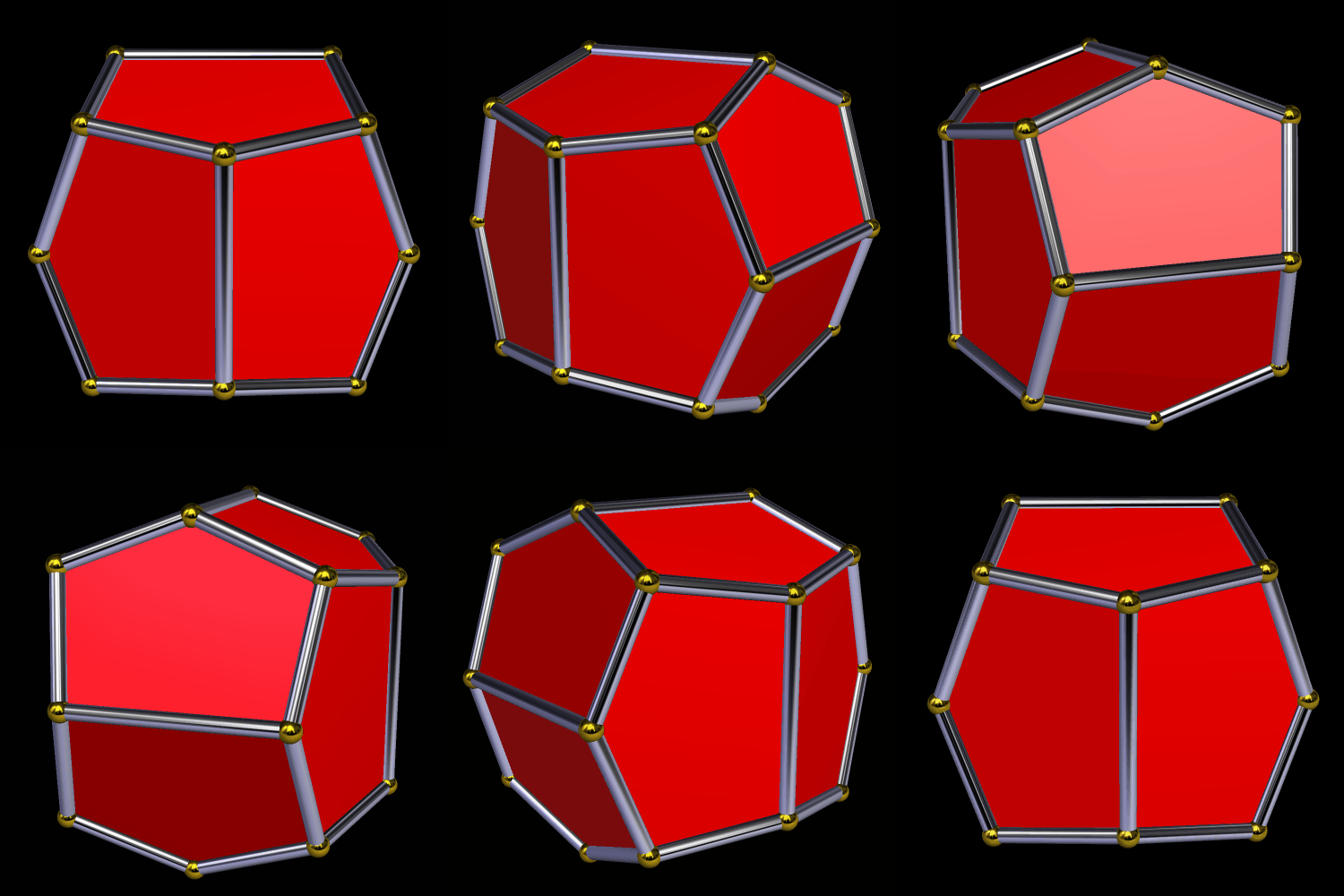
4 Convex hull of 18th stellation of face-based zonish icosahedronAt this point, the irregular hexagons were bothering me, so I used Stella 4d‘s “try to make faces regular” option. (Stella 4d is polyhedron-manipulation software you can try for free, or purchase, right here.)

5 spring model of convex hull of 18th stellation of face-based icosahedron

The next step I chose was to augment all the yellow trapezoids with prisms, each with a height 1.6 times the trapezoids average edge length.

6 Augmented sping model of convex hull of 18th stellation of FBZI

The next step was, again, to make the convex hull.
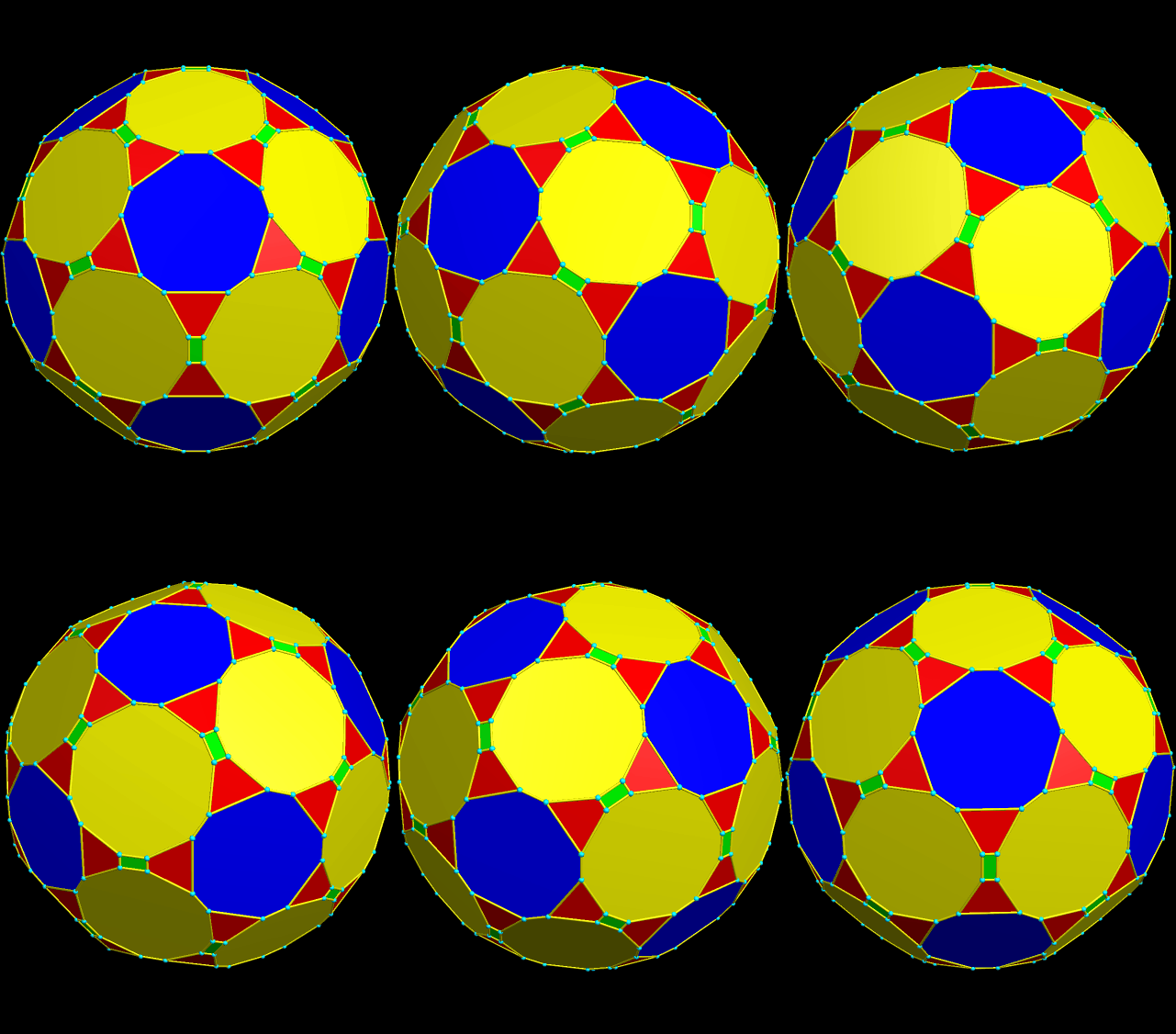
7 Convex hull of augmented convex hull

At this point, I tried “try to make faces regular” again, and was pleased with the result. The green rectangles became so thin, however, that I had to stop displaying the edges and vertices, in order for then to be seen.

8 spring model of last oneNext, I augmented both the blue faces (decagons) and the yellow faces (dodecagons) with antiprisms, again using a height 1.6 times that of the augmented faces’ average edge-lengths.
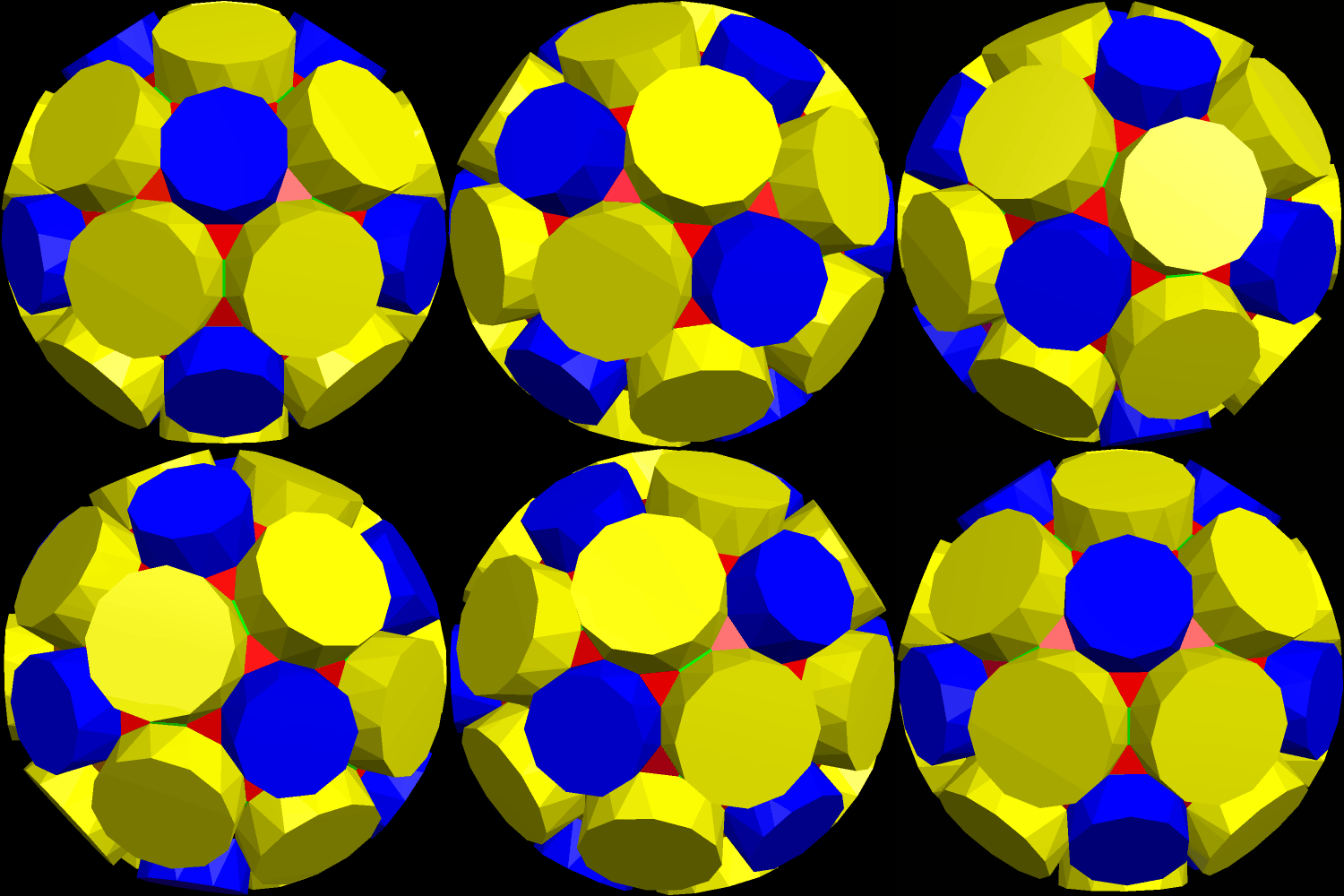
9 Augmented Poly 9th in series

Next, I made the convex hull again — a step I often take immediately after augmenting a polyhedron.

10 Convex hull

This one surprised me, as it is more complicated than I expected. To clean things up a bit, I augmented only the trapezoids (dark pink) with prisms, and dodecagons (green) with antiprisms, again using the factor 1.6 for the augmentation-height.

11 augmented Convex hull

The next step I chose was to take the convex hull, once more. I had not yet noticed that the greater height of the trapezoidal prisms would cause the dodecagonal antiprisms to be “lost” by this step, though.
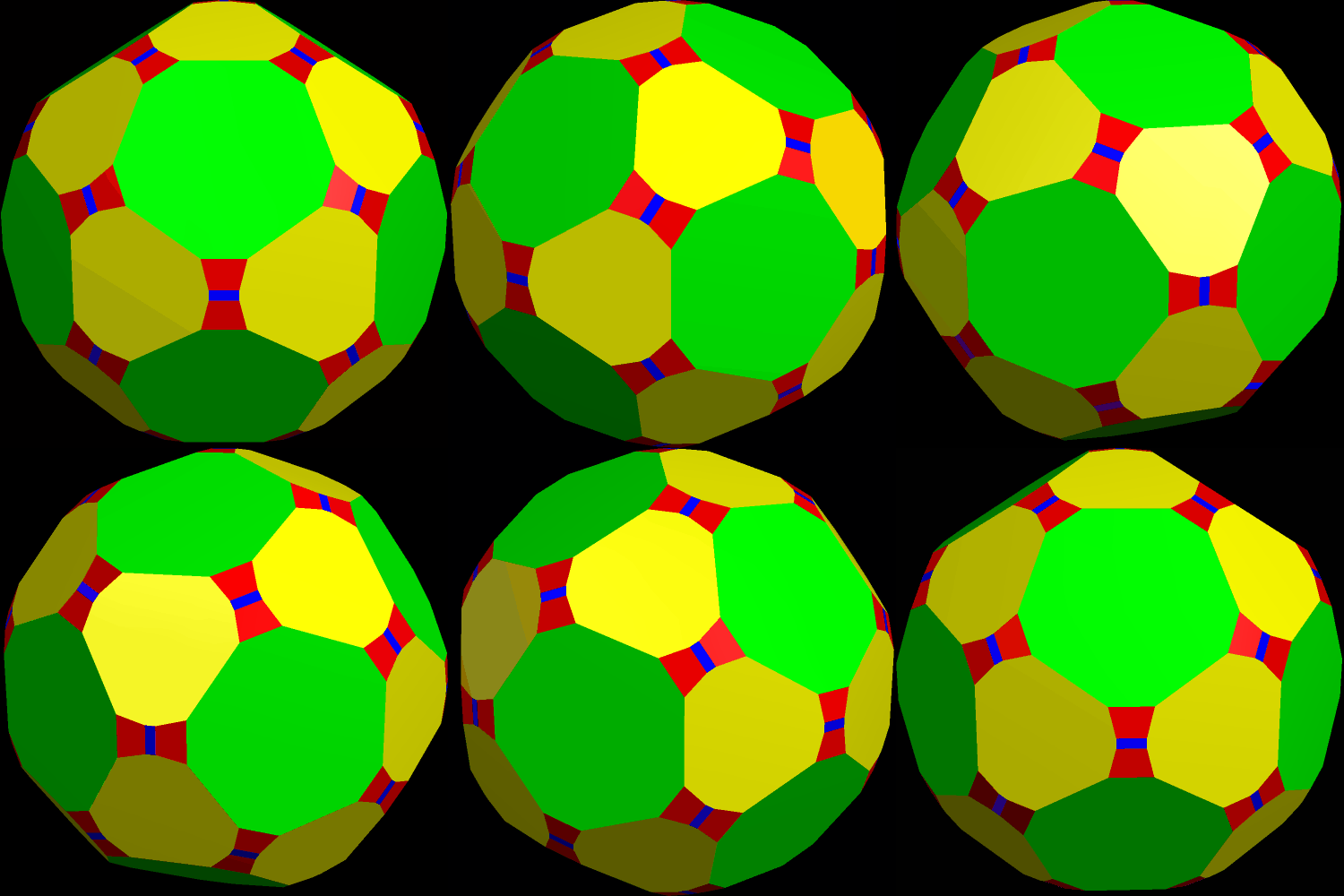
12 convex hull

Next, “try to make faces regular” was used again.

13 spring model

This last result had me feeling my polyhedral journey was going in circles, so I tried augmentation again, but in a different way. I augmented this polyhedron, using prisms, on only the red trapezoids (height factor, 1.6 again) and the blue rectangles (new height factor, 2.3 times average edge length).

14 augmented spring model

After that, it was time to make another convex hull — and that showed me that I had, indeed, taken a new path.

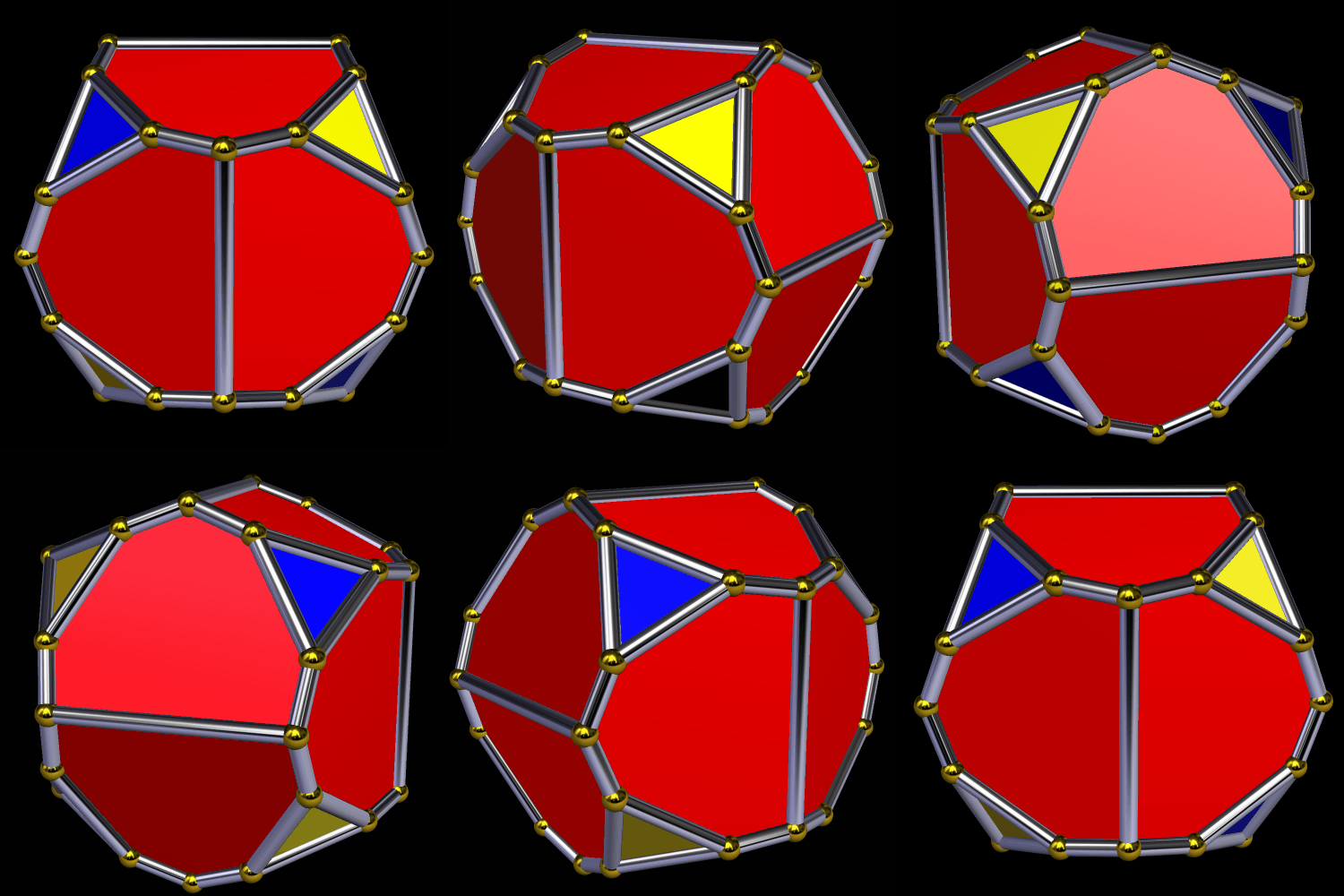
15 Convex hullI found the most interesting faces of this polyhedron to be the long, isosceles trapezoids, so I augmented them with prisms, ignoring the other faces, using the new height-factor of 2.3 times average edge length this time.

16 augmented Convex hull

Of course, I wanted to see the convex hull of this. Who wouldn’t?
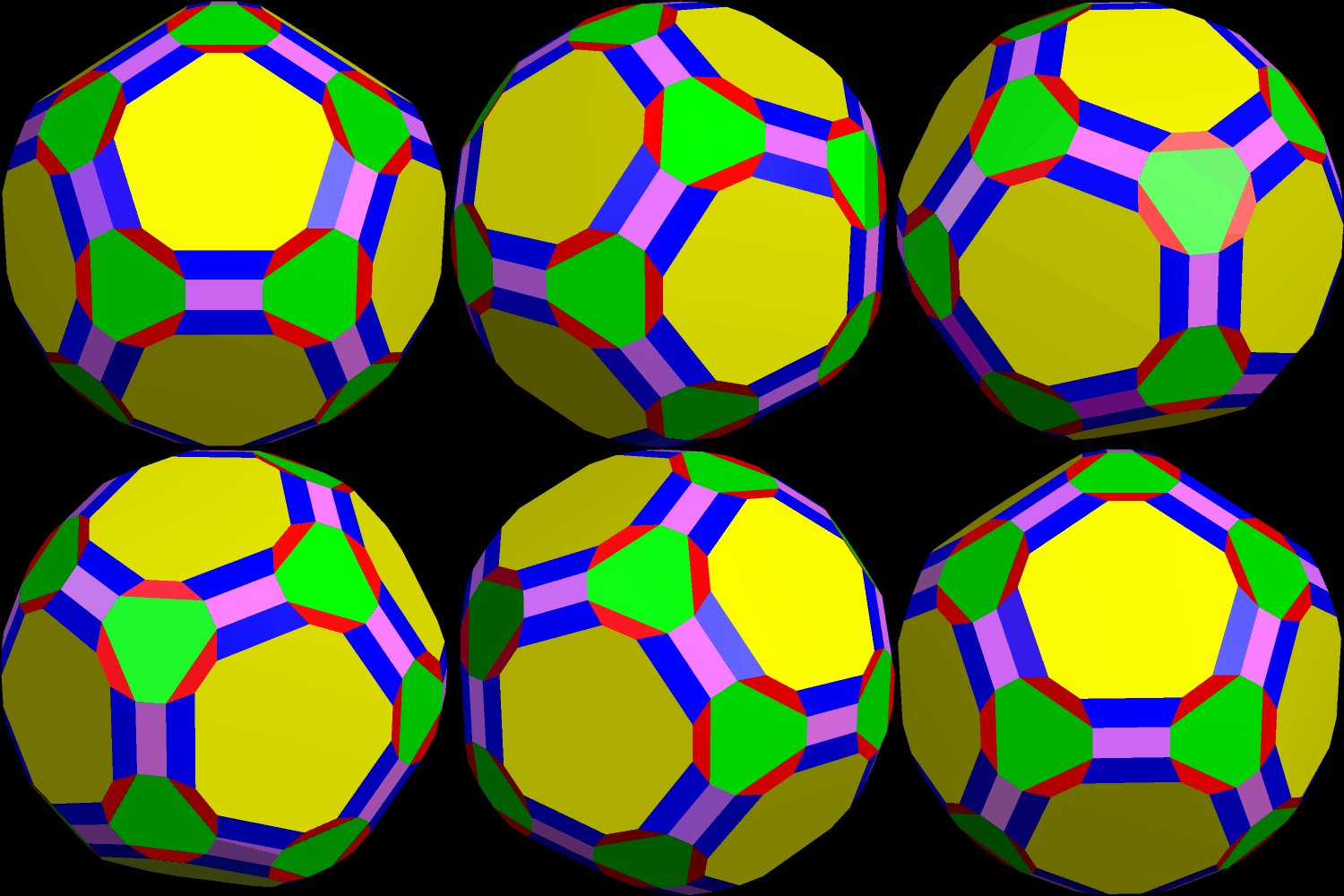
17 Convex hull

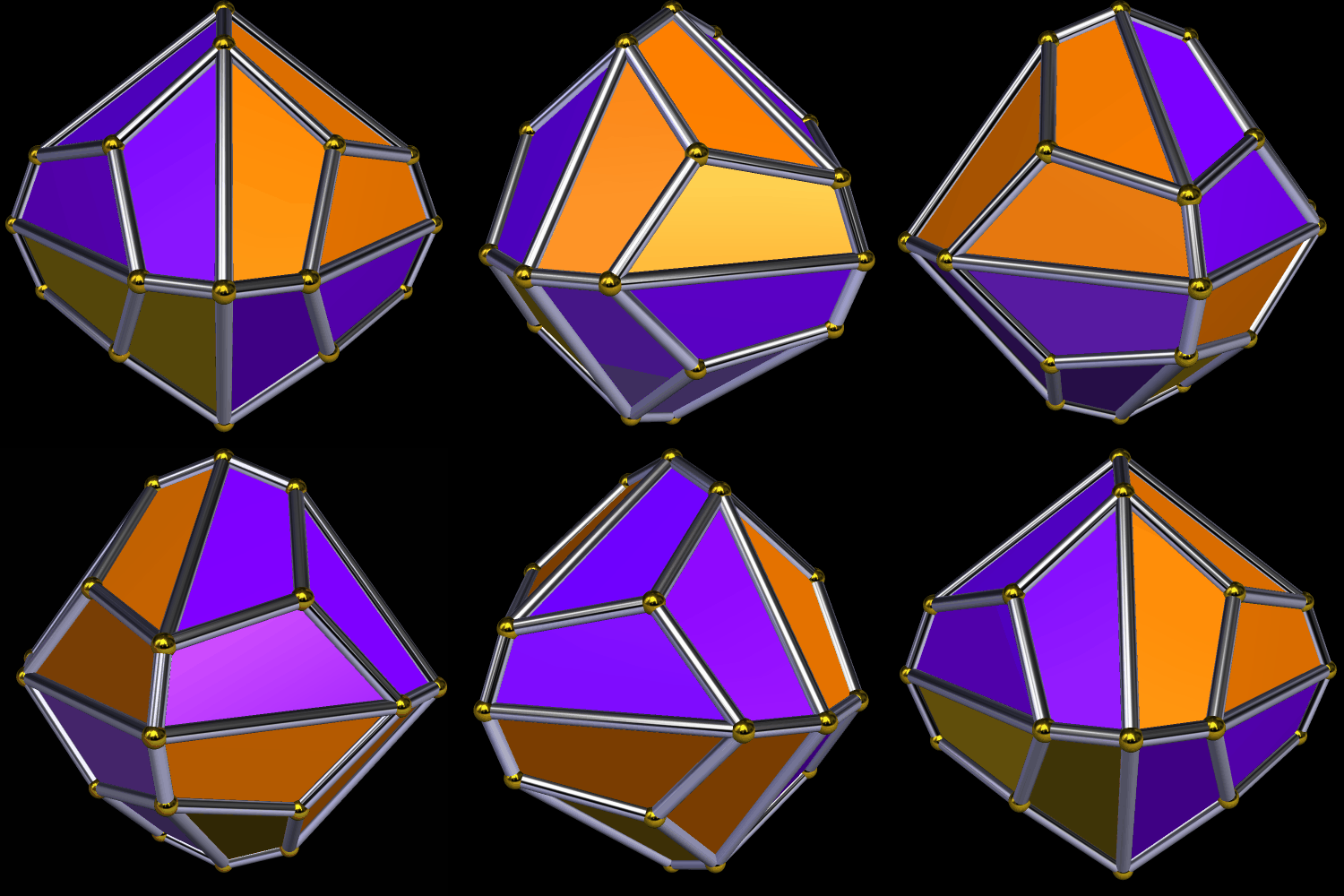
I then started to stellate this figure, choosing the 14th stellation as a good place to stop, and making the edges and vertices visible once more.
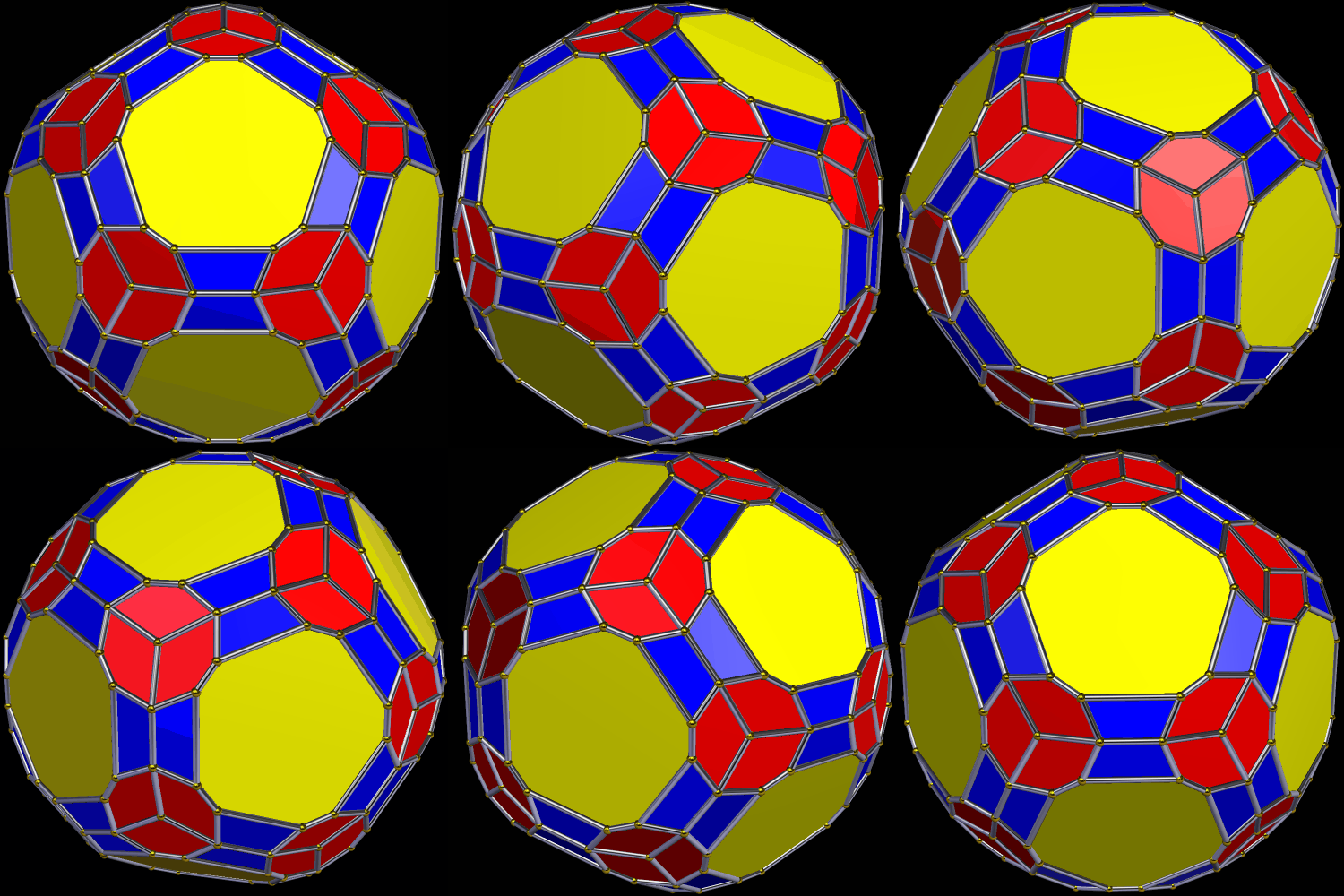
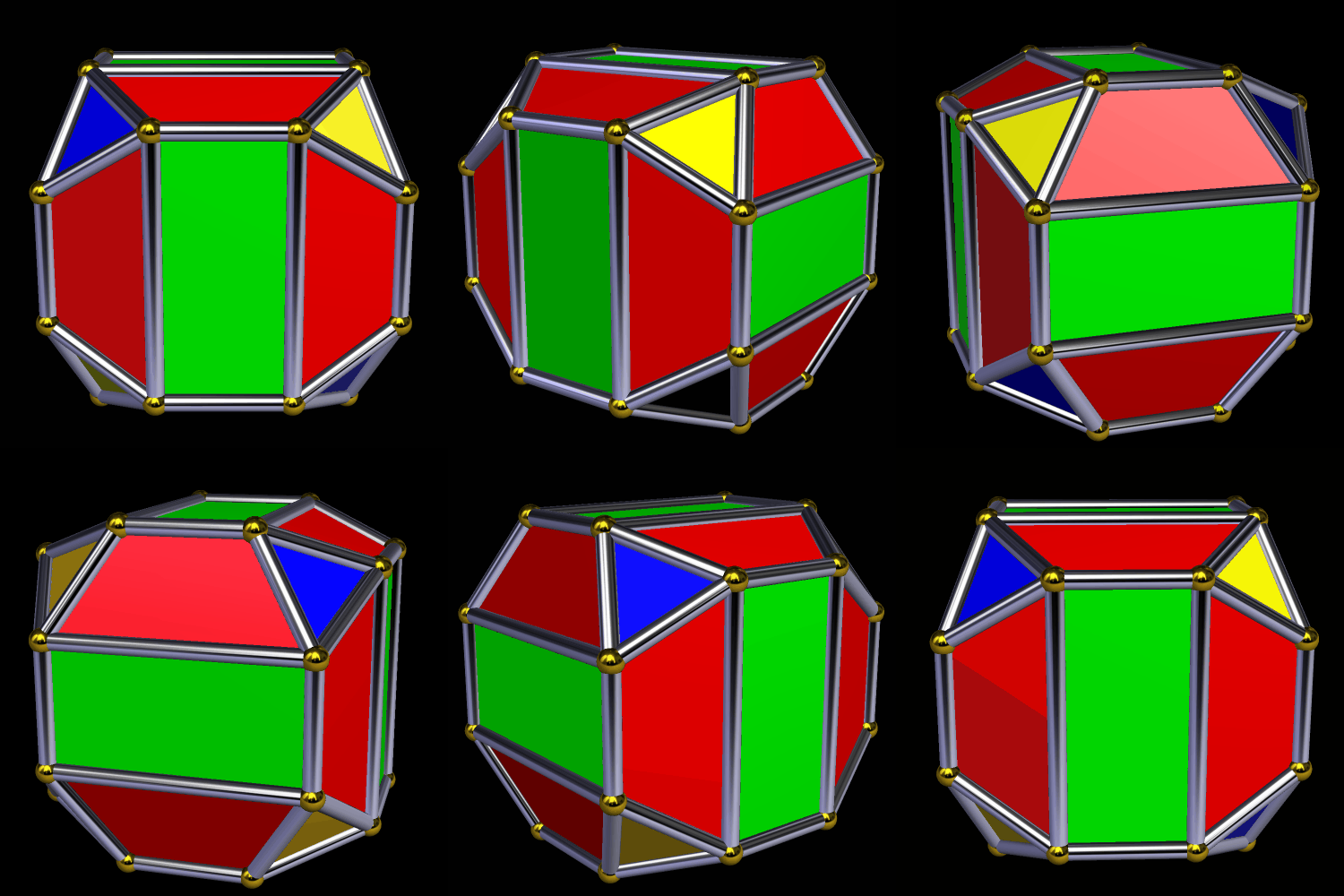
18 the 14th stellation of the previous Convex hull

A Zonish Icosahedron, and Some of Its “Relatives”

To begin this, I used Stella 4d (available here) to create a zonish polyhedron from the icosahedron, by adding zones along the x-, y-, and z-axes. The result has less symmetry than the original, but it is symmetry of a type I find particularly interesting.

zonohedrified icosahedron xyz

After making that figure, I began stellating it, and found a number of interesting polyhedra in this polyhedron’s stellation-series. This is the second such stellation:

zonohedrified icosahedron xyz 2nd stellation

This is the 18th stellation:

zonohedrified icosahedron xyz 18th stellation

The next one, the 20th stellation, is simply a distorted version of the Platonic dodecahedron.

zonohedrified icosahedron xyz 20th stellation

This one is the 22nd stellation:

zonohedrified icosahedron xyz 22nd stellation

This is the 30th stellation:

zonohedrified icosahedron xyz 30th stellation

The next really interesting stellation I found was the 69th:

zonohedrified icosahedron xyz 69th stellation

At this point, I returned to the original polyhedron at the top of this post, and examined its dual. It has 24 faces, all of which are quadrilaterals.

zonohedrified icosahedron xyz dual

This is the third stellation of this dual — and another distorted Platonic dodecahedron.

zonohedrified icosahedron xyz dual 3rd stellation

This is the dual’s 7th stellation:

zonohedrified icosahedron xyz dual 7th stellation

And this one is the dual’s 18th stellation:

zonohedrified icosahedron xyz dual 18th stellation

At this point, I took the convex hull of this 18th stellation of the original polyhedron’s dual, and here’s what appeared:

Convex hull of 18th stellation of dual of zonish icosahedron xyz

Here is this convex hull’s dual:

dual of Convex hull of 18th stellation of dual of zonish icosahedron xyz

Stella 4d, the program I use to make these (available here), has a built-in “try to make faces regular” function. When possible, it works quite well, but making the faces of a polyhedron regular, or even close to regular, is not always possible. I tried it on the polyhedron immediately above, and obtained this interesting result:

spring model of Dual of convex hull of stellation of zonish xyz icosahedron

While interesting, this also struck me as a dead end, so I returned to the red-and-yellow convex hull which is the third image above, from right here, and started stellating it. At the 19th stellation of this convex hull, I found this:

19th stellation of Convex hull of 18th stellation of dual of zonish icosahedron xyz

I also found an interesting polyhedron as the 19th stellation of the dual which is three images above:

19th stellation of dual of Convex hull of 18th stellation of dual of zonish icosahedron xyz

The 109th Stellation of the Triakis Icosahedron

109th stellation of Triakis icosa

Created using Stella 4d:  Polyhedron Navigator, available here.

An Unsolved Problem Involving the Icosahedron and the Dodecahedron, and Their Circumscribed Spheres

This is apparently a problem, posed by Gregory Galperin, which went unsolved at the Bay Area Math Olympiad in 2005. I haven’t solved it yet, but I’m going to try, as I work on this blog-post. My 2010 source is a paper about Zome which may be read, as a .pdf, at bact.mathcircles.org/files/Summer2010/zomes-6-2010.pdf. The problem involves a dodecahedron and an icosahedron, each inscribed inside the same sphere of radius r, and asks which has the greater volume. At the time the authors wrote this paper, they knew of no solution, and I know of none now, but I do like a challenge.

My idea for solving this begins with Zome (info on Zome:  see http://www.zometool.com, as well as other sites you can find by googling “Zome”). In the Zome geometry system, using B1 struts for the edges of both a dodecahedron and an icosahedron, R1 struts are the radii of the circumscribed sphere for the icosahedron,  and Y2 struts are the radii for the circumscribed sphere of the dodecahedron. Since volume formula for polyhedra are generally given in term of edge-length, I need to find B1 in terms of R1 for the icosahedron, and find B1 in terms of Y2 for the dodecahedron.

icosa

Icosahedron:  find B1, in terms of R1.

There exists a right triangle which can be built in Zome which has a hypotenuse equal to 2R1, and legs epqual to B1 and B2. B2 = φB1, so, by the Pythagorean Theorem, (2R1)^2 = (B1)^ + φ²(B1)², which simplifies to 4(R1)^2 = (1 + φ²)(B1)^2, which can then be solved for B1 as B1 = sqrt[4(R1)^2/(1 + φ²)]. B1 here is the icosahedron’s edge-length, while R1 is the radius of its circumscribed sphere.

dodecahedron

Dodecahedron:  find B1, in terms of Y2.

In the Zome system, Y2 = φY1, and Y1 = [sqrt(3)/2]B1. Rearrangement of the first of these equations yields Y1 = Y2/φ, and substitution then yields [sqrt(3)/2]B1 = Y2/φ, which then can be rearranged to yield B1 = 2Y2/[φsqrt(3)]. B1 here is the dodecahedron’s edge-length, while Y2 is the radius of its circumscribed sphere.

Next, find the volume of the icosahedron inscribed inside a sphere, in terms of that sphere’s radius.

According to http://mathworld.wolfram.com/Icosahedron.html, the volume of an icosahedron is given by V = (5/12)[3 + sqrt(5)]a³, where a is the edge length, or B1 in the first indented section, between the two images, above.  Then, by substitution, V = (5/12)[3 + sqrt(5)]{sqrt[4(R1)^2/(1 + φ²)]}³, which then becomes (with “r” being the radius of the circumscribed sphere) V = (5/12)[3 + sqrt(5)][2r/sqrt(1 + φ²)]³ = (40/12)[3 + sqrt(5)][1/sqrt(1 + φ²)]³r³ = (10/3)[3 + sqrt(5)][1/sqrt(1 + φ²)]³r³. Then, using the identity φ² = φ + 1, this can be further simplified to V = (10/3)[3 + sqrt(5)][1/sqrt(2 + φ)]³r³.

Next, find the volume of the dodecahedron inscribed inside the same sphere, in terms of that sphere’s radius, r.

According to https://en.wikipedia.org/wiki/Dodecahedron, the volume of an icosahedron is given by V = (1/4)[15 + 7sqrt(5)]a³, where a is the edge length, or B1 in the second indented section, below the second image, above.  Then, by substitution, V = (1/4)[15 + 7sqrt(5)]{2Y2/[φsqrt(3)]}³, which then becomes (with “r” being the radius of the circumscribed sphere) V = (8/4)[15 + 7sqrt(5)]{1/[φsqrt(3)]}³r³ = 2[15 + 7sqrt(5)]{1/[3sqrt(3)]}(1/φ³)r³ = (2/3)[15 + 7sqrt(5)][sqrt(3)/3](1/φ³)r³  = [2sqrt(3)/9][15 + 7sqrt(5)](1/φ³)r³.

So, with the “r” in each case being the same, the icosahedron is larger than the dodecahedron iff (10/3)[3 + sqrt(5)][1/sqrt(2 + φ)]³ > [2sqrt(3)/9][15 + 7sqrt(5)](1/φ³), which simplifies to (5)[3 + sqrt(5)][1/sqrt(2 + φ)]³ > [2sqrt(3)/3][15 + 7sqrt(5)](1/φ³), which simplifies further to {5/[sqrt(2 + φ)]³}[3 + sqrt(5)] > [2sqrt(3)/3φ³][15 + 7sqrt(5)], which is, as a decimal approximation, is (0.726542528)(5.2360679774998) > (3.464101615/12.708203932)(30.6524758), or 3.804226 > 8.355492, which is false, meaning that the dodecahedron is larger, not the icosahedron.

Now for the bad part:  I think I’m wrong, but I don’t know where the error lies. I’m also tired. If any of you see the mistake, please point it out in a comment, and I’ll try to fix this after I’ve rested.

Update:  if the websites http://rechneronline.de/pi/icosahedron.php and http://rechneronline.de/pi/dodecahedron.php work correctly, then the dodecahedron is larger. Evidence:

volume calculators

This does not, however, mean that I did the problem correctly. I merely stumbled upon the correct answer. How do I know this? Simple:  the ratio I obtained was too far off. Therefore, I would still welcome help clearing up the mystery of where my error(s) is/are, in the calculations shown above.

The Cube / Icosahedron Compound

icosa and cube

I made this rotating .gif file using Stella 4d. You can try this software for itself at http://www.software3d.com/Stella.php.

An Icosahedron, Augmented with Twenty Triangular Cupolae, Together with Its Dual

Icosahedron Augmented with Triangular Cupolae

After making the above polyhedron using Stella 4d (a program you can try for free at www.software3d.com/Stella.php), I checked its dual, which is shown below. I was surprised at its appearance, for it resembles a stellated polyhedron, even though it was created by a completely different process.

Icosahedron Augmented with Triangular Cupolae's Dual

A Compound of an Icosahedron and the First Stellation of the Rhombic Triacontahedron

Compound of an icosahedron and the 1st stellation of the RTC

I stumbled across this compound yesterday, an example of exploratory polyhedral manipulation using Stella 4d producing an unexpected result. If you would like to experiment with a free trial download of this program, before deciding whether or not to purchase the fully-functioning version, simply click here:  www.software3d.com/Stella.php.

Music Video: Murder By Death’s “Those Who Stayed” & “I’m Afraid of Who’s Afraid of Virginia Woolf”

Music: the first two tracks from the Murder By Death album Like the Excorcist, But More Breakdancing. Please visit their website, http://www.murderbydeath.com, to buy this band’s music and merchandise. While you’re there, I recommend checking their concert calendar, to see if they may be playing near you soon. Murder By Death concerts, which I’ve seen six times now, are not to be missed!

Visuals: rotating polyhedra, all with icosidodecahedral symmetry, generated using Stella 4d: Polyhedron Navigator, which you can try for yourself at http://www.software3d.com/Stella.php. The polyhedra shown are, in order of appearance:

  1. The icosahedron
  2. The compound of the icosahedron and its dual, the dodecahedron
  3. The dodecahedron, with all faces the same color
  4. The small stellated dodecahedron, or first stellation of the dodecahedron, in a single color
  5. The small stellated dodecahedron, with only parallel faces having the same color (six-color arrangement)
  6. The great dodecahedron, or second stellation of the dodecahedron, six-color arrangement
  7. The great stellated dodecahedron, or third stellation of the dodecahedron, six-color arrangement
  8. Stellating the dodecahedron a fourth time, to return it to its original form, but in the six-color arrangement this time
  9. The icosidodecahedron, with triangular faces invisible, and pentagonal faces shown using the six-color arrangement
  10. The icosidodecahedron, all faces visible now, and colored by face type
  11. The fourth stellation of the icosidodecahedron (its first stellation is the dodecahedron, the second is the icosahedron, and the third is the compound of the first two, all of which have already been seen)
  12. The fifth stellation of the icosidodecahedron
  13. The convex hull of the fifth stellation of the icosidodecahedron, which is a slightly-truncated icosahedron
  14. The truncated icosahedron which is a true Archimedean Solid, since all its faces are regular
  15. The truncated icosahedron’s second stellation (the first is the already-seen icosahedron)

Icosahedron with Tessellated Faces

Icosa

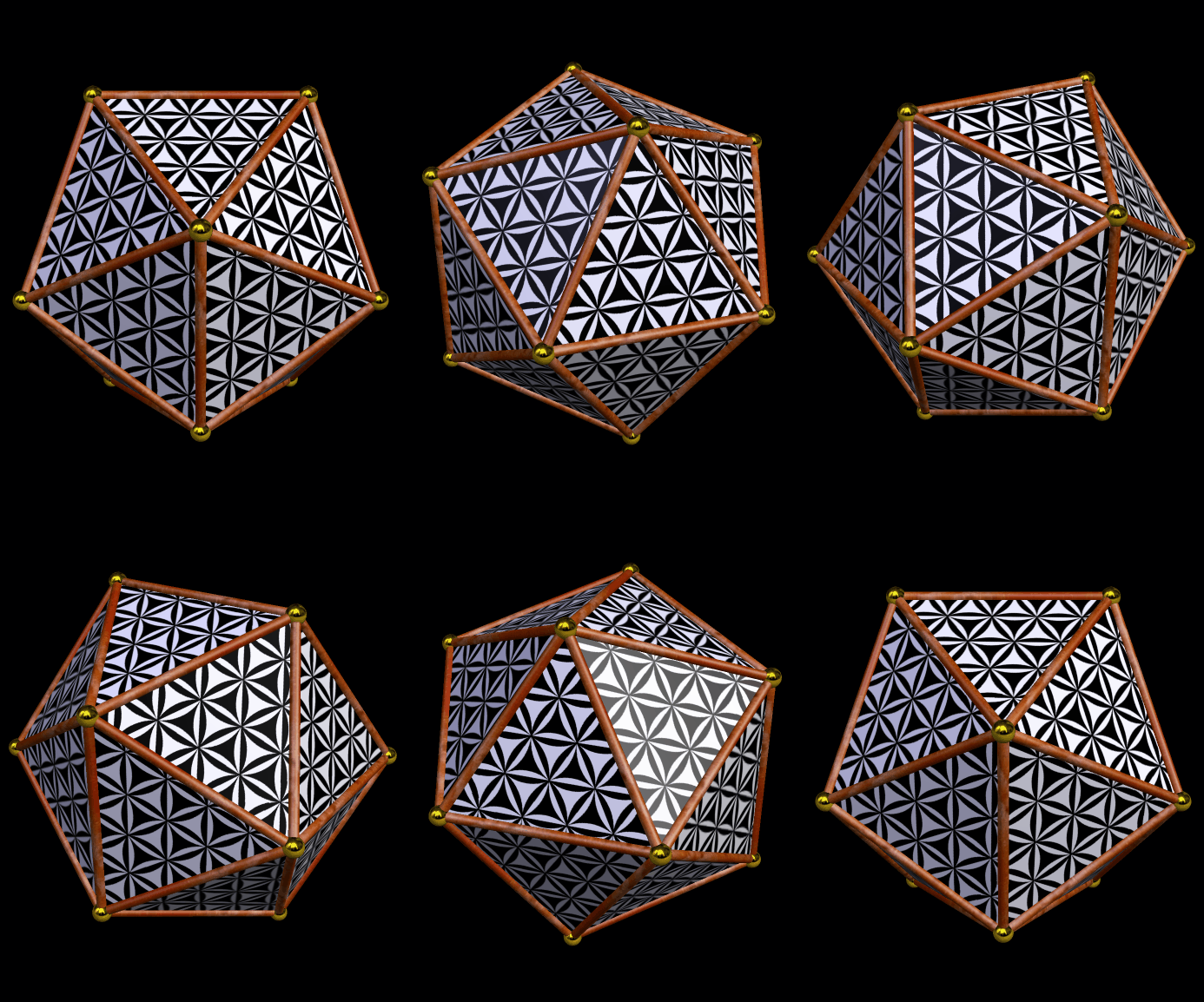
The images on the faces of this icosahedron appeared on this blog three posts ago, and were created with Geometer’s Sketchpad and MS-Paint. To project this image onto this polyhedron, and then generate this rotating .gif, I used a third program, Stella 4d. You may try this last program yourself, as a free trial download, at www.software3d.com/Stella.php.

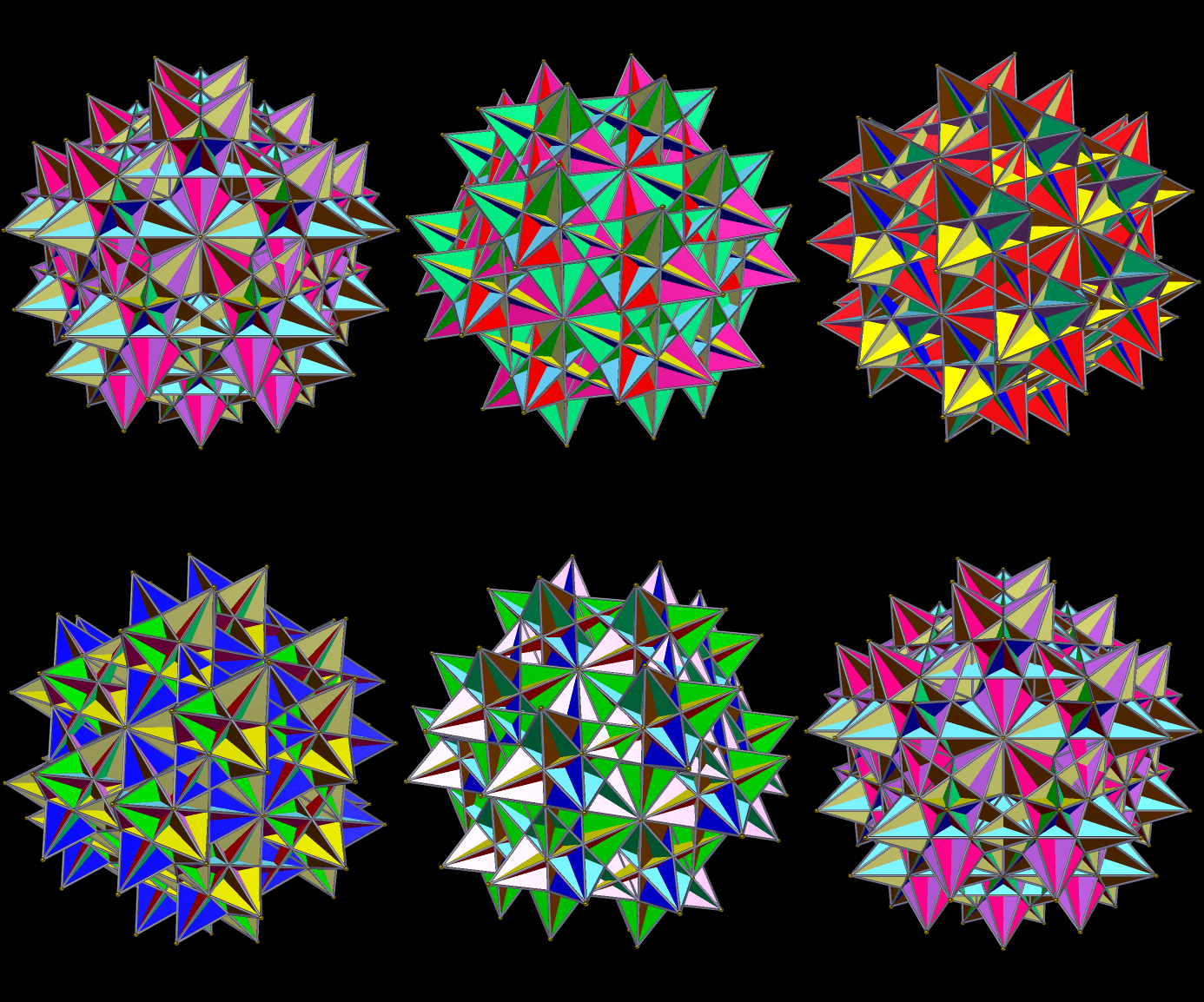
An Icosahedron, Augmented with Twenty Great Icosahedra

Image

An Icosahedron, Augmented with Twenty Great Icosahedra

The picture above uses symmetry to divide the faces of this polyhedral cluster into color groups. This next one puts faces in the same color-group if and only if they are parallel.

icosa  Augmented with Great Icosa with parallel faces a color-set

Stellating this once yielded this result, again colored by face-type, like the first image here:

1st stellation of great icosa - augmented icosahedron

I made these using Stella 4d, which you can try at www.software3d.com/Stella.php.