The Icositetrachoron, or 24-Cell: An Oddball In Hyperspace

Image

The Icositetrachoron, or 24-Cell:  An Oddball In Hyperspace

In three dimensions, there are five regular, convex polyhedra. However, in hyperspace — that is, four dimensions — there are, strangely, six.

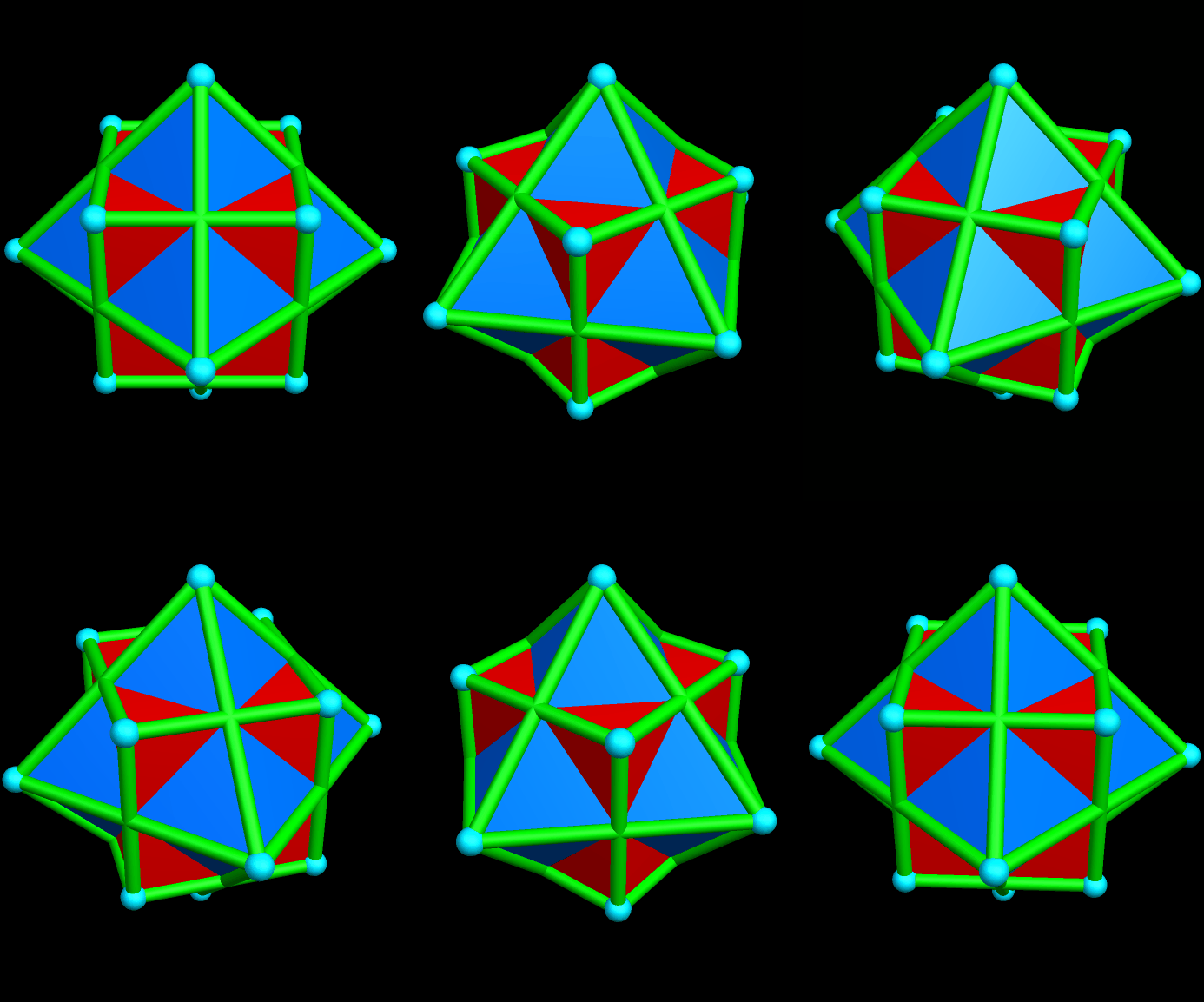
The five Platonic solids have analogs among these six convex polychora, and then there’s one left over — the oddball among the regular, convex polychora. It’s the figure you see above, rotating in hyperspace: the 24-cell, also known as the icositetrachoron. Its twenty-four cells are octahedra.

Like the simplest regular convex polychoron, the 5-cell (analogous to the tetrahedron), the 24-cell is self-dual. No matter how many dimensions you are dealing with, it is always possible to make a compound of any polytope and its dual. Here, then, is the compound of two 24-cells (which may be enlarged by clicking on it):
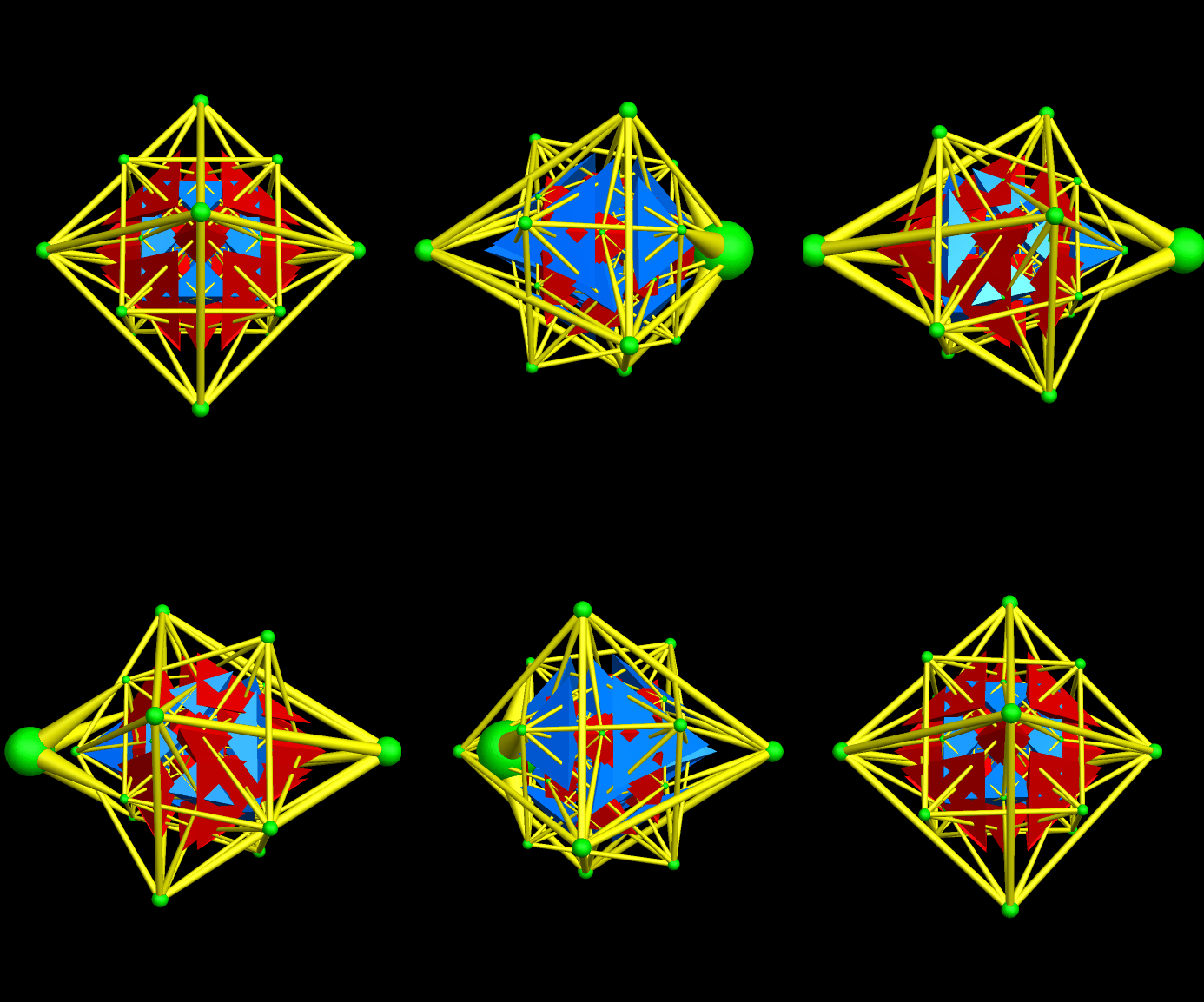
4-Ico, 24-cell, Icositetrachoron with dual

Both of these moving pictures were generated using software called Stella 4d:  Polyhedron Navigator. You can buy it, or try a free trial version, right here:  http://www.software3d.com/Stella.php.
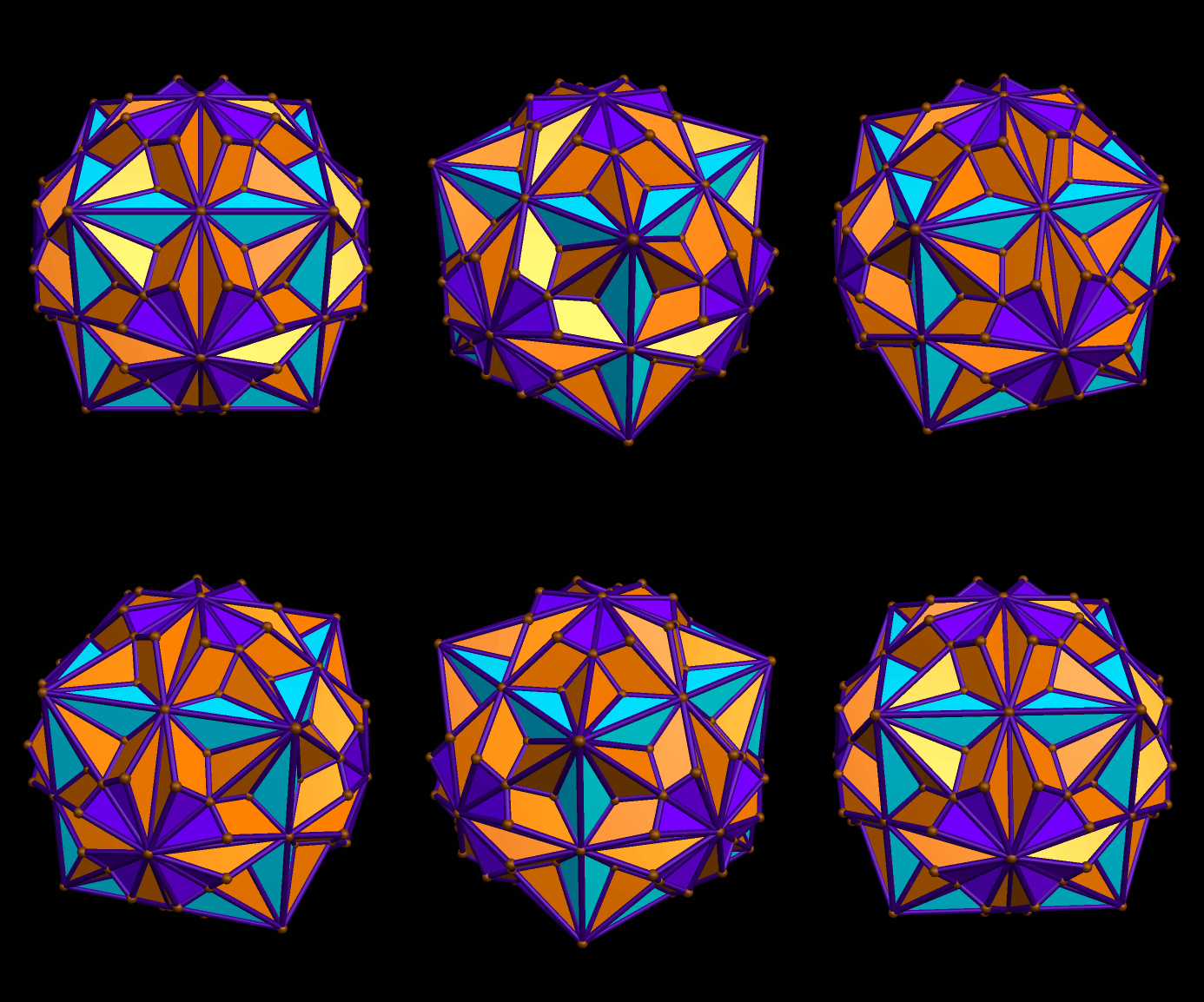
Three Unusual Polyhedral Compounds

Image

Three Unusual Polyhedral Compounds

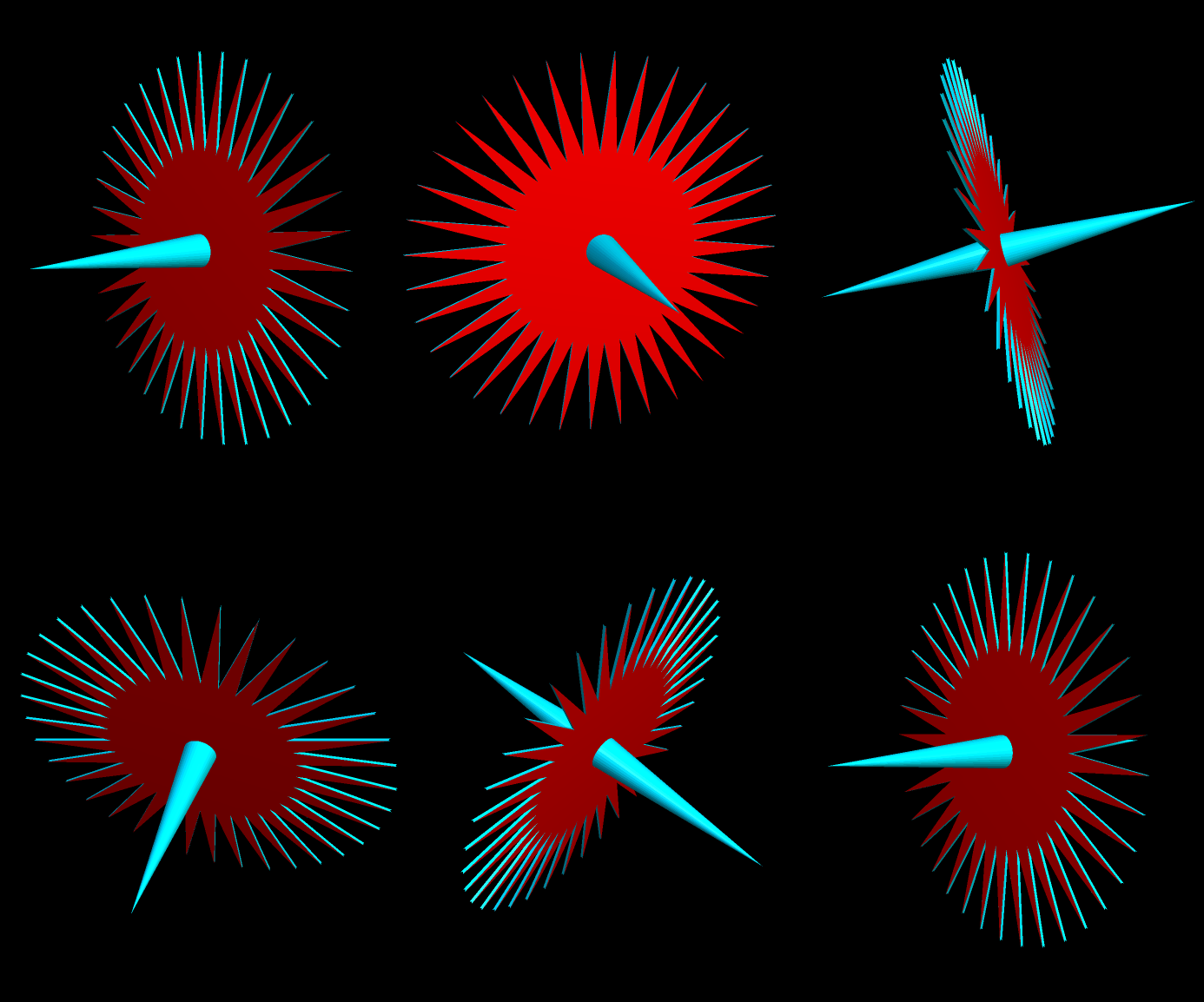
The other two appear smaller here, but can be enlarged with a single click.

hybrid

All three were created using software called Stella 4d, which you may find at http://www.software3d.com/Stella.php.

strange compound

Two Versions of a Stellated Polyhedron with Icosidodecahedral Symmetry

Image

Two Versions of a Stellated Polyhedron with Icosidodecahedral Symmetry

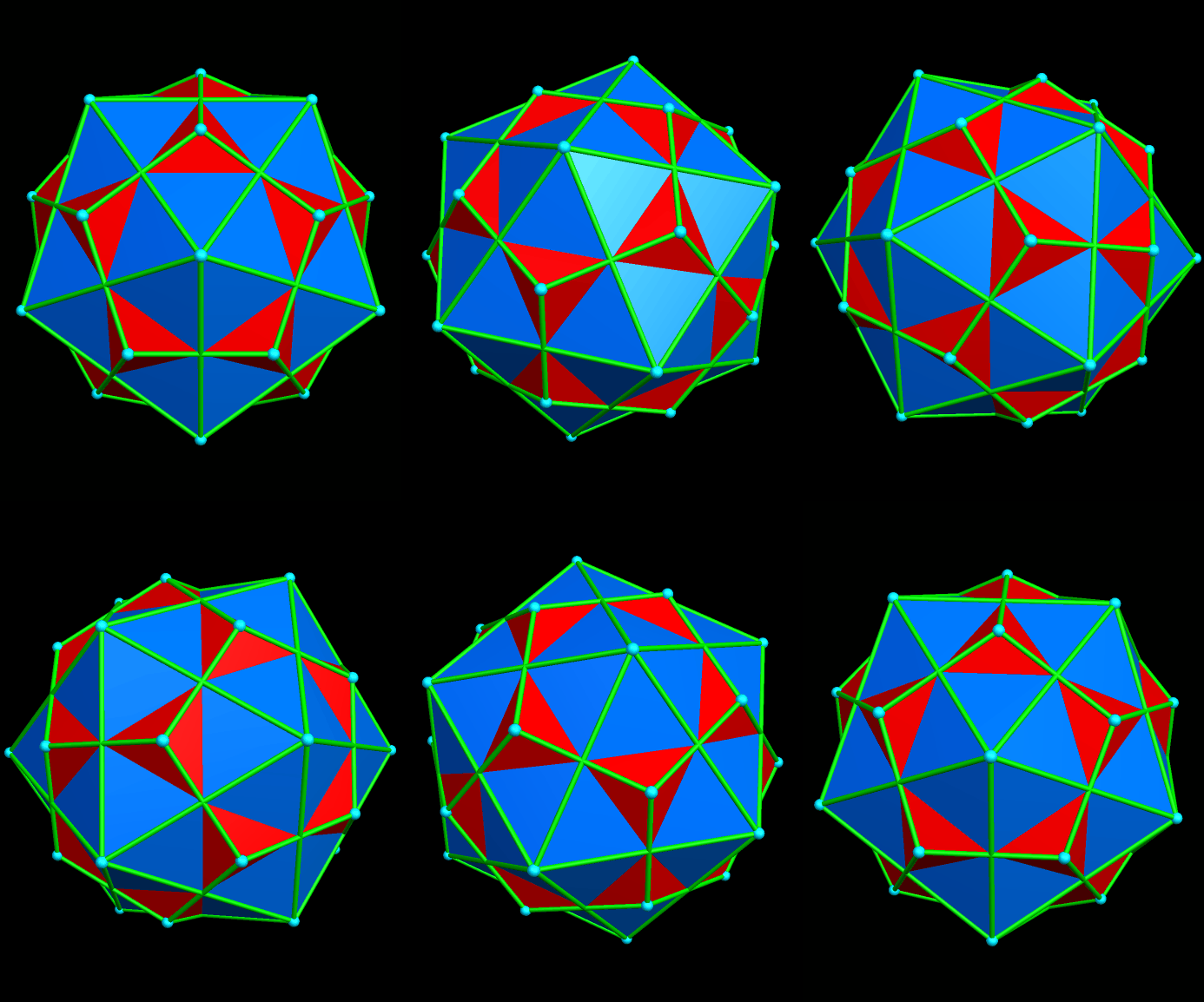
The next image was produced by rendering all the blue faces above invisible, and then changing the color-scheme to “rainbow color mode.” For both of these stellated polyhedra, the convex hull would simply be an icosidodecahedron (not shown here).

Stellated DFGACoNBCnvex hull

These images were both created using Stella 4d, which you can try and/or buy at www.software3d.com/Stella.php.

Faced-Based Zonish Versions of the Icosahedron and the Icosidodecahedron

Image

Faced-Based Zonish Versions of the Icosahedron and the Icosidodecahedron

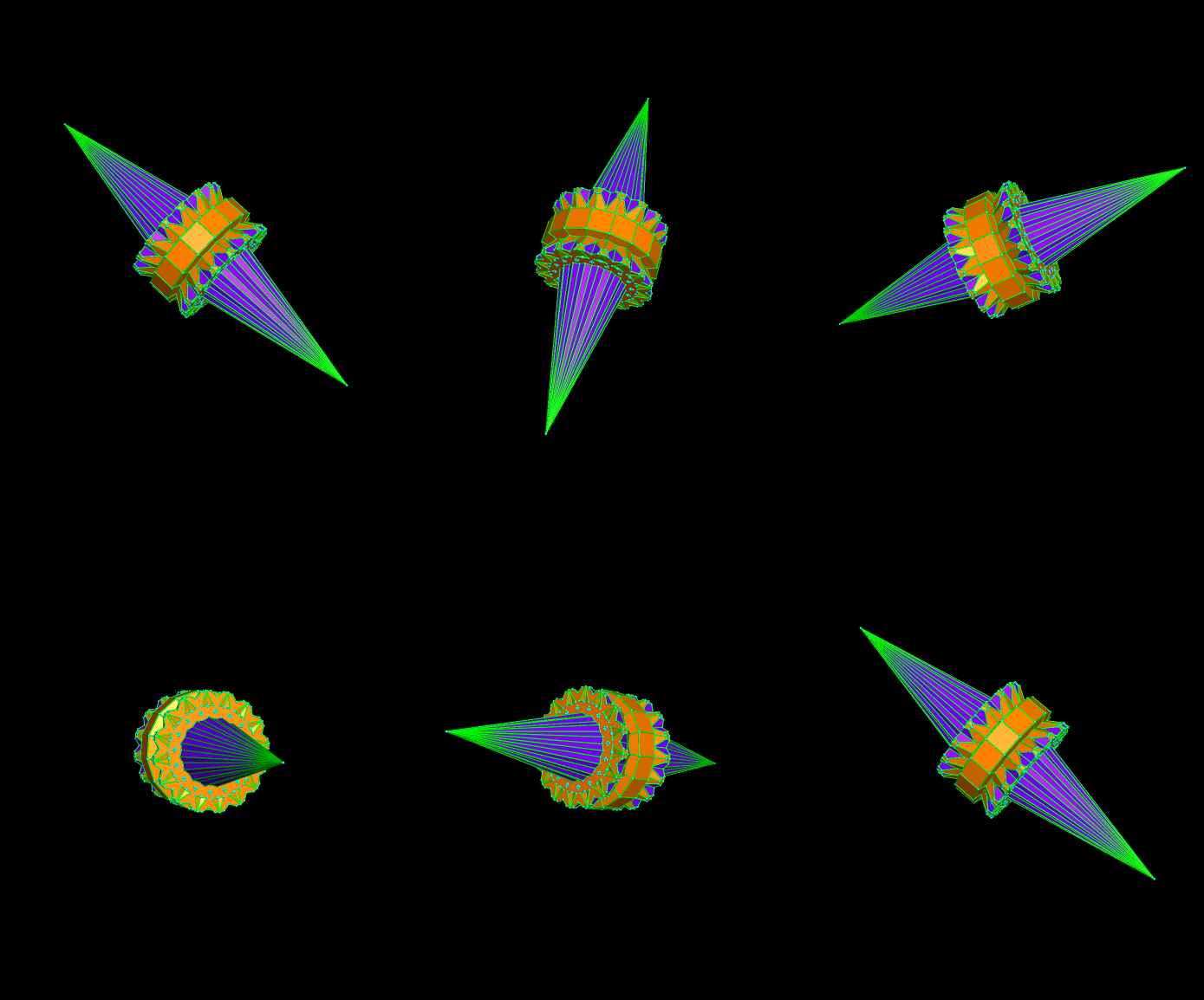
I’ve had some success lately finding near-misses to the Johnson solids by making face-based zonish versions of various polyhedra. These were found during that search, and are certainly not near-misses, but I still find them interesting, primarily due to their symmetry. Like the others, they were found using Stella 4d, which you can try or buy at http://www.software3d.com/Stella.php.
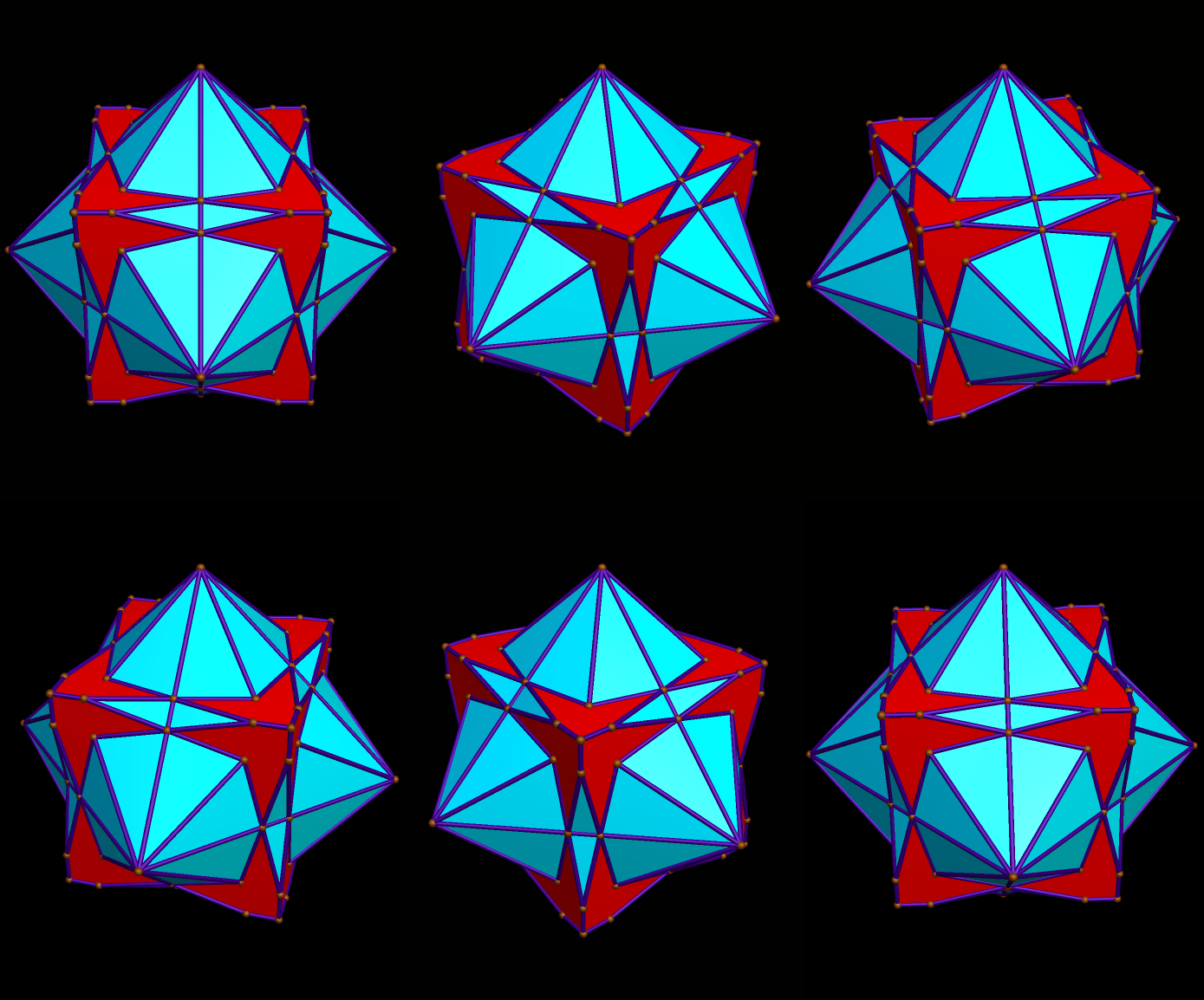
The top image was formed by making this modification to the icosahedron, and the one below (which you can enlarge with a click) was created by doing the same thing to an icosidodecahedron.

zid

Two Repeatedly-Stellated Polyhedral Compounds Which Are Dipolar

Image

Two Repeatedly-Stellated Polyhedral Compounds Which Are Dipoles

Both of these were created using Stella 4d, available at http://www.software3d.com/Stella.php. To enlarge the second image, simply click on it.
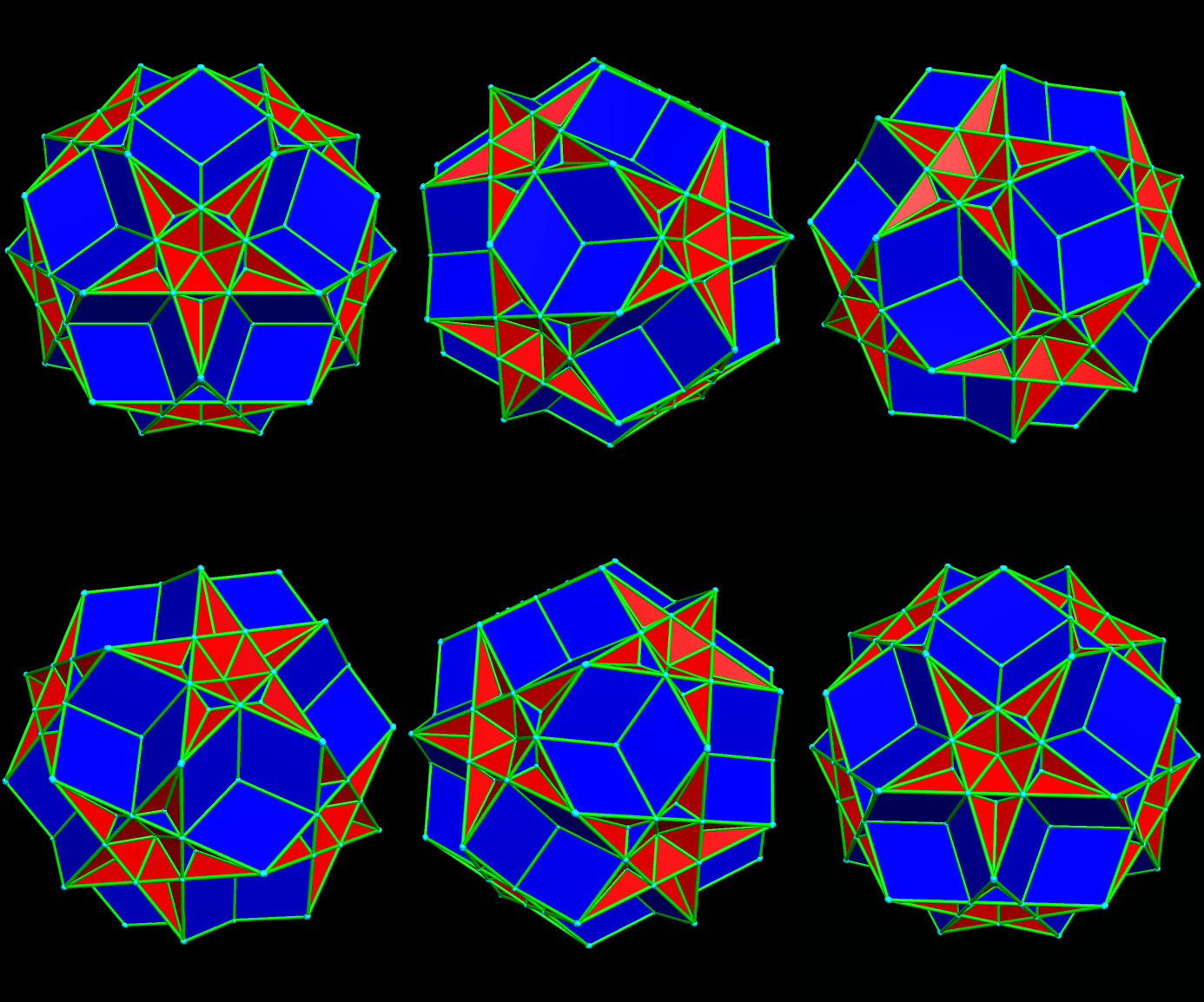
Compound of 36- Prism and dual

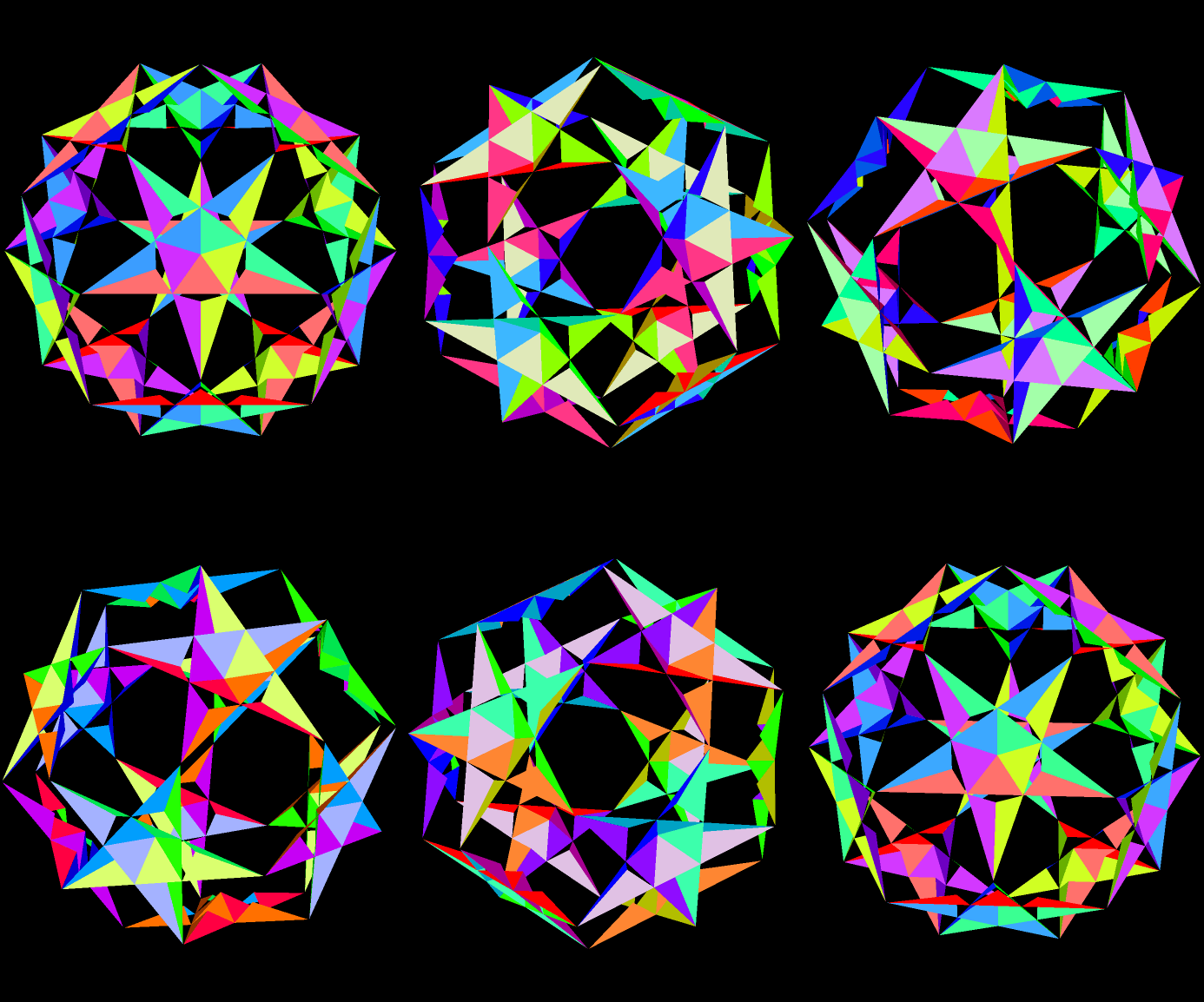
Two Versions of an Icosidodecahedron-Variant

Image

Two Versions of an Icosidodecahedron-Variant

The two versions differ in their coloring-scheme, and, also, the pentagons and blue almost-triangles (actually irregular hexagons) are hidden in the second version, which you can make larger with a click:

Convex huSDGFDNll

Both images were created using Stella 4d, which you can try or buy at http://www.software3d.com/Stella.php.
Migraine

Image

Migraine

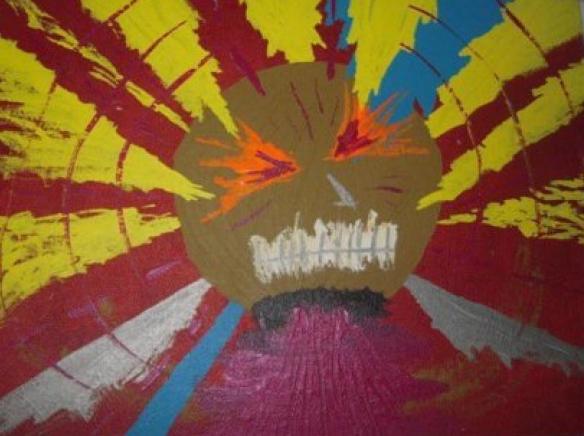
I thought I would try to paint a migraine headache, and a few years ago, I did so, and painted this. I then fell asleep, and woke up, with, of course, a migraine.

Who Reads This Blog?

Image

Who Reads This Blog?

The Hyperspace Analog of the Dodecahedron/Icosahedron Compound

Image

The Hyperspace Analog of the Dodecahedron/Icosahedron Compound

The dodecahedron and the icosahedron are dual to each other, and can be combined to make this well-known compound.

Icosa

In hyperspace, the analog to the dodecahedron is the hyperdodecahedron, also known as the 120-cell, as well as the hecatonicosachoron. Its dual is the 600-cell, or hexacosichoron, made of 600 tetrahedral cells. The image at the top is the compound of these two polychora, rotating in hyperspace.

These images were made using Stella 4d, available at http://www.software3d.com/Stella.php.
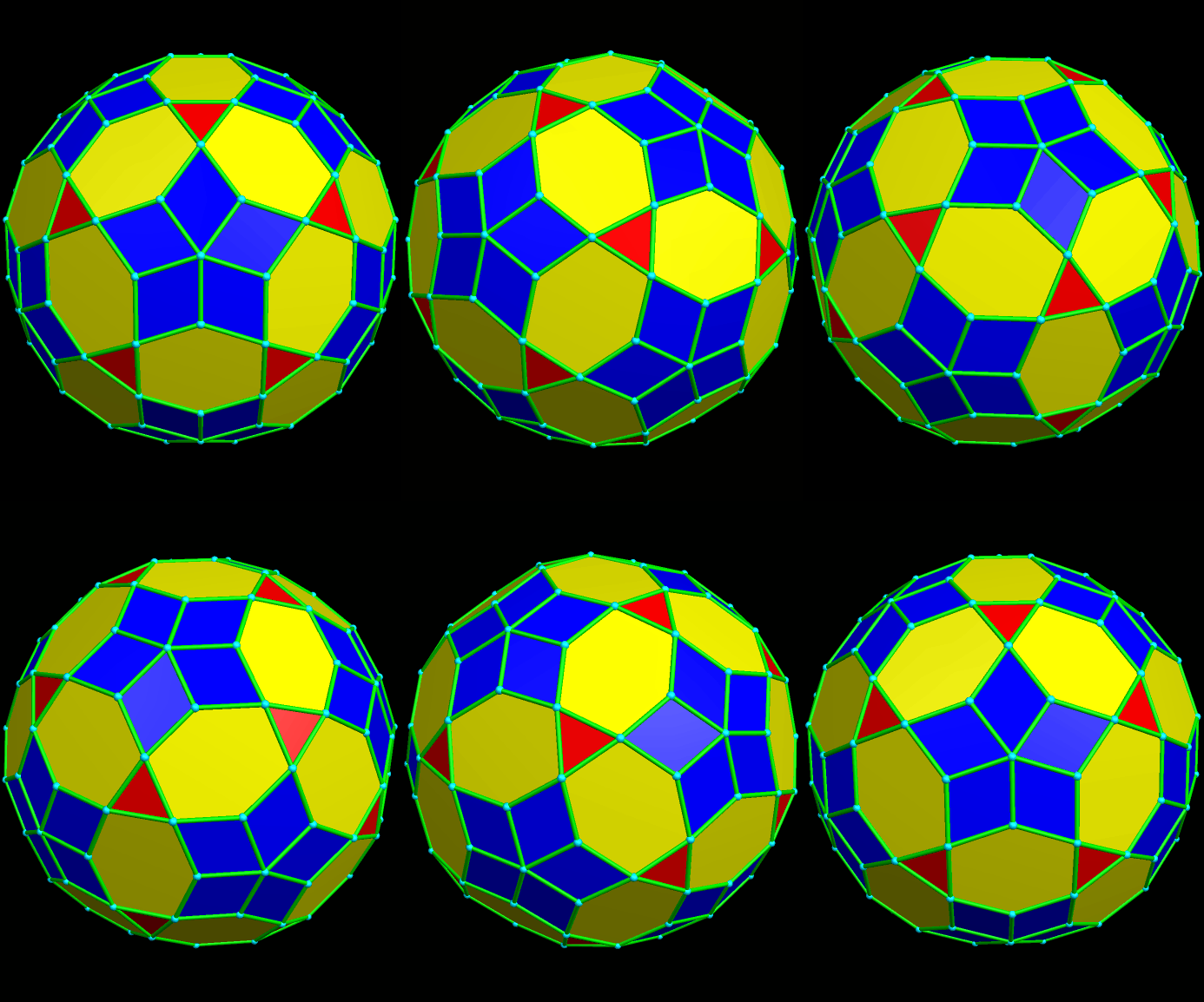
The Hyperspace Analog of the Cube/Octahedron Compound

Image

The Hyperspace Analog of the Cube/Octahedron Compound

The cube and the octahedron are dual to each other, and can be combined to make this well-known compound (below; can be enlarged with a click).

Octa

In hyperspace, the analog to the cube is the tesseract, also known the 8-cell, the octachoron, and the hypercube. Its dual is the 16-cell, or hexadecachoron, made of 16 tetrahedral cells. The image at the top is the compound of these two polychora, rotating in hyperspace.

These images were made using Stella 4d, available at http://www.software3d.com/Stella.php.