Unknown's avatar

About RobertLovesPi

I go by RobertLovesPi on-line, and am interested in many things, a large portion of which are geometrical. Welcome to my own little slice of the Internet. The viewpoints and opinions expressed on this website are my own. They should not be confused with those of my employer, nor any other organization, nor institution, of any kind.

A Polyhedron Featuring Octagons, Hexagons, and Pentagons, All Irregular

Convex hull of chiral pair compound of snub cube duals

I made this using Stella 4d, software which you can try for free right here.

Do You Like the Changes Here?

To reflect the fact that my blogging here has broadened from what it used to be (all polyhedra, all the time), I gave this blog a new tagline, title, and changed a few other things about the blog’s appearance. If you remember the way it looked before, I have a simple question for you: do you like the changes?

Public Education in Arkansas Is Under Attack — By Our Own State Legislature!

Arkansas_State_Capitol_Little_Rock

For details on the efforts of the majority of the Arkansas State Legislature to ruin public schools in Arkansas, please watch this music video:

The AEA (Arkansas Education Association) is doing everything they can to resist this flood of anti-education legislation. If you are eligible for membership in the AEA, and join, that will help with these efforts — for the strength of the AEA grows as our number of members increases. If you work in an Arkansas public school, you can join. Students can join also, and so can those who have retired from work in the field. For information on how to join, please click here.

An Involuntary Conversation with Siri

I use an iPad, but I don’t like Siri. When she’s turned on, it’s by mistake, and without the need for her, um, “help.”

siri

The other day, I accidentally activated Siri. After she said her standard opening bit, I barked at her, “&%$# it, Siri! Go away!”

She replied, in the tone of one with hurt feelings, “I’m just trying to help.” I hadn’t even thought about the fact that she was listening.

Someone actually went to the trouble to give proto-A.I., which is what Siri is, the ability to sulk.

The Most Disturbing Thing I Ever Witnessed in a College Class

  • The Year: 1993
  • The College: The University of Central Arkansas
  • The Course: Educational Psychology

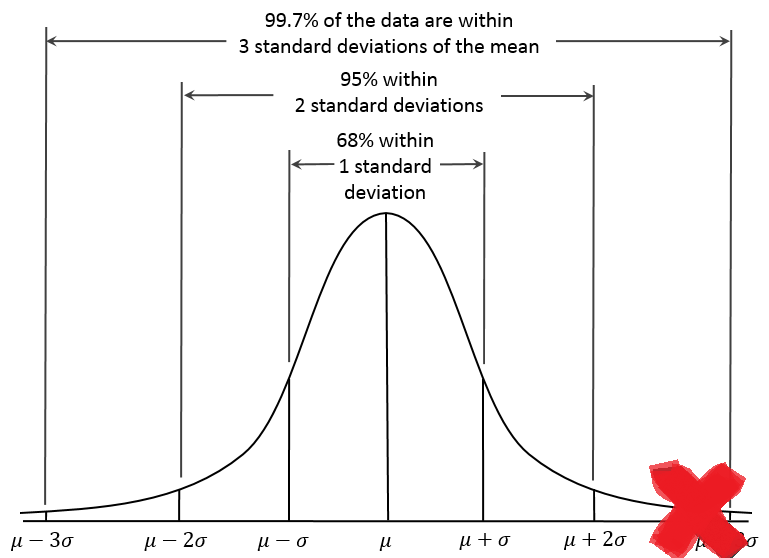
In a class called “Educational Psychology,” the bell curve, a statistical concept often used to describe the distribution of intelligence in humans, should be expected to receive some attention, and, when I took the class, it did — for about five minutes. I found the image below here; in this class, the professor drew a somewhat simpler version of it on a chalkboard.

Empirical_Rule (1)

The professor (who should be glad I do not remember his name, since I would blog it) proceeded to describe, briefly, characteristics associated with different “columns” of the bell curve, as some in academia apply it to intelligence. He then said, “Actually, what I’ve always really wanted to do was to get rid of these people.” He then added an “x” to what he’d drawn on the board. I’ve made it red, simply to make the location where he drew his “x” easier to see.

Empirical_Rule

I sat, in shocked silence, as the majority of the students in the class laughed. Laughed.

Once I could move again, after the initial, paralyzing shock turned into a deepening horror, I looked around the classroom. No one looked appalled, as I was; no one else even seemed to be disturbed, nor even slightly upset. Some were still visibly amused, in fact. I considered objecting, directly to the professor, but I was so affected by the whole episode that I was experiencing severe nausea. I couldn’t speak, for fear of throwing up.

The professor may not have known this — in fact, I would be surprised if he had — but what he was “joking” about has actually happened. It was called the Cambodian genocide, and was carried out by one of the most brutal regimes of the 20th Century, the Khmer Rouge. One of their tools used to stay in power was intimidation, taken to an extreme. In this photograph, from the article linked immediately above, you can see one form of this intimidation: the public display of the skulls of their victims. One need not be able to read to understand the message of such a display; below, the reason why this was important to the Khmer Rouge should become apparent.

800px-Choeungek2

I’ve studied this genocide. From just 1975 to 1979, the Khmer Rouge, driven by a radical Stalinist-Maoist and extremely anti-intellectual ideology, managed to reduce the population of Cambodia by an estimated 25%. They targeted, among many others, teachers. They separated children from their parents, since parents are often known to teach their children. They killed people who were seen wearing glasses — because glasses are often used to help people read books. They did their utmost to wipe out as much of the high-intelligence part of the bell curve as possible. They did their best to eliminate literacy.

Those who survived this horror were still devastated, for a whole nation had been traumatized — just imagine an entire country with PTSD (post-traumatic stress disorder). To make this situation even worse, the very people who could have helped most with the post-Khmer-Rouge recovery (doctors, therapists, teachers, clergy, etc. — all professions which require education) were almost entirely wiped out, and the people who could train new recruits for such professions had also been killed. As a direct result of this targeting of intellectuals for slaughter, the effects of the Cambodian genocide lasted far longer than the regime which perpetrated it.

I was thinking about this as the class period ended. In a daze, I walked away — far away. Even though I did return for future class sessions, since the course was a requirement for teacher certification, I never listened to another word that professor said, for he had permanently lost all credibility with me. At the end of the term, I left his class with an “A,” and a renewed determination to oppose those who, like the Khmer Rouge, try to “dumb down” society — at every opportunity. As for the people of Cambodia . . . they are still recovering, and will be, for many more years.

Wiping out a group of people — any group — simply isn’t funny.

“That which does not kill us makes us stronger.” Oh, really?

I have observed that many people often stop thinking about a phrase, and simply accept it, if they hear it repeated enough times. Since I don’t want to make this error, I’ve developed a habit of questioning such phrases. This quote, from Friedrich Nietzsche, definitely qualifies as a phrase which many believe because it’s repeated a lot, and it is certainly questionable. More than that, in fact: it is utter nonsense — and I can prove it.

The method I will use for this proof is reductio ad absurdam, in which one temporarily assumes the statement is true, then shows that it leads to a conclusion which is pure nonsense, which, in turn, shows that the original assumption of truth was a faulty one.

So the Nietzsche quote, purely for the purposes of this proof, is now (temporarily) assumed to be true. Since being stronger is beneficial, it now follows that we should actually seek out things which damage us, but without killing us. It isn’t hard to think of examples of such behaviors.

SONY DSC

If a person were to drive to a hospital’s emergency room, and, while standing just outside the entrance with a hacksaw, started using one hand to attempt to saw off the other one (warning: do not try this yourself!), damage would certainly result. This hypothetical person probably wouldn’t completely lose his hand, for (a) hacksaws are not fast, and (b) someone else would no doubt notice, and take action to stop the self-damage, in time to get him medical attention. He is, after all, already in the perfect place for it.

Another, much more common example:

img-thing

It’s possible for a person to drink these boxes of inexpensive red wine at a rate of five a week, but it’s an incredibly bad idea. Alcohol will do serious damage, consumed at that rate, given enough time, as can be verified with virtually any physician. Surviving prolonged binge-drinking is possible (but not guaranteed), even if done for a few years; I know this to be true because I have witnessed it. It wasn’t a pretty thing to watch, and the binge drinker could not be persuaded to stop. The binge drinking finally ended, but with an emergency trip in an ambulance needed, for immediate medical care, to prevent imminent death.

In each case, (1) the hypothetical person who tries to saw off his own hand while standing outside an emergency room, and (2) the real person (an adult whom I will not name) who consumed dangerous quantities of alcohol, something happens which damages them, but doesn’t kill them. Does it make them stronger? The first person could easily lose some functionality in his hand, and could also end up in a psychiatric institution. The second person suffered numerous forms of permanent damage to multiple systems of the body, resulting in permanent disability. Both rack up huge medical bills. These aren’t good things, for either person, and they are quite unlikely to “make one stronger.” A far more likely outcome is the exact opposite — each person is weakened, in the sense that are are rendered less able to deal effectively with the rest of their lives.

The proof is now complete. It turns out that those things which do not kill you can, quite possibly, weaken you, and expecting them to make you stronger simply makes no sense. So, world, please stop repeating this insipid Nietzsche-quote. Not only is it logically invalid; it’s also become one of the most annoying clichés in existence.

Fortunately, for those who want advice which actually makes sense, there are many sources available which are not Friedrich Nietzsche.

[Note: I did not create the images in this post, but simply found them with Google image-searches for “hacksaw” and “box of wine.”]

Meet the NEA President, Lily Eskelsen Garcia

In my last post (click here to see it), I made a case for Arkansans who work in public schools to join the Arkansas Education Association, a state affiliate of the NEA, or National Education Association. I’d now like to introduce you to NEA President Lily Eskelsen Garcia. This video was recorded while she was still the NEA Vice-President, but it remains a great introduction to the kind of person she is.

I don’t often simply yield my blog-space to others . . . but I’m one of Lily’s fans, and have been since I first saw her perform this song, so she gets “airtime” here — without even having to ask for it.

Teachers’ unions are under attack by corporate-backed politicians — all across the country. It’s important that we fight back. The more members we have, the more effectively we can resist the current efforts to reduce the legal rights of those who work in schools (both teachers and support staff). If you are eligible for membership in the NEA (see this page to check on that, and join, please, if you can), I hope you will not only join, but recruit others to join, as well. The more members we have, the stronger we are. The stronger we are, the more likely we are to prevail — over those who trying to destroy public education in this country.

The NEA, and its affiliates, protect the working environment of America’s teachers — and that is also the learning environment of America’s children. Helping the NEA save American public education is, therefore. in the best interests of everyone.

If you teach, or work in some other capacity in an American public school, this is your fight. Please join us.

The Arkansas Education Association, or AEA: How (and Why) to Join

aea

The Arkansas Education Association is the oldest, largest, most effective, and most well-established professional organization (and union) for educators in Arkansas. I’ve been a member for years, and will explain why, below. First, though, here are three ways to join:

  1. A local affiliate of the AEA exists in every school district in Arkansas. My local is called PACT, the Pulaski Association of Classroom Teachers. In the nearby Little Rock School District, the local AEA affiliate is the LREA: the Little Rock Education Association. If you know members at your local, ask them to put you in touch with the teacher at your school who serves as the Representative, or “Rep,” for your school. You can then simply ask your Rep for a membership form, fill it out, and return it to them. The Rep will take it from there.
  2. A second way to join is through the AEA’s website, at http://www.aeaonline.org/how-join. This involves filling out and printing a paper form, and then mailing it to the AEA’s office in Little Rock, using the address at that website.
  3. There’s also a third way, and it doesn’t require paper forms, nor postage stamps. You can join our national organization, the NEA, through their website, at https://ims.nea.org/JoinNea/, and this will automatically make you a member of your state and local affiliate at the same time. Also, this works for educators and support staff in other American states, the District of Columbia, and Puerto Rico, as well — unlike items #1 and 2 above.

So . . . why join these affiliated local, state, and national organizations? Well, first, let me give you some idea what it costs to be a member. I pay dues of $23.08, by paycheck deduction, twice a month, and that’s the total of my NEA, AEA, and PACT dues. (This amount will vary in other school districts, since each local sets their own dues.) In return, I have a network of people dedicated to (1) protecting my rights as a teacher, everywhere from my own classroom to Capitol Hill, (2) helping me develop professionally as a teacher (through collaboration with an extensive network of colleagues, as well as formal, for-credit Professional Development opportunities), and (3) being ready to come to my legal defense, should I need such assistance.

It is important to remember that a teacher can do absolutely nothing wrong, and still end up in a situation where such assistance is needed — to defend yourself against a false accusation, for example. I’ve been falsely accused of unethical conduct, via an anonymous complaint, in the past; it isn’t a fun situation. Because I was already a PACT/AEA/NEA member, help was provided at no extra cost, and my name was fully cleared. Had I not been a member, I might have had to hire an attorney in that situation — if affording one was possible, but it wasn’t. Few teachers have tens of thousands of dollars on hand to privately hire an attorney, should such a need arise in connection with their jobs, and I was no exception — but union membership takes care of that, if (and only if) you are already a member when trouble strikes. If I consider the dues I pay, vs. what attorneys charge when hired by individuals, I realize the truth: union dues are one of the best bargains available — anywhere.

It is a sad reality that some (not all, but some) administrators have a nasty habit of bullying teachers. In fact, such bullying was exactly what drove me to join PACT/AEA/NEA in the first place. The bullying continued after I joined, so I then reported it to my local’s contacts, and the organization intervened to protect me — successfully. Later, I witnessed similar bullying, of my fellow teachers, by a different administrator, and that’s what prompted my move from being a dues-paying union member to being a much more active union member, and a building Representative as well. In that role, I had the privilege of intervening personally, to do my best to stop such adult-on-adult bullying, and enlisted the help of others, whenever such help was needed. Again, such efforts were successful, although our own confidentiality rules do not allow me to describe the specifics, for we carefully protect the privacy of our members. (Important side note: all of this bullying described above happened in schools other than the school where I currently teach. This is not a coincidence; I am at my current school on purpose, so that I can work with good administrators every day. When teachers are well-treated, as is the norm at my current school, we can do a much better job focusing on, and meeting, the educational needs of our students.)

This is what union members do: we help each other. We protect each other. We support each other. Until the miraculous day when every single person in management and administration suddenly begins behaving ethically, 100% of the time, unions will be needed, and our work will continue to be important. We protect the working environment in schools — and that same working environment is the learning environment for America’s children.

There are other, more dollars-and-cents-oriented reasons to join, as well. For example, through the NEA, I have a quarter-million-dollar life insurance policy which costs me only $32.73 per month — an excellent price. Shopping discounts exist in abundance. There even exist benefits which I haven’t even used yet, simply because there are so many.

Of all the benefits of membership, there is one, above all others, which makes the argument for membership most compelling to me, and that is related to the legal right of representation. For AEA members, the statement below is both vital, and true:

right-to-representation

“An employee shall be entitled to and shall be offered the opportunity to have a witness or representative of the employee’s choice present during any disciplinary or grievance matter with any administrator.” This is an Arkansas state law (A.C.A. 6-17-210). Any time an administrator in my district breaks this law, by denying any PACT or PASS member’s request for representation, it is imperative that union leaders be informed of this illegal act, without delay. (One way to reach them is by calling the PACT/PASS office, at 501-374-4955, during business hours.) PACT is our teachers’ union, and PASS is our union for support staff. We work together, which is as it should be. (Those AEA members in other locals, in similar situations, should contact the corresponding leaders of their own locals.)

Union members have representation provided to them upon request, whenever the need for it exists, at no extra cost — for our dues, and the dues of our colleagues, have already paid for it. Those who are not members, by contrast, are at the mercy of the market to find representation, on their own — with no well-organized, powerful organization backing them up, as we have as AEA members. In my opinion, this seals the deal — if you work in an Arkansas school, you can’t afford not to join the AEA, for the benefit of representation, alone. As for the numerous other benefits, they simply make membership an even sweeter deal.

One last thing: should anyone who tries to join the AEA encounter any difficulties doing so, feel free to ask for my personal help, in a comment to this post — and I promise to make certain you get the help you need.

A Simple Cheating-Prevention Idea, for Teachers with Students Sitting at Tables

With just two pieces of cardboard and a pair of scissors, you can partition a table which seats four into four sections — one per student. This makes cheating much more difficult, and that’s a good thing for everybody. No tape is needed; each piece of cardboard holds up the other one.

cardboard privacy screens for tables of 4 students

Other materials can be used as well. For one-time use, posterboard is adequate. For something more permanent, wooden boards are recommended.

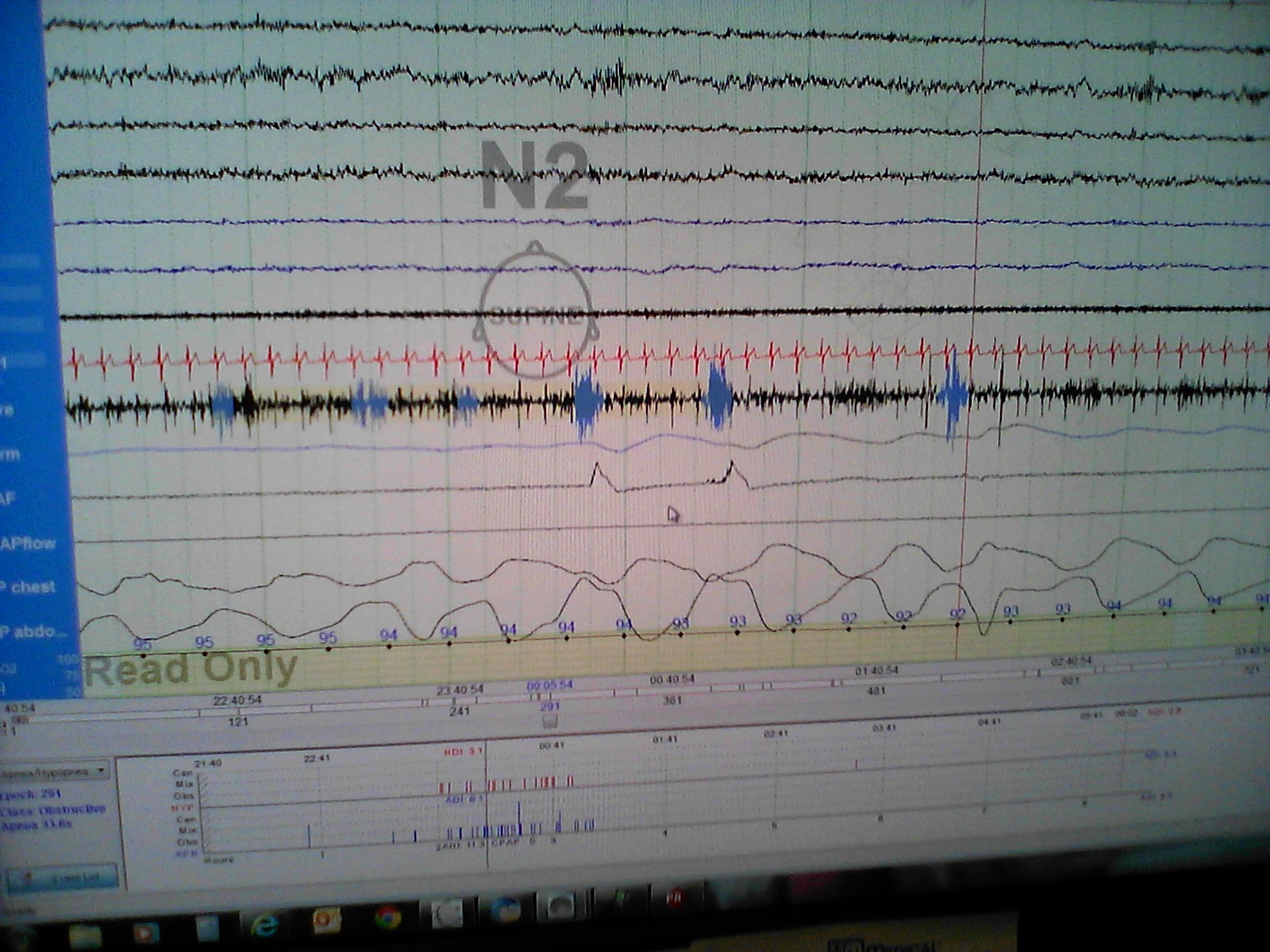
I Now Have Empirical Evidence for the Existence of My Own Brain!

Pic-03202015-001

A doctor needed to look at my brainwaves (and a bunch of other MSLs, also known as “medical squiggly lines”), as recorded during a sleep study, so of course I asked him if I could see them myself. Who wouldn’t want to see their own brainwaves?