The Misadventures of Jynx the Kitten, Chapter Three: Jynx Tries To Help Wash the Dishes

The thing is, kittens really aren’t very good at housework — but at least he’s trying, right?

20141006_175239_resized

Of course, he might have been wanting a shower instead. It’s hard to tell what Jynx is thinking sometimes.

20141006_175227_resized

This did cause a delay in the dishes getting done, for we were laughing too hard to load any dishes for quite some time, even after these pictures were taken.

20141006_175218_resized

No kittens were harmed in the making of this blog-post . . . but I will admit that the temptation to close the dishwasher, and then start it, did exist. However, we unanimously decided against it.

A Confusing Sign, Posted at the Entrance to My Local Library

141006_0000

I just returned home from a visit to my local library, and was so bewildered by this sign at the entrance that I felt compelled to take a picture of it. Helium doesn’t react with anything at all . . . so why would a library want to ban helium balloons? It’s not like helium can damage books!

My Aqua Regia Story

This is my twentieth year teaching, but only the first year when I have not taught at least one class in chemistry, and I miss it. One of my fondest memories of chemistry lab involves the one time I experimented with aqua regia — a mixture of acids which, unlike any single acid, can dissolve both gold and platinum, the “noble metals.” I had read a story of a scientist’s gold Nobel Prize being protected from the Nazis by dissolving it in aqua regia, and then recovering the gold from solution after World War II had ended. Having read about this, I wanted to try it myself, and also thought it would make an excellent lab for classroom use — if I could figure out how to recover the gold, and also learn what precautions would be needed to allow high school students to perform this experiment safely. For sensible and obvious reasons, I conducted a “trial run” without students present, but with another chemistry teacher nearby, since aqua regia, and the gases it produces when dissolving gold, are quite dangerous. Someone else has put a video on YouTube, showing aqua regia dissolving gold, so you can see something much like what I saw, simply by watching this video.

First, I obtained one-tenth of a troy ounce of gold, which cost about $80 at the time. I had read about the extreme malleability of gold, one of the softest metals, and wanted to see evidence for it for myself — so, before I prepared the the aqua regia, I used a hammer to try flattening the gold sample into a thin sheet. That didn’t work, but it didn’t take long for me to figure out why — I had accidentally bought gold coin-alloy, which is 10% copper, not pure gold. Since this alloy is far less malleable than pure gold, my attempt to flatten it had failed, but I also knew this would not pose a problem for my primary experiment — the one involving aqua regia. Also, I didn’t have another spare $80 handy, to purchase another 1/10 troy ounce of pure gold, so I proceeded to make, for the first time in my life, a small amount of aqua regia — Latin for “royal water.”

Unlike what is shown in the video above, I prepared the acid-mixture first, before adding the gold, using a slightly-different recipe:  the traditional 1:4 ratio, by volume, of concentrated nitric acid to concentrated hydrochloric acid. Both these acids look (superficially) like water, but the mixture instantly turned yellow, and started fuming, even before anything was added to it. Wearing full protective gear, I watched it for a few minutes — and then, using tongs held by gloved hands, lowered my hammer-bashed sample of gold into the fuming, yellow mixture of concentrated acids.

It worked. It was a fascinating reaction, and a lot of fun to watch. At approximately the same time that the last of my gold sample dissolved, something occurred to me:  I had failed to research how to recover the dissolved gold from the resulting solution! No problem, I thought — I can figure this out. (I am seldom accused of lacking self-confidence, even when I’m wrong.)

My first idea was to use a single-replacement reaction. Many times, I have had students extract pure silver from a solution of silver nitrate by adding a more-active metal, such as copper. The copper dissolves, replacing the silver in the silver nitrate solution, and silver powder forms, as a precipitate, on the surface of the copper. Thinking that a similar process could be used to precipitate out the gold from my gold / aqua regia mixure, I simply added come copper to the reaction beaker. The corrosive properties of my aqua regia sample had not yet been exhausted, though, and so the remaining aqua regia simply “ate” the copper. The result was a mess — I had only succeeded in turning an already-complicated problem into an even-more-complicated problem, by adding more chemicals to the mixture. More attempts to turn the gold ions back into solid gold dust, using other chemicals, followed, but all of them failed. Finally, I used a strong base, sodium hydroxide, to neutralize the still-acidic mixture, and then, disgusted by my failure to recover the gold, found a way to safely dispose of the mixture, and did so.

In retrospect, I think I know where I messed up — I should have neutralized the remaining acids in the mixture with sodium hydroxide first, before adding copper to cause the gold to precipitate out, in a no-longer-acidic solution of ions with much less hydronium present. That, I think, will work, and I do intend to try it sometime — after doing more research first, to increase my level of certainty, and also after waiting for the current price of gold to drop to less-expensive levels. Right now, after all, a tenth of a troy ounce of gold costs roughly $120, not a mere $80.

As for the lost $80, I’m not upset about that anymore. I definitely learned things while doing this, and now view the $80 spent as simply the cost of tuition for an educational experience.

At Least for Me, Blogging > Writing a Book

stack-of-books-images-Stack-of-Books-books-to-read-2998208-550-408

I’ve been asked, more than once, if I’ve ever considered writing a book. The answer: writing a book, as compared to maintaining a blog, would drive me crazy. The reason is simple: every book I’ve every read has at least one typo in it — somewhere. If I wrote a book, got it published, and then found writing mistakes in it, I’d be mortified. With a blog, on the other hand, I can edit mistakes away, months, or even years, after making them.

There aren’t many things that embarrass me, but making errors in writing is definitely one of them. If others can see the errors, then having committed the “sin” of writing incorrectly feels like being caught naked in public — eeeeek!

Recovering from Theophobia: My Personal, Secular Jihad

640px-Lutte_de_Jacob_avec_l'Ange

The image above is a 19th-Century painting by Eugène Delacroix, depicting the story of Jacob, wrestling with a being often described as an angel, as described in the Book of Genesis. An interesting part of the story is that there were no witnesses to this struggle in the darkness (“So Jacob was left alone, and a man wrestled with him till daybreak,” Gen. 32:24, NIV), which tells me that the conflict could have occurred entirely inside Jacob’s mind. It does not matter if there was, or was not, an actual person, named Jacob, who had such an experience. No supernatural beliefs are necessary to find this story interesting, and there is no good reason to avoid thinking about it.

Thought is, of course, a mental activity which can bring clarity to confusing things in life, just as a sunrise can enable one to see things which have previously been hidden by night. There are times when thinking requires solitude, and the process of figuring out difficult problems usually doesn’t succeed without some sort of internal struggle. If you have ever wrestled with a single, difficult mathematical problem for several days running, as I have, then you understand this already — but the need for clear, rational thinking is certainly not limited to the field of mathematics. Rational thought is important in all parts of life.

Whether we like it or not, life contains a series of both external and internal struggles. Many people dislike conflict, and go to great lengths to avoid it. I am not one of those people, but this is not by choice. It is, rather, a result of the fact that I was born into an intense struggle-in-progress:  the efforts of my now-deceased father, a religious fanatic, to control the lives of everyone around him, and use them for his own selfish purposes — and the efforts of some of these other people, myself included, to escape his efforts to control every facet of our lives. From an early age, out of necessity, I had to develop complex techniques of mental and verbal combat, both defensive and offensive, simply to survive childhood with some semblance of sanity intact — although the resulting PTSD, from growing up in the war zone I called “home,” is something with which I will always have to cope. My earliest memory, after all, is surviving shaken baby syndrome at age 2½, and that sort of experience simply cannot be escaped without consequences.

My mental-combat techniques still exist, available for use at any time of my choosing, and can have devastating impact on others — I seldom lose an argument — but using these verbal and mental weapons at full power is, I now realize, quite dangerous, more so to myself than to anyone else. Now, decades later, I still have to be careful not to be overly eager to jump headlong, as if by instinct, into any conflict which presents itself, especially if I see those I care about being bullied, or otherwise abused. I have neither the time, nor the mental energy, to fight every single injustice I see, but it took many years for me to understand the wisdom of the well-known saying that it is important to choose one’s battles carefully.

The word “jihad,” which I deliberately used in the title of this post, is complex, and has multiple definitions. It is also an emotionally-charged word, and out-of-control emotions are, perhaps, the greatest enemy of rational thought. So, first, please understand this: when I use this word, I am not referring to any sort of “holy war,” which is the first thing that comes to mind, for many people, when they hear what I sometimes call the “j-word.” I am also not making any sort of comment for, nor against, Islam, but am simply borrowing a word from another language, Arabic, because it applies so well to much of my own life. Another definition you will find here is “a personal struggle in devotion to Islam especially involving spiritual discipline” — in other words, an internal struggle to do the right thing. While I am not religious in any conventional sense, I definitely understand the important idea of an internal, mental — or “spiritual,” if you prefer — struggle. My personal internal struggle involves a never-ending effort to maintain self-control, especially over destructive emotions, such as hatred, and fury. Fury isn’t simply anger, after all — it goes far beyond that. It is an absolutely horrific state of mind where one is so overcome by anger that the rational self becomes utterly consumed by white-hot, blinding rage.

For years, without realizing it, I was a theophobe — hardly surprising, considering the religious elements of the more unpleasant parts of my childhood. Theophobia is not a familiar word to most people, but it can exist in both religious and non-religious people, and can be defined as an irrational fear and hatred of God, religion, religious people, and religious institutions, such as churches and mosques. There have been entire years — especially since the Catholic Church’s pedophilia scandal blew wide-open in the media, worldwide — when I could not bring myself to go near a church of any denomination, let alone enter one, for fear that being near such a place would trigger a panic attack, or, even worse, a PTSD “freakout” episode. It isn’t hard to spot theophobes, of course; they are easily identified, especially among the much larger, rapidly-growing group of people who call themselves atheists. You probably know at least a few atheists yourself, and might have noticed that some of them seem to be at peace with life, and can easily interact peacefully with religious people — while others are a perfect fit for the “angry atheist” stereotype, attacking religion as if it were the source of all evil in the world. It isn’t, but that didn’t stop me from thinking that it was, for many years.  Recovering from theophobia is not easy, and is definitely a struggle, but is also very much worth the effort.

Unusually, several of the people I am now grateful to, specifically for helping me recover from theophobia, are practicing Muslims. This doesn’t fit the stereotype of Islam portrayed in the Western media, of course. If you get all of your information about Islam from stories in the news, you might think all Muslims hijack airplanes, commit suicide bombings, oppress women, and decapitate “infidels” every time they get they chance. Fortunately, I started using another approach, while still in college:  conversation. Simply by talking to Muslims I am now proud to call my friends, I have learned several things, among them that most Muslims are kind and decent people, and also that most Muslims intensely dislike the extremists within Islam — about as much as the average Christian dislikes, say, the Westboro Baptist Church. Adding practicing Christians to the list of people I can successfully engage in productive conversation took a lot longer, but the reason for this has absolutely nothing to do with Christianity, and everything to do with my own personal history. My father was, after all (among many other things), an ordained Christian minister. Later, he moved through several other religions, attempting to drag my family along with him, and these religions included his own warped version of amalgamated Native American religious traditions, the Soka Gakkai sect of Buddhism, and several others. A notable absence on this list — one of the few religions with which my father never developed an obsession — is Islam. This fact made Islam, and those who practice it, a logical place for me to start the process of making peace with certain inescapable facts: (1) the world contains billions of religious people, most of whom are not dangerous fanatics, and (2) religion is not going away any time soon, no matter how much the furious theophobes of the world rage against it.

This personal recovery-process is not over; I still have much internal, mental work left to do, especially when it comes to establishing peace with Christianity, the world’s largest religion. The important thing, at this point, is that I am doing it. I’m quite happy to have left the “angry atheist” phase of my life in the past, where it belongs, and have no intention of returning there.

Sam Harris: A Quote

Sam_Harris_01

Source — Waking Up:  A Guide to Spirituality Without Religion, p. 38.

Top 100 Banned/Challenged Books: 2000-2009

censorship

The best ways to celebrate Banned Books Week (which is going on now) are to read/buy/give away banned books, and/or donate money to libraries which deliberately put banned books in the circulating collection, as all good libraries do.

I’ve color-coded the list below. Books in red, I have read in their entirety. Books in blue, I have read some of, but have not (yet) finished. Also, now that I know they’re on this list, I’m likely to add some of the books in black, which I have not yet read, to my “books-to-read” list. There are few things I hate as much as censorship.

1. Harry Potter (series), by J.K. Rowling

2. Alice series, by Phyllis Reynolds Naylor

3. The Chocolate War, by Robert Cormier

4. And Tango Makes Three, by Justin Richardson/Peter Parnell

5. Of Mice and Men, by John Steinbeck

6. I Know Why the Caged Bird Sings, by Maya Angelou

7. Scary Stories (series), by Alvin Schwartz

8. His Dark Materials (series), by Philip Pullman

9. ttyl; ttfn; l8r g8r (series), by Lauren Myracle

10. The Perks of Being a Wallflower, by Stephen Chbosky

11. Fallen Angels, by Walter Dean Myers

12. It’s Perfectly Normal, by Robie Harris

13. Captain Underpants (series), by Dav Pilkey

14. The Adventures of Huckleberry Finn, by Mark Twain

15. The Bluest Eye, by Toni Morrison

16. Forever, by Judy Blume

17. The Color Purple, by Alice Walker

18. Go Ask Alice, by Anonymous

19. Catcher in the Rye, by J.D. Salinger

20. King and King, by Linda de Haan

21. To Kill A Mockingbird, by Harper Lee

22. Gossip Girl (series), by Cecily von Ziegesar

23. The Giver, by Lois Lowry

24. In the Night Kitchen, by Maurice Sendak

25. Killing Mr. Griffen, by Lois Duncan

26. Beloved, by Toni Morrison

27. My Brother Sam Is Dead, by James Lincoln Collier

28. Bridge To Terabithia, by Katherine Paterson

29. The Face on the Milk Carton, by Caroline B. Cooney

30. We All Fall Down, by Robert Cormier

31. What My Mother Doesn’t Know, by Sonya Sones

32. Bless Me, Ultima, by Rudolfo Anaya

33. Snow Falling on Cedars, by David Guterson

34. The Earth, My Butt, and Other Big, Round Things, by Carolyn Mackler

35. Angus, Thongs, and Full Frontal Snogging, by Louise Rennison

36. Brave New World, by Aldous Huxley

37. It’s So Amazing, by Robie Harris

38. Arming America, by Michael Bellasiles

39. Kaffir Boy, by Mark Mathabane

40. Life is Funny, by E.R. Frank

41. Whale Talk, by Chris Crutcher

42. The Fighting Ground, by Avi

43. Blubber, by Judy Blume

44. Athletic Shorts, by Chris Crutcher

45. Crazy Lady, by Jane Leslie Conly

46. Slaughterhouse-Five, by Kurt Vonnegut

47. The Adventures of Super Diaper Baby: The First Graphic Novel by George Beard and Harold Hutchins, the creators of Captain Underpants, by Dav Pilkey

48. Rainbow Boys, by Alex Sanchez

49. One Flew Over the Cuckoo’s Nest, by Ken Kesey

50. The Kite Runner, by Khaled Hosseini

51. Daughters of Eve, by Lois Duncan

52. The Great Gilly Hopkins, by Katherine Paterson

53. You Hear Me?, by Betsy Franco

54. The Facts Speak for Themselves, by Brock Cole

55. Summer of My German Soldier, by Bette Green

56. When Dad Killed Mom, by Julius Lester

57. Blood and Chocolate, by Annette Curtis Klause

58. Fat Kid Rules the World, by K.L. Going

59. Olive’s Ocean, by Kevin Henkes

60. Speak, by Laurie Halse Anderson

61. Draw Me A Star, by Eric Carle

62. The Stupids (series), by Harry Allard

63. The Terrorist, by Caroline B. Cooney

64. Mick Harte Was Here, by Barbara Park

65. The Things They Carried, by Tim O’Brien

66. Roll of Thunder, Hear My Cry, by Mildred Taylor

67. A Time to Kill, by John Grisham

68. Always Running, by Luis Rodriguez

69. Fahrenheit 451, by Ray Bradbury

70. Harris and Me, by Gary Paulsen

71. Junie B. Jones (series), by Barbara Park

72. Song of Solomon, by Toni Morrison

73. What’s Happening to My Body Book, by Lynda Madaras

74. The Lovely Bones, by Alice Sebold

75. Anastasia (series), by Lois Lowry

76. A Prayer for Owen Meany, by John Irving

77. Crazy: A Novel, by Benjamin Lebert

78. The Joy of Gay Sex, by Dr. Charles Silverstein

79. The Upstairs Room, by Johanna Reiss

80. A Day No Pigs Would Die, by Robert Newton Peck

81. Black Boy, by Richard Wright

82. Deal With It!, by Esther Drill

83. Detour for Emmy, by Marilyn Reynolds

84. So Far From the Bamboo Grove, by Yoko Watkins

85. Staying Fat for Sarah Byrnes, by Chris Crutcher

86. Cut, by Patricia McCormick

87. Tiger Eyes, by Judy Blume

88. The Handmaid’s Tale, by Margaret Atwood

89. Friday Night Lights, by H.G. Bissenger

90. A Wrinkle in Time, by Madeline L’Engle

91. Julie of the Wolves, by Jean Craighead George

92. The Boy Who Lost His Face, by Louis Sachar

93. Bumps in the Night, by Harry Allard

94. Goosebumps (series), by R.L. Stine

95. Shade’s Children, by Garth Nix

96. Grendel, by John Gardner

97. The House of the Spirits, by Isabel Allende

98. I Saw Esau, by Iona Opte

99. Are You There, God?  It’s Me, Margaret, by Judy Blume

100. America: A Novel, by E.R. Frank

Source:  http://www.ala.org/bbooks/top-100-bannedchallenged-books-2000-2009

Finally, what I am reading, myself, during Banned Books Week is Sam Harris’s latest, Waking Up. It’s a safe bet that all books by Sam Harris are banned in quite a few places.

Sam Harris on Men, Women, Violence, and Rape

sam-harris rape

The Ill-Fated Quest for “Genesis”

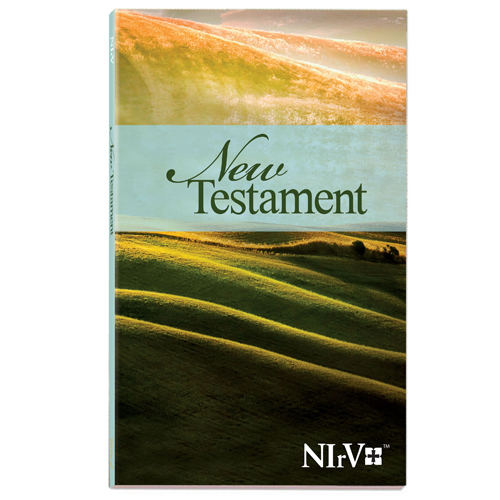
NT

In the “too funny to be made up” category, I recently had someone ask me for help, because he could not find “Genesis” in the paperback New Testament he was reading. I referred him to the complete Bible on the bookshelf, told him to look in the front, and somehow didn’t laugh until he was out of the room, but this took extreme effort.

Fort Smith? Pine Bluff? What’s the Difference?

Fort Smith is Pine Bluff

Unless you also live in the American state of Arkansas, you may not have even heard of Fort Smith and Pine Bluff. For those who grew up in this state, though, they’re considered (by our peculiar standards) to be major cities. Fort Smith is on the far West side of the state, on the Oklahoma border, while Pine Bluff is in the Southeastern part of the state, also known as the Mississippi Delta.

I didn’t learn Arkansas geography in school. Instead, when I was a child, my family traveled, mostly within the state — a lot. By the time I was ten years old, I’d been in all 75 counties of Arkansas, and knew quite a bit about where things are here . . . except for these two cities, Fort Smith and Pine Bluff.

If you’re from Arkansas, you know these two cities are nothing alike. What I noticed in childhood, above all else, was the fact that the two cities smelled so different from each other. The reason is simple:  Pine Bluff has a lot of paper mills, and the smell near paper mills is not entirely unlike being locked in a small closet with several dozen rotten eggs. Fort Smith, by contrast, is relatively odorless.

What perplexed my parents, though, is the fact that I would consistently confuse these two cities. I’d refer to the “horrible smell of Fort Smith,” or, if I knew we were going to Pine Bluff, I might ask if we’d be crossing the border into Oklahoma. My parents always corrected these mistakes, but I kept making them, repeatedly, which is not like me at all. When young, I never had more than a 50% chance of correctly identifying either of these cities. Once I figured out what I was doing, though — at around age twelve — this repeated error made perfect sense.

When I try to understand something, I examine it, and consider it, mathematically. Often, I’m not even conscious I’m doing that — it’s simply how I think. Both Fort Smith and Pine Bluff are two-word city names. To make matters even worse, the first word of each city-name has four letters, and the second word in each has five. Once I realized these parallels, though, it all made sense:  no wonder I couldn’t tell these places apart, with names which, examined through the lens of childhood mathematics, looked exactly alike.

To my knowledge, no one else has ever had a long-term problem confusing these two Arkansas cities. However, when those who know me well hear this story, they are never surprised that I would do such a thing.