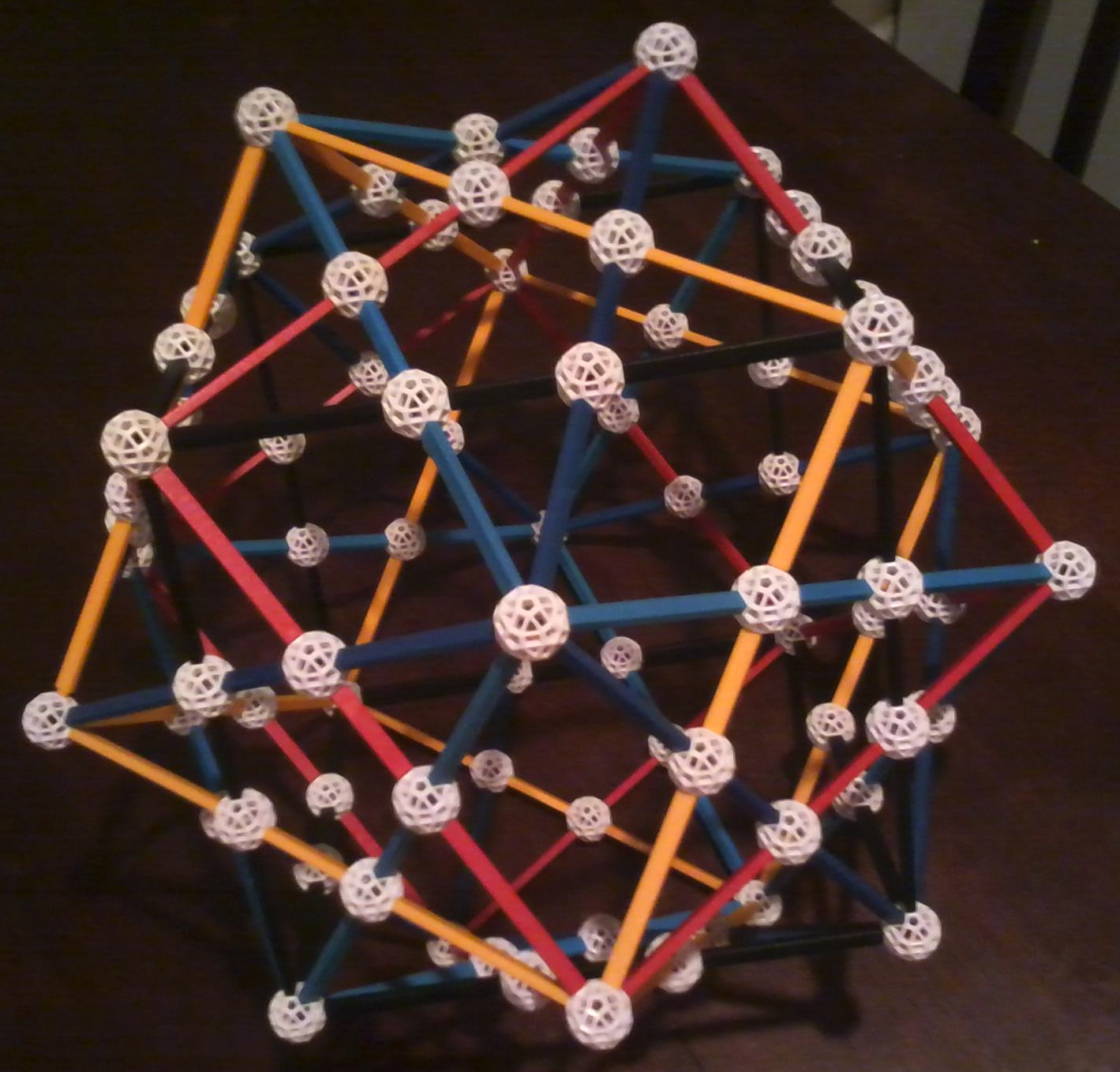
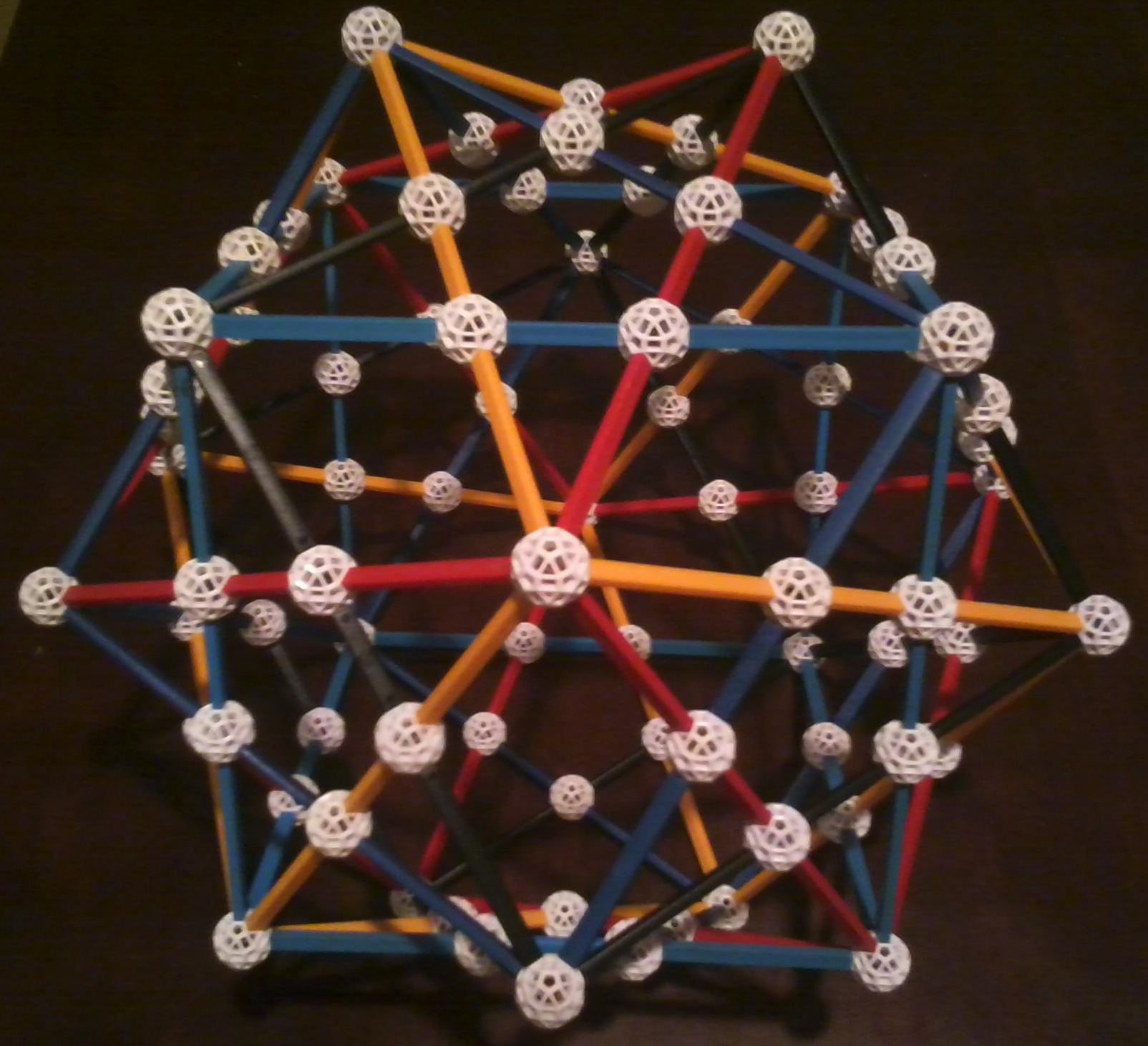
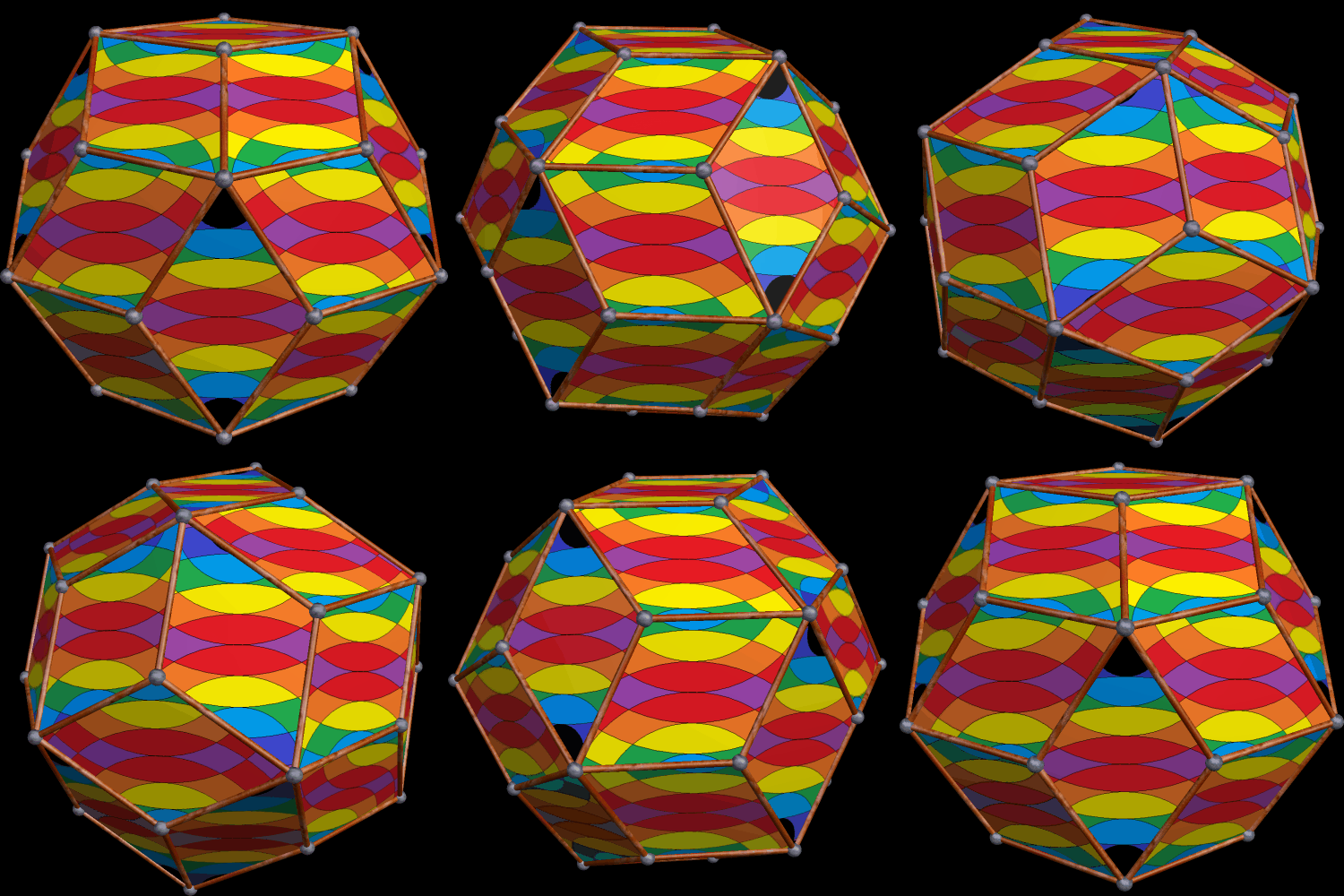
The Compound of Five Cubes, Rendered in Five Colors of Zome

151008_0000

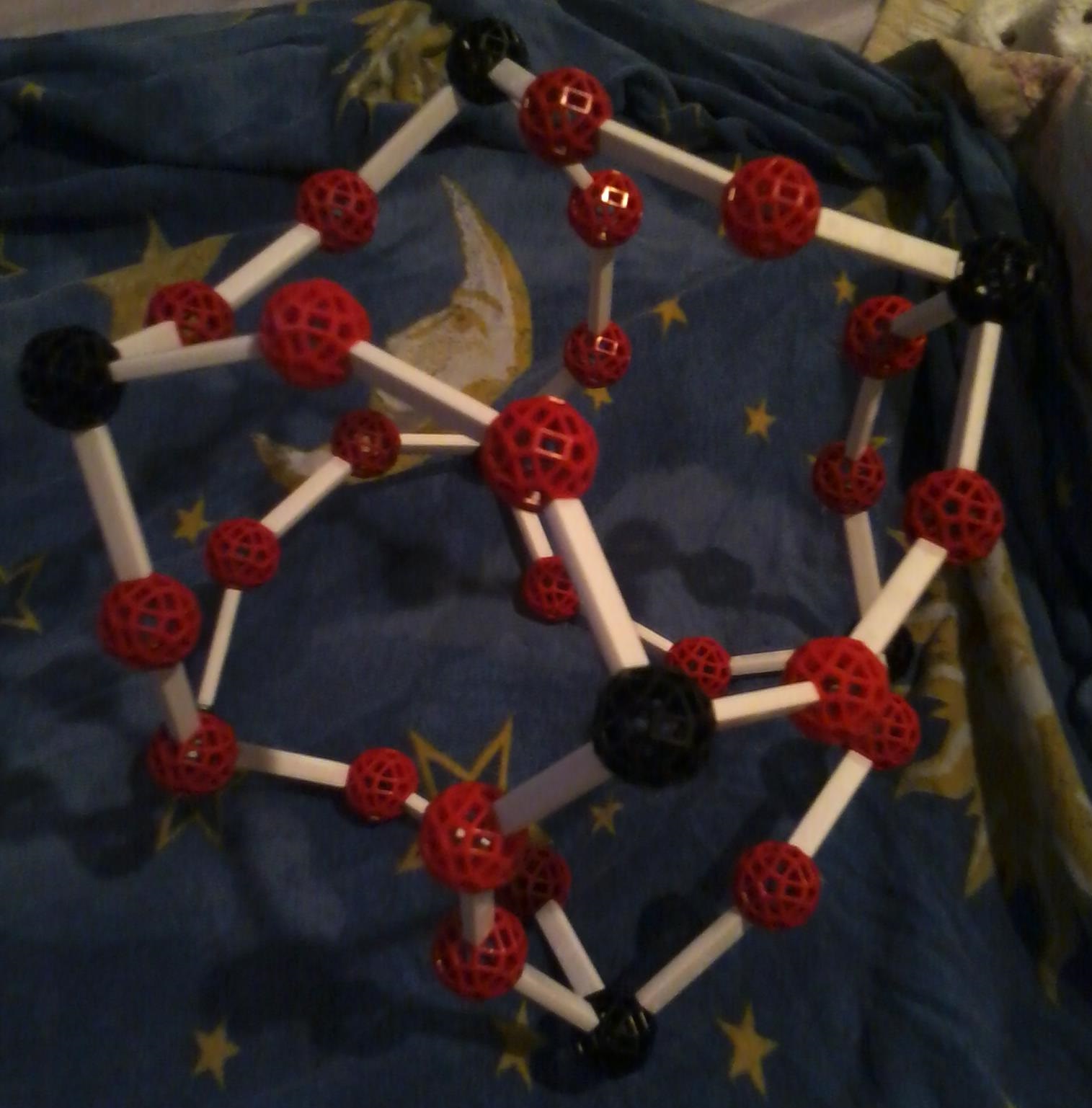
Ordinarily, with Zometools, the compound of five cubes is an all-blue model. However, I wanted to build one in which each cube is a different color, so I made a special request to the Zometool Corporation (their website: http://www.zometool.com) for some off-color parts, to make this possible.

151008_0001

The five colors used in this model are standard blue, a darker shade of blue, red, yellow, and black.

151008_0002

I also received the struts needed to build this model with one cube in white, so I will be making a second version of this soon. I didn’t want the Zomeballs used to match any strut color, though, so I will have to wait for the shipment of purple Zomeballs I ordered, today, to arrive, before I can build that model.

Zome is a fantastic tool to use for mathematical investigations, as well as education, and other applications as well. I recommend this product highly, and without reservation.

A Polyhedron Featuring 180 Kites as Faces, Plus Related Polyhedra

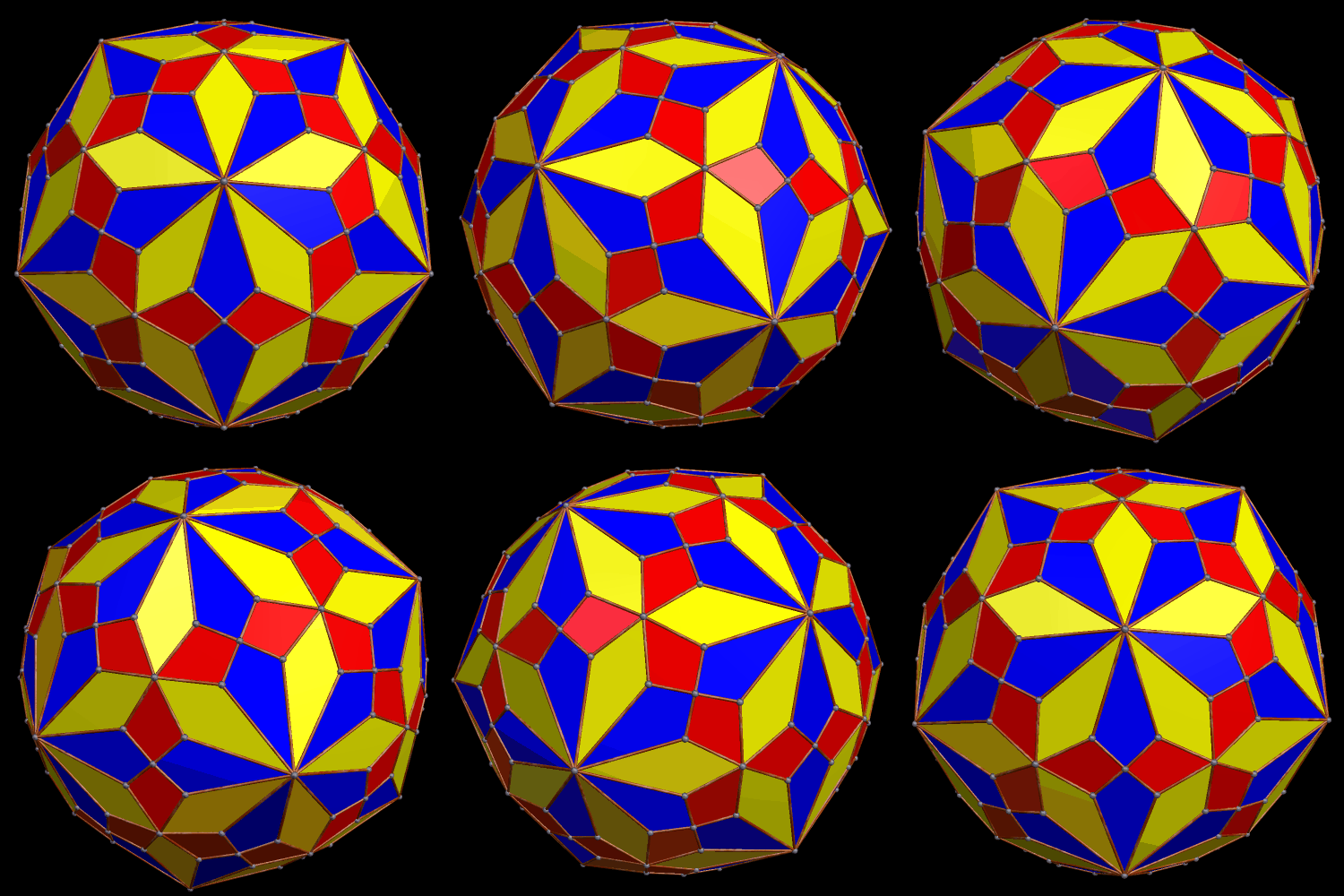
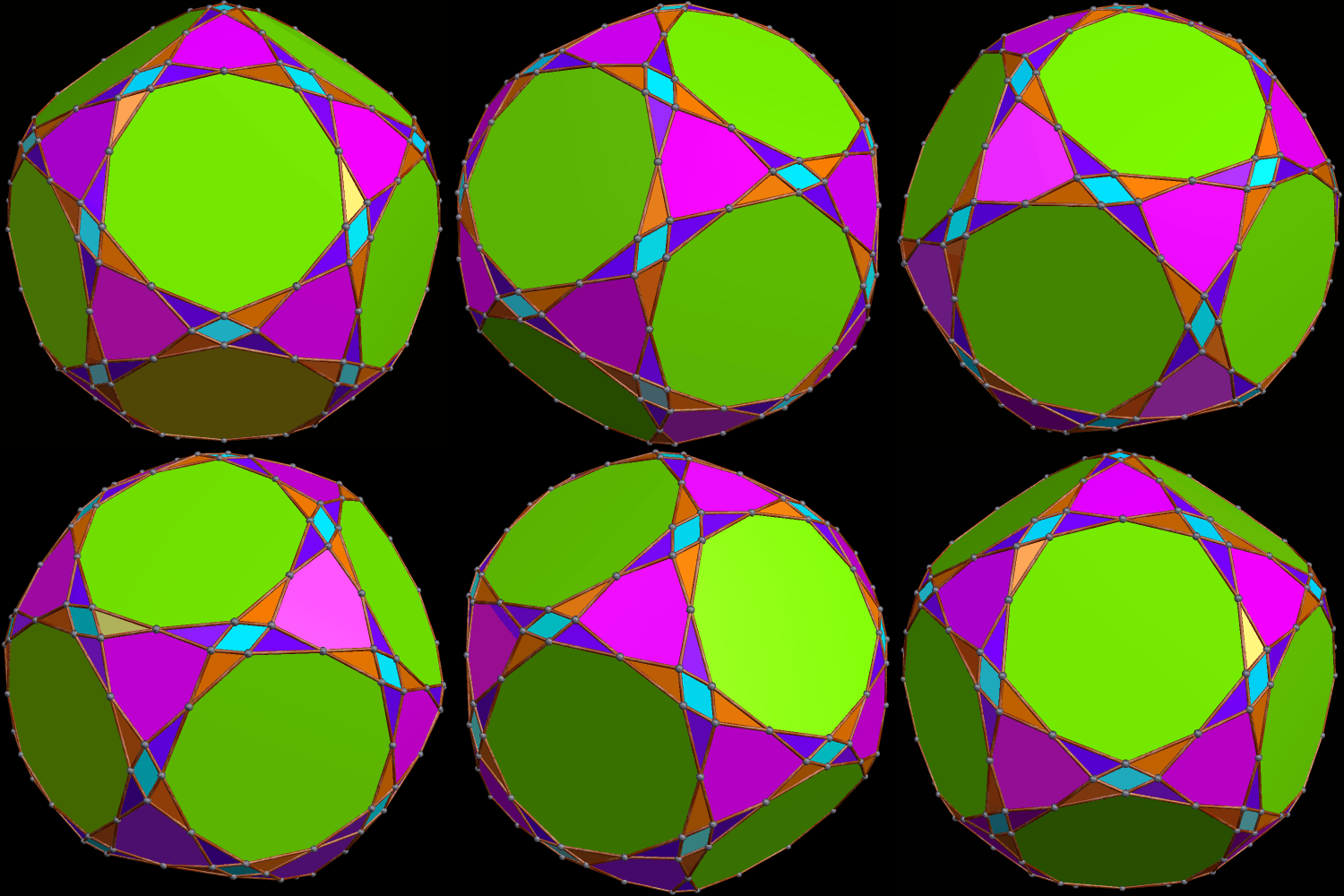
If one starts with the great rhombicosidodecahedron, then makes a compound of it, and its dual, and then forms the convex hull of that compound, this is the result:

180 kites 60&60&60

This polyhedron has 180 faces, all of them kites. What’s more, there are equal numbers — sixty each — of the three different types of kites in this polyhedron.

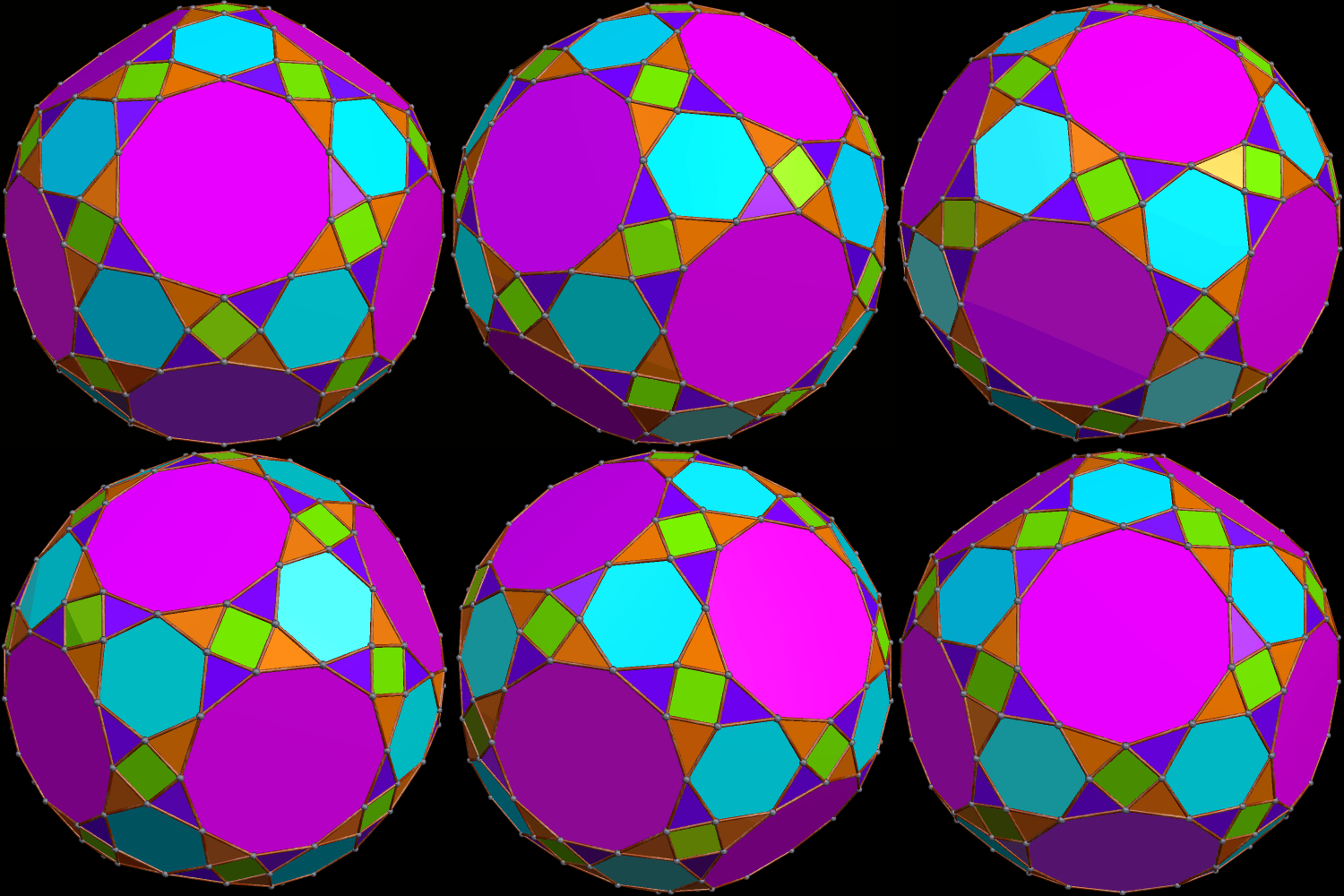
It also has an interesting dual:

180 kites 60&60&60 the dual

These virtual polyhedral models were created using Stella 4d: Polyhedron Navigator, which you can buy, or try for free, right here. Stella contains a “try to make faces regular” function, and here is what appears if that operation is applied to the dual shown above:

180 kites dual with TTMFR

The dual of this figure is similar to the original polyhedron at the top of this post, featuring 180 kites, again: sixty each, of three different types:

180 kites with TTMFR

My Third Solution to the Zome Cryptocube Puzzle

The President of the Zometool Corporation, Carlos Neumann, gave me a challenge, not long ago: find a solution to the Zome Cryptocube puzzle which uses only B0s, which I call “tiny blue struts.” For the Cryptocube puzzle, though, these “blue” struts actually appear white. Carlos knows me well, and knows I cannot resist a challenge involving Zome. Here is what I came up with, before the removal of the black cube, which is what the Zome Cryptocube puzzle starts with.

150923_0000

In a “pure” Crypocube solution, the red Zomeballs would also be white — not just the “blue” struts. However, when Carlos issued this challenge, I was at home, with all the white Zomeballs I own located at the school where I teach — so I used red Zomeballs, instead, since I had them at home, and did not wish to wait.

Here’s what this Cryptocube solution looks like, without the black cube’s black struts. You can still “see” the black cube, though, for the black Zomeballs which are the eight corners of the black cube are still present. As is happens, this particular Cryptocube solution has pyritohedral symmetry — better known as the symmetry of a standard volleyball.

150923_0001

While the Cryptocube puzzle is not currently available on the Zome website, http://www.zometool.com, it should be there soon — hopefully, in time for this excellent Zome kit to be bought as a Christmas present. Once a child is old enough so that small parts present no choking hazard, that child is old enough to start playing with Zome — and it is my firm belief that such play stimulates the intellectual growth of both children and adults. As far as a maximum age where Zome is an appropriate Christmas gift, the answer to that is simple: there isn’t one.

Also: while I do openly advertise Zome, I do not get paid to do so. I do this unpaid advertising for one reason: I firmly believe that Zome is a fantastic product, especially for those interested in mathematics, or for those who wish to develop an interest in mathematics — especially geometry. Also, Zome is fun!

Five Polar Polyhedra

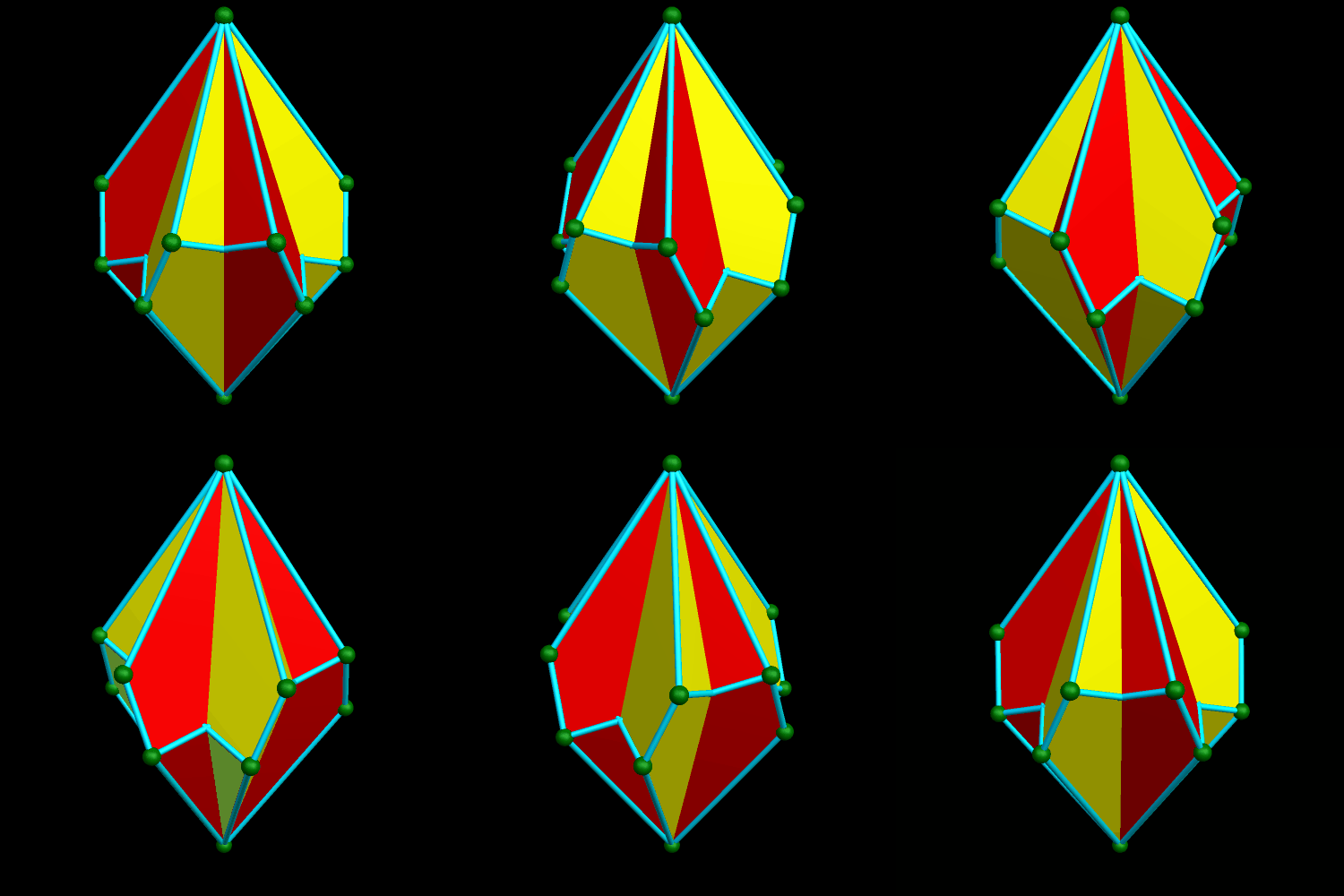
Most polyhedra I post have cuboctahedral, tetrahedral, or icosidodecahedral symmetry, or some pyritohedral or chiral variation of one of these symmetry-types. These, however, are exceptions. I call them “polar polyhedra” because they each have an identifiable “North Pole” and “South Pole,” which are, in three of these five images, at the ends of their axes of rotation.

cub isomorph polar and chiral Compound of enantiomorphic pair

polar and chiral cubic isomorpth

Dual Morph 50.0%

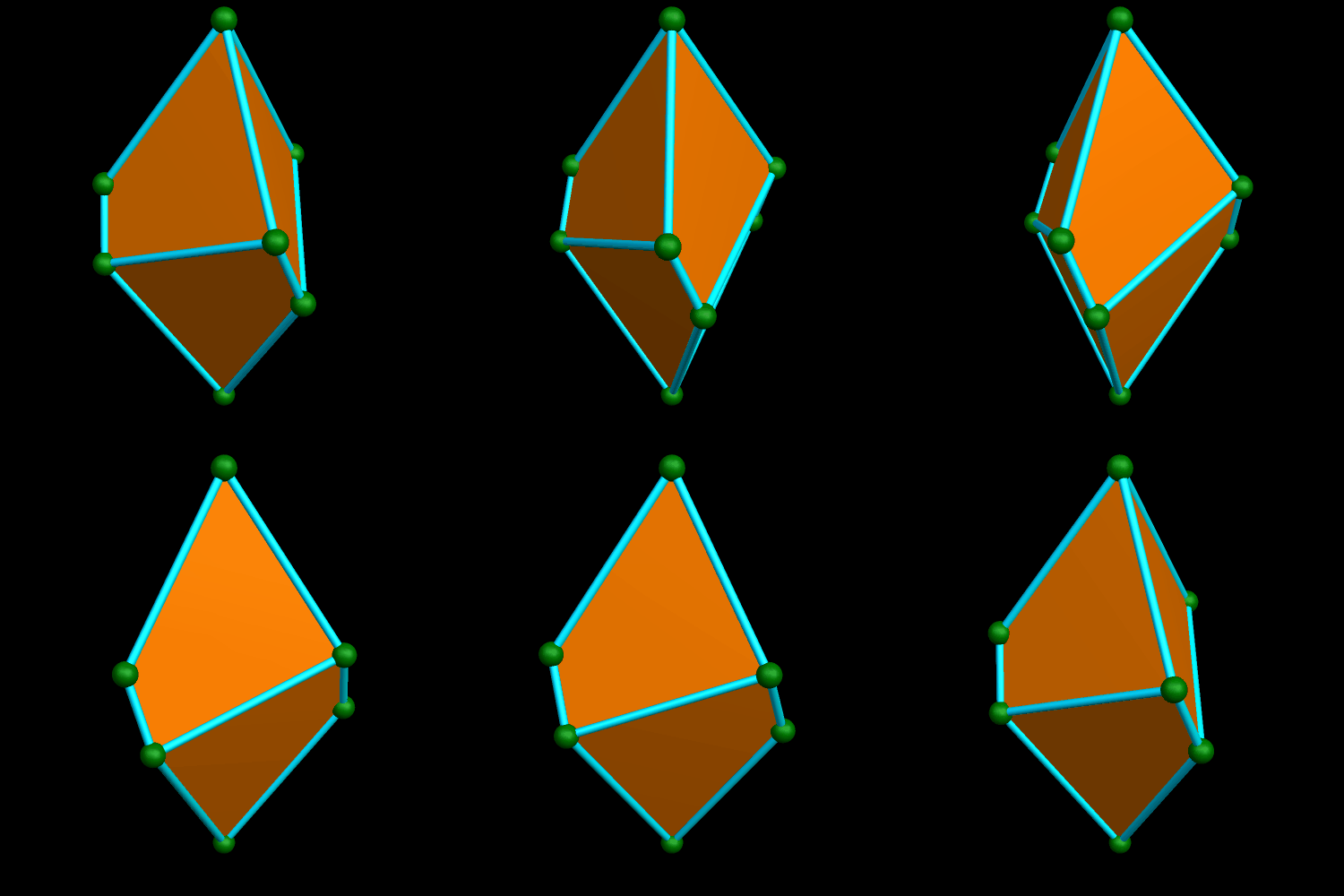
polar polyhedrarhombus-elongated trapezohedron with n = 4

These rotating images were created using Stella 4d, software you may try for yourself, right here.

A Plea for Consistency in the Use of Numerical Prefixes

consistency

First, let’s face facts: the numerical prefixes currently in use, in English, are a horrible mess. Most of the ones used with polyhedra, for example, such as tetra- (4) and penta- (5), are derived from Greek. For polygons, however, a four-sided figure is usually called a quadrilateral, with “quad-” derived from Latin, just as it is in “quadrillion,” or “quadruplets.” Why use two prefixes for the number four? It would be more consistent (and therefore better), since four-faced polyhedra are called tetrahedra, for four-sided polygons to be called tetragons, just as we call five-sided polygons pentagons. Consistency improves comprehension, simply by reducing the number of prefixes one needs to understand, and can therefore aid in both teaching and learning. Inconsistency, though, has the opposite effect, and that benefits no one.

The Greek-based prefix for 5, “penta-,” has a Latin-based rival, also: “quint-,” as in quintuplets, or the number quintillion. It doesn’t make sense to use two different prefixes for the same thing, for both English, and mathematics, are complicated enough without adding unnecessary complications. The necessary complications are quite enough!

My preference is for Greek-based prefixes, for two reasons: (1) more of them are in use than their Latin counterparts, and (2) the Latin-speaking Romans appropriated ideas from the ancient Greeks, not the other way around.

Even the number one is not immune from this problem. For one, we use “mono-,” “uni-,” “un-,” “uni-,” “en-, “and “hen-,” all to mean “one,” and each has at least a slightly different derivation. Examples include “monomer,” “monologue,” “unicycle,” “undecillion,” “undecagon,” “endecagon,” and “hendecagon,” the last three of which all name the same polygon. (Also, these last three prefixes are for 11, actually, formed by combining a prefix for the one with the Greek-based “deca-” prefix for ten. Combinations of prefixes will be addressed later.) I call 11-sided polygons “hendecagons,” for both prefixes in that word are derived from Greek.

Prefixes for the number two are also unnecessarily numerous, as well as ambiguous. “Bi-” is used in “bicycle,” “binary,” and “billion,” but that’s a horrible idea, since “bi-” is also used, in some cases, for ½. This shows up, for example, in chemistry: the bulk of a carbonic acid molecule, if fully ionized, is called the carbonate ion. However, if it is only half-ionized, it is often called the bicarbonate ion, as in sodium bicarbonate, better-known as baking soda. In chemistry, “di-” is used for two, as in carbon dioxide, a molecule containing two oxygen atoms. “Do-” and “duo-” are also both used for the number two, with the first derived from Greek, and the second from Latin. When combined with the Greek prefix for ten, to make twelve, these prefixes appear in words such as “dodecagon,” “dodecahedron,” and “duodecimal.” I find the word “duodecimal” particular irritating, for it combines Greek and Latin prefixes in a single word. If one person had deliberately designed this entire system, with the goal of causing confusion, it would have taken a lot of work to invent a system more confusing than the one we actually use.

If, for ½, we only used “bi-,” that would be nice, but that isn’t what we do. Half a circle is a semicircle, and then half a sphere is a hemisphere. Since it originates from Greek, my preference is for “hemi-.”

At least three’s prefix is usually consistent, with “tri-” being all-but-universal. The only exception I know of appears when “tri-” is combined with “deca-,” to create a prefix for thirteen, and the Greek work for “and,” which is “kai,” often appears with it, as in triskaidecaphobia, the fear of the number thirteen — in this word, “tri-” is modified to “tris-.” However, a thirteen-sided polygon is simply called a “tridecagon,” with no “s” attached to “tri-,” and the “kai” omitted.

I don’t actually care if we use “kai,” or not, in numerical prefixes, but we should pick one or the other, and stick with it. It makes no sense that a fifteen-sided polygon is usually called a “pentadecagon,” while sometimes called a “pentakaidecagon.” Why do we not simply choose just one?

Six and seven are similarly troublesome. The numbers “sextillion” and “septillion,” as well as the month of September, all use Latin-derived prefixes for these numbers. I prefer the Greek-derived prefixes used with polygons and polyhedra: “hexa-,” and “hepta-.” With eight, though, as in the case of three, English-speakers lucked out, with “octopus,” “octillion,” “octagon,” and “octahedron” all starting with the same three letters.

With nine, however, our system falls apart again. In high school, geometry students are taught the Latin-prefix-containing word “nonagon” for a nine-sided polygon, and “November” contains yet another Latin-based prefix meaning nine. (It was named the ninth month, rather than the eleventh, because the start of each new year was marked with the first day of Spring in ancient times, rather than the first day of January.) A professional mathematician, however, is more likely to call a nonagon an “enneagon,” for “ennea-” is derived from Greek, making “enneagon” consistent with its “neighbors,” the octagon and the decagon. Ten is not a problem, though, for the Greek-based “deca-” was simply appropriated by the Latin-speaking Romans, who named their tenth month December — using a prefix close enough to “deca-” that it is unlikely to cause confusion.

One numbers exceed ten, though, a new problem is encountered, in addition to the issue of whether or not we use “kai.” Numbers such as 12 and 24 require us to combine prefixes, but there is no consistency in the order in which this is done. For example, a twelve-faced polyhedron is a “dodecahedron” — using a prefix for two, followed by a prefix for ten: the smaller number, and then the larger number. We continue this practice with words such as “pentadecagon,” already described above. Then, however, we have this thing, the dual of the snub cube:

Penta Icositetra

The faces of this polyhedron are 24 pentagons, and it isn’t the only well-known polyhedron with 24 faces, so “pentagonal” is part of this polyhedron’s name, which makes sense. However, if its name followed the pattern in the paragraph above, that would make it a “pentagonal tetraicosahedron,” or perhaps a “pentagonal tetrakaiicosahedron” — the smaller “tetra-,” meaning “four,” would come before the larger “icosa,” meaning twenty. At least both these prefixes originated in the Greek language, but, for mysterious reasons, the prefixes are put in the reverse order, relative to the order used for the dodecahedron: it is called the “pentagonal icositetrahedron.” Polyhedral names are hard enough to learn without arbitrary switches between “smaller, then larger,” and its opposite, “larger, then smaller.” We should choose a method, one or the other, and then stick to it.

[Note: the rotating polyhedron above was created using Stella 4d, software you can buy, or try for free, at this website.]

In chemistry, naming-disputes (what to call a newly-synthesized element, for example) are settled by the IUPAC: the International Union of Pure and Applied Chemistry. I know of no organization with a corresponding role in the field of mathematics, but, if one were created, perhaps that would help get this mess cleaned up.

Sixty and Sixty: A Chiral Polyhedron, as well as the Compound of It, and Its Own Reflection

60 and 60 -- chiral

This polyhedron is chiral, meaning that (unlike many well-known polyhedra) it exists in “left-handed” and “right-handed” forms — reflections of each other. These “reflections” are also called enantiomers. I call this polyhedron “sixty and sixty” because there are sixty faces which are irregular, purple quadrilaterals, as well as sixty faces which are irregular, orange pentagons.

I stumbled upon this polyhedron while playing around with Stella 4d: Polyhedron Navigator, software you can try right here. For those who research polyhedra, I know of no better tool.

To see the other enantiomer, there is a simple way — just hold a mirror in front of your computer screen, with it showing the image above, and look in the mirror!

With any chiral polyhedron, it is possible to make a compound out of the two enantiomers. Here is what the compound looks like, for this “sixty and sixty” polyhedron cannot be seen this way, so here is an image of it, also created using Stella 4d.

60 and 60 chiral --Compound of enantiomorphic pair

One of Many Faceted Rhombicosidodecahedra

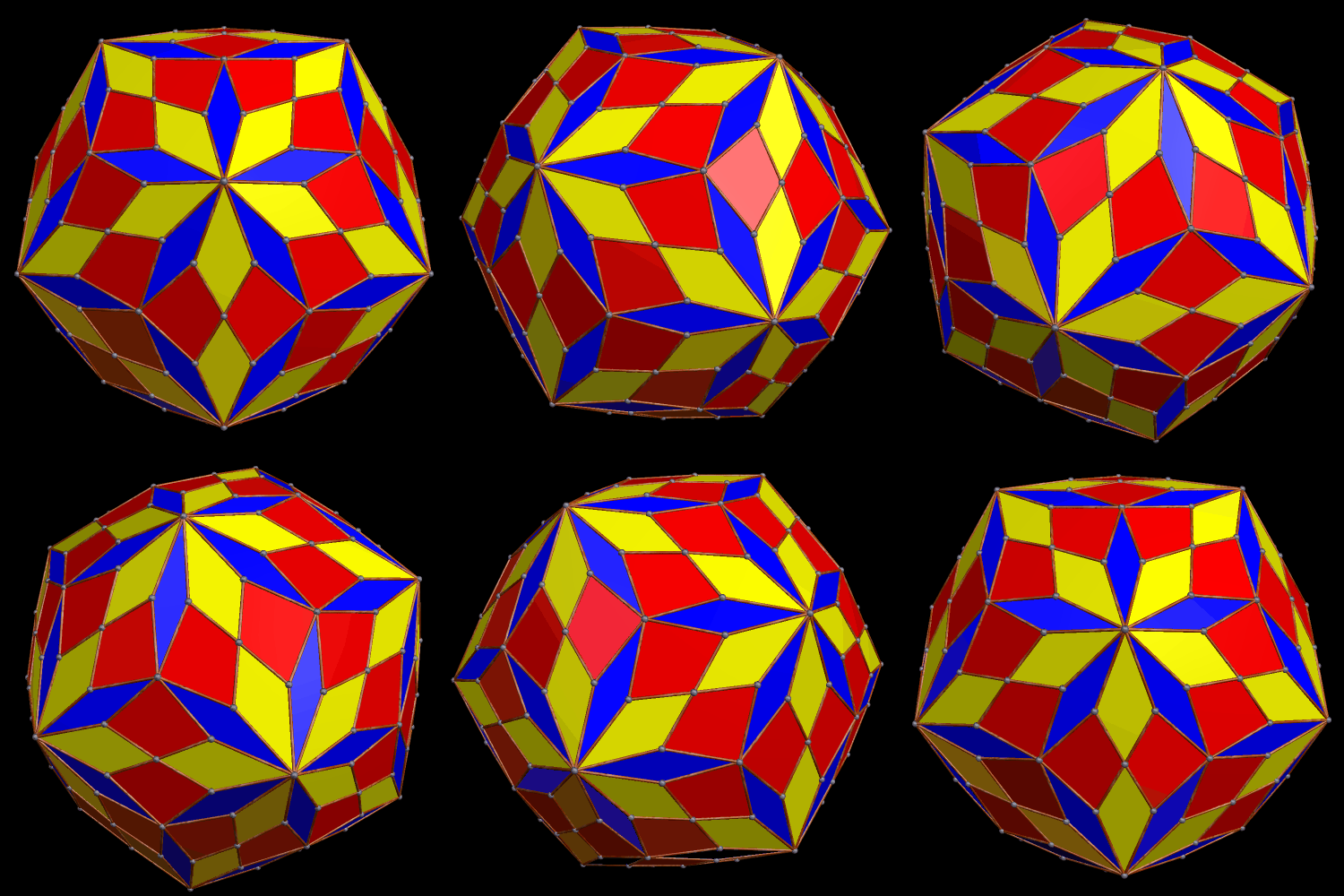
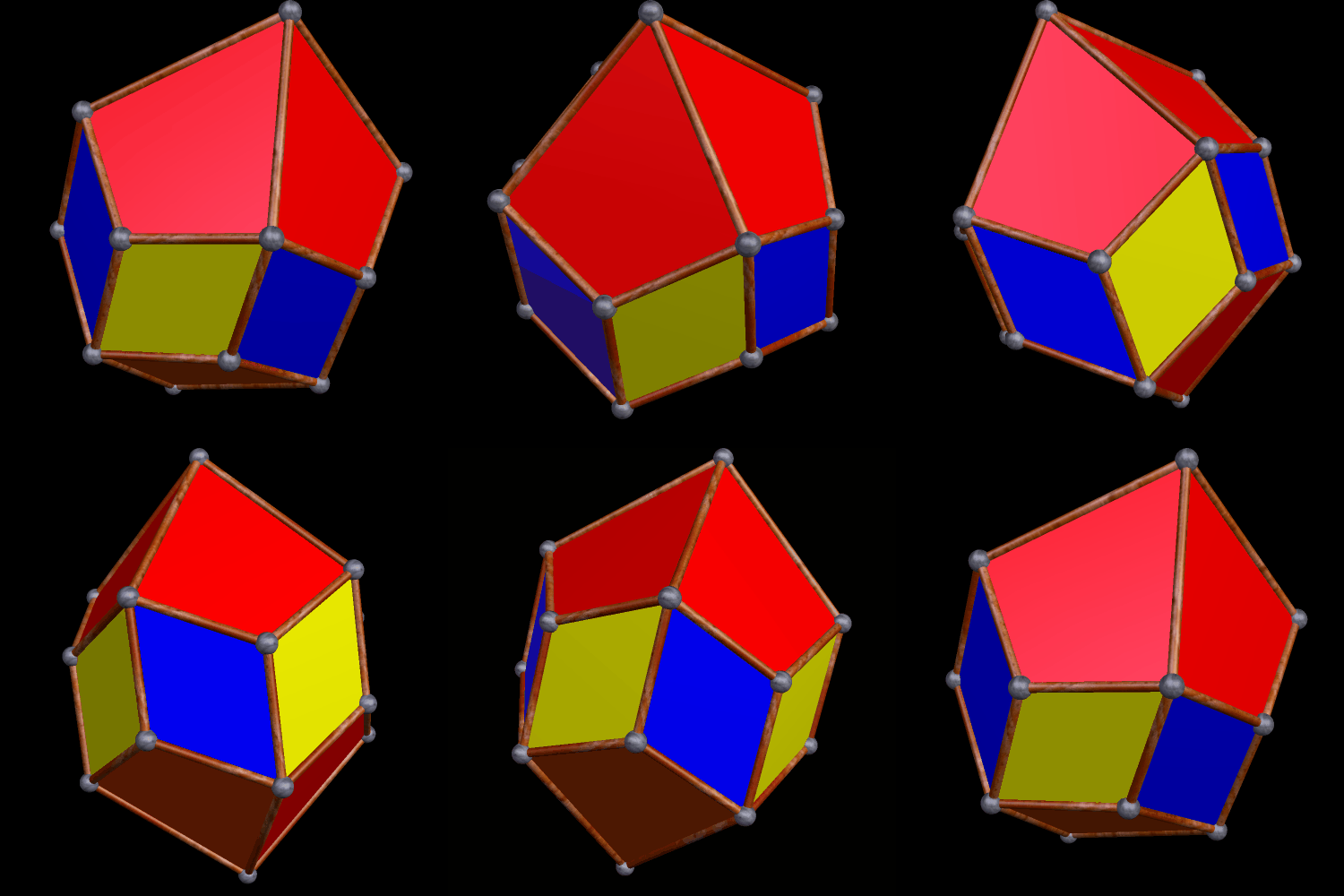
Faceted Rhombicosidodeca the dual of the 32nd stellation of the strombic hexaconta

This was created by making the dual of the 32nd stellation of the strombic hexacontahedron, which is itself the dual of the rhombicosidodecahedron. This technique for finding facetings works because faceting is the reciprocal function of polyhedral stellation.

I did this using Stella 4d, which you can try for yourself, for free, at http://www.software3d.com/Stella.php.

A Rhombic Ring of Icosahedra, Leading to a Rhombic Dodecahedron Made of Icosahedra

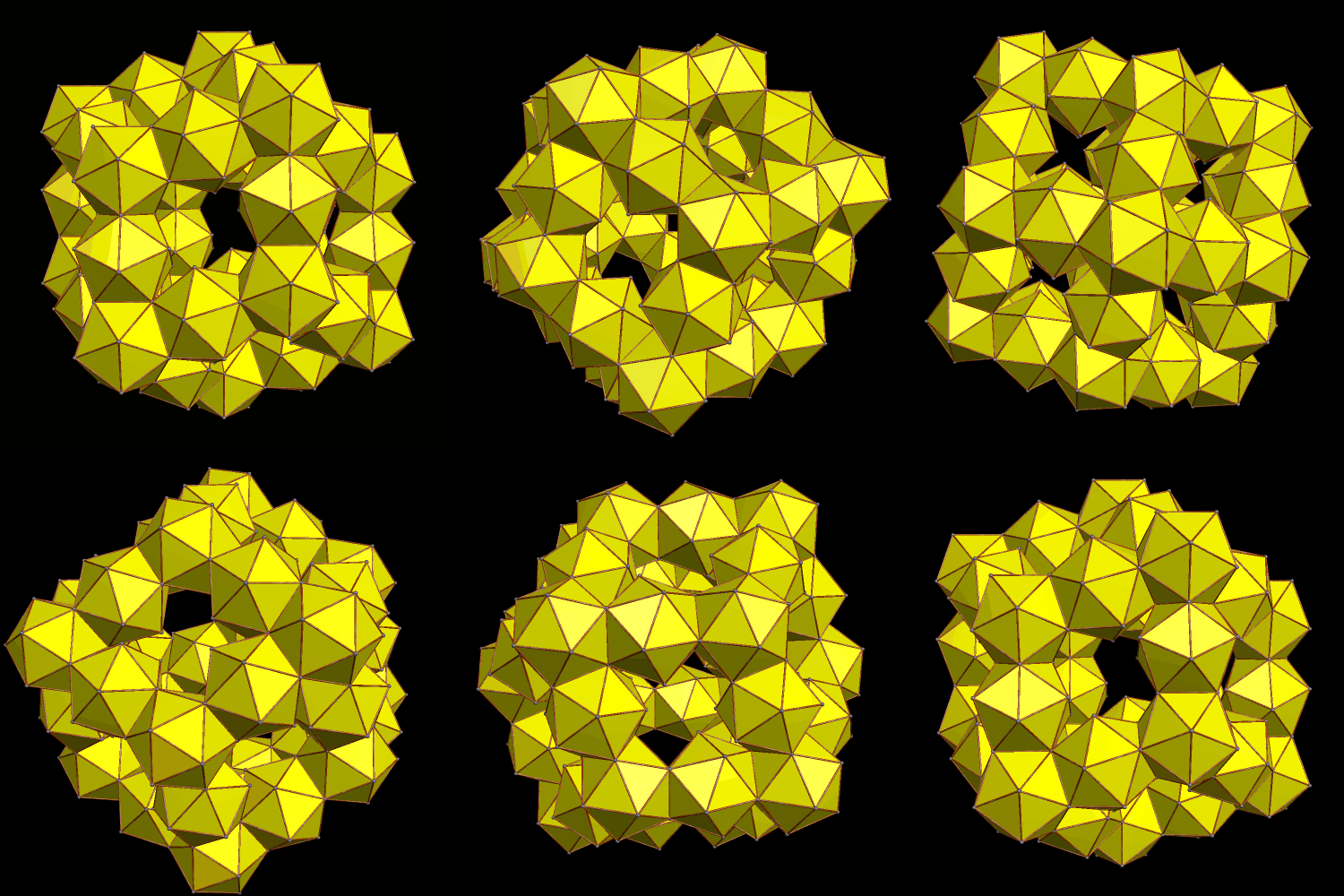
As it turns out, eight icosahedra form this rhombic ring, by augmentation:

Rhombic ring of Icosa

Measured from the centers of these icosahedra, the long and short diagonal of this rhombus are in a (√2):1 ratio. How do I know this? Because that’s the only rhombus which can made this polyhedron, a rhombic dodecahedron, dual to the cuboctahedron.

RD of Augmented Icosa

This rhombic dodecahedral cluster of icosahedra could be extended to fill space, since the rhombic dodecahedron itself has this property, an unusual property for polyhedra. Whether space-filling or not, the number of icosahedron per rhombic-dodecahedron edge could be increased to 5, 7, 9, or any greater odd number. Why would even numbers not work? This is a consequence of the fact that opposite faces of an icosahedron are inverted, relative to each other; a pair of icosahedra (or more than one pair, producing odd numbers > 1 when added to the vertex-icosahedron) must be attached to the one at a rhombic-dodecahedron-vertex to make these two inversions bring the triangular face back around to its original orientation, via an even number of half-rotations, without which this consruction of these icosahedral rhombi cannot happen.

Here’s another view of this rhombic dodecahedron, in “rainbow color” mode:

RD of Augmented Icosa RB

All images above were produced using Stella 4d, software which may be tried for free right here.

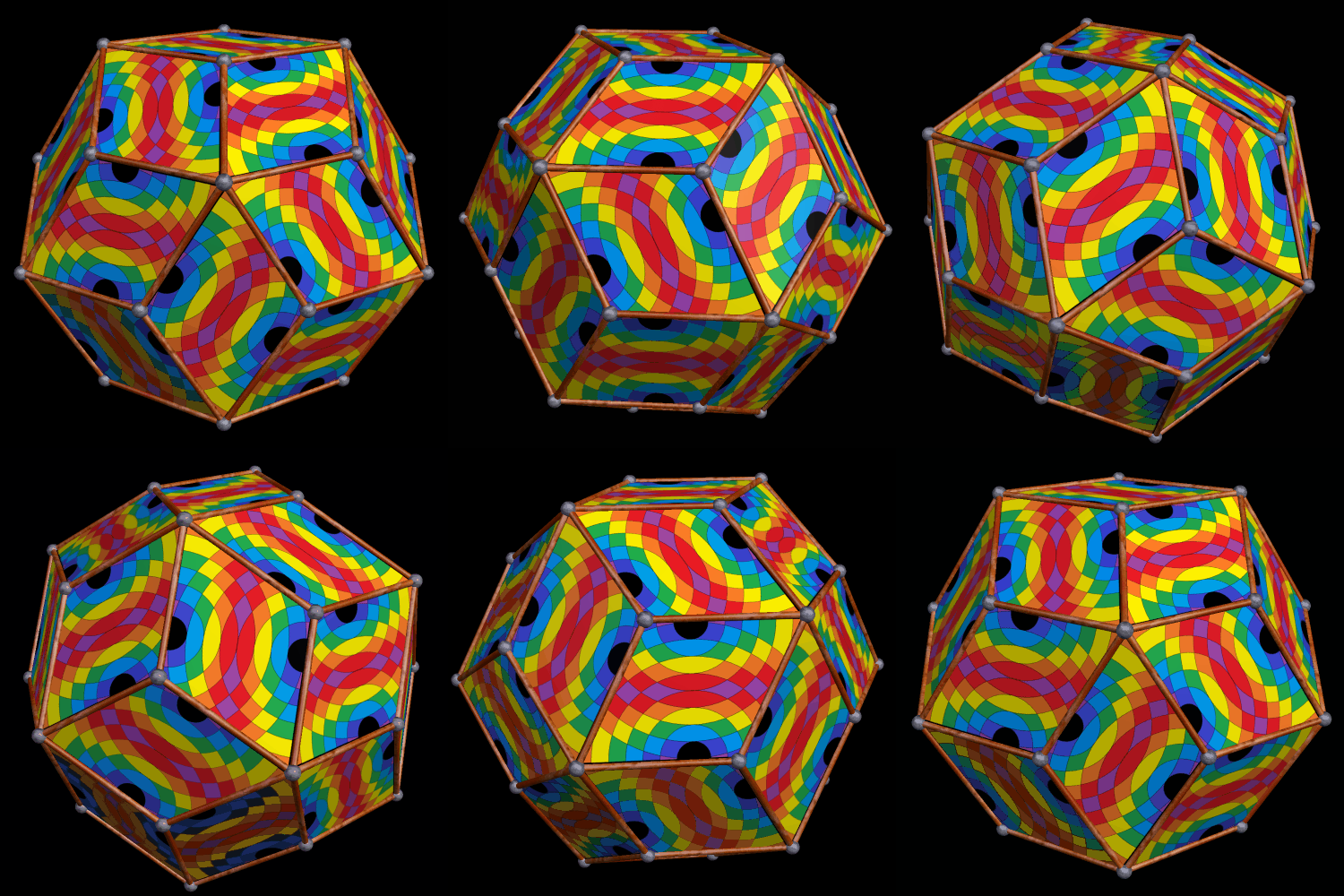
Two Versions of a Slowly Rotating Rhombic Triacontahedron, Adorned with Spectral Patterns on Each Face

Rhombic Triaconta

It took three programs to make this. First, outlines of the “double rainbow” patterns on each face were constructed using Geometer’s Sketchpad. A screenshot from that program was then pasted into MS-Paint, which was used to add color to the outline of the pattern on each face. Next, the colorized image was projected onto each face of a rhombic triacontahedron, using Stella 4d: Polyhedron Navigator — the program that put this all together, and what I used to generate the rotating .gif above. Stella is available at http://www.software3d.com/Stella.php, with a free trial download available.

Interestingly, while this polyhedron itself is not chiral, the coloring-pattern of it, shown above, is.

With only small modifications, Stella can produce a very different version:

Rhombic Triaconta

Which one do you like better?

How I Hit My Personal Mathematical Wall: Integral Calculus

Hitting the wall

To the best of my recollection, this is the first time I have written publicly on the subject of calculus. The fundamental reason for this, explained in detail below, is something I rarely experience: embarrassment.

Unless this is the first time you’ve read my blog, you already know I like mathematics. If you’re a regular follower, you know that I take this to certain extremes. My current conjecture is that my original motivation to learn how to speak, read, and write, before beginning formal schooling, was that I had a toddler-headful of mathematical ideas, no way to express them (yet), and learned to use English in order to change that. Once I could understand what others were saying, read what others had written, write things down, and speak in sentences, I noticed quickly that interaction with other people made it possible to bounce mathematical ideas around, using language — which helped me to develop and expand those mathematical ideas more quickly. Once I started talking about math, as anyone who knows me well can verify, I never learned how to shut up on the subject for longer than ten waking hours at a time.

A huge part of the appeal of mathematics was that I didn’t have to memorize anything to do it, or learn it. To me, it was simply one obvious concept at a time, with one exposure needed to “get it,” and remember it as an understood concept, rather than a memorized fact. (Those math teachers of mine who required lots of practice, over stuff I already knew, did not find me easy to deal with, for I hated being forced to do that unnecessary-for-me chore, and wasn’t shy about voicing that dislike to anyone and everyone within hearing range, regardless of the situation or setting. The worst of this, K-12, was long division, especially the third year in a row that efforts were made to “teach” me this procedure I had already learned, on one specific day, outside school, years earlier.) It might seem like I have memorized certain things, such as, say, the quadratic formula, but I never actually tried to — this formula just “stuck” in my mind, from doing lots of physics problems, of different types, which required it. Similarly, I learned the molar masses of many commonly-encountered elements by repeatedly using them to show students how to solve problems in chemistry, but at no time did I make a deliberate attempt to memorize any of them. If I don’t try to memorize something, but it ends up in memory anyway, that doesn’t count towards my extremely-low “I hate memorizing things” threshhold.

When I first studied calculus, this changed. Through repeated, forced exposure in A.P. Calculus class my senior year of high school, with a teacher I didn’t care for, I still learned a few things that stuck: how to find the derivative of a polynomial, the fact that a derivative gives you the slope a function, and the fact that its inverse function, integration, yields the area under the curve of a function. After I entered college, I then landed in Calculus I my freshman year. Unbeknownst to me, I was approaching a mental wall.

My college Cal I class met early in the morning, covered material I had already learned in high school, and was taught by an incomprehensible, but brilliant, Russian who was still learning English. Foreign languages were uninteresting to me then (due to the large amount of memorization required to learn them), and I very quickly devised a coping strategy for this. It involved attending class as infrequently as possible, but still earning the points needed for an “A,” by asking classmates when quizzes or tests had been announced, and only waking up for class on those mornings, to go collect the points needed for the grade I wanted.

This was in 1985-86, before attendance policies became common for college classes, and so this worked: I got my “A” for Cal I. “That was easy,” I thought, when I got my final grade, “so, on to the next class!”

I did a lot of stupid things my freshman year of college, as is typical for college freshmen around the world, ever since the invention of college. One of these stupid things was attempting to use the same approach to Calculus II, from another professor. About 60% of the way through that course, I found myself in a situation I was not used to: I realized I was failing the class.

Not wanting an “F,” I started to attend class, realizing I needed to do this in order to pass Cal II, which focuses on integral calculus. A test was coming up. In class, the professor handed out a sheet of integration formulas, and told us to memorize them.

Memorize them.

I read the sheet of integration formulas, hoping to find patterns that would let me learn them my way, rather than using brute-force memorization-by-drill. Since I had been skipping class, I saw no such patterns. All of a sudden, I realized I was in a new situation, for me: mathematics suddenly was not fun anymore. My “figure it out on the fly” method, which is based on understanding, rather than memorization, had stopped working.

A few weeks and a failed test later, I began to doubt I would pass, and tried to drop the class. This is how I learned of the existence of drop dates for college classes, but I learned it too late: I was already past the drop date.

I did not want an F, especially in a math class. Out of other options, I started drilling and memorizing, hated every minute of it, but did manage to bring my grade up — to the only “D” I have on any college transcript. Disgusted by this experience, I ended up dropping out of college, dropped back in later, dropped out again, re-dropped back in at a different university, and ended up changing my major to history, before finally completing my B.A. in “only” seven years. I didn’t take another math class until after attempting to do student teaching, post-graduation . . . in social studies, with my primary way of explaining anything being to reduce it to an equation, since equations make sense. This did not go well, so, while working on an M.A. (also in history) at a third college, I took lots of science and math classes, on the side, to add additional teaching-certification areas in subjects where using equations to explain things is far more appropriate, and effective. This required taking more classes full of stuff I already knew, such as College Algebra and Trigonometry, so I took them by correspondence (to avoid having to endure lectures over things I already knew), back in the days when this required the use of lots of postage stamps — but no memorization. To this day, I would rather pay for a hundred postage stamps than deliberately memorize something.

In case you’re wondering how a teacher can function like this, I will explain. Take, for example, the issue of knowing students’ names. Is this important? Yes! For teaching high school students, learning the names of every student is absolutely essential, as was quite evident from student teaching. However, I do this important task by learning something else about each student — how they prefer to learn, for example, or something they intensely like, or dislike — at which point memorization of the student’s name becomes automatic for me. It’s only conscious, deliberate memorization-by-drill that bothers me, not “auto-memorization,” also known as actually understanding something, or, in the case of any student, learning something about someone.

I don’t know exactly why my to-this-point “wall” in mathematics appeared before me at this point, but at least I know I am in good company. Archimedes knew nothing of integral calculus, nor did his contemporaries, for it took roughly two millennia longer before Isaac Newton and Gottfried Leibniz discovered this branch of mathematics, independently, at roughly the same time.

However, now, in my 21st year as a teacher, I have now hit another wall, and it’s in physics, another subject I find fascinating. Until I learn more calculus, I now realize I can’t learn much more physics . . . and I want to learn more physics, for the simple reason that it is the only way to understand the way the universe works, at a fundamental level — and, like all people, I am trapped in the universe for my entire life, so, naturally I want to understand it, to the extent that I can. (A mystery to me: why isn’t this true for everyone else? We’re all trapped here!) Therefore, I now have a new motivation to learn calculus. However, I want to do this with as much real understanding as possible, and as little deliberate memorization as possible, and that will require a different approach than my failed pre-20th-birthday attempt to learn calculus.

I think I need exactly one thing, to help me over this decades-old wall: a book I can read to help me teach myself calculus, but not a typical textbook. The typical mathematics textbook takes a drill-and-practice approach, and what I need is a book that, instead, will show me exactly how various calculus skills apply to physics, or, failing that, to geometry, my favorite branch of mathematics, by far. If any reader of this post knows of such a book, please leave its title and author in a comment. I’ll then buy the book, and take it from there.

One thing I do not know is the extent to which all of this is related to Asperger’s Syndrome, for I was in my 40s when I discovered I am an “Aspie,” and it is a subject I am still studying, along with the rest of the autism spectrum. One thing Aspies have in common is a strong tendency to develop what we, and those who study us, call “special interests,” such as my obsession with polyhedra, evident all over this blog. What Aspies do not share is the identity of these special interests. Poll a hundred random Aspies, and only a minority will have a strong interest in mathematics — the others have special interests in completely different fields. One thing we have in common, though, is that the way we think (and learn) is extremely different from the ways non-Aspies think and learn. The world’s Aspie-population is currently growing at a phenomenal rate, for reasons which have, so far, eluded explanation. The fact that this is a recent development explains why it remains, so far, an unsolved mystery. One of things which is known, however, is the fact that our status as a rapidly-growing population is making it more important, by the day, for these differences to be studied, and better understood, as quickly as the speed of research will allow, in at least two fields: medicine, and education.

Only one thing has fundamentally changed about me, regarding calculus, in nearly 30 years: I now want to get to the other side of this wall, which I now realize I created for myself, when I was much younger. I am also optimistic I will succeed, for nothing helps anyone learn anything more than actually wanting to learn it, no matter who the learner is, or what they are learning. In this one respect, I now realize, I am no different than anyone else, Aspie or non-Aspie. We are all, after all, human beings.