On Twenty-Minuteism, and Young-Earth Creationism

Image

On Twenty-Minuteism, and Young-Earth Creationism

There exists a belief that everything — the entire universe — was created exactly twenty minutes ago. What’s more, it is completely impossible to prove that this belief is incorrect.

For the sake of argument, I’ll assume, temporarily, that this belief is true. You might then object that you’ve been sitting at your computer for over an hour, and remember events that happened yesterday, and have memories of your childhood, years ago. Are these objections a problem? Absolutely not! All I have to do, in order to nullify these objections, is explain that, when the universe was created twenty minutes ago, each of us was carefully created with a lifetime of false memories of an existence we believe we remember, but which is actually completely unreal — except for the last twenty minutes, of course.

Of course, this belief — while irrefutable — is also completely ridiculous. Could it be true? Yes, but there’s no reason to accept it as valid. Why? That’s simple: lack of evidence. It makes no sense to accept any proposition when no real evidence exists to support it.

Now, please compare Twenty-Minuteism, an extremely rare belief system, to Young-Earth Creationism, a set of beliefs firmly held by millions of people. These two points of view are basically the same, differing only in the amount of time involved. Young-Earth Creationists hold the view that everything was created fewer than ten thousand years ago, and most have a particular fondness for a period of time of approximately six thousand years, based on certain passages from the Bible.

The objections to Young-Earth Creationism are numerous, but its adherents have an answer for all of them. Take, for example, the existence of ancient fossils. It’s easy to claim that the earth was created with intact fossils underground, and then explain why this was done, in one of several ways. One such method is to claim that the creator of the universe placed these fossils underground, deliberately, as a test of our faith. Another explanation invokes an evil, supernatural being, and then blames this entity for placing these fossils underground, in order to deceive us, and lead us astray. My favorite version, though, is one I actually heard, many years ago, from a card-carrying, professional Creationist. He focused, in his work, on the fossils of large dinosaurs, and even had a dinosaur-silhouette on his slick, professional-looking business card, which he was proud to show me. As he explained it, dinosaurs were alive until the Great Flood described in the Book of Genesis drowned them all — and all that water mixed with soil to make vast amounts of mud. Since dinosaurs were large, heavy animals, he explained, their dead bodies sank further down into this mud, which later became rock — and that explains why dinosaur fossils are found further down than, say, fossilized mice, birds, or people. For someone so incredibly dense (in one sense of the word), this man had very little understanding of density — for it is density (not mass, nor volume, nor weight) which governs whether objects float or sink, in any fluid, as well as how far down they sink (if they sink at all), and he said nothing whatsoever about dinosaur density. I will give this man credit for two things: he was certainly memorable, as well as entertaining.

Another objection to Young-Earth Creationism is based on radioactive dating of rocks, but here’s how Creationists deal with that: they sometimes claim that radioactive-dating doesn’t actually work as scientists explain it, and sometimes even claim that scientists conspire to hide this “truth” from the public — and, of course, these Creationists also throw in just enough scientific-sounding jargon to fool a lot of gullible people. There is another way to “explain away” the radioactive-dating objection to Young-Earth Creationism, of course: just claim that radioisotope-ratios in rocks were created that way, by either a good or evil supernatural being, as a test of faith, or an act of deception — take your pick. This is, of course, the same chicanery usually used when dismissing fossils as evidence that their claims are wrong.

Astronomy provides yet another mountain of evidence to refute Young-Earth Creationism. A prime example of this is the nearest large galaxy, M31, known also as the Andromeda Galaxy — the most distant object which can be seen without a telescope. Scientists have used a variety of methods to calculate the distance to M31, and the current best-estimate of this distance is ~2.5 million light years. Since a light year is defined as the distance light travels in one year, this means we see Andromeda as it existed 2.5 million years ago. How can this be reconciled with the belief that the universe was created less than 10,000 years ago? Why, that’s simple — all you have to do is claim that the light we now see when we look at Andromeda didn’t actually originate there, but was created, at the same time as the rest of the universe, in such a way as to make it appear that this light has been in transit between galaxies. Question this assertion, and you’ll be introduced, once more, to the supernatural beings who are said to be testing us, or trying to deceive us.

The fact is that (except for the heavy-dinosaurs-sinking-further-down silliness described above) no one can disprove any of this nonsense. There is no evidence that supernatural beings have, in fact, not placed fossils underground, nor carefully arranged tricky isotope-ratios in rocks, nor created light in space, nearby, to make it appear that other galaxies existed millions, or even billions, of years ago. However, there is also a complete lack of evidence to support any of these extraordinary claims — just as there is no evidence for, or against, the equally-absurd, but less popular, beliefs of the Twenty-Minuteists. These two belief systems are not only equally absurd, but also equally valid, for zero, like all numbers, is equal to itself.

I have no intention of abandoning my skeptical, scientific approach to understanding as much as I can about reality, as it actually exists. However, if I do lose my mind, some time in the future, and abandon scientific skepticism, I still won’t join forces with the Young-Earth Creationists. After all, if one is going to embrace, and adopt, a irrational way of thinking, why choose one with which millions of people already agree? I much prefer to be different from other people, especially people in large groups, and have always been this way. It’s a core part of my personality.

I have no desire to be “normal,” and, where I live (in the Southern part of the United States), Young-Earth Creationism is (sadly) quite normal, in the sense that a great many people agree with it, despite the total lack of empirical evidence to support it. If I were to become a Twenty-Minuteist, by contrast, I would, at least, get to continue being different from nearly everyone else, rather than being just another normal person, lost in the crowd. To me, that’s at least worth something — something that Young-Earth Creationism simply cannot offer.


“Give us reliable evidence and we will change our minds.”

Image

This is a good way to explain the viewpoint known as agnostic atheism. A lot of people don’t realize this, but most atheists are also agnostic, simply because we don’t claim to have absolute certainty that no deities exist. We are atheists because we possess no beliefs in any gods, and we are also agnostics because we are willing to admit that we could, possibly, be wrong.

What’s more, many agnostic atheists find the other type of atheist (gnostic atheists, who are few in number, and who do claim certainty that no deities exist) quite irritating. It simply is not rational to claim that one knows, without doubt, that there are no gods, for one simple reason: lack of supporting evidence. There is no evidence that no gods exist. There is also no evidence for the non-existence of, say, leprechauns.

Something else many people don’t know: theists (that is, religious believers) also come in the same two types. Agnostic theists believe in at least one deity, but don’t claim absolute certainty in that belief. Gnostic theists, by contrast, are believers who do not doubt, nor question, their religious beliefs. They claim to know they are right — and, in that one way, they are just like gnostic atheists. Gnostics, of whatever type, aren’t willing to admit there is the slightest chance that they might be wrong. It’s much easier to have reasonable, productive conversations with agnostics than with gnostics — regardless of whether they are they are theists or atheists. Also, when it comes to debate, there’s simply no point in debating anything with a gnostic. One might as well argue with a rock, for a rock is exactly as likely as a gnostic to have a change of opinion.

(Note: unlike most images on this blog, this picture is not one I created myself. Only the words below the image, in this post, are mine.)

How to Fix the Gay Marriage Debate, and All Other Legal Problems Related to Marriage and Divorce, All At Once

Image

How to Fix the Gay Marriage Debate, and All Other Legal Problems Related to Marriage and Divorce, All At Once

The government is now deeply involved in the process of people getting into and out of marriages, but this was not always so. Marriage is simply an agreement — a contact — between at least two people. Or a person and a toaster, perhaps, for that doesn’t really hurt any of us, now, does it?

Churches do lots of weddings, and they’re used to this role. They can keep doing it the same way they have been, except for parts which involve government. Churches could issue marriage licenses; we don’t need the state doing it.

Now, of course, people shouldn’t be required to be religious, or pretend to be, to get married. Any organization or individual could issue marriage licenses. For that matter, we could simply have official recognition of people’s relationship statuses on Facebook.

Yes, I mean that. Why not?

It used to be really simple. There’s no good reason for it to have become so complicated. Let’s fix that, with separation of marriage and the state.

Now, at the same time, we will need to change certain other things. Right now, the state encourages people to marry, with varying tax rates for married and single people. I contend that this is not a proper role for the state. There should be no reward for marrying, nor should there be any kind of penalty. They’re our marriages, not the government’s. Government should simply have stayed out of such matters, and should get out of them now.

“Strong Grape Juice”

Image


My earliest memory of a church service involves a trip to visit relatives, and I started discovering how different from others I was at a very young age. This is one of the episodes which played a major role in that discovery.

I was only four or five years old, and had already developed an intense hatred of being bored. Ignoring the sermon seemed like an even more boring prospect that actually paying attention to it, so I consciously chose the latter, which I’ve observed is often not the choice young children make.

This church’s denomination is one of those that teaches that drinking alcohol is sinful. They are also Biblical literalists. This, of course, poses a problem, for there is a lot of drinking of wine to be found in the Bible. This preacher didn’t avoid the contradiction, though. His task, that Sunday morning, was to deal with it head-on, and he did so with the following claim: when Jesus, his disciples, and numerous other people from the Bible are described as drinking wine, that wine actually contained no alcohol. It was not wine as we know it today. It was, rather, merely “strong grape juice.” Those were his exact words.

Even at that young age, I had already started working on building, in my own mind, the best crap-detector I could possibly create. (Improving it is still something I work on today.) I didn’t yet realize that real wine would be far safer, before refrigeration existed, than grape juice, simply because alcohol, at the concentrations found in wine, kills lots of disease-causing bacteria. However, that morning, I had learned enough to instantly recognize this “strong grape juice” claim as absolute crap.

Dismissing the preacher as not worthy of further attention, I stood up in our pew, and turned around to face the back of the church. We were sitting near the front, so this let me see most of the congregation. I didn’t need to speak to them — I just wanted to look at them. I remember being stunned by what I saw. Nearly everyone appeared quite attentive to the sermon. Some mouths were half-open, and numerous heads were nodding in agreement with the preacher’s droning nonsense. I figured it out: they were actually accepting what this man was saying as the truth, and were doing so without question! They believed him! At first, I felt dizzy, and then, later, I felt sick. The more I thought about the experience, the worse I felt, and I could think about nothing else for a long time after that church service finally ended.

I’d been exposed to religion many times before, but it always seemed to me that adults didn’t really believe what they were saying, any more than when they told children my age about the Tooth Fairy or Santa Claus. At that moment, though, I realized I had been mistaken. This was no act. These people, in that church that day, actually believed what they were told. Why? I didn’t know. I still don’t. If that man told them that two plus two equals six, would they believe that? I suspected they would.

I was surrounded by a herd of sheep. That moment of clarity, when I realized this fact, scared me. It made me wonder, and not for the last nor first time, if I had been secretly planted on earth by aliens, as a baby, and without a guidebook.

This is only one of many experiences that convinced me of the importance of skepticism. The fact that it is so clear, in my memory, leads me to think it was one of the more important of those experiences. It cemented, in my mind, a scary truth: the world is infested with large numbers of incredibly gullible, deluded people. They weren’t like me. I didn’t understand them. They were everywhere. I wasn’t anything like them, and didn’t want to be, either. I was, however, stuck here with them.

I was stranded on the wrong planet, with no prospect for escape, any time soon. That was over forty years ago, and I’m still here.

“He wrote that . . . .”

Quote

“He wrote that he cared not a whit whether a neighbor believed in no god or in many gods, since such a private opinion ‘neither picks my pocket nor breaks my leg.'”

The above is from a book by the late Christopher Hitchens, writing about, and then quoting, Thomas Jefferson.

In my opinion, we’d all be better off if those atheists who actively try to destroy the faith of believers would follow Jefferson’s example, as described here, and follow the simple advice of the saying, “live and let live.”

The Problem of Gumball-Machine Theology

Image

king-carousel-gumball-machine

Within the nontheistic community, which includes agnostics, atheists, and many who eschew such labels, much debate and discussion has occurred on the subject of tactics. Should religion be fought by any means necessary, including outright ridicule, as if it were a self-evident evil, under any and all circumstances? Or should a different approach be used — a friendlier one, albeit one which still argues against religion as a whole? Anyone can easily find examples of the latter approach, by doing such things as a Google search for the terms “friendly atheism,” or reading Daniel Dennett’s excellent book, Breaking the Spell, which is quite reasonable, engaging, and, well, friendly, in its tone. He is nothing like, for example, the late Christopher Hitchens, whose writing is quite angry, and therefore much more likely to cause offense to believers.

I’d like to suggest a third approach, one that focuses only on one particularly harmful type of religion, and I welcome discussion on the subject. I have noticed religion doing harm, in many ways. I have also noticed religious people doing extremely good things, and thereby making the world a better place, and I am proud to call many such people my friends. However, I have never seen good come from the actions of a religious person who subscribes to what I call “gumball-machine theology,” or GMT for short (with apologies to the residents of Greenwich). Perhaps this is where the nontheistic community should focus their efforts. Perhaps there are even religious people who will wish to help in the effort to rid the world of GMT, in order to “clean their own houses.” I hope this is a way that all reasonable, intelligent people can find common ground on the often-divisive topic of religion.

I should, of course, explain exactly what I mean by GMT. I will begin with an example from my childhood.

From approximately ages 10-14 (my ages, not his), my father was deeply involved in a variant of Buddhism known as “Soka Gakkai.” Fans or adherents of true Buddhism will find little of value here; I consider it a degenerate form of that religion, and recently learned (reading Hitchens) that Soka Gakkai was the driving ideology behind the Imperial Japanese extremists who led their country to fight on the same side as the Nazis during WWII. No one else in my family was interested in practicing Soka Gakkai, but that did not stop my father from dragging us to meetings, proselytizing to us (in this group, or call it a cult if you wish, this is called “shakabuku,” which translates to “bend and flatten” — I may have been bent, but I was not flattened), and generally making our lives completely miserable for these four long years. Soka Gakkai involves a lot of solemn chanting, in ancient Japanese, and the alleged power of such chanting is quite amazing. I actually heard the following at one of those horrible meetings: “If you need a new refrigerator, and you chant long enough, you will GET a new refrigerator.” That’s GMT in a nutshell. Need a fridge? Well, they’re stored in a celestial gumball machine. Insert ample chanting, twist the knob, and a refrigerator will fall out and land in your kitchen. True Buddhists would be both offended and embarrassed by this — and rightly so, for it is blatantly ridiculous to anyone with their brain set in the “on” position.

Another example of GMT can be found within Christianity, although not all Christians use GMT, any more than all Buddhists do. As with Soka Gakkai, “Gumball Christianity” is a degenerate form of one of the world’s major religions. Especially if you live in the American South, which is, sadly, infested with GMT, you’ll recognize the “reasoning” often found on small tracts, often left in public restrooms and similarly odd places: say this simple prayer, believe it in your heart, and you are saved forever, and can be assured until your dying day that you will see heaven when that day comes — no matter what you do in the meantime (!). GMT often includes the phrase “once saved, always saved,” and it is easy to find alleged Christians who use GMT to justify drinking like thirsty camels (alcohol, though, not water), engaging in promiscuous sex (or worse), committing the sins of gossip and slander, spreading bigotry (I’d bet that many Ku Klux Klansmen have these tracts in their back pockets, probably marking a page in Mein Kampf or The Turner Diaries), but still remaining smugly assured that heaven awaits them after death, for they, after all, bought the divine gumball. True Christians are appalled by this; they find it extremely insulting to portray God as an easily-controllable salvation device. If you believe that God created you, it simply makes no sense to also believe that you can control His decision regarding your eternal post-death abode. Non-theists are also appalled by such “reasoning,” but it can be hard to tell that they are, for you’ll typically find them laughing (they can’t help it) at such vivid displays of illogic. Often, they’re laughing to keep from crying.

Many, many people also have also cried — any many lost their lives — because of my last example of GMT: the 9/11 attacks in 2001. The hijackers of the jets on that day believed that martyrdom would secure, for them, a never-ending place of honor in a luxurious, sensual heaven. Yes, they called themselves Muslims, but this essay is no attack on Islam. My first Muslim friend ever, a Saudi Shi’ite I met at UALR, taught me long ago that he had no belief in a gumball-machine deity. He was wracked by guilt, one day, because he had been eating pepperoni pizza with some American friends. He had asked them if pepperoni contained pork (forbidden to Muslims), and had been assured by these ignorant Americans that pepperoni was pork-free, made only from beef. Thus assured, he had eaten the pizza, only to find out later he had been misinformed (perhaps deliberately, as a sick joke — he wasn’t sure), which is when his guilt began. He was sincerely worried about the fate of his immortal soul, and I did not wish to see my friend suffer. I asked him if Islam contained anything like the Catholic Sacrament of Penance (Confession), only to be told that he could pray, he could discuss the incident and ask for advice from his imam, and he could apologize to God for his transgression, but he could have no assurance forgiveness would be given to him, because the final decision would be God’s alone, and God cannot be controlled, he said, by any man, nor even any religion, nor religious organization. I respected that, offered what comfort I could, and remembered this well when the 9/11 attacks occurred. It was, no doubt, those early conversations with my friend which prevented me from falling into the trap of blaming all Muslims, rather than simply the individuals responsible, for the crimes committed on that horrible September day. The best thing that can be said for these “Gumball Muslims” (the hijackers, of course) is that they were, at least, willing to pay a very high price for their “gumball,” for they all lost their lives. That’s (deliberately) very faint praise, however. No matter how expensive the gumball, there can be no justification for what those people did — as many, many of my Muslim friends have told me in the years since 2001. Gumball Muslims offend and embarrass true Muslims, just as Gumball Christians offend and embarrass true Christians, and Gumball Buddhists offend and embarrass true Buddhists. And, of course, non-theists roll their eyes at all of this, often using these outrageous excesses to attack religion as a whole.

Whether or not you are religious, I do hope I have convinced you that GMT is a bad thing — a perversion of religion, if you will. I hope my non-theistic friends who actively oppose religion will make GMT a primary focus, for it is clearly among the most dangerous forms of religion. I hope my theistic friends will oppose GMT as well, and try to cleanse their own religions of these perversions, for such “repair work” is much easier done by insiders, rather than outsiders, in any group.

(This was originally published in December, 2009, as a Facebook-note. It has been slightly revised here.)

Progress

As the people in my life (even in its periphery) get to know me better, I’m finding it necessary less and less often to point out that I’m an atheist, for I’m not running into the assumption-of-Christianity much any more.

On a related note, I also don’t ever have to tell anyone that I don’t collect stamps.

What I do not know:  is this a widespread phenomenon, or is it just me who is experiencing it?

The Evolution of Sam Harris’s Writing

Image

The Evolution of Sam Harris's Writing

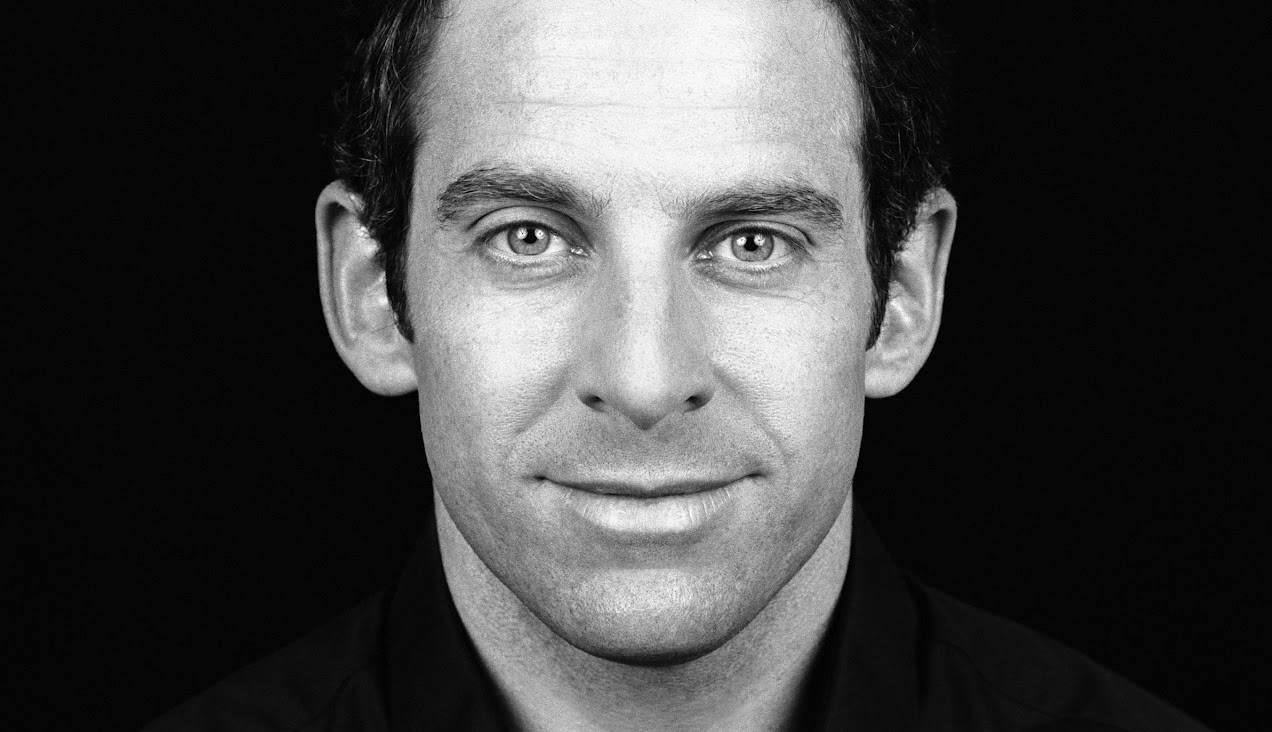
Sam Harris is my favorite author of non-fiction, but this has not always been the case. He is usually classified as one of the “Four Horsemen” (along with Richard Dawkins, Daniel Dennett, and the late Christopher Hitchens), to the point where he has remarked that some treat them as “one creature with four heads.” I’ve read books by all four men, and they are very different. Harris started as my least favorite of the four, and has become my favorite. How did this happen? Well, it took some time.

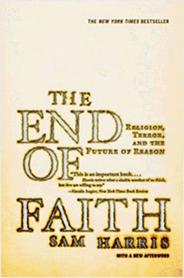
Sam Harris began his career as a writer with a book called The End of Faith, written in the wake of, and largely in response to, the 9/11 attacks of 2001.

book-cover1

Despite my atheism, I did not care for this book. It bashes Islam too much for my tastes, and Harris is still criticized for this fact, generally by people who have not read the rest of his work. Reactions like mine to this book are rare among atheists, for one simple reason: most atheists have a far less favorable view of Islam than I do. For more on that, please see my previous blog-post, and the earlier one it links to.

Islam is not the only religion criticized by Harris in his first book — not by any means. As someone who has never had a Muslim attempt to harm me, but who has suffered greatly at the hands of certain Christians, I was far more receptive to his arguments against the Christian religion. Many members of that religion noticed those arguments as well, and Harris was deluged with hate mail, much of it from enraged Christians in the USA. He wrote his second book as a response to this torrent of criticism.

book-cover2

This second book paid much less attention to Islam, and far more, as the title implies, to Christianity. I enjoyed it more, but admit that this likely has as much to do with my personal history as anything else. Still, Letter to a Christian Nation remains the only book I have ever read in a single sitting; it was so compelling that I was unwilling to stop reading it until the last page.

Both of Harris’s first books may be described as “beating the drum of atheism,” an activity which is interesting and useful only up to a certain point. To his credit as an author, he realized that writing more books which repeat this process would be waste of time. He therefore decided to move on to other subjects — and, in my opinion, his books improved greatly as a result of that decision. Here’s his next one:

moral-landscape-rev

The Moral Landscape is not a book about atheism, nor religion. Sam Harris is a neuroscientist, and this book considers human values from a scientific point of view:  questions of good and evil, and whether or not such questions can be addressed scientifically. Ethics and morality are things for which some people consider religion essential. Rather than belaboring the fact that he disagrees with this, Harris, in this book, simply makes a compelling case that such topics can indeed be addressed using the scientific method.

This was Harris’s first book after he made the excellent decision to move out, beyond his previous focus on atheism and religion. Were it not for this decision, I would not name Harris as my favorite non-fiction author. The arguments in this book are compelling, I learned much from reading it, and recommend it highly.

Harris’s fourth book tackles the topic of honesty, and its opposite:

lying_cover_184

Is there ever a situation in which lying is justifiable? Most people would say “yes.” Harris disagrees, and, in this very short book, makes a compelling argument for honesty. His move away from the “drum of atheism” continues in this book, and the rule with Harris is simple:  the further away he goes from his original topic of choice, the better his writing becomes.

This brings me to his fifth book, the amazing Free Will.

free-will

Do I have free will?  Do you?  Does Harris?  It certainly seems as if we do, but Harris takes the point of view that free will is an illusion, and supplies ample evidence to support this position. Denying free will is a dangerous game, of course, for, without free will, how can anyone be held responsible for their actions? Harris does not avoid this problem, but tackles it directly. Reading this book has had a powerful impact on how I view a great many things.

There is more of Harris to read, for those who are interested. I follow his blog regularly (http://www.samharris.org), and he has a new major book release coming soon, as well. Since he keeps getting better with each new book, I am looking forward to it with anticipation.

My Unusual View of Islam, Part II

Image

My Unusual View of Islam, Part II

For part I, please see this post: https://robertlovespi.wordpress.com/2013/03/22/my-unusual-view-of-islam/

Since publishing my first post on Islam, I’ve received a mixture of praise and criticism for it. Most of the criticism focuses on the fact that, for the most part, I discussed Muslims, rather than the religion of Islam itself, in my first post. This is true; I did do that, and I will attempt to remedy that here.

Let me make clear, though, that I do this without apology for my previous post. Muslims are ambassadors for Islam, just as Christians are ambassadors for their religion. The same can be said for other religions, or even a lack of religion. It is human nature to associate a system of belief with its adherents, and to use observations of the latter when forming opinions of the former.

I have not, however, merely become friends with many Muslims, without studying Islam itself. Because I live in the American South, it is also virtually impossible for me to avoid analyzing Islam by comparing and contrasting it with Christianity. The two forms of Christianity with which I am the most familiar are Roman Catholicism (I’m a former Catholic), and fundamentalist Protestant Christianity of the type which is very common where I live..

The two religions have a remarkable number of similarities, but important differences as well. As Abrahamic religions, both (along with Judaism, of course) are monotheistic. As one who is extremely interested in mathematics, simplicity and consistency are important and appealing to me. Viewed through this lens, Christian monotheism and Islamic monotheism are quite different.

Islam is truly monotheistic, and the deity Muslims worship is described as unlike human beings, neither male nor female, and certainly not divisible into different “persons” of the same deity. This is not the case with any form of Trinitarian Christianity. To accept the Trinity, a core Christian belief, one must accept a mathematical absurdity, for three does not equal one. Islam presents no such problem. To many Muslims (and to me), Christianity appears polytheistic, in fact. I do not have to be a Muslim, nor adhere to any of the beliefs of Islam, to appreciate greater logical and mathematical consistency.

Christianity, by contrast, is cluttered — particularly in the forms of it, such as Catholicism, where veneration of Mary and other saints plays a strong role. Clutter, in any belief system, hold little appeal for me.

The Five Pillars of Islam are also interesting to me, albeit from an outsider’s point of view. The first pillar, the shahada, is an appealingly simple statement of faith and trust: “There is no god but Allah, and Muhummad is his prophet.” As an atheist, I cannot now say this phrase aloud, and honestly believe it — but one who can, need only do so once to convert to Islam. It really is just that simple. Not only does that appeal to me on grounds of aesthetics, for I find simplicity appealing, but it is also a very welcoming aspect of the religion. If I were to recite this phrase to one of my close Muslim friends, they would accept it, and offer to help me learn more about my new religion. I do not think it likely this will ever happen, but neither do I rule it out. I have surprised myself many times before, and am not so bull-headed that I’m going to rule such a possibility out altogether. My burden of evidence, of course, remains high, and I would never even consider uttering this phrase (except when clearly quoting it) as a dishonest act. The fact remains that ease of conversion is, to me, a point in Islam’s favor. Accept the essential core beliefs with a simple and sincere sentence, and you are accepted into Islam. I like that.

The second pillar is the salat, or, as most Westerners know it, prayer five times per day. I have come across Muslims doing this in private areas, such as isolated stairwells. By contrast, American politicians never tire of trying to promote public prayer, which Jesus himself is recorded as speaking against in the Gospels. As an atheist, I do not pray. I appreciate that Muslim prayer has never been pushed on me. I certainly cannot say the same for Christian prayer.

The third pillar is the zakāt — giving alms to the poor. Christian teachings on this subject are similar. I will not criticize either religion for this practice, for I view it favorably in both contexts. There are many people in the world who need help, and I’m not going to quibble over the source of such assistance.

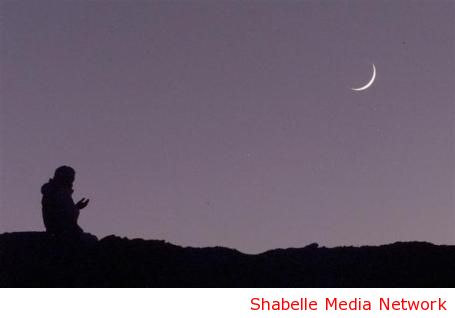
Sawm is the fourth pillar — ritual fasting. The Ramadan fast (to which the image above is related) is unlike typical Christian fasting in that it is much more strenuous. I would have an extraordinarily difficult time doing the Ramadan fast for one day, let alone a full lunar month. I do not fully understand sawm, but I have witnessed the joy of my Muslim friends during this time. It harms no one, for there are special, reasonable provisions to exempt the sick, or those who are otherwise unable, from this rigorous fast. I respect the ability to do something I do not feel I could do myself, provided it is a harmless act, as this fast is.

The fifth pillar is the hajj, or the once-per-lifetime pilgrimage to Mecca. My first exposure to this idea was in my reading of The Autobiography of Malcolm X, and his hajj was a transformative experience — one which convinced him that racism has no place in Islam, in contrast to his former beliefs.

I can, and do, find something to admire and respect in each of the Five Pillars.

There is more to Islam than the Five Pillars, of course, but they are at the core. I have been taken to task for not discussing other, less savory things found in the Koran, but no one has shown me anything which exceeds the horror of the more unsavory aspects of the Bible, such as Old Testament misogyny, homophobia, xenophobia, genocide, and sexism. The Old Testament actually requires killing disobedient children — something personally horrifying to me, as the son of an extremely abusive father, against whom rebellion was absolutely necessary for personal survival. The New Testament isn’t much better, in my view, with such things as “Slaves, obey your masters” in Ephesians, or the central narrative about God sending his son, who is somehow also God, on a suicide mission to redeem people from sin they somehow inherited from their ancestors. In my view, both books contain some pretty horrific relics of history — but moderate, reasonable Muslims and Christians, both, are moving away from such teachings, and emphasizing those which have a more positive message. Since religion isn’t going away any time soon, I’m all for seeing it transform into something more beneficial, and less harmful, and this is true of any religion.

It must be remembered that Islam is a newer religion than Christianity, by roughly seven centuries. When people describe horrors perpetrated in the name of Islam today — and yes, they are real — it would be good to consider what Christianity was like seven centuries ago, in the Dark Ages.

It’s also worth remembering that Islamic civilization is responsible for preserving much valuable knowledge from the ancient world, through the Western Dark Ages, when the candle of knowledge was very nearly extinguished.

Horrors are perpetrated — today — in the name of both religions. Many claim that this is worse, in the case of Islam, than with Christianity. To that, I respond by pointing out the problem of AIDS in Africa, made much worse by the Vatican’s stubborn opposition to the use of condoms to prevent the spread of this deadly disease. Millions are dying because of this policy. Is this as dramatic, and does it grab as many headlines, as honor killings in Afghanistan, executions in Saudi Arabia, or other such things? No, but it is every bit as deadly and harmful. There is also the horror of Christianity’s pedophilia scandals, of course. No religion has a monopoly on evil.

Some hope that the horrors of religion will finally be erased by the future ascent and dominance of atheism. Frankly, over the next several decades, I think that’s a pipe dream. The moderates within both religions are the key to making them less harmful over time, and anyone who thinks Islam has no moderates has likely fallen victim to stereotypes perpetuated by the Western media and/or politicians. Moderate Muslims are not hard to find; they vastly outnumber the fanatics, as is also the case with Christians.

Islamophobes do not see these moderates, do not appreciate their potential for reigning in the excesses of radical Islam, and often offend them with insults directed at the whole of Islam, as if it is monolithic. It is not, and these sweeping generalizations are not helpful to anyone.

Atheists and other secularists can “imagine no religion” all they want, but these imaginings are going to remain imaginary for a very long time — many generations, likely. A more realistic short-term goal is peaceful coexistence — among those of all religions, and those with none. This won’t happen without the help of moderates in multiple religions, and a reduction of hateful rhetoric from all sides.

Hate helps no one.

Symbol of Peace and Atheism

Image

Symbol of Peace and Atheism