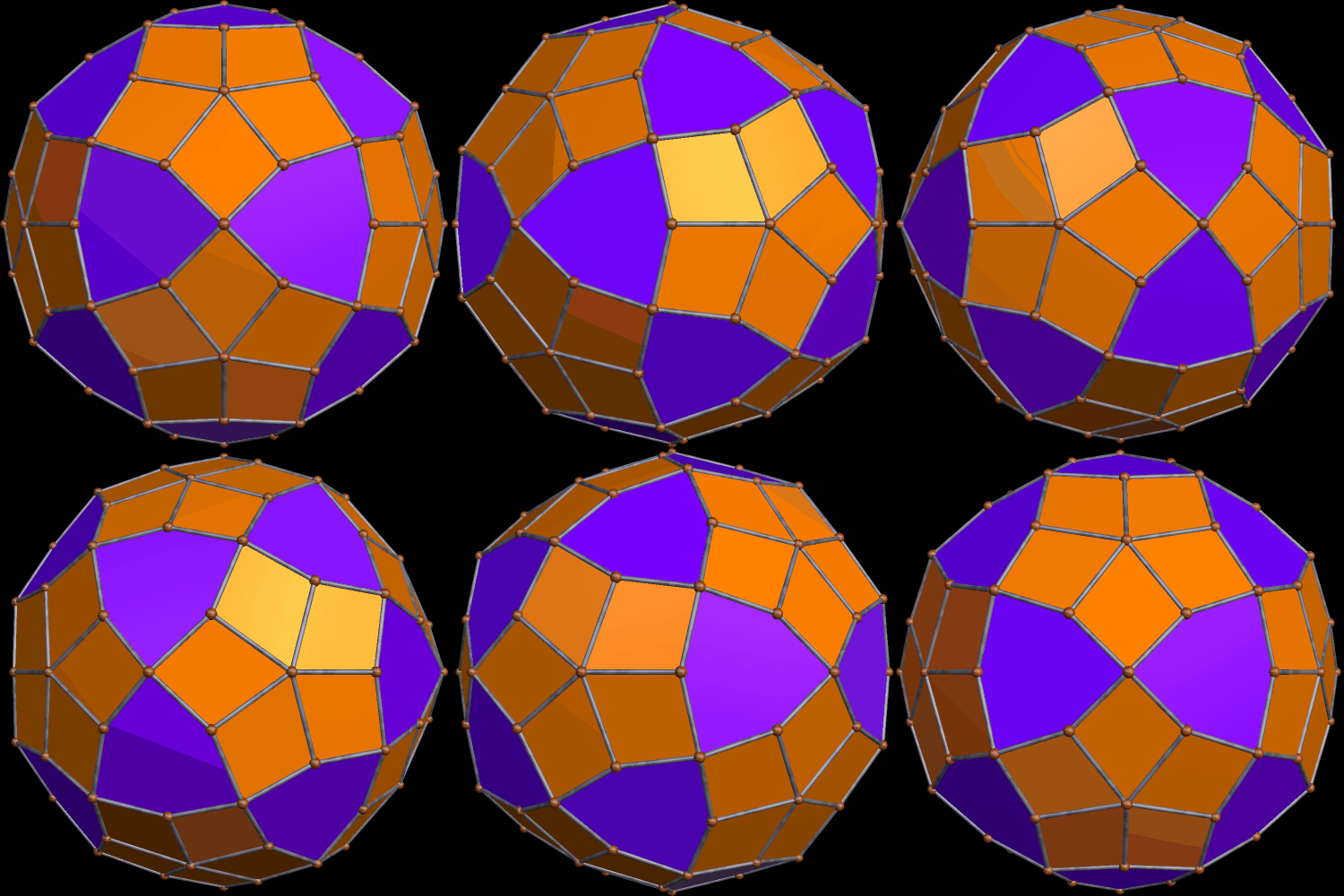
A Rhombic Ring of Icosahedra, Leading to a Rhombic Dodecahedron Made of Icosahedra

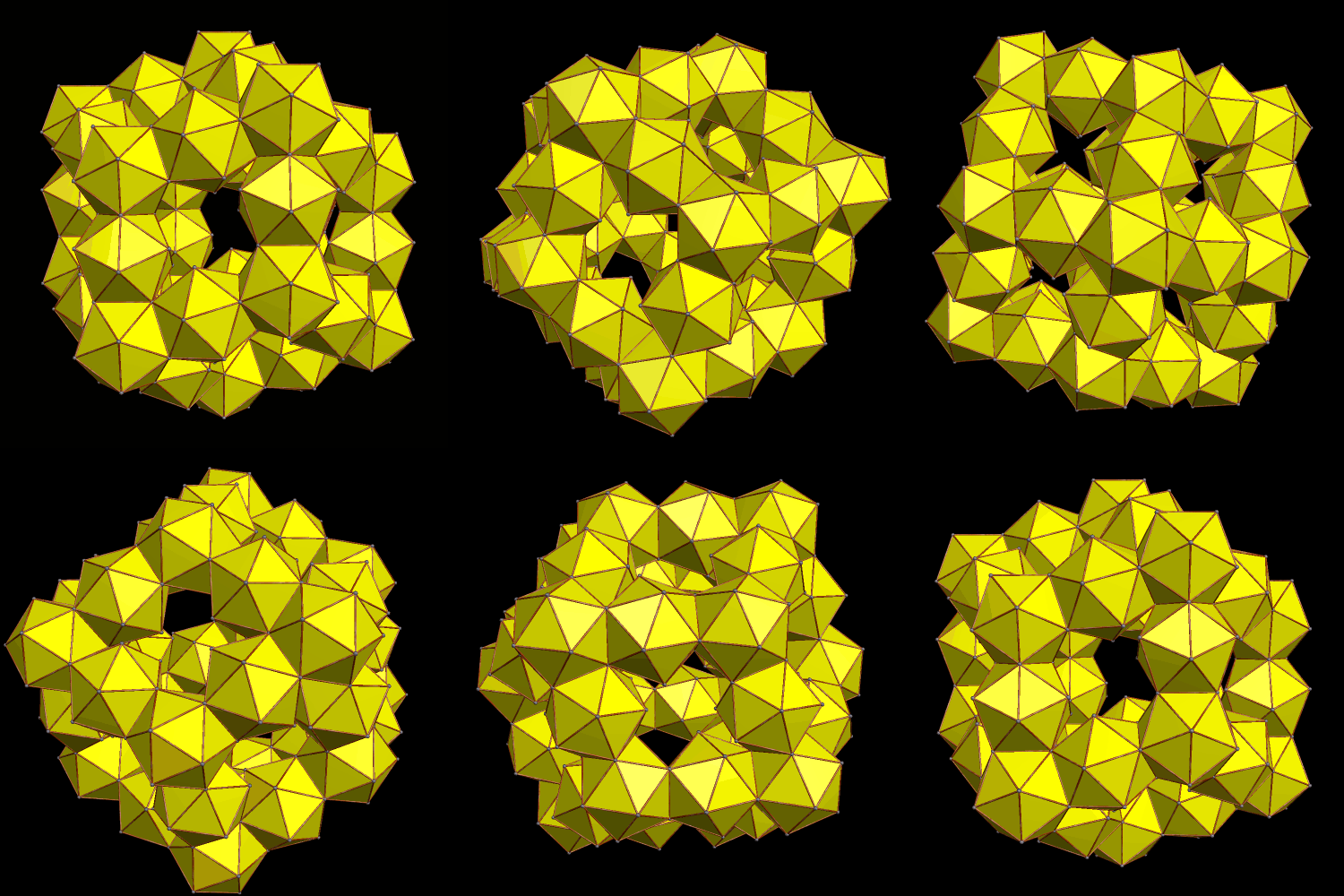
As it turns out, eight icosahedra form this rhombic ring, by augmentation:

Rhombic ring of Icosa

Measured from the centers of these icosahedra, the long and short diagonal of this rhombus are in a (√2):1 ratio. How do I know this? Because that’s the only rhombus which can made this polyhedron, a rhombic dodecahedron, dual to the cuboctahedron.

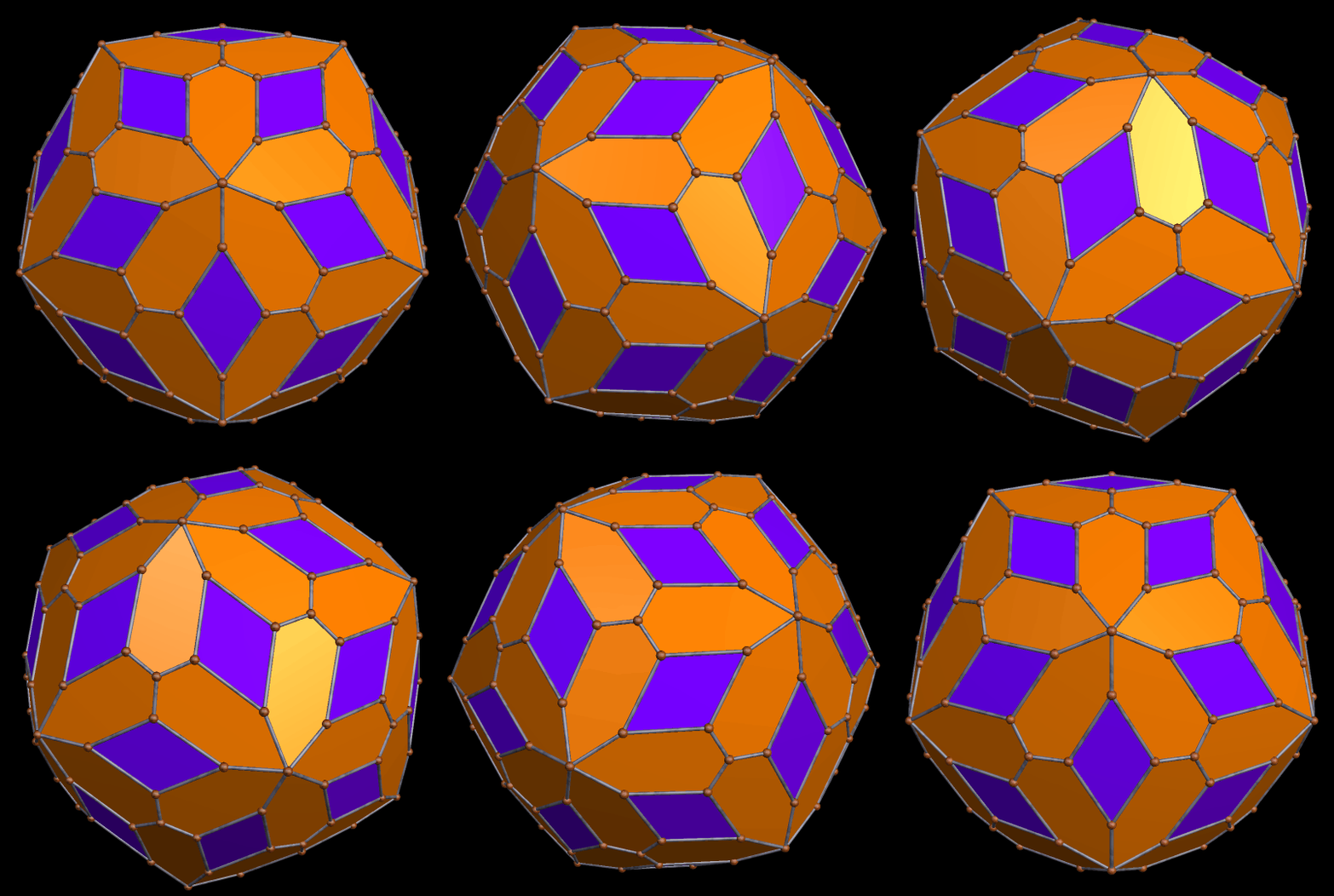
RD of Augmented Icosa

This rhombic dodecahedral cluster of icosahedra could be extended to fill space, since the rhombic dodecahedron itself has this property, an unusual property for polyhedra. Whether space-filling or not, the number of icosahedron per rhombic-dodecahedron edge could be increased to 5, 7, 9, or any greater odd number. Why would even numbers not work? This is a consequence of the fact that opposite faces of an icosahedron are inverted, relative to each other; a pair of icosahedra (or more than one pair, producing odd numbers > 1 when added to the vertex-icosahedron) must be attached to the one at a rhombic-dodecahedron-vertex to make these two inversions bring the triangular face back around to its original orientation, via an even number of half-rotations, without which this consruction of these icosahedral rhombi cannot happen.

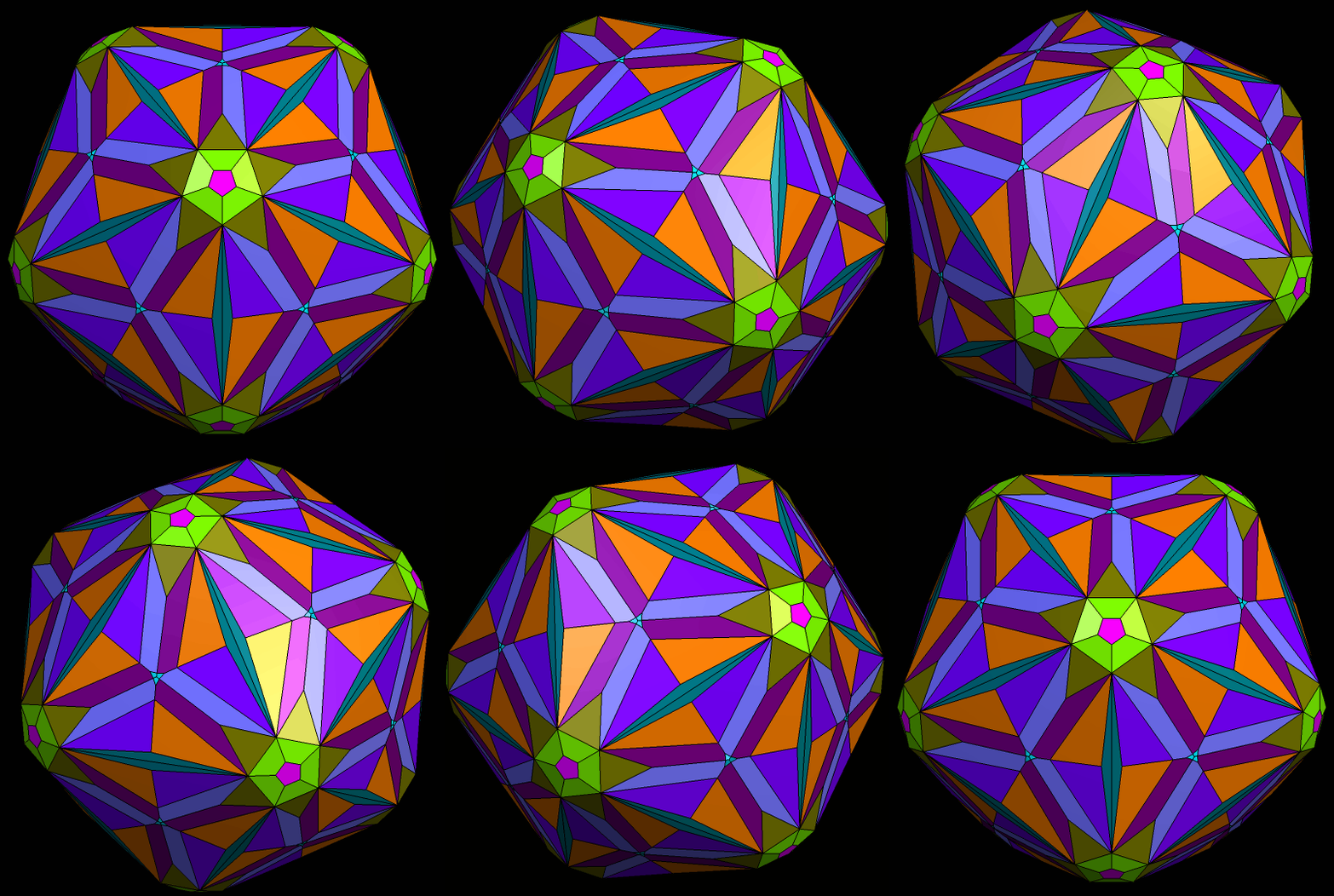
Here’s another view of this rhombic dodecahedron, in “rainbow color” mode:

RD of Augmented Icosa RB

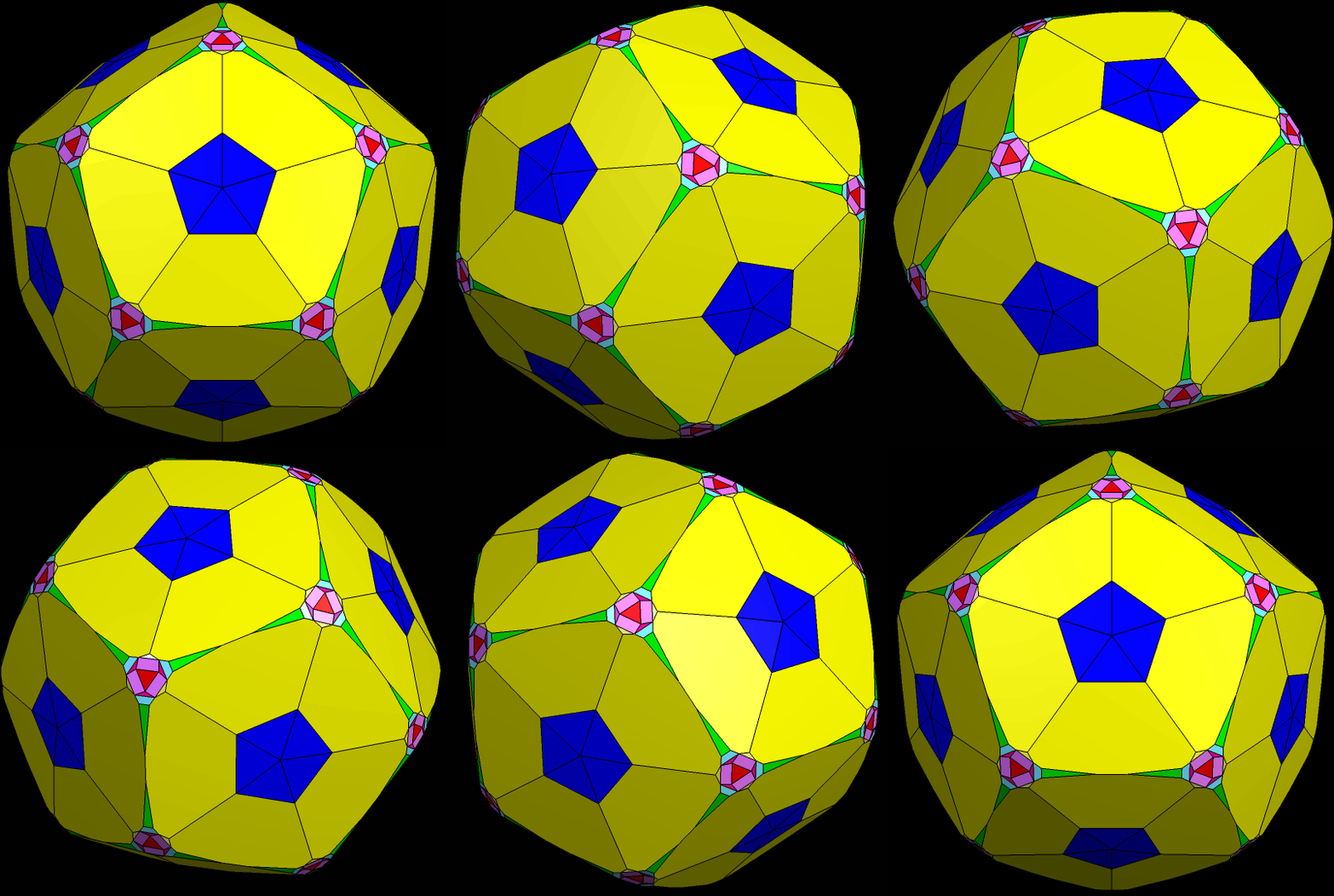
All images above were produced using Stella 4d, software which may be tried for free right here.

On Binary Planets, and Binary Polyhedra

Faceted Augmented Icosa

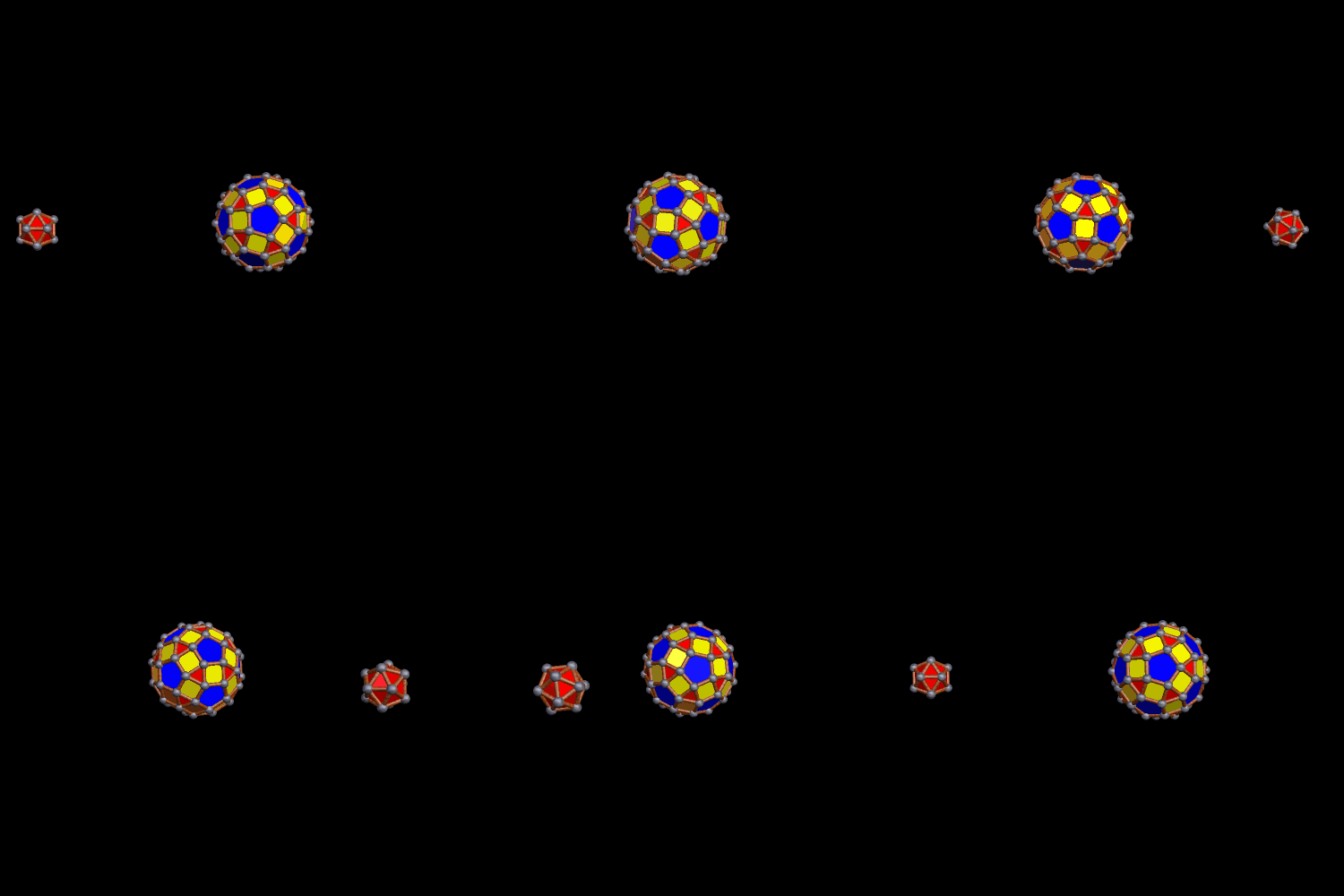
This image of binary polyhedra of unequal size was, obviously, inspired by the double dwarf planet at the center of the Pluto / Charon system. The outer satellites also orbit Pluto and Charon’s common center of mass, or barycenter, which lies above Pluto’s surface. In the similar case of the Earth / Moon system, the barycenter stays within the interior of the larger body, the Earth.

I know of one other quasi-binary system in this solar system which involves a barycenter outside the larger body, but it isn’t one many would expect: it’s the Sun / Jupiter system. Both orbit their barycenter (or that of the whole solar system, more properly, but they are pretty much in the same place), Jupiter doing so at an average orbital radius of 5.2 AU — and the Sun doing so, staying opposite Jupiter, with an orbital radius which is slightly larger than the visible Sun itself. The Sun, therefore, orbits a point outside itself which is the gravitational center of the entire solar system.

Why don’t we notice this “wobble” in the Sun’s motion? Well, orbiting binary objects orbit their barycenters with equal orbital periods, as seen in the image above, where the orbital period of both the large, tightly-orbiting rhombicosidodecahedron, and the small, large-orbit icosahedron, is precisely eight seconds. In the case of the Sun / Jupiter system, the sun completes one complete Jupiter-induced wobble, in a tight ellipse, with their barycenter at one focus, but with an orbital period of one jovian year, which is just under twelve Earth years. If the Jovian-induced solar wobble were faster, it would be much more noticeable.

[Image credit: the picture of the orbiting polyhedra above was made with software called Stella 4d, available at this website.]

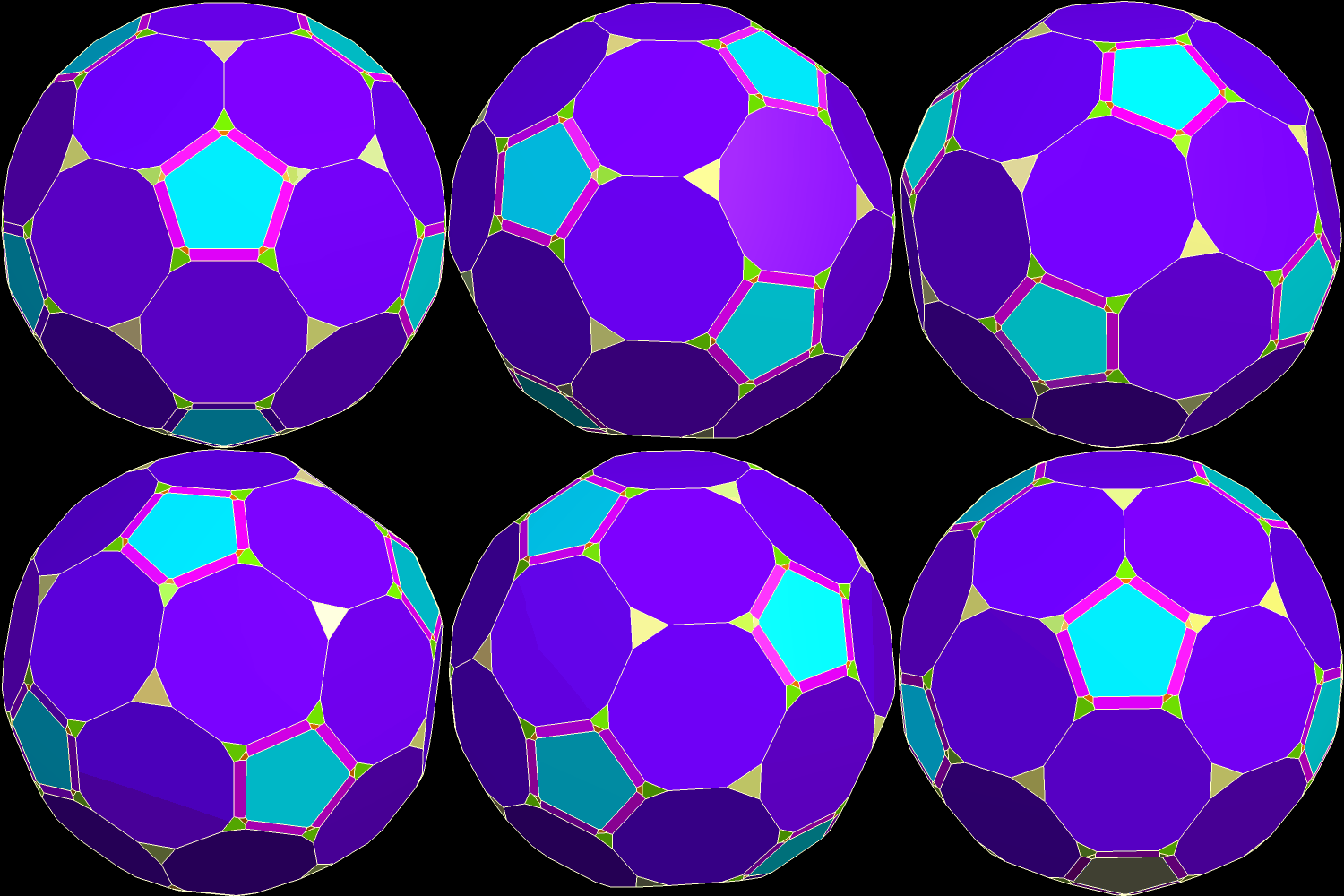
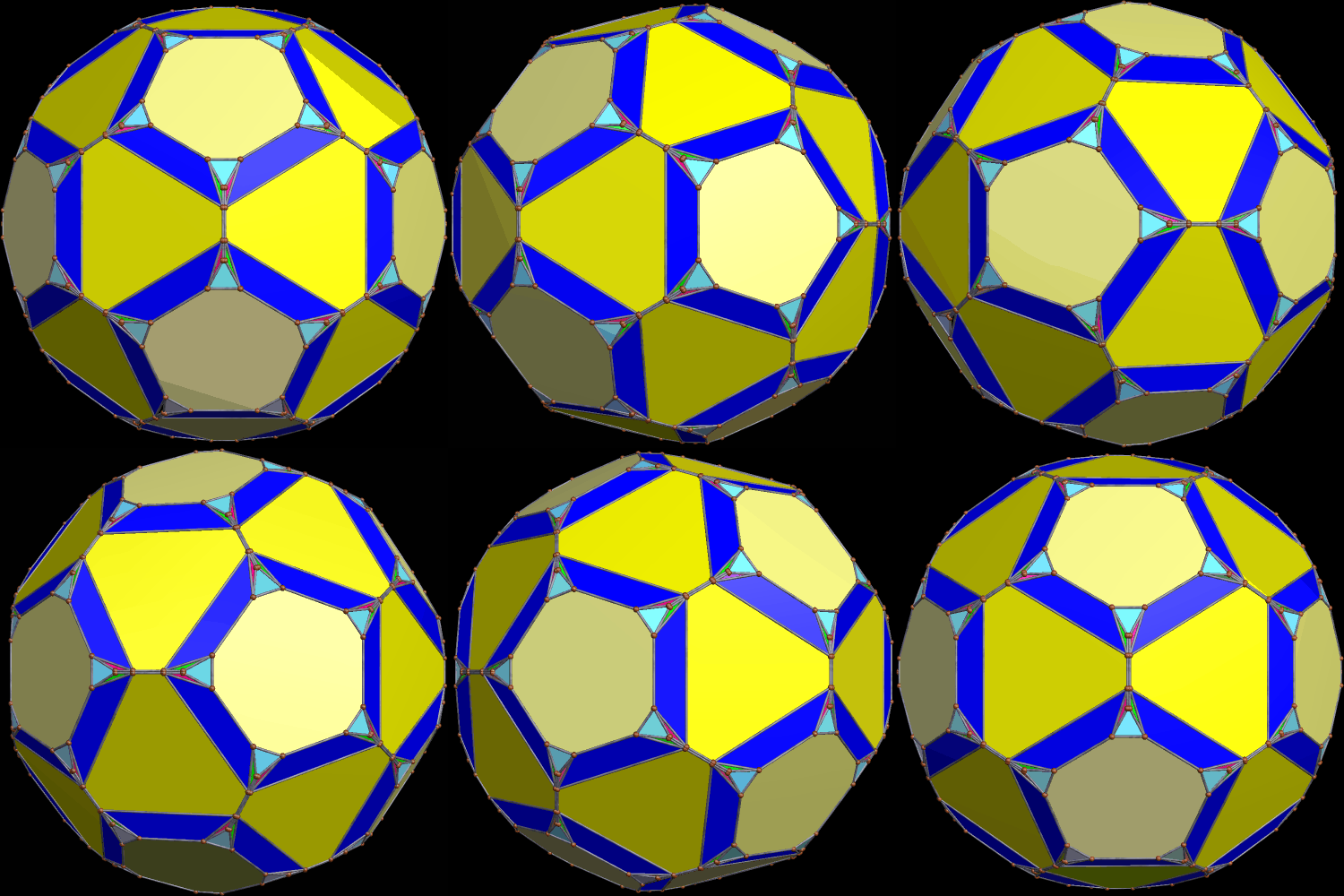
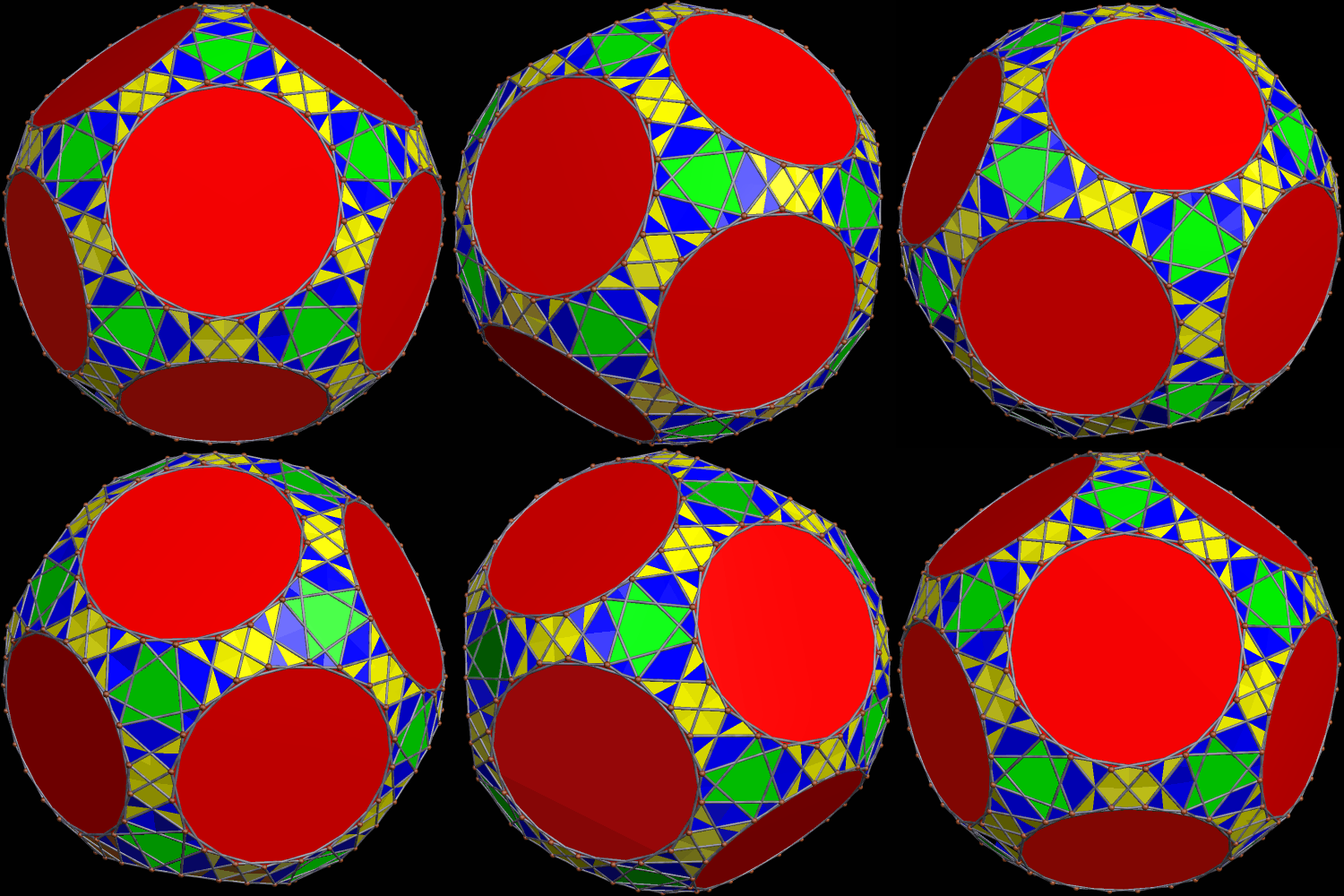
Thirty-Four Rotating, Convex, and Non-Chiral Polyhedra with Icosidodecahedral Symmetry

Most in the field call this type of symmetry “icosahedral,” but I prefer the term George Hart uses — along with “cuboctahedral” in place of “octahedral.”

Each polyhedral image here was created with Stella 4d: Polyhedron Navigator. At this linked page, you can try a trial version of that program for free.

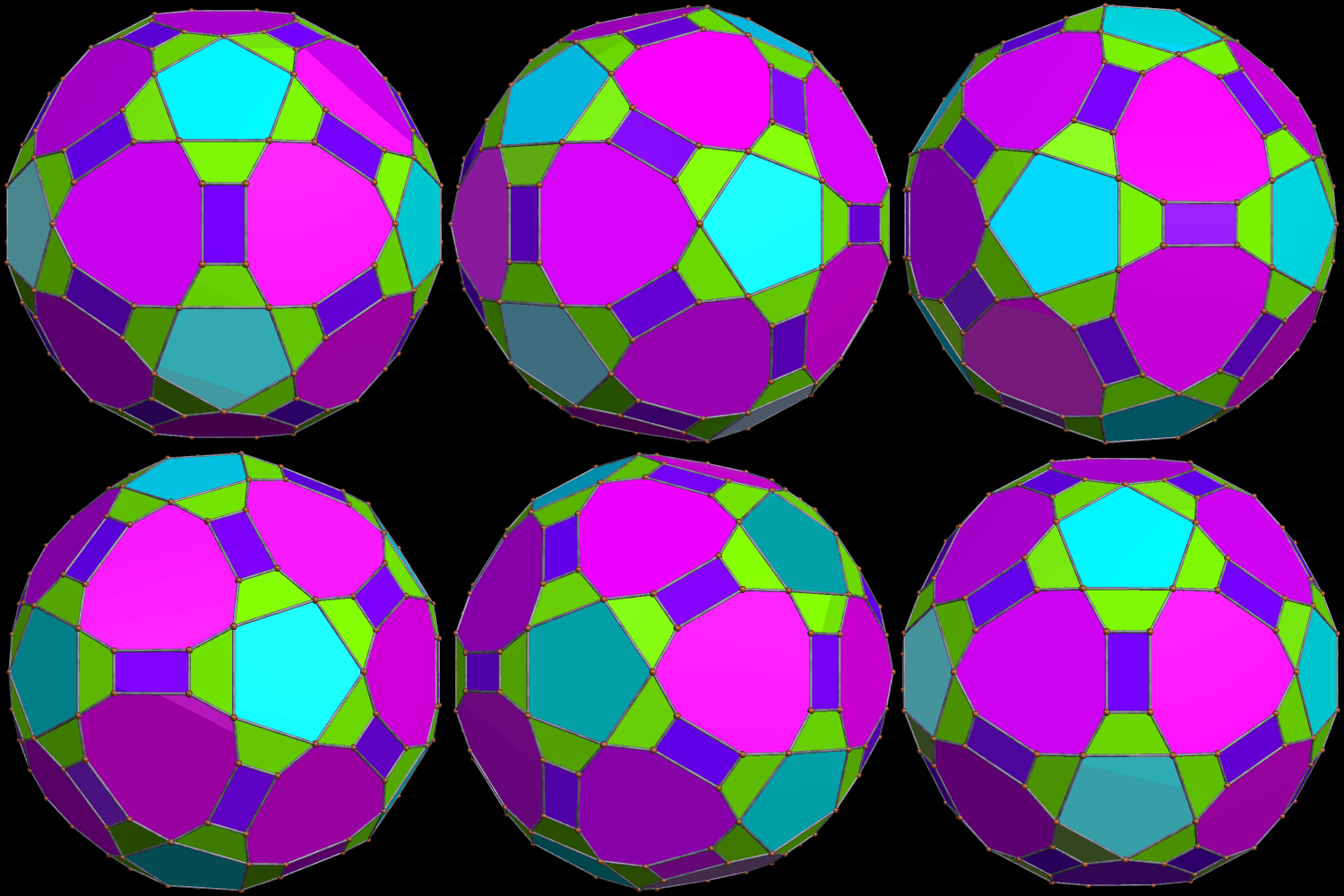
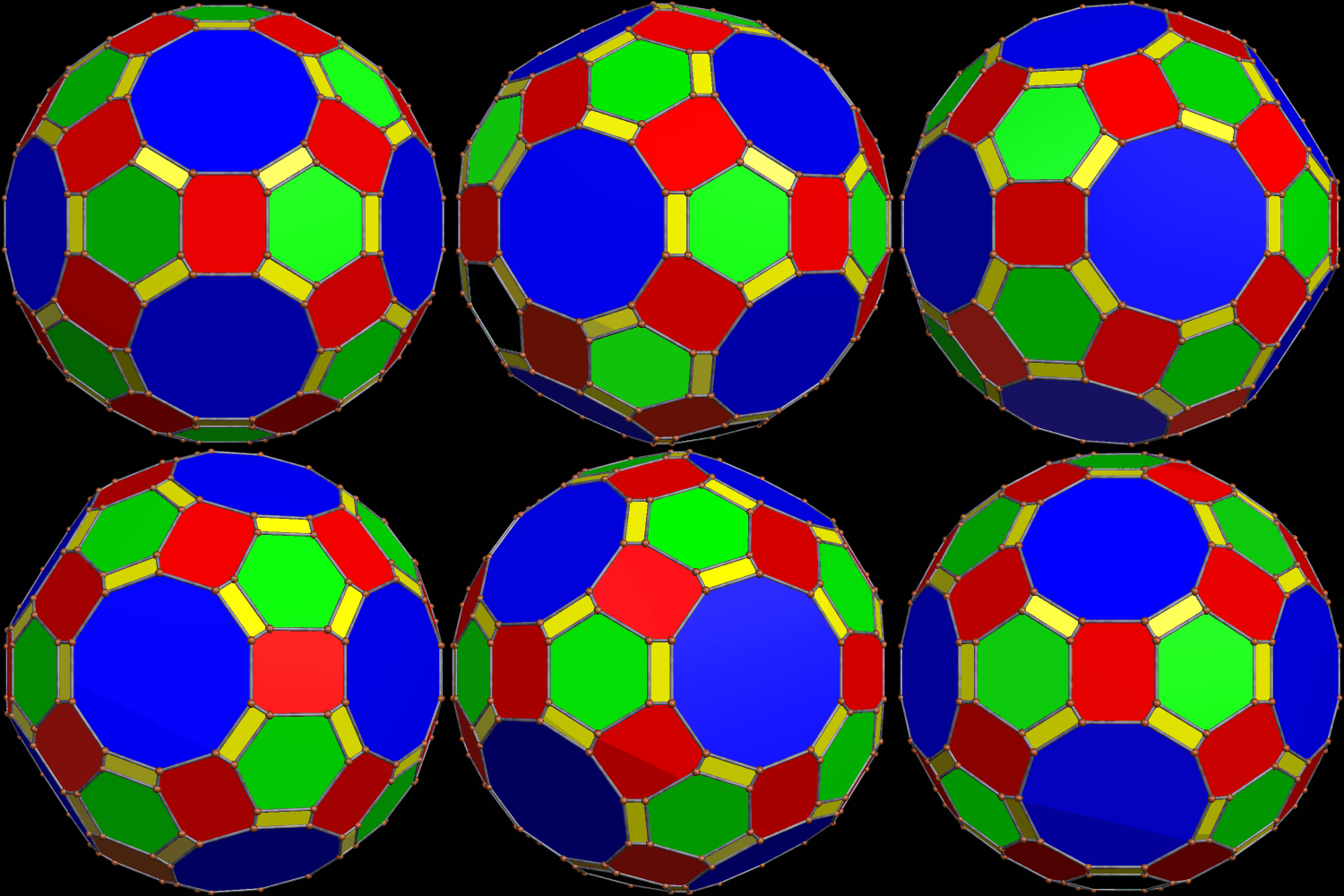
12 icosagons and stuff

Dual of Convex huull

272 faces in 12 reg dec & 120 scalene triangles and 60 isos triangles and 60 isos traps and 20 reg hexagons

Convex hnbghjull

Convex hull 20 8 and 12

By the way, when I described these polyhedra, in this post’s title, as non-chiral, I was not referring to the coloring-schemes used here, many of which obviously are chiral, but only the shapes themselves.

Convex hull LP

convex hull of synthetic comet nucleus

Dual of Convex hull

Convexxx hull

Convhgfehgx hull

That 10 GB space-upgrade, which most bloggers don’t ever need, is really coming in handy right now. In other words, some of these .gif files are huge!

Convhgfex hull

Dual of Chgonvex hulgfl

Dual of Chgonvex hull

Dual of Cjhfjonvex hull

Dualhhc of Convex hull

Why, yes, I am including some words after every fifth polyhedron. That will help, later, when I count them for the title of this post.

Dual of Conjhvex hull

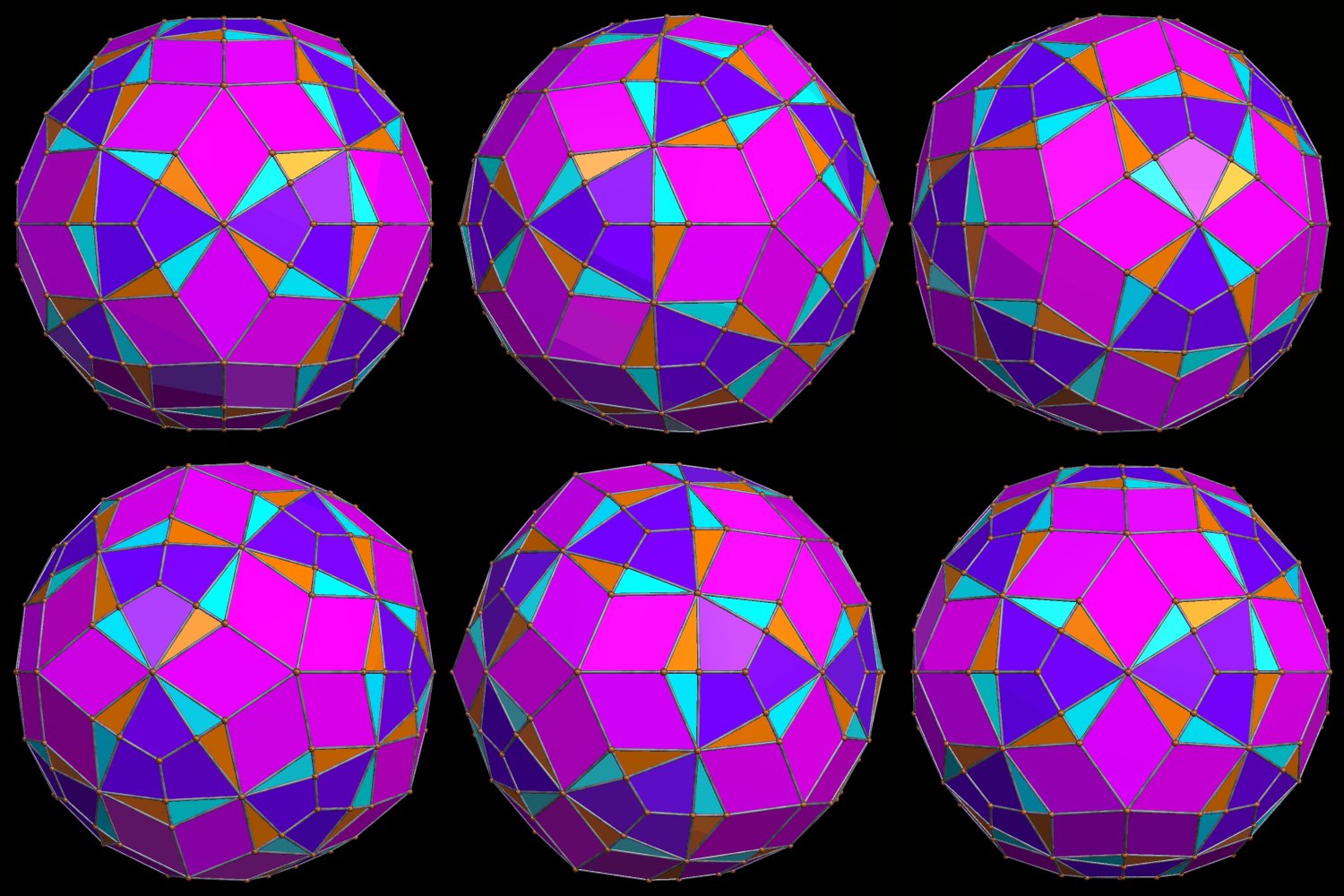
enneagons and kites

Enneagons, Pentagon, isostraps, and rectangles

exansiaon Convex hull

Expanded GRID

I’m not sure why that last one is spinning the opposite direction from the others. Perhaps this polyhedron is trying to start a trend. On the other hand, it could just simply upside-down.

Faceted Stellated Dual of Convex hull

metaexpanded RID

ID variation

intermediate form

jdshfgs

That’s twenty-five so far.

metaRID

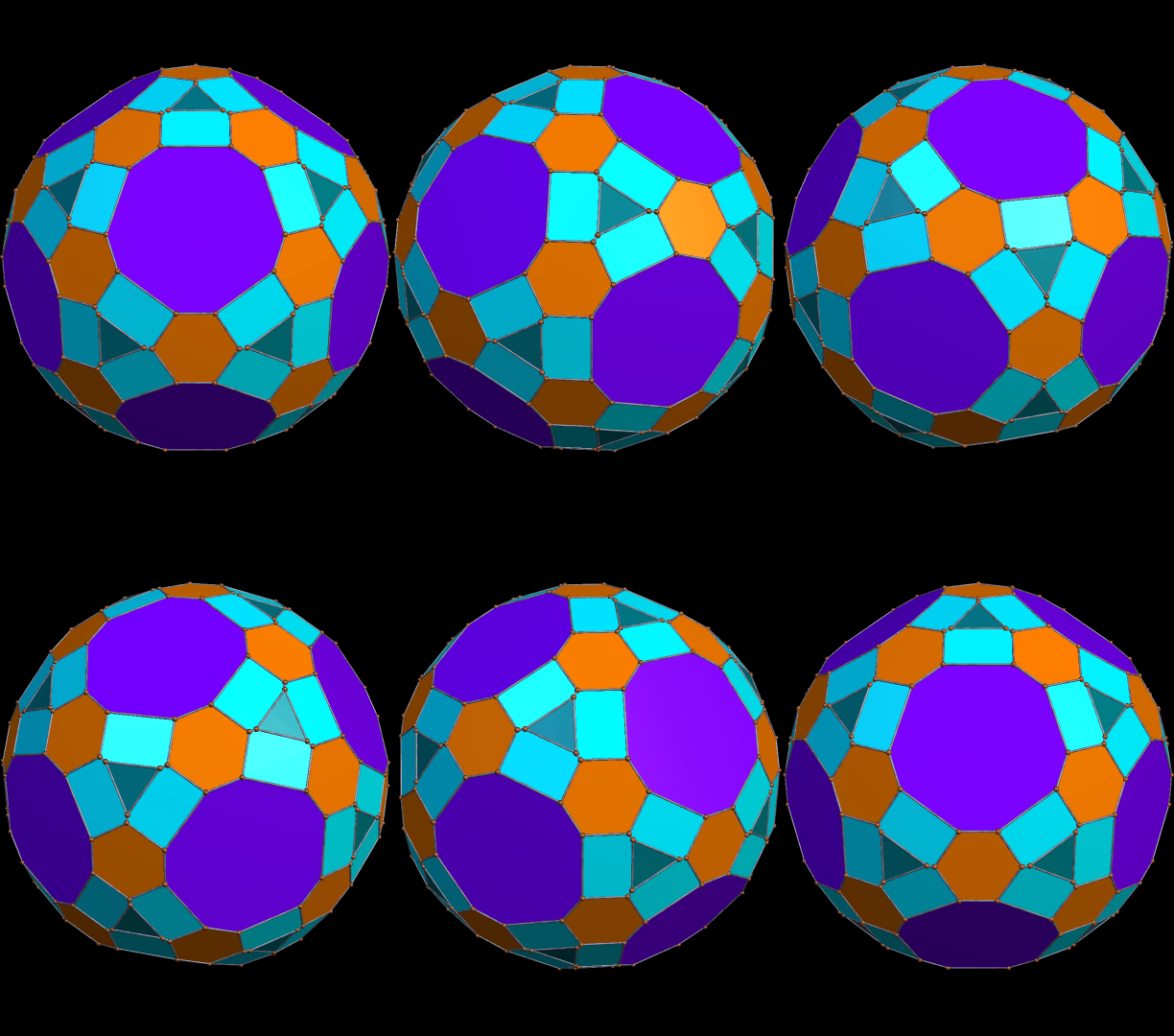
pentadecagons two types hexagons and trapezoids

RID variant

RTC and RID blend

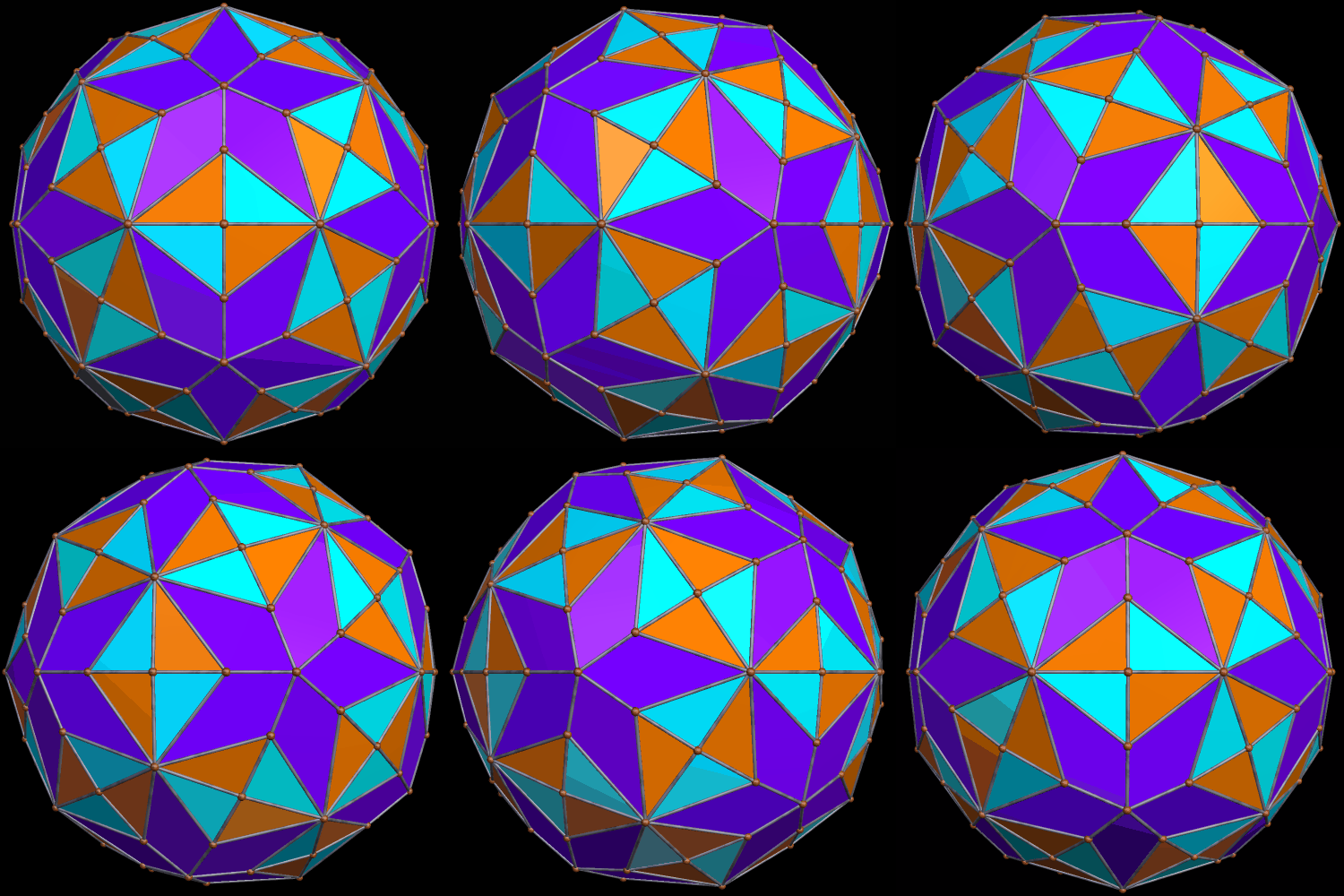
Stellated Poly

Clearly, I should have checked the number of files in that file folder before deciding to simply post them all together, based on what they have in common. That’s thirty so far.

sixty pentagons and twenty hexagons

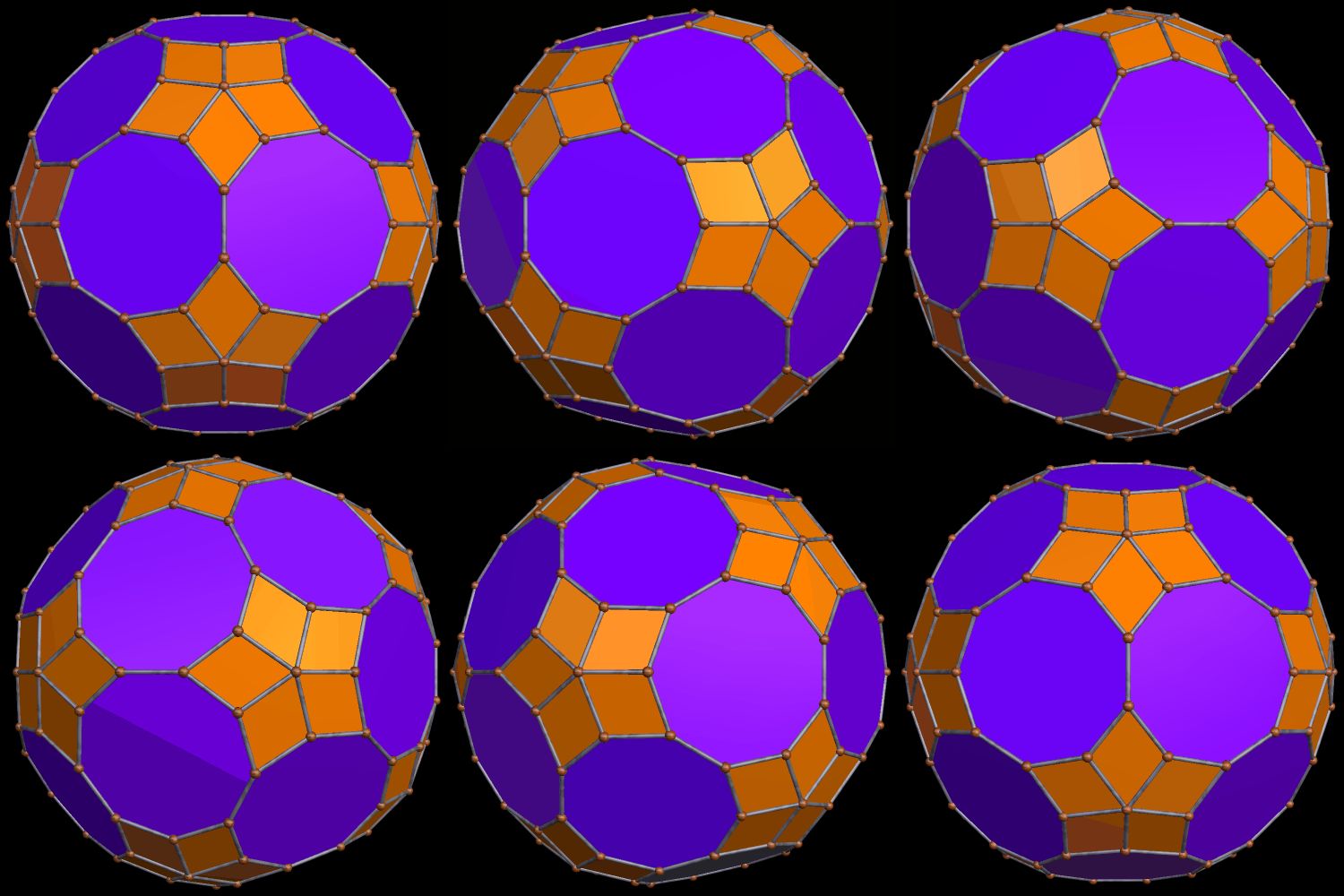
twenty regular dodecagons

Unnabsghfmed

what is this thing

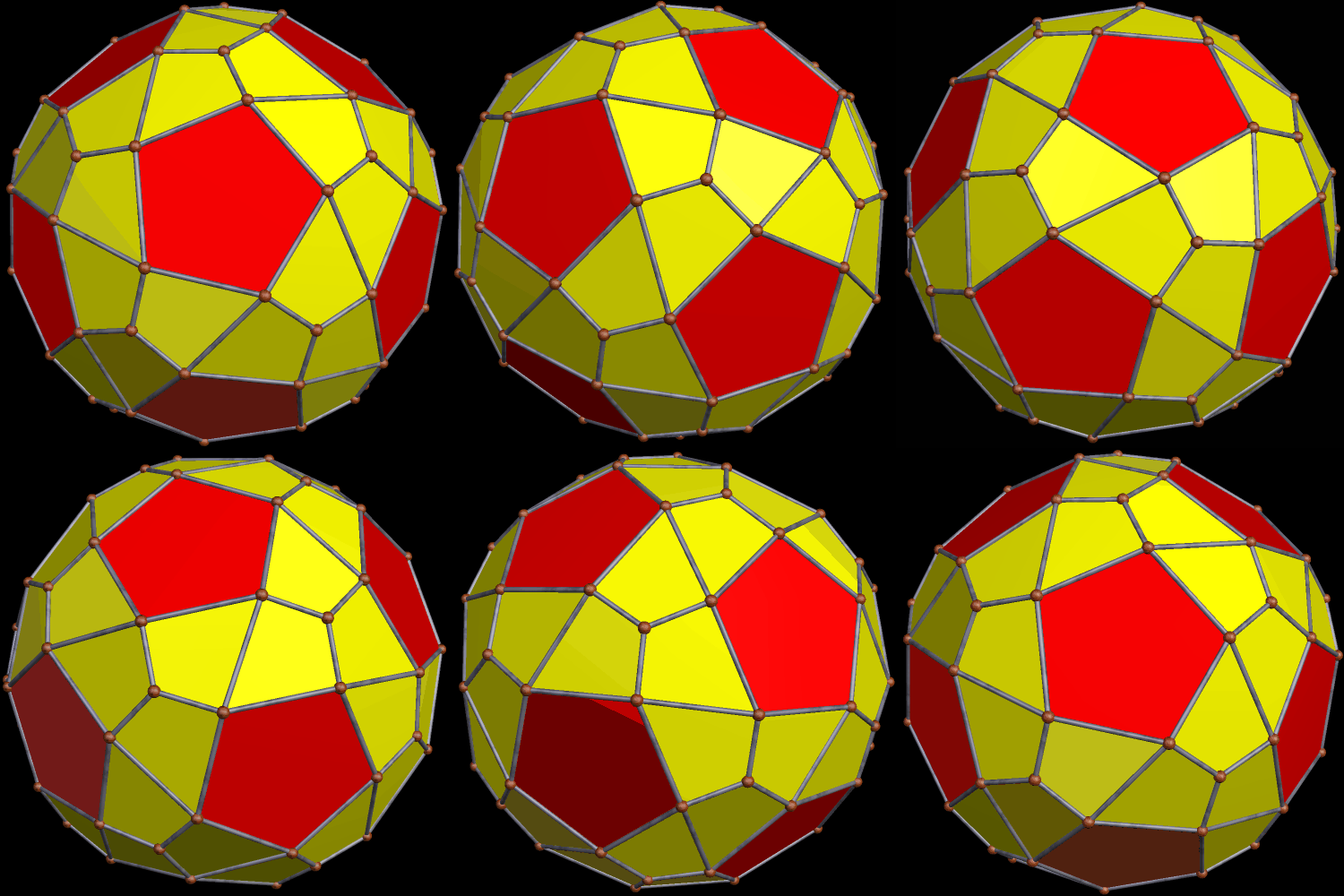
Two Different Versions of an Expanded Snub Dodecahedron, Both of Which Feature Regular Decagons

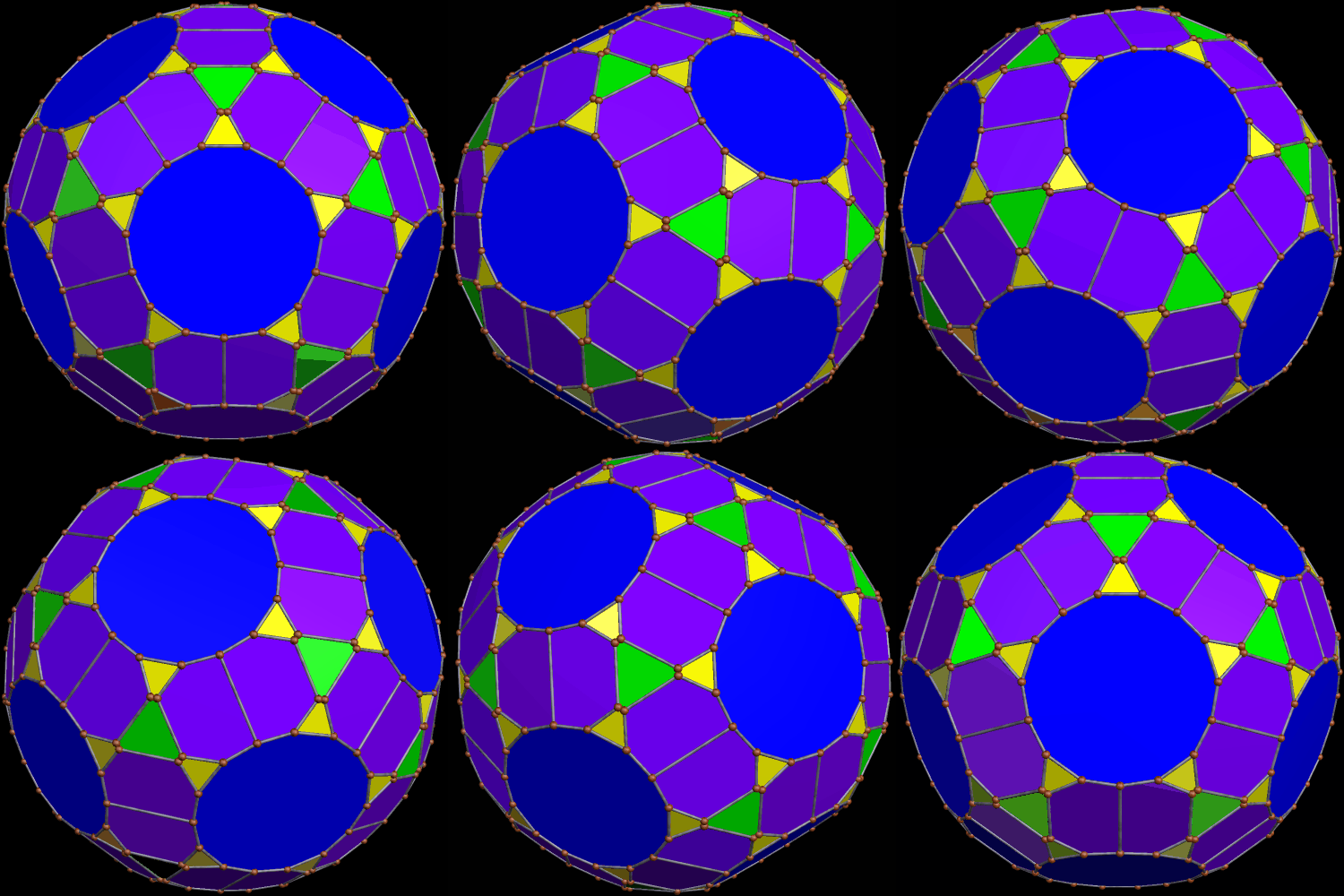
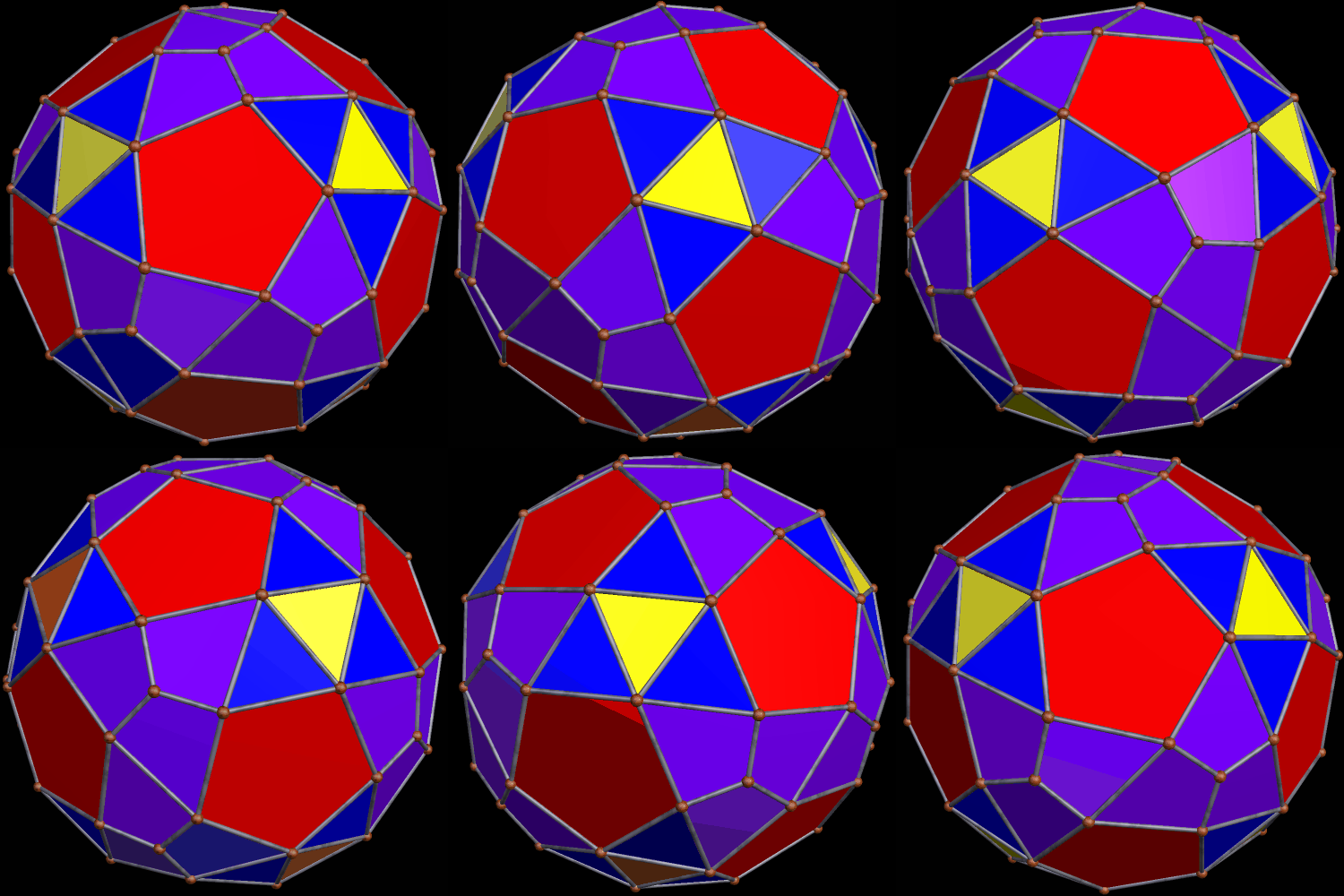
The snub dodecahedron, one of the Archimedean solids, can be expanded in multiple ways, two of which are shown below. In each of these expanded versions, regular decagons replace each of the twelve regular pentagons of a snub dodecahedron.

exp sn dodeca 2

Exp Sn Dodaca

Like the snub dodecahedron itself, both of these polyhedra are chiral, and any chiral polyhedron can be used to create a compound of itself and its own mirror-image, Below, you’ll find these enantiomorphic-pair compounds, each made from one of the two polyhedra above, together with its own reflection.

exp sn dodeca 2 compound of enantiomophic pair

exp sn dodaca Compound of enantiomorphic pair exp snub dodeca

All four of these images were created using Stella 4d: Polyhedron Navigator, software available (including a free trial download) at this website.

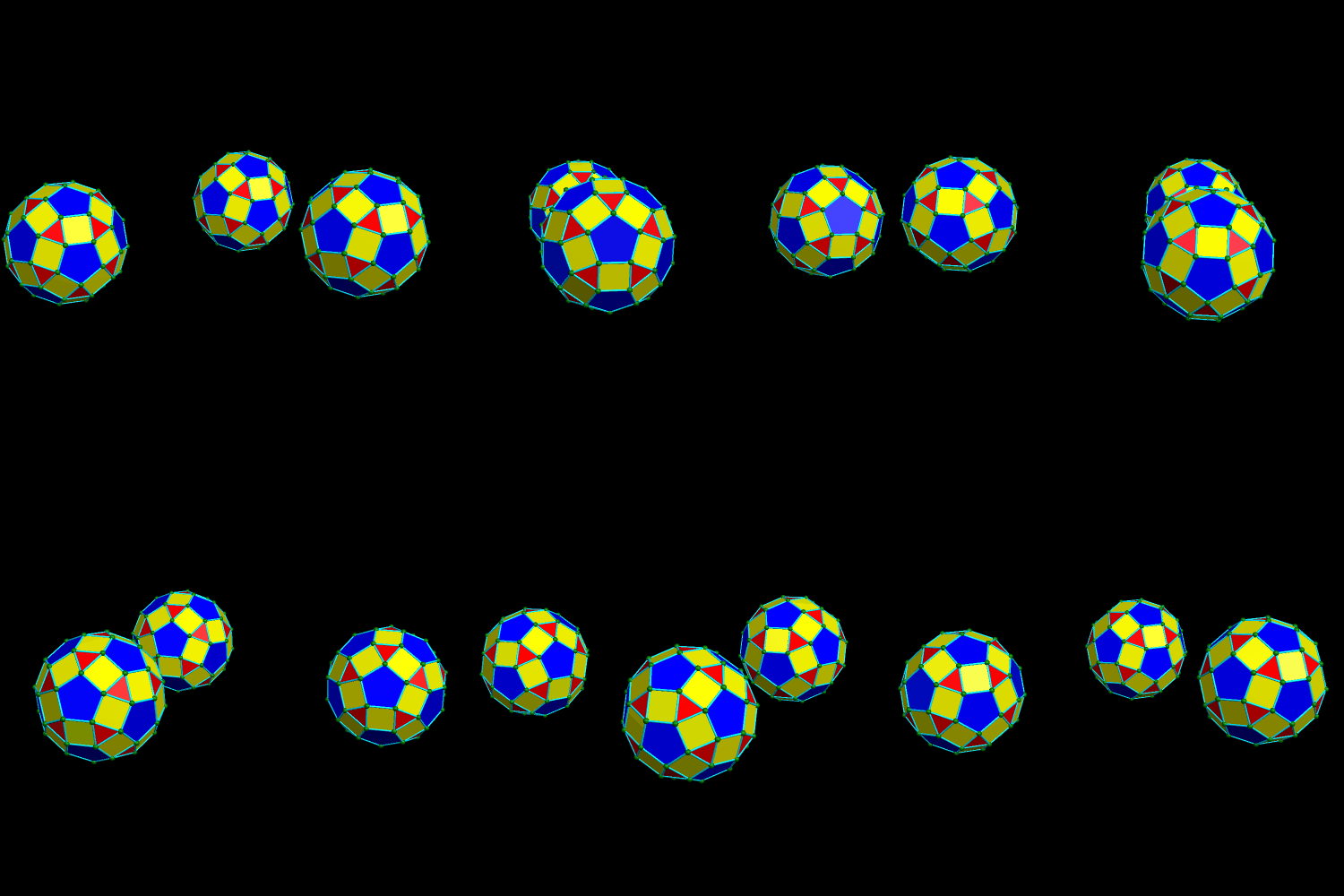
Trinary Rhombicosidodecahedra

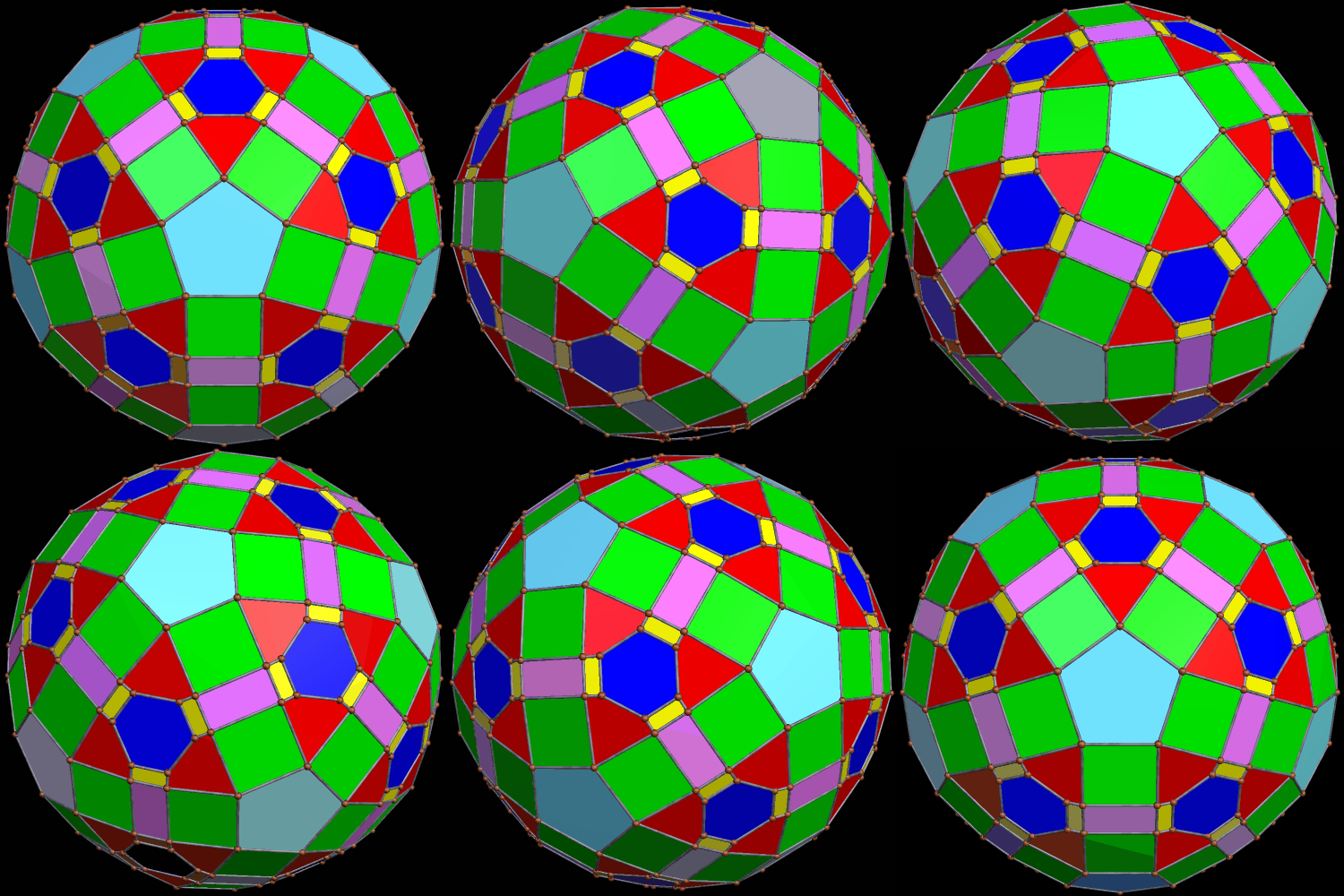
Faceted Augmented Rhombicosidodeca

This image of three rhombicosidodecahedra “orbiting” a common center was made with Stella 4d, a program you may try for free at this website.

Tidally Locked Binary Icosidodecahedra

binary icosidodecahedra

I’ve been trying to figure out for over a year how to make images like the one above, without having holes in the two polyhedra, facing each other. At last, that puzzle of polyhedral manipulation using Stella 4d (software available at this website) has been solved: use augmentation followed by faceting, rather than augmentation followed by simply hiding faces.

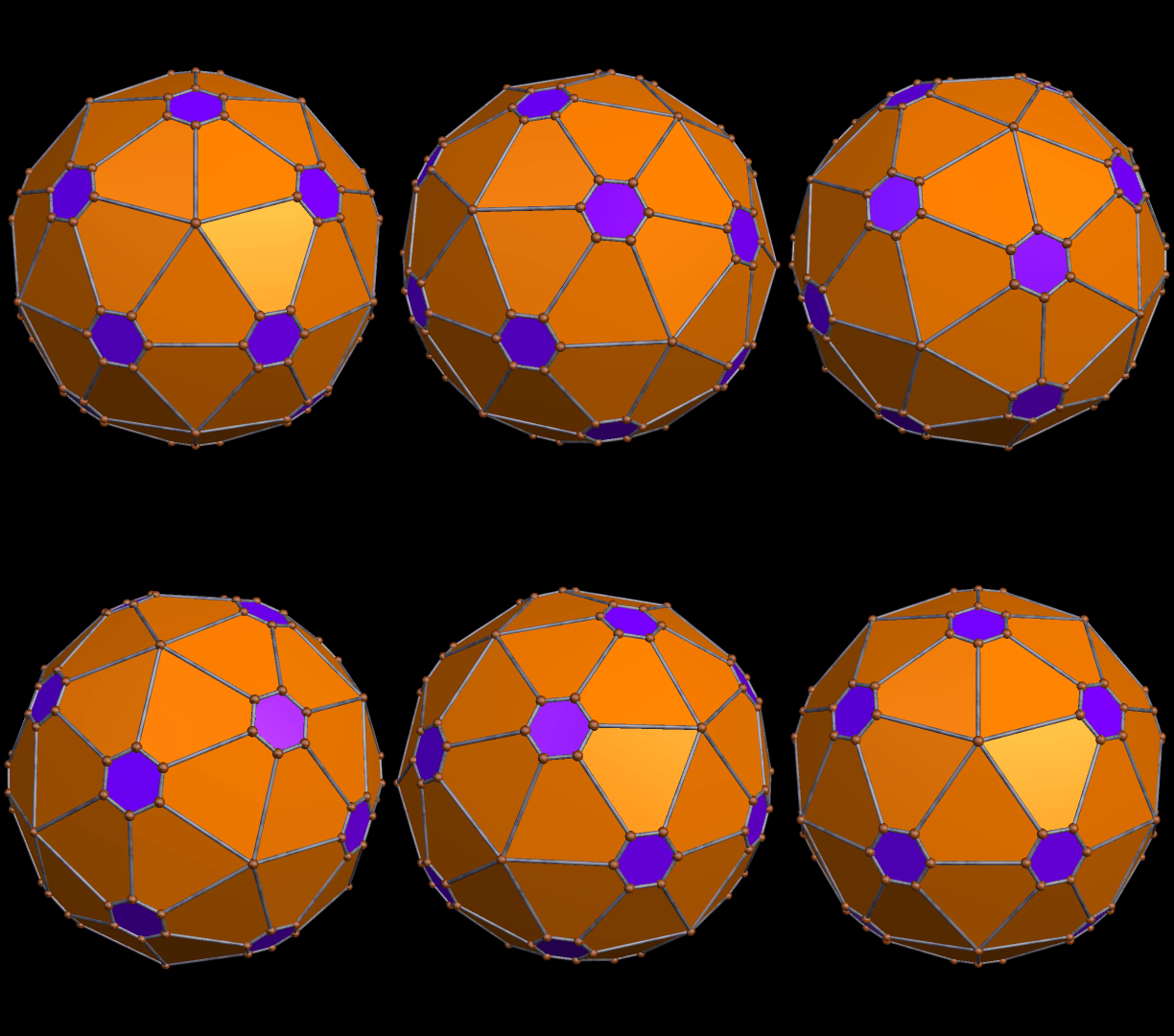
Two Similar Polyhedra with Icosidodecahedral Symmetry

octagons and kites

Stellated Chjhonvex hull

Both of these were made using Stella 4d, software you can try at this website.

Three Different Depictions of the Compound of Five Cubes

The most common depiction of the compound of five cubes uses solid cubes, each of a different color:

Cubes 5

This isn’t the only way to display this compound, though. If the faces of the cubes are hidden, then the interior structure of the compound can be seen. An edges-only depiction, still keeping a separate color for each cube, looks like this:

Cubes 5 edges

If these thin edges are then thickened into cylinders, that makes a third way to depict this polyhedral compound. It creates a minor problem, though: edges-as-cylinders looks awful without vertices shown as well, and the best way I have found to depict vertices, in this situation, is with spheres. With vertices shown as spheres, however, a sixth color, only for the vertex-spheres, is needed. Why? Because each vertex is shared by six edges: three from a cube of one color, and three from a second cube, of a different color.

Cubes 5 thick edges

Finally, here are all three versions, side-by-side for comparison, and with the motion stopped.

cover

All images in this post were created using Stella 4d: Polyhedron Navigator, software you may try for free at this website.

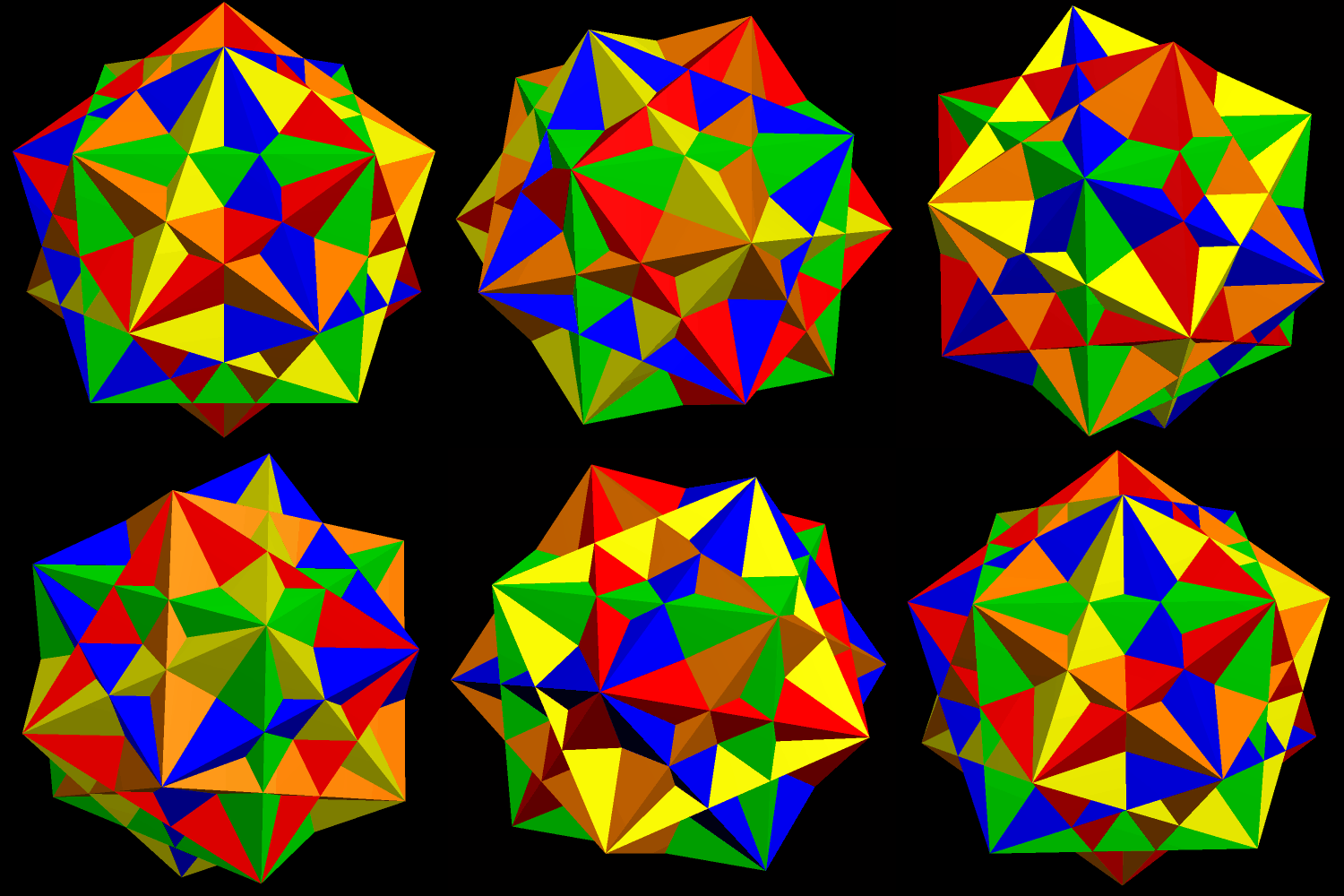
Various Views of Three Different Polyhedral Compounds: Those of (1) Five Cuboctahedra, (2) Five of Its Dual, the Rhombic Dodecahedron, and (3) Ten Components — Five Each, of Both Polyhedra.

Polyhedral compounds differ in the amount of effort needed to understand their internal structure, as well as the way the compounds’ components are assembled, relative to each other. This compound, the compound of five cuboctahedra, and those related to it, offer challenges not offered by all polyhedral compounds, especially those which are well-known.
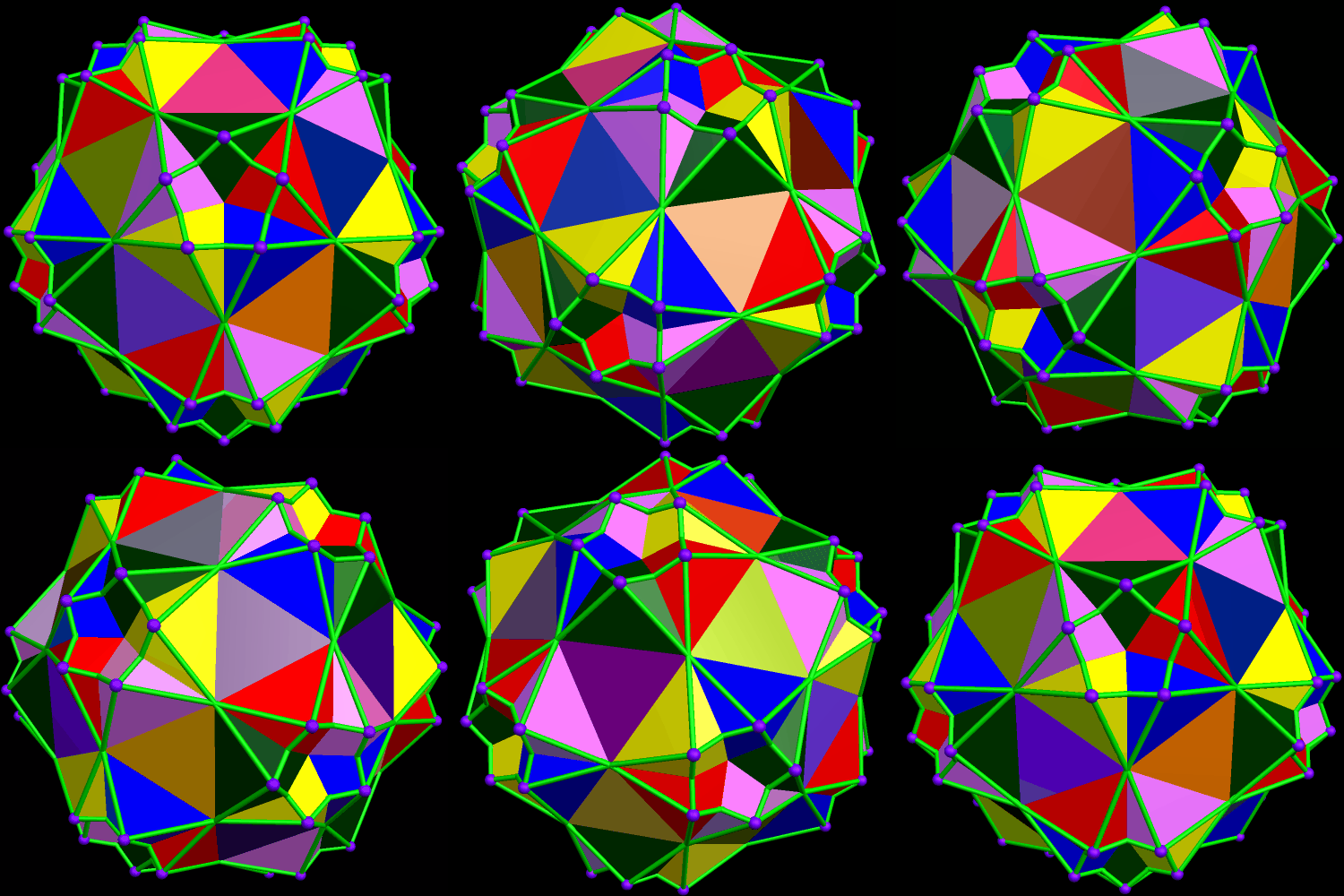
COBOCTA 5 COLORED BY COMPONENT

The image above (made with Stella 4d, as are others in this post — software available here) is colored in the traditional style for compounds: each of the five cuboctahedra is assigned a color of its own. There’s a problem with this, however, and it is related to the triangular faces, due to the fact that these faces appear in coplanar pairs, each from a different component of the compound.
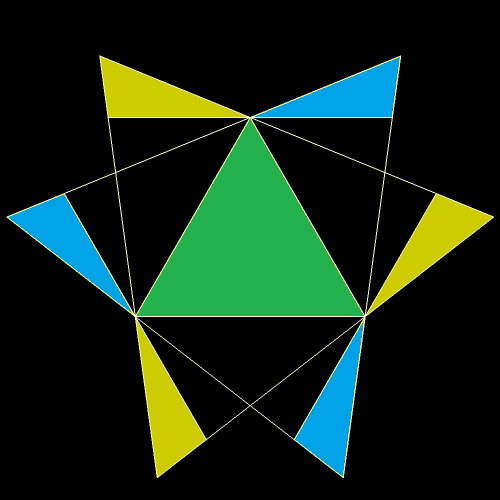
COBOCTA 5 COLORED TRIANGLE Face

The yellow regions above are from a triangular face of the yellow component, while the blue regions are from a blue triangular face. The equilateral triangle in the center, being part of both the yellow and blue components, must be assigned a “compromise color” — in this case, green. The necessity of such compromise-colors can make understanding the compound by examination of an image more difficult than it with with, say, the compound of five cubes (not shown, but you can see it here, if you wish). Therefore, I decided to look at this another way: coloring each face of the five-cuboctahedra compound by face type, instead of by component.
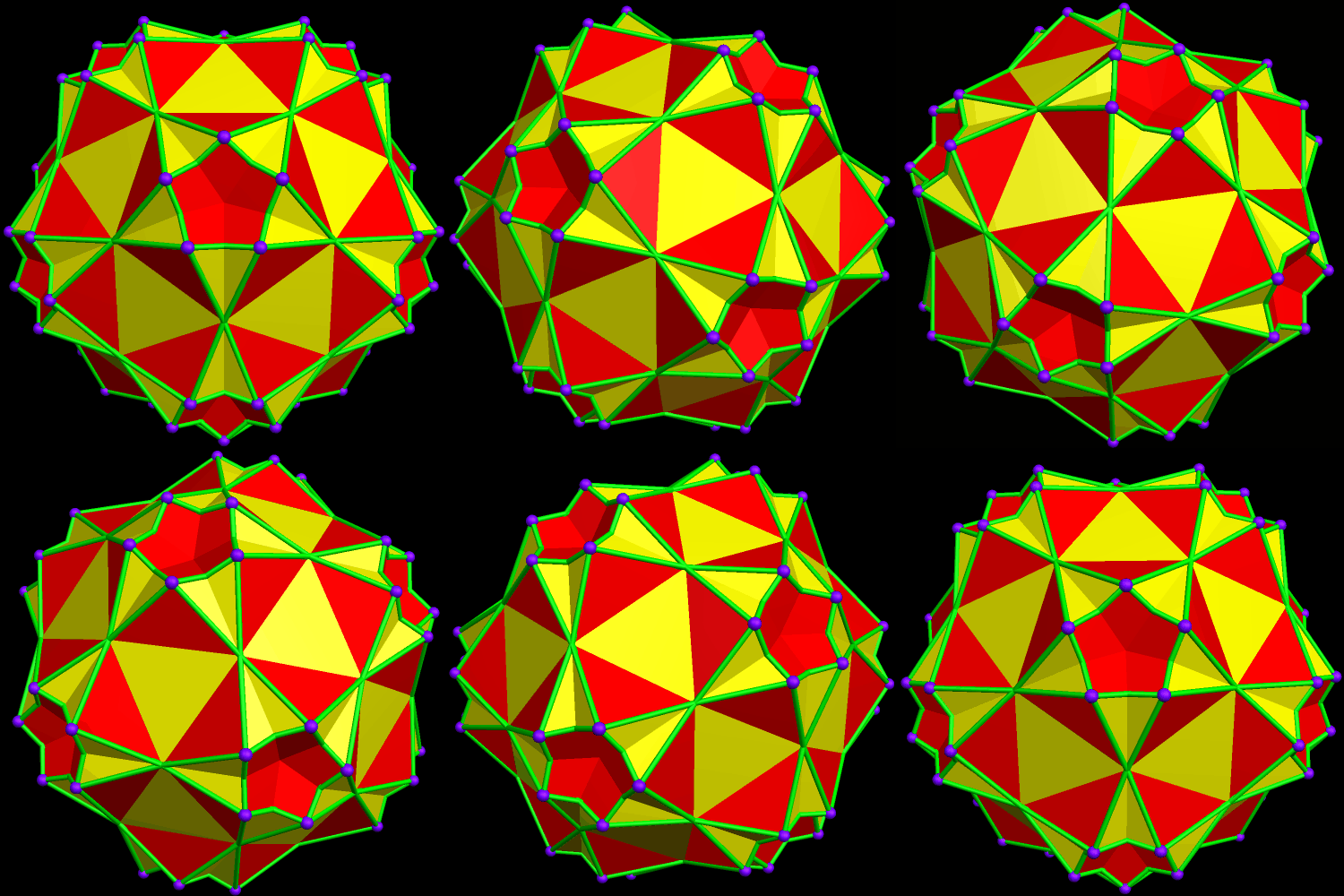
COBOCTA 5 COLORED BY FACE TYPE

Another helpful view may be created by simply hiding all the faces, revealing internal structure which was previously obscured.

COBOCTA 5 HOLLOW

Since the dual of the cuboctahedron is the rhombic dodecahedron, the dual of the compound above is the compound of five rhombic dodecahedra, shown, first, colored by giving each component a different color.

RD 5 colored by component

A problem with this view is that most of what’s “going on” (in the way the compound is assembled) cannot be seen — it’s hidden inside the figure. An option which helped above (with the five-cuboctahedra compound), coloring by face type, is not nearly as helpful here:

RD 5 colored by face type

Why wasn’t it helpful? Simple: all sixty faces are of the same type. It can be made more attractive by putting Stella 4d into “rainbow color” mode, but I cannot claim that helps with comprehension of the compound.
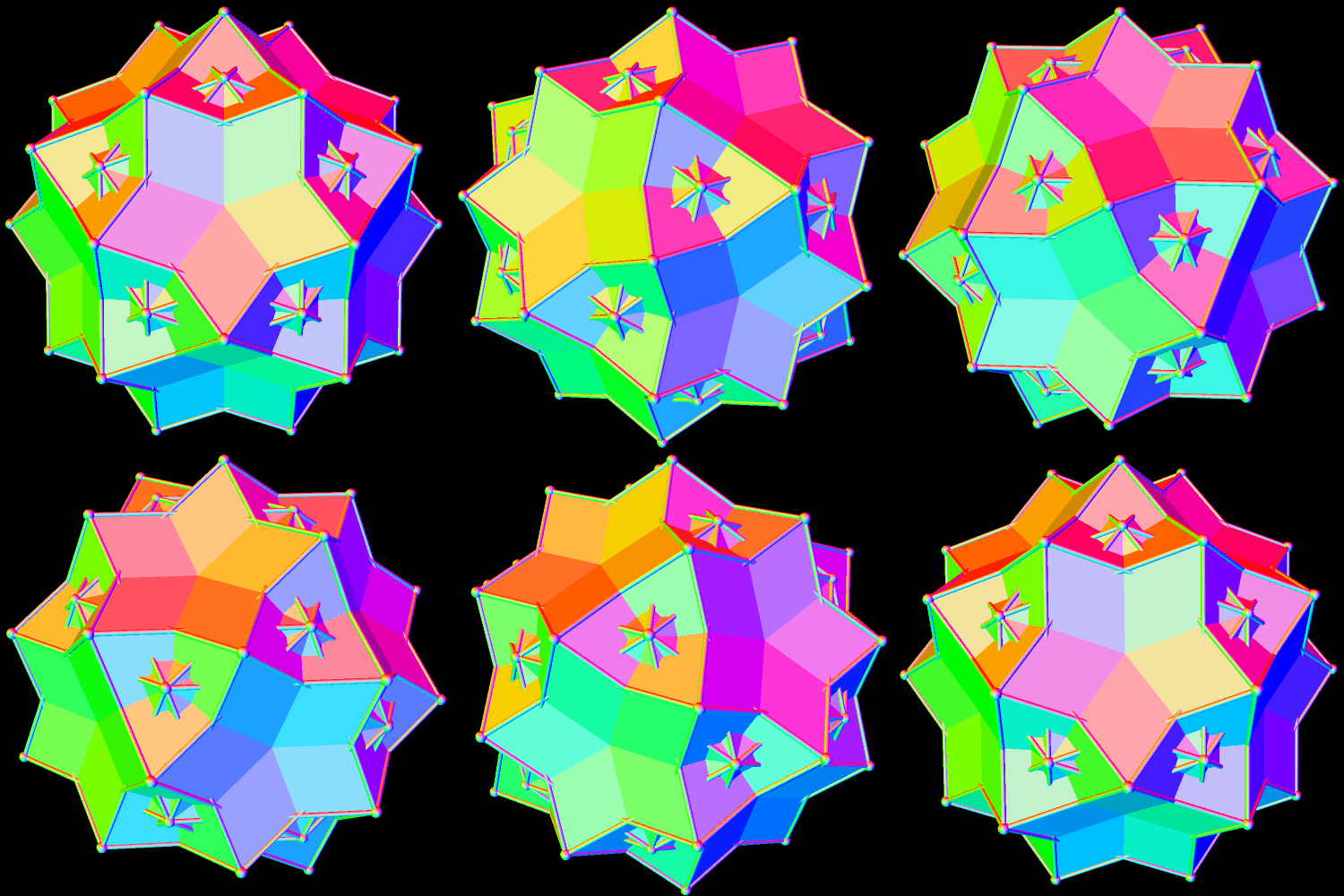
RD 5 colored rainbow

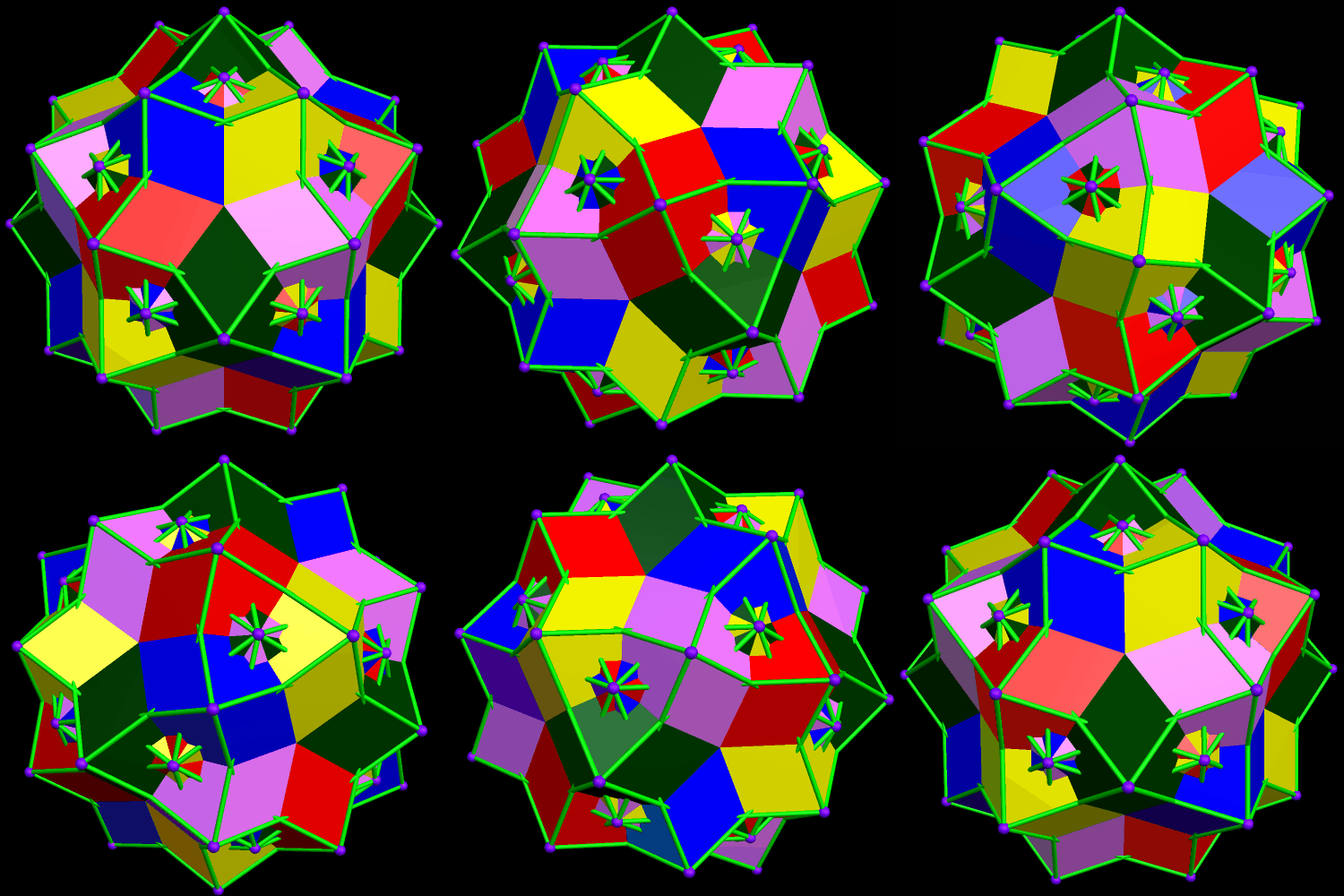
With this compound, what’s really needed is a “ball-and-stick” model, with the faces hidden to reveal the compound’s inner structure.
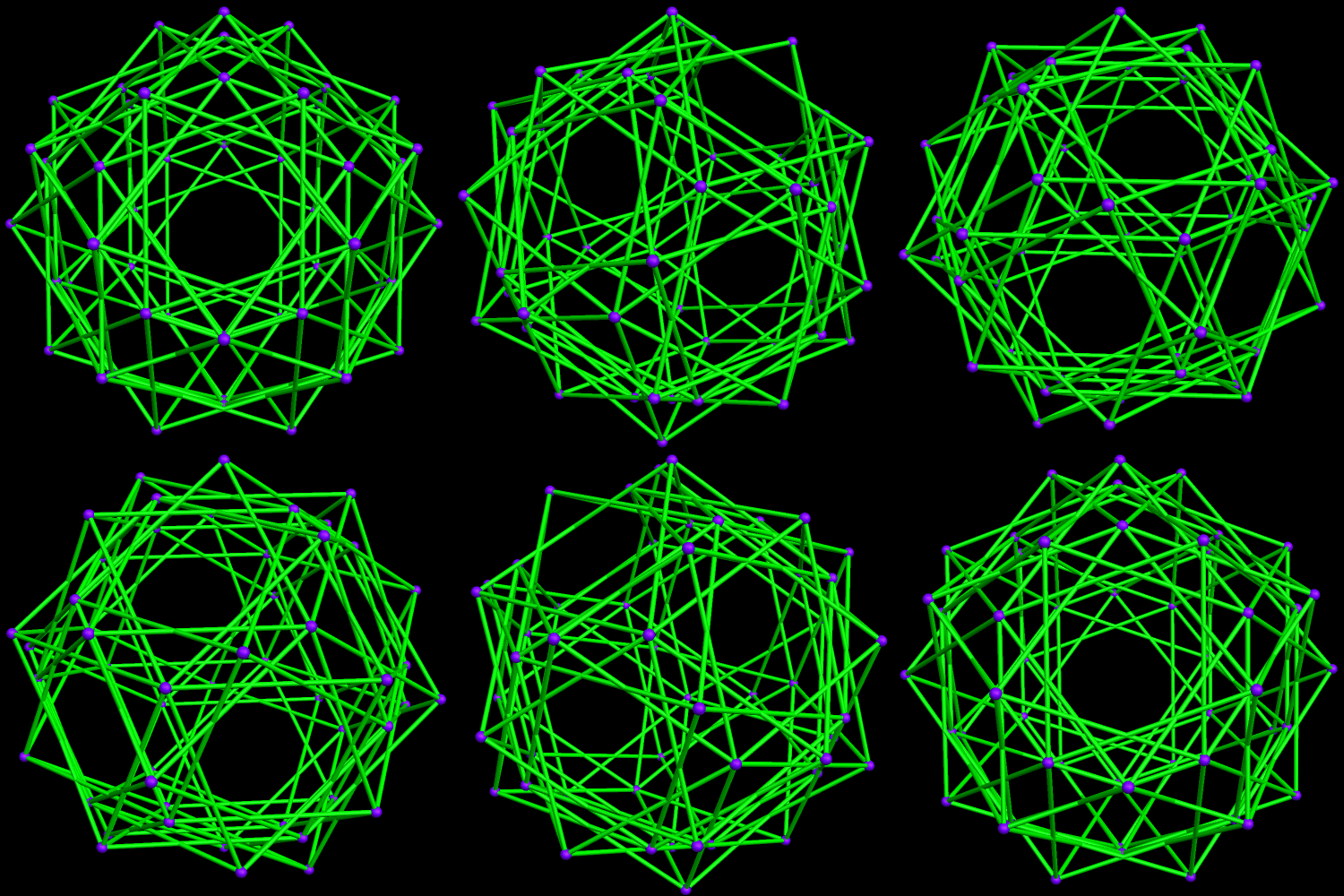
RD 5 colored hollow

Since the two five-part compounds above are duals, they can also be combined to form a ten-part compound: that of five cuboctahedra and five rhombic dodecahedra. In the first image below, each of the ten components is assigned its own color.
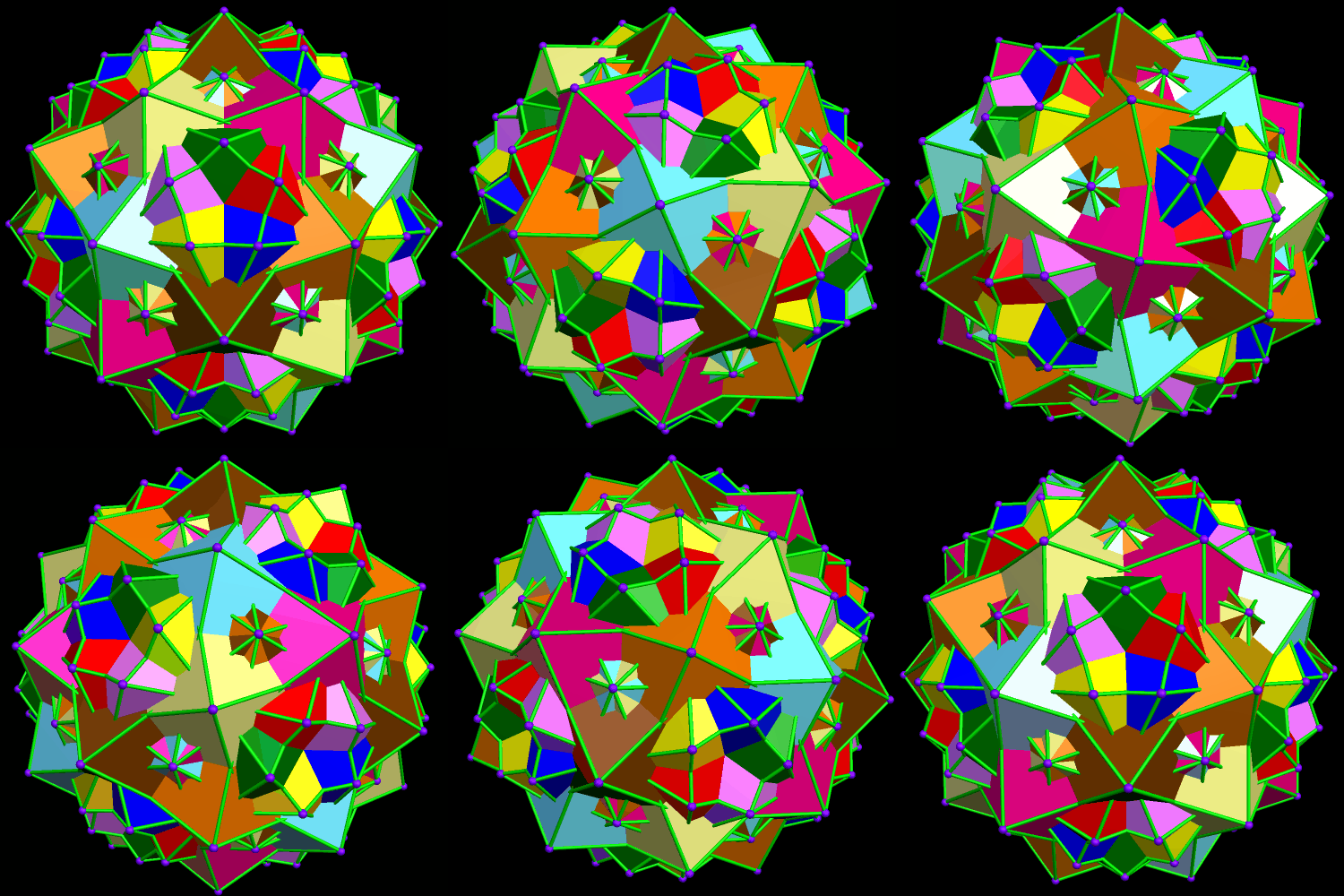
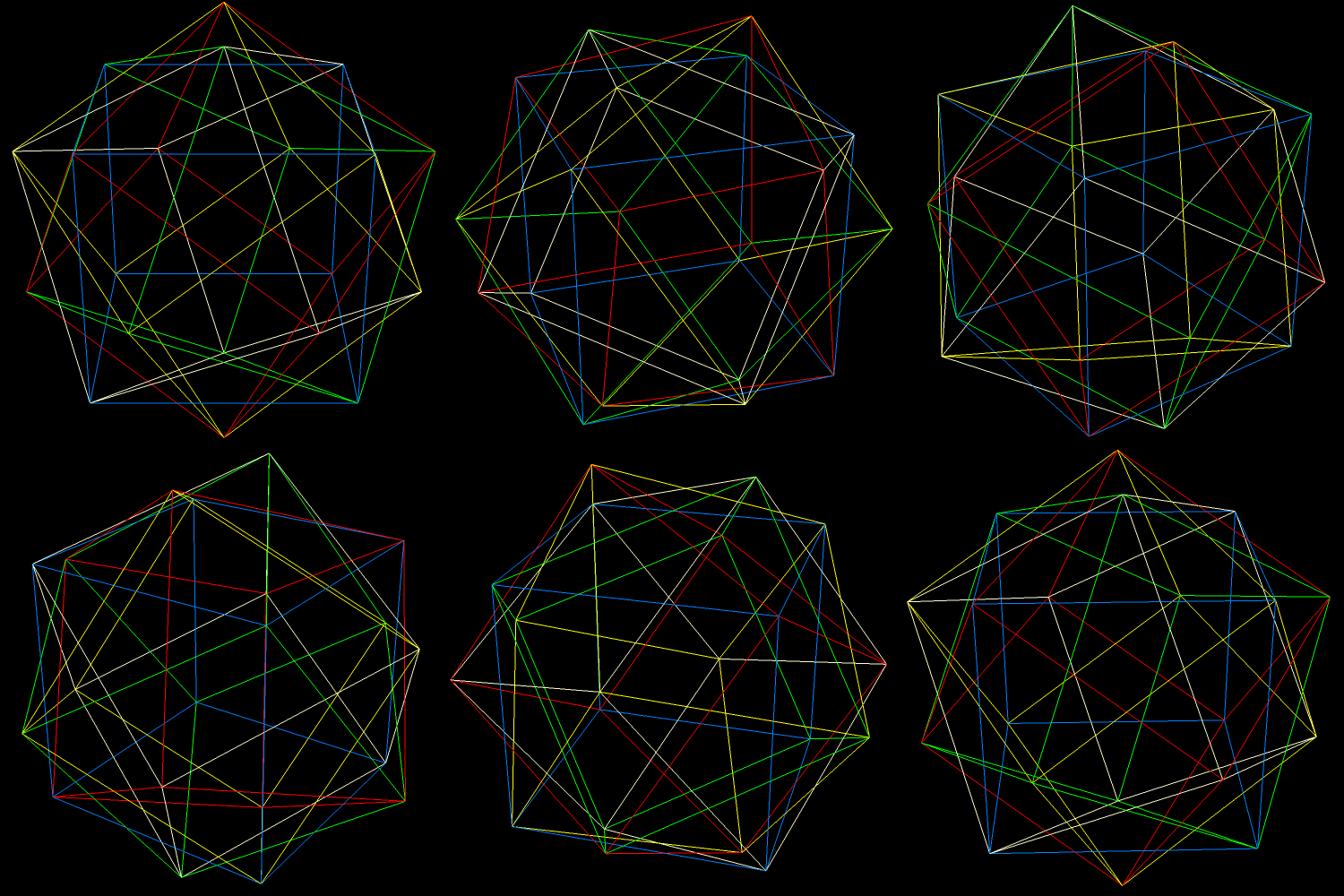
Compound of 5 Cuboctahedra and dual colored by component

In this ten-part compound, the coloring-problem caused in the first image in this post, coplanar and overlapping triangles of different colors, vanishes, for those regions of overlap are hidden in the ten-part compound’s interior. This is one reason why this coloring-scheme is the one I find the most helpful, for this ten-part compound (unlike the two five-part compounds above). However, so that readers may make this choice for themselves, two other versions are shown below, starting with coloring by face type.

Compound of 5 Cuboctahedra and dual colored by face typet

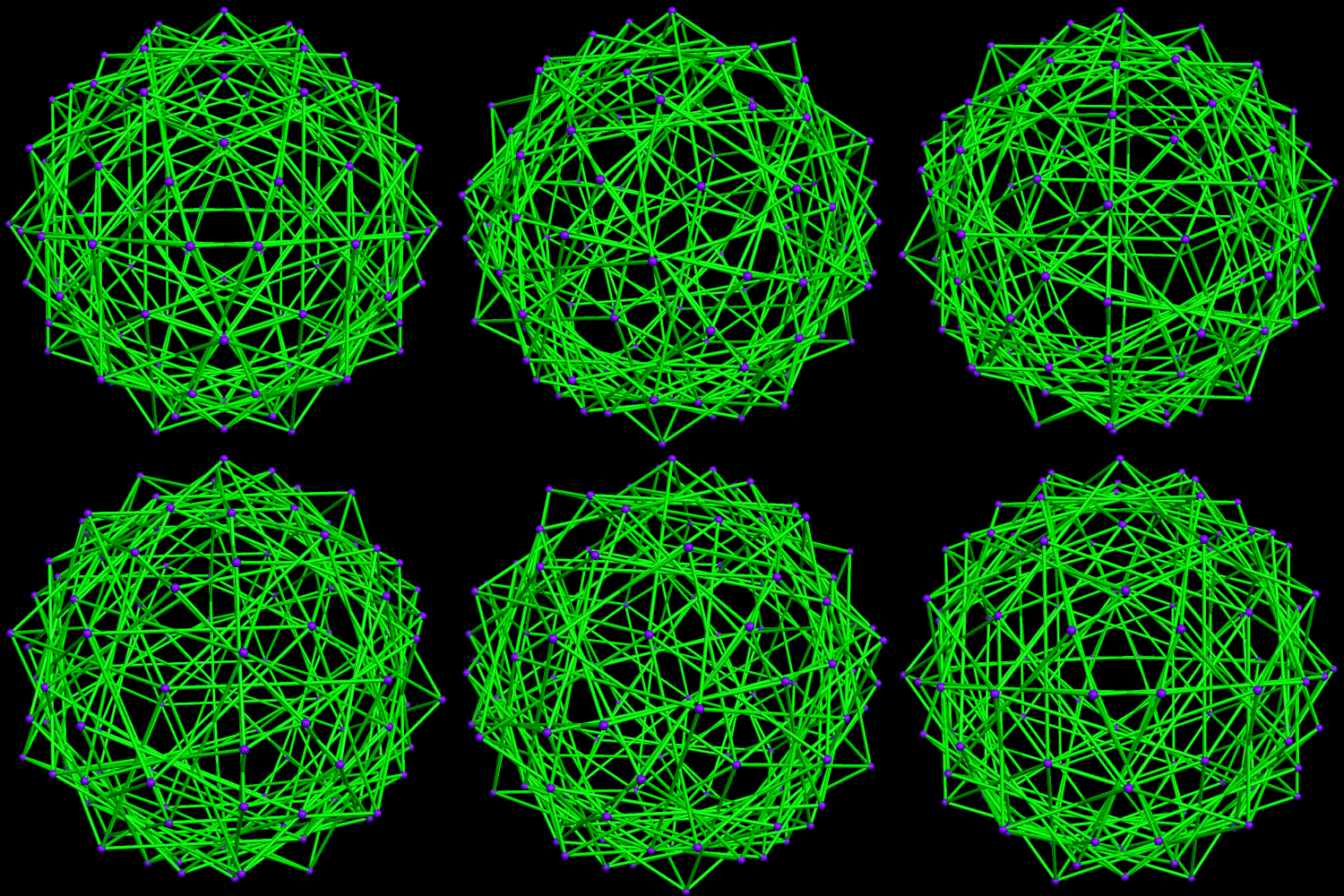
Finally, the hollow version of this ten-part compound. This is only a personal opinion, but I do not find this image quite as helpful as was the case with the five-part compounds described above.

Compound of 5 Cuboctahedra and dual colored rainbow

Which of these images do you find most illuminating? As always, comments are welcome.

Flying Kites into the Snub Dodecahedron, a Dozen at a Time, Using Tetrahedral Stellation

I’ve been shown, by the program’s creator, a function of Stella 4d which was previously unknown to me, and I’ve been having fun playing around with it. It works like this: you start with a polyhedron with, say, icosidodecahedral symmetry, set the program to view it as a figure with only tetrahedral symmetry (that’s the part which is new to me), and then stellate the polyhedron repeatedly. (Note: you can try a free trial download of this program here.) Several recent posts here have featured polyhedra created using this method. For this one, I started with the snub dodecahedron, one of two Archimedean solids which is chiral.

Snub Dodeca

Using typical stellation (as opposed to this new variety), stellating the snub dodecahedron once turns all of the yellow triangles in the figure above into kites, covering each of the red triangles in the process. With “tetrahedral stellation,” though, this can be done in stages, producing a greater variety of snub-dodecahedron variants which feature kites. As it turns out, the kites appear twelve at a time, in four sets of three, with positions corresponding to the vertices (or the faces) of a tetrahedron. Here’s the first one, featuring one dozen kites.

Snub Dodeca variant with kites

Having done this once (and also changing the colors, just for fun), I did it again, resulting in a snub-dodecahedron-variant featuring two dozen kites. At this level, the positions of the kite-triads correspond to those of the vertices of a cube.
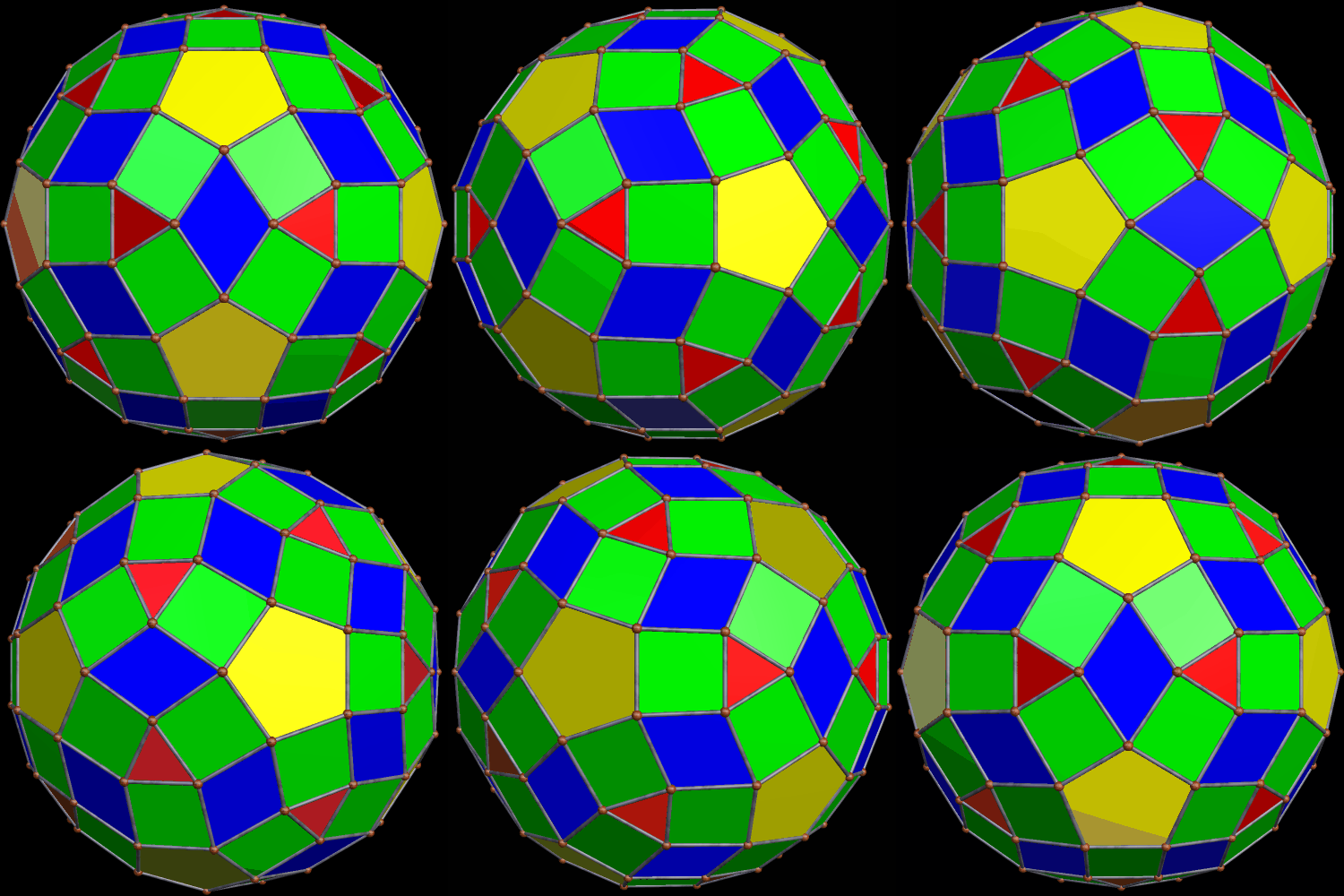
Snub Dodeca variant with kites 1

You probably know what’s coming next: adding another dozen kites, for a total of 36, in twelve sets of three kites each. At this point, it is the remaining, non-stellated four-triangle panels, not the kite triads, which have positions corresponding to those of the vertices of a cube (or the faces of an octahedron, if you prefer).

Snub Dodeca variant with kites 2

Incoming next: another dozen kites, for a total of 48 kites, or 16 kite-triads. The four remaining non-stellated panels of four triangles each are now arranged tetrahedrally, just as the kite-triads were, when the first dozen kites were added.

Snub Dodeca variant with kites 3

With one more iteration of this process, no triangles remain, for all have been replaced by kites — sixty (five dozen) in all. This is also the first “normal” stellation of the snub dodecahedron, as mentioned near the beginning of this post.

Snub Dodeca variant with kites 4

From beginning to end, these polyhedra never lost their chirality, nor had it reversed.