“The Whole World’s Wrong, and You’re Right!”

081007hoffman

I can’t think of a better response, Abbie.

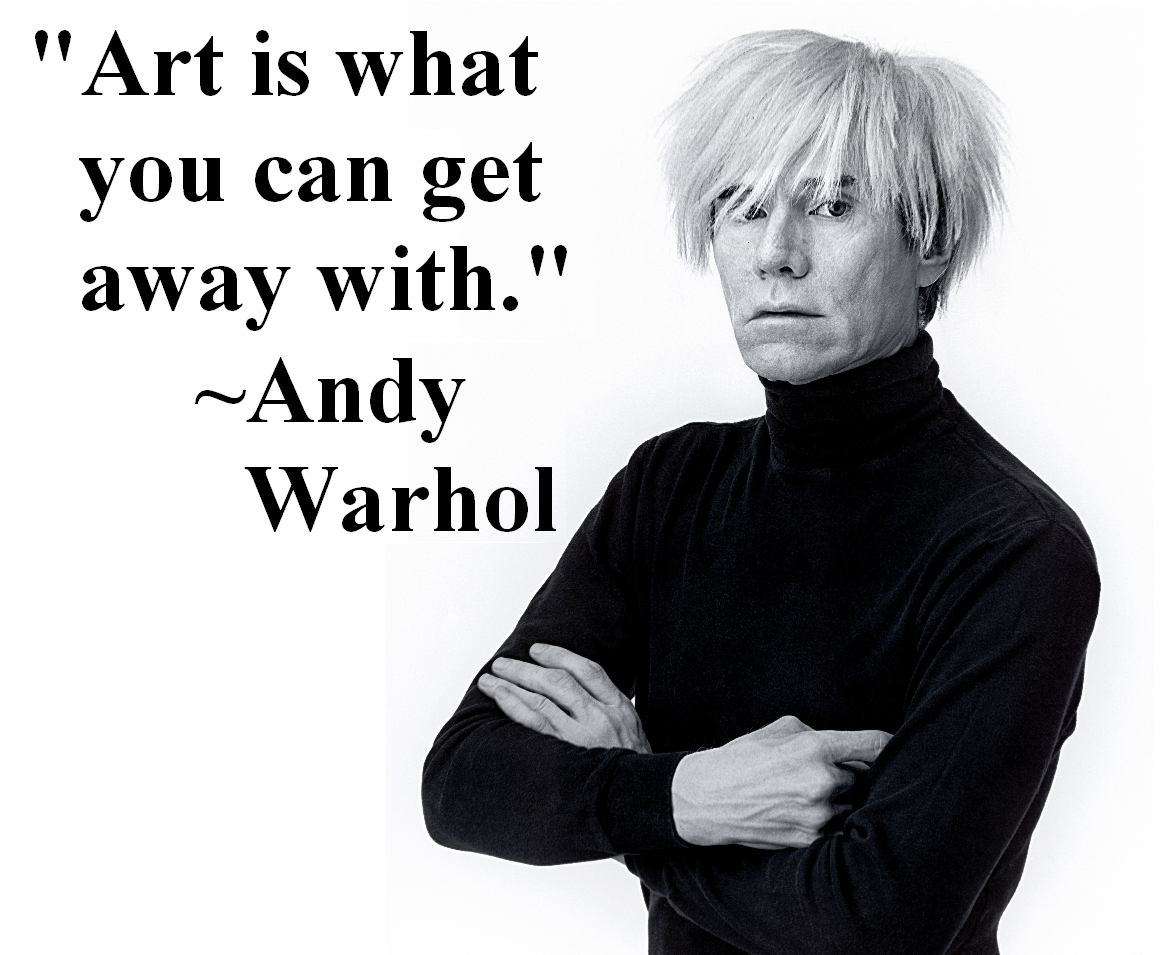
What Is Art? Here’s Andy Warhol’s Answer.

Warhol

Until finding this quote, I had no idea Andy Warhol was an economist.

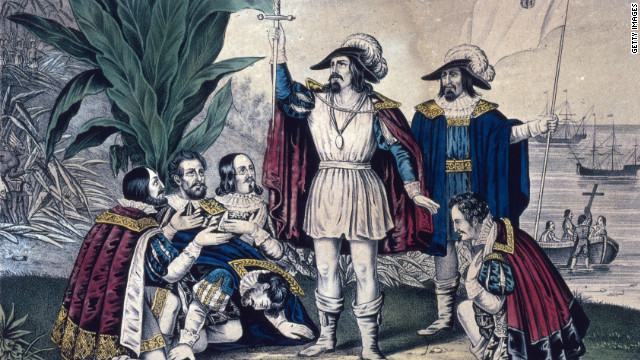
A Historically-Accurate (But Not Recommended) Way to Observe Columbus Day

130205155638-christopher-columbus-story-top

Today is Columbus Day in the United States. While I do not recommend actually doing this, the following would be a historically-accurate way to observe this day.

  1. Break into the house where a family of your neighbors live.
  2. Announce to this family that you live there now.
  3. Kick the entire family outside, into the cold.
  4. If you notice them shivering, make them feel better by sharing your religious beliefs with them.
  5. If #4 does not work, use swords to put your former neighbors out of their misery.
  6. If step #5 seems a bit too excessive, use this option instead, based on the actions of those who followed Columbus:  “help” your shivering former neighbors keep warm . . . by throwing some smallpox-infested blankets to them.

Obviously, regarding Christopher Columbus:  I’m not a fan. I therefore call upon the United States Congress to remove Columbus Day from our list of official national holidays.

[Image credit:  see http://www.cnn.com/2014/10/10/opinion/perry-columbus-day-what-to-tell-your-kid/ — this is where I found the image above.]

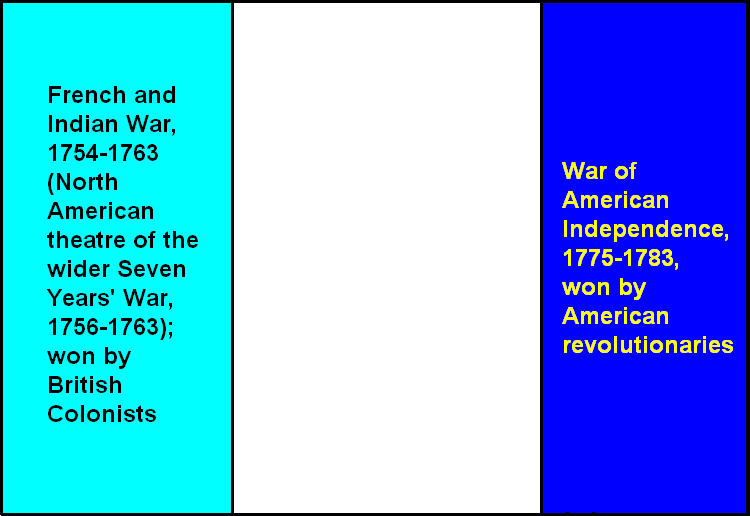
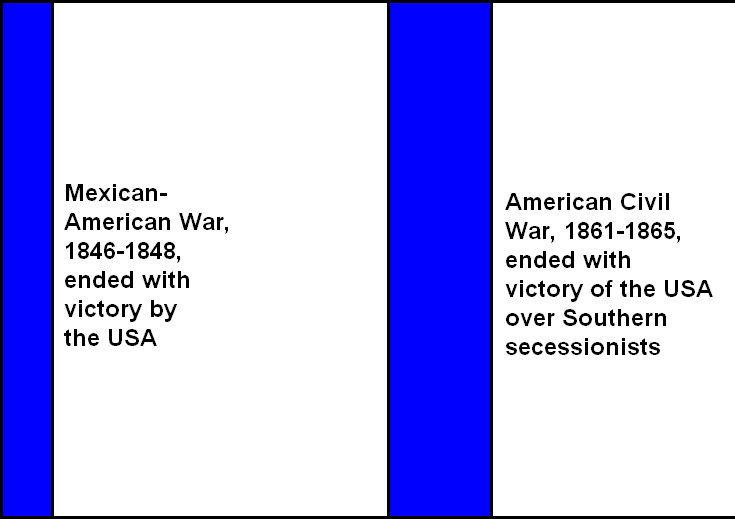
A Timeline of the Major Wars of the United States of America, in Our Brief History

Because it was, in some ways, a precursor to the American Revolutionary War, this timeline begins with the pre-American-independence French and Indian War. American independence was formally declared during the Revolutionary War, in 1776.

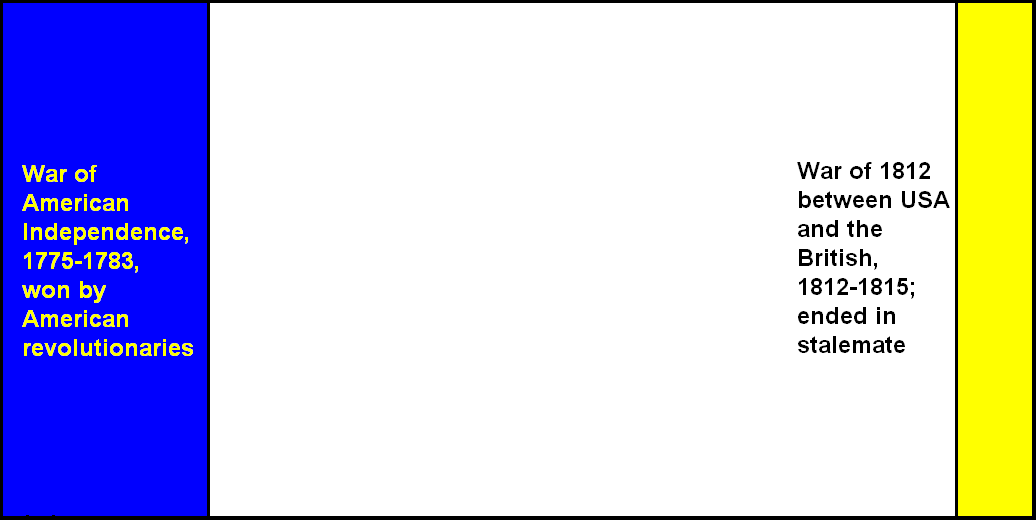
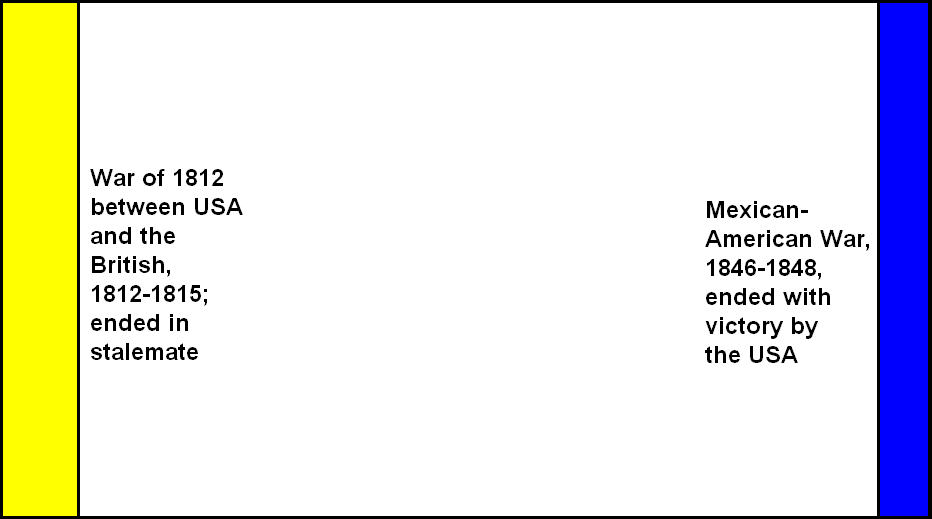
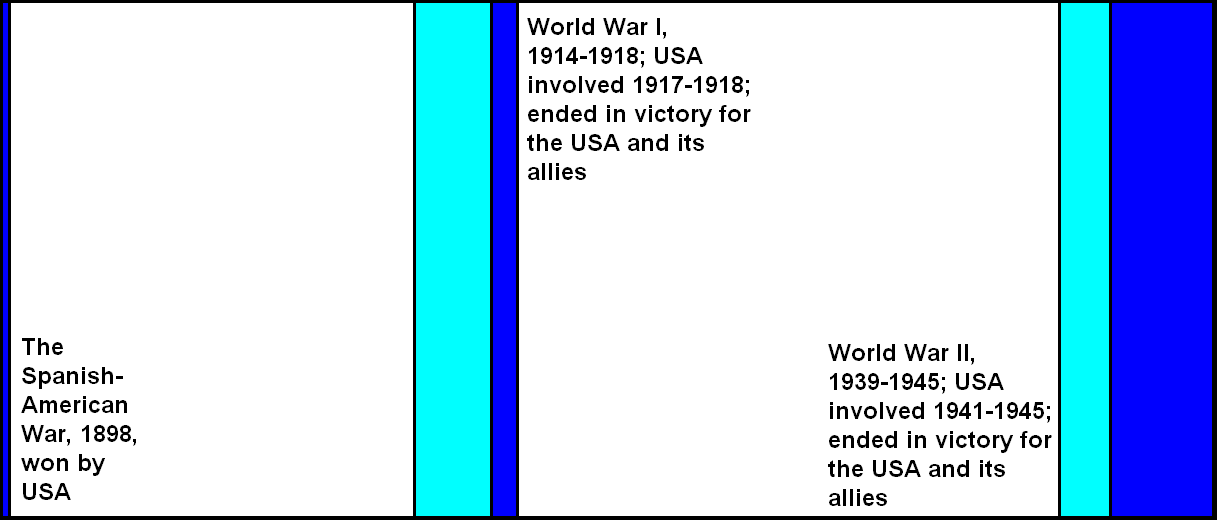
war1Light blue areas are for pre-American involvement in wars which ultimately ended in some form of victory for the USA, with dark blue areas representing American involvement in wars that ended in a victory for the side containing the United States, alone or with allies.

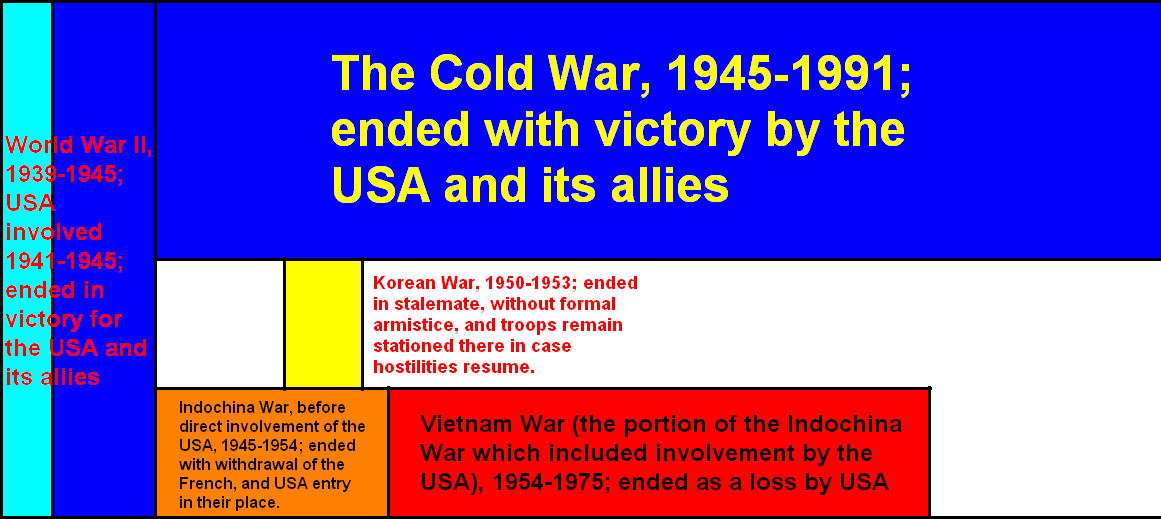
Each new part of this timeline contains the end of the previous one, and all wartimes within a single portion of this timeline are shown to scale. The white areas represent periods of peacetime, and are also shown to scale. Yellow wars are those that ended in stalemates, or conditions that could simply be called a tie.

war2war3war4war5

war6Beginning in 1945, things get complicated, with an ideological war (the Cold War) occasionally turning “hot,” as it did in Korea and Vietnam. A similar “it’s complicated” situation appears later, during the ongoing War on Terror. Also, the Vietnam War makes two new colors needed:  orange, for pre-USA-involvement in wars that ultimately lead to a defeat for the USA, and red, for the period leading up to a loss for the USA which actually involved American personnel.

war7

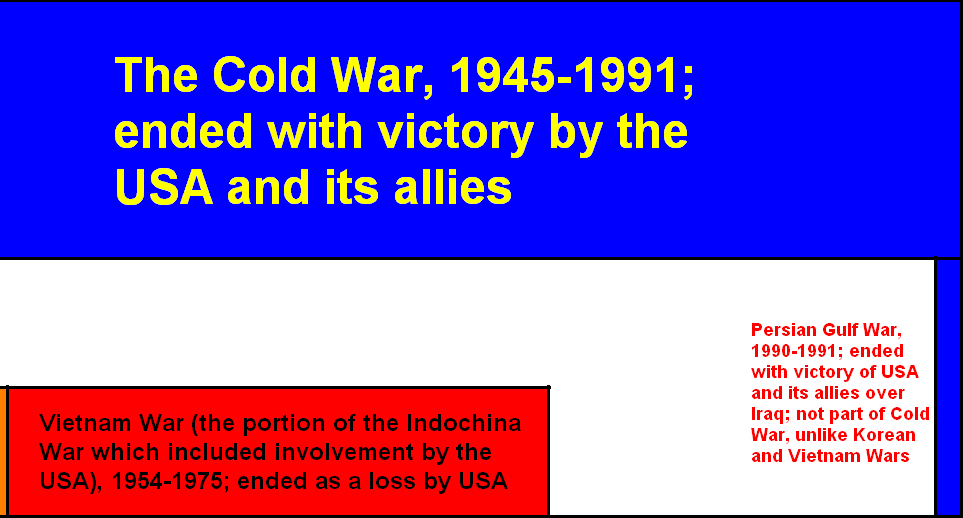
When the Soviet Union fell in 1991, ending the Cold War, some actually wrote of “the end of history,” as if the world had suddenly became uncomplicated. Subsequent events proved this idea to be premature.

war8

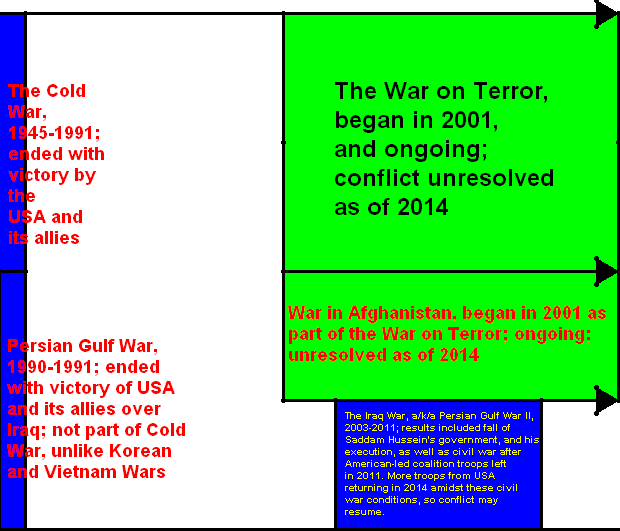
Since the War on Terror, as well as its component in Afghanistan, is unresolved as of now (2014), a new color, green, is used here for ongoing conflicts.

war9

Finally, it should be pointed out that the administration of George W. Bush tried to sell, to the American public and others, the idea that the 2003-2011 Iraq War was part of the War on Terror. Many Americans, however, myself included, do not accept this rationale, for no connection has been established between Iraq, on the one hand, and the 11 September 2001 terrorist attacks against multiple targets in the USA, on the other.

How Richard Feynman Saved Eastern Tennessee from Getting Nuked

feynman

I’m reading the book shown above for the second time, and am noticing many things that escaped my attention the first time through. The most shocking of these items, so far, is finding out that history’s first nuclear explosion almost occurred by accident, in Oak Ridge, Tennessee, during World War II. One person prevented this disaster, and that person was Richard Feynman, my favorite scientist in any field. If you’d like to read Feynman’s account of this, in his own words, it’s in the chapter “Los Alamos from Below,” which starts on page 107.

Feynman, a physicist, was one of many civilians involved in the Manhattan Project, doing most of his work in New Mexico. At one point, though, he obtained permission to visit Oak Ridge, in order to try to solve problems which existed there. These problems were caused by the American military’s obsession with secrecy, which was caused, in turn, by the fact that it was known, correctly, that at least one spy for the Nazis was among the people working on the Manhattan Project. The military’s “solution” to this problem was to try to keep each group of civilians working for them in the dark about what the other groups of civilians were doing. Most of them had no idea that they were working to develop a bomb, let alone an atomic bomb. In Tennessee, they thought they were simply working on developing a way to separate uranium isotopes, but did not know the underlying purpose for this research.

The military men in charge knew (because the physicists in New Mexico figured it out, and told them) a little bit about the concept of critical mass. In short, “critical mass” means that if you get too much uranium-235 in one place, a runaway chain-reaction occurs, and causes a nuclear explosion. The military “brass” had relayed this information to the civilian teams working in Tennessee, by simply telling them to keep the amount of U-235 in one place below a certain, specific amount. However, they lacked enough knowledge of physics to include all the necessary details, and they deliberately withheld the purpose for their directive. Feynman, by contrast, did not share this dangerous ignorance, nor was he a fan of secrecy — and, as is well known, the concept of respecting “authority” was utterly meaningless to him.

While in Tennessee, Feynman saw a large amount of “green water,” which was actually an aqueous solution of uranium nitrate. What he knew, but those in Tennessee did not, is that water slows down neutrons, and slow neutrons are the key to setting off a chain reaction. For this reason, the critical mass for uranium-235 in water is much less than the critical mass of dry U-235, and the “green water” Feynman saw contained enough U-235 to put it dangerously close to this lower threshhold. In response to this, Feynman told anyone who would listen that they were risking blowing up everything around them.

It wasn’t easy for Feynman to get people to believe this warning, but he persisted, until he found someone in authority — a military officer, of course — who, although he didn’t understand the physics involved, was smart enough to realize that Feynman did understand the physics. He was also smart enough to carefully listen to Feynman, and decided to heed his warning. The safety protocols were modified, as were procedures regarding sharing of information. With more openness, not only was a disaster in Tennessee avoided, but progress toward developing an atomic bomb was accelerated. It turns out that people are better at solving problems . . . when they know the purpose of those problems.

Had this not happened, not only would Eastern Tennessee likely have suffered the world’s first nuclear explosion, but overall progress on the Manhattan Project would have remained slow — and the Nazis, therefore, might have developed a controlled nuclear bomb before the Americans, making it more likely that the Axis Powers would have won the war. Richard Feynman, therefore, dramatically affected the course of history — by deliberately putting his disdain for authority to good use. 

save lives

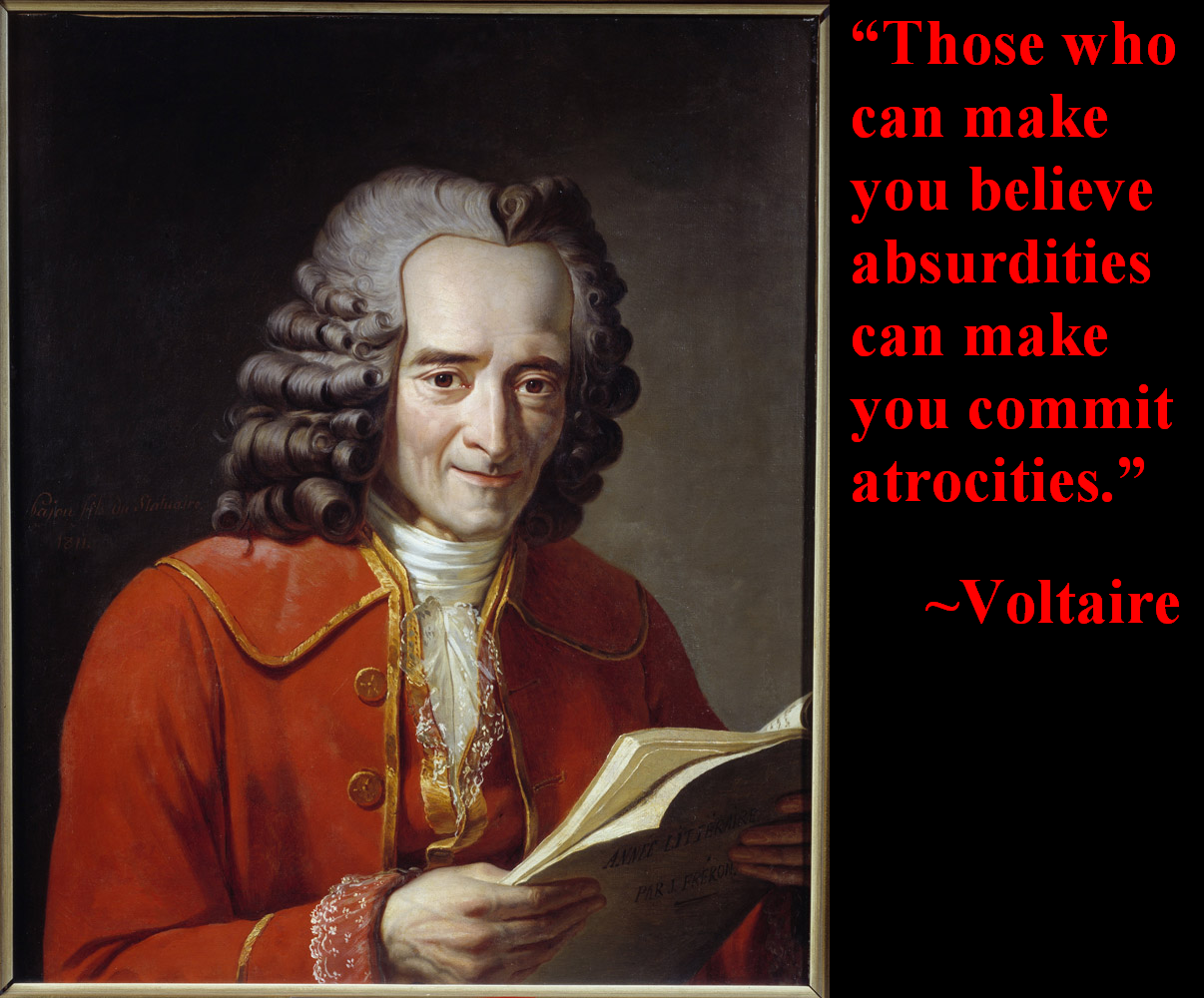
A Quote from Voltaire, on Absurdities and Atrocities

Voltaire-lisant

Examples abound. Here are two:

Absurdity #1:  Pure human races exist.

A resulting atrocity:  the Holocaust (~20 million people, including ~6 million Jews, killed by the Nazis in the 1930s and 1940s).

Absurdity #2:  Acts which are both suicidal and homicidal can be wonderful things, and can earn a person an eternal reward in paradise after death.

A resulting atrocity:  the destruction of the World Trade Center, and attacks on other targets, on September 11, 2001, which killed over three thousand people, including the hijackers themselves.

Please note that this list is far from complete. A complete list would fill several very large books. Beware of absurdities in your thinking, for they can actually be fatal.

My Four Favorite Authors

favorite authors

Whenever people ask me to name my favorite author, I always have to ask them to be more specific, for I cannot bring myself to choose just one. If gender is specified, and either fiction or non-fiction is, as well, then I am able to choose a favorite author in each of the resulting four categories.

My two favorite writers of fiction, Flannery O’Connor and Robert A. Heinlein, are shown at the top. Flannery O’Connor was often described as a Southern gothic writer with an excellent ability to describe the grotesque, mostly with short stories, while Robert Heinlein was often called the greatest of all writers in the genre of science fiction. I wish it were possible for them to write even more, but, unlike the two authors described next, they are no longer living.

Shown below O’Connor and Heinlein are my two favorite authors of non-fiction, Jung Chang and Sam Harris. Jung Chang writes about Chinese history, eloquently, from the perspective of someone who actually was a Red Guard during the utterly insane period known as the Chinese Cultural Revolution, as a teenager, but later managed to get out of the People’s Republic — and, crucially, she was also able to mentally escape the powerful cult of personality which surrounded that nation’s leader for over two decades, Chairman Mao Zedong. She has gone on to become one of Mao’s harshest critics.

Sam Harris, a neuroscientist, began his career as an author by writing books criticizing religion, in the wake of the 9/11 terrorist attacks of 2001. He has since moved on to other topics (and writing better books than his earlier work, in my opinion), such as the corrosive effects of lying, the question of the existence or non-existence of free will, and a scientific approach to dealing with issues involving good and evil. He also has a new book coming out in September.

Other than their amazing skill at the difficult craft of writing, these four have little in common . . . but who wants to read the same sort of books all the time? If you aren’t familiar with their work already, I recommend giving each of them a read, and seeing what you think of their books. For one of them, Sam Harris, you can even give some of his writing a try for free, for he maintains a blog you can check out for yourself, at http://www.samharris.org.

For the other three, it isn’t quite that easy to get started, but their books may still be found in any decent public library, or, of course, websites such as Amazon. For O’Connor, the best place to start is with her collected short stories (Amazon link: http://www.amazon.com/The-Complete-Stories-Flannery-OConnor/dp/0374515360/ref=sr_1_2?ie=UTF8&qid=1405366654&sr=8-2&keywords=collected+short+stories+of+flannery+o%27connor). For Jung Chang, I recommend starting with the story of what happened, against the tumultuous backdrop of Chinese history, to her grandmother, mother, and finally herself, in Wild Swans:  Three Daughters of China (see http://www.amazon.com/Wild-Swans-Three-Daughters-China/dp/0743246985/ref=sr_1_1?s=books&ie=UTF8&qid=1405366792&sr=1-1&keywords=wild+swans). Heinlein’s works are numerous, and there are many good starting places to be found. Among the best books with which to start reading Heinlein are Stranger in a Strange Land (his most famous work), Friday, The Moon Is a Harsh Mistress, and Job:  A Comedy of Justice. Amazon’s Robert Heinlein page may be found at http://www.amazon.com/Robert-Heinlein/e/B005GDIOHM/ref=sr_tc_2_0?qid=1405367065&sr=1-2-ent.

Enjoy, and, if you have book recommendations of your own, I invite you to leave them in a comment to this post.

“Antisemitism” has become an inherently confusing word. Here’s how to fix this problem.

symbols

When referring to the Holocaust, it never caused confusion to refer to Nazis as “antisemitic.” German is not a Semitic language, and the non-Semite Nazis were trying to exterminate an ethnoreligious group, the Jews, who are a Semitic people. In that context, the word “antisemitism,” in a European setting, is not difficult to understand. This is also true of antisemitism earlier in European history.

Decades later, and outside of Europe, however, the situation has changed, and the word “antisemitism” is now far less clear in its meaning. The one nation most closely identified with the Jewish people is Israel, and Israel is not in conflict with Germany. Israel is, of course, currently in an active conflict with an organization, Hamas, which has been firing rockets from nearby Gaza across the border, into Israel. In response, Israel has been retaliating, using even greater force than that wielded by Hamas. In this current conflict, there have been numerous deaths of noncombatants, including many children, in Gaza, but no deaths (so far) in Israel. For this reason, some people have raised their voices in criticism of the actions of the Israeli government in the current conflict. Predictably, but not logically, those who are criticizing Israel’s actions are now being accused of antisemitism.

When the word “antisemitic” gets thrown around, in the context of conflicts in the Middle East which involve Israel, it doesn’t help anyone understand anything. The word is actually an impediment to understanding. The reason for this is that “Semite” does not mean what many people think it means. For one thing, most Semites are not Jews.

“Semites” refers to a collection of ethnolinguistic groups — people who speak, or are descended from those who spoke, any of a large collection of languages known as the Semitic languages . . . and one of the Semitic languages is Arabic. Are Jews Semites? Yes, they are, but so are Arabs. The current conflict in the Middle East is a conflict between two different groups of people, both of whom are Semitic. To throw the emotionally-charged word “antisemitic” into the middle of the fray, therefore, makes no sense. It increases confusion, and clarifies nothing. The word also further enflames the emotions of those arguing and fighting, on both sides, in a situation where the exact opposite is needed.

It doesn’t help that many Westerners believe a fallacy related to Arabs, using “Arab” (which refers to an ethnic group) interchangeably with “Muslim,” which is not an ethnic term at all, but one that simply refers to anyone who practices the religion known as Islam. In reality, there are many Arabs who are not Muslims, and there are hundreds of millions of Muslims who are not Arabs. For example, consider the people who live in Iran. The governments of Israel and Iran are often hostile to each other, and Iran has very few Arabs, despite being a nation where an overwhelming majority practice Islam.

When Israel has conflicts with other nations (or organizations, for Hamas is not a nation) in the Middle East, those conflicts are political in nature, with religion playing a strong role as well. Israel is associated with the religion of Judaism (even though much of its Jewish population is only ethnically Jewish, not Jewish in the religious sense of the term), and is often in conflict with others in the Middle East who are associated with the religion called Islam. “Antisemitic,” used as a synonym for anti-Jewish bigotry, is an unfortunate misnomer, but there are alternatives which are better, in the sense that they are more specific, and therefore more clear. There is already a word in common use for fear and hatred of Islam and/or Muslims:  “Islamophobia.”  The corresponding term for fear and hatred of Judaism and/or Jews, including those who are Jewish only in the ethnic sense of the word, is “Judeophobia.” Most of the time, when people use the word “antisemitism,” they actually mean Judeophobia. Since Arabs are, themselves, a subset of the Semites, it would be illogical to refer to a specific person who is both an Arab, and a hater of Jews, as an “antisemitic Arab.”  To describe that person as a “Judeophobic Arab,” on the other hand, makes perfect sense.

Finally, it must be recognized that there are numerous people, within both Judaism and Islam, who do not have within them the blind, furious hatred of the other group that has caused so much death and destruction in the Middle East since the founding of the modern nation of Israel, in the years following World War II. I am referring, of course, to non-Islamophobic Jews, and non-Judeophobic Muslims. One does not often see them featured in the news, especially when conflicts such as the current one are raging, but such people do exist, and their existence should give all people who prefer peace over war hope for the future. May their numbers increase.

Seven Moving Lights in the Sky, the Seven Days of the Week, and Other Significant Sets of Seven

days of week and lights in the sky

Have you ever wondered why the number seven appears in all the places it does? We have seven days in the week. Churches teach about the seven deadly sins, and “seven heavens” is a common phrase. There are seven wonders of the ancient world, and seven of the modern world. The number seven has appeared in many other socially significant ways, in societies all over the world, for millennia.

It is no coincidence, I think, that the ancients were able to see seven lights in the sky which are either visible in daylight, or move against the background of “fixed” stars at night. They ascribed great significance to what went on in the sky, since they viewed “the heavens” as the realm of the gods in which they believed. The evidence for this lives on today, in the names of the seven days of the week, and numerous other sets of seven, all over the world.

It is possible to see the planet Uranus without a telescope, but it is very dim, and you have to know exactly where to look. No one noticed it until after the invention of the telescope. If Uranus were brighter, and had been seen in numerous ancient societies, I have no doubt that we would have eight days in the week, etc., rather than seven.

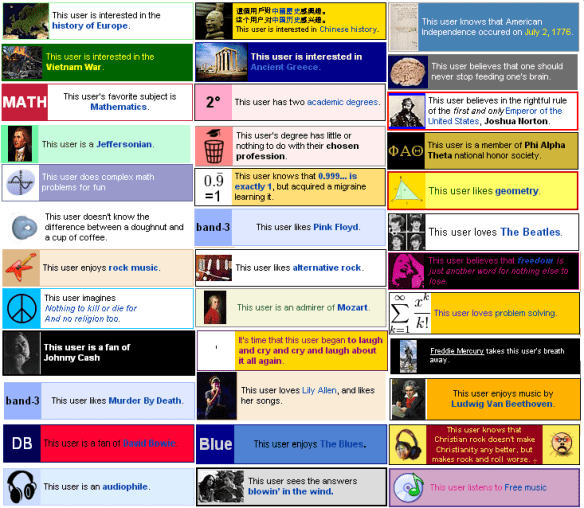
My Wikipedia Userboxen Collection, Part III

Image

My Wikipedia Userboxen Collection, Part III

And, yes, there are even more….