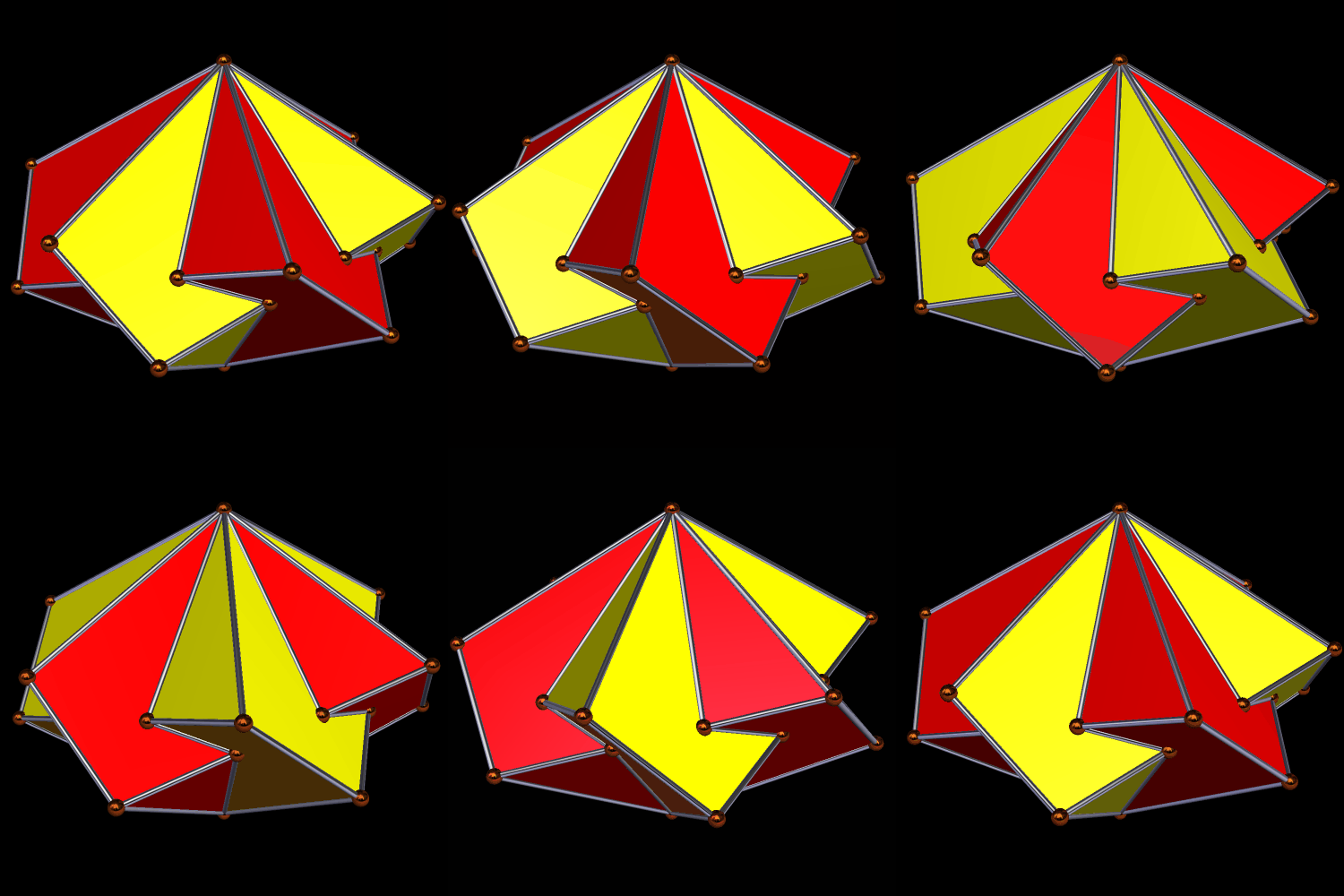
Two Compounds of Skewed Polyhedra, Each with Twelve Total Faces in the Compound

compound with 12 faces total

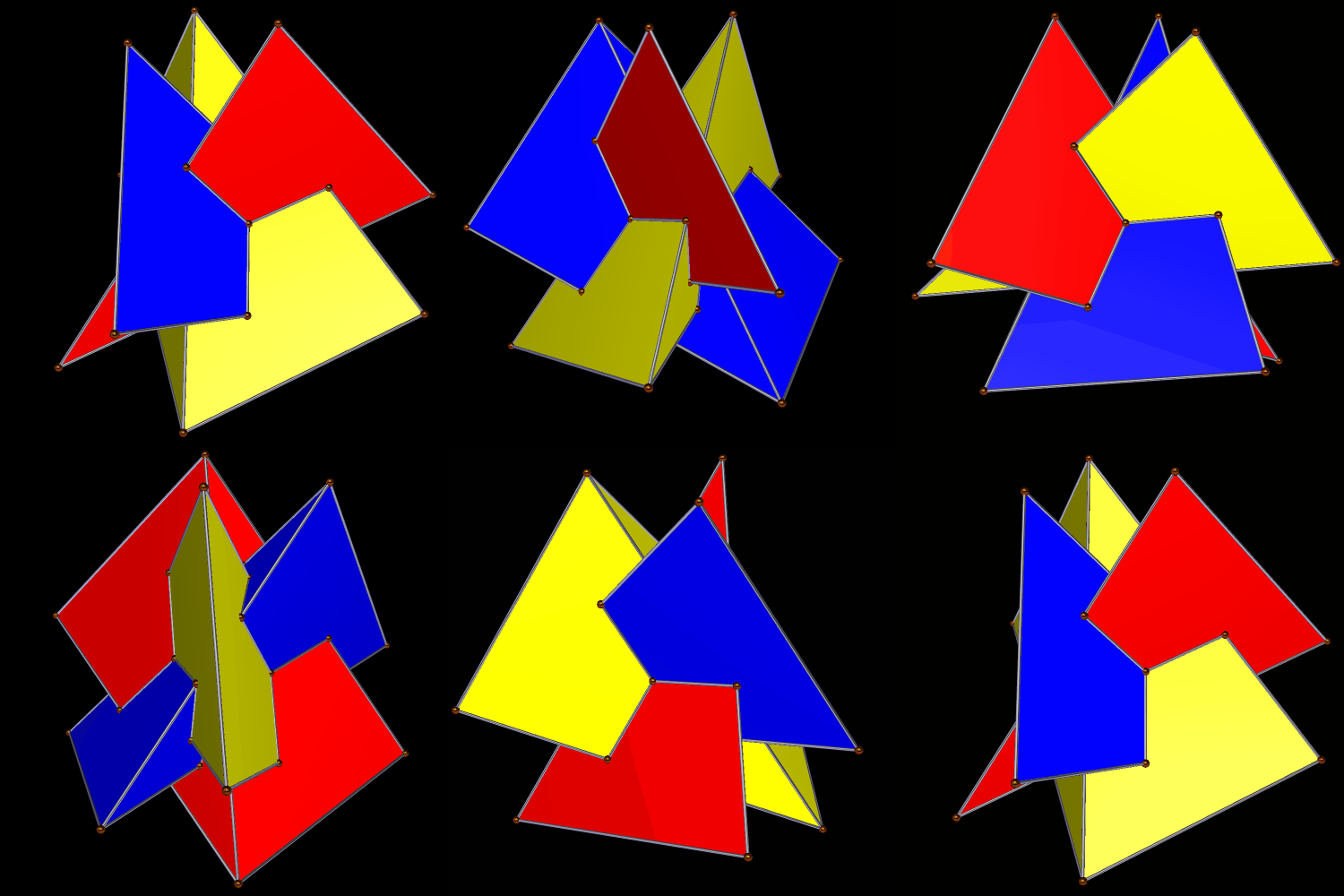
I found both of these with what one could call “random-walk playing” with polyhedral-manipulation software, Stella 4d, available here, with a free trial-download available. In the figure above, both compound components are skewed cubes, while the image below shows a compound of three skewed tetrahedra. Since (2)(6) = (3)(4) = 12, each of these compounds has the same total number of faces, although, of course, the number of faces per component polyhedron varies from one compound to the other.

compound of three skew tetrahedra

You draw two cards, simultaneously, from a 52-card deck. What is the probability that at least one is an ace?

Image

bigslick

For one card, this is easy: the odds are one in thirteen, for there are four aces in 52 cards, and 4/52 = 1/13.

With a second card drawn at the same time, we must consider the 12/13ths of the time that the first card drawn is not an ace. When this happens, 51 cards remain, with four of them aces, so there is an additional  4/51sts of this 12/13ths that must be added to the 1/13th for the first card drawn.

Therefore, the odds of drawing at least one ace, in two cards drawn from a standard deck, are 1/13 + (4/51)(12/13) = (1/13)(51/51) + (4/51)(12/13) = (51 + 48)/[(51)(13)] = 99/663 = 33/221, or 33 out of 221 attempts, which is as far as the fraction will reduce. In decimal form, as a percentage, this happens ~14.93% of the time.

If I made an error above, please let me know in a comment. I do not claim to be infallible.

[Image credit: I found the image above here.]

Three Convex Polyhedra with Tetrahedral Symmetry, Each Featuring Four Regular Enneagons

FOUR ENNEAGONS

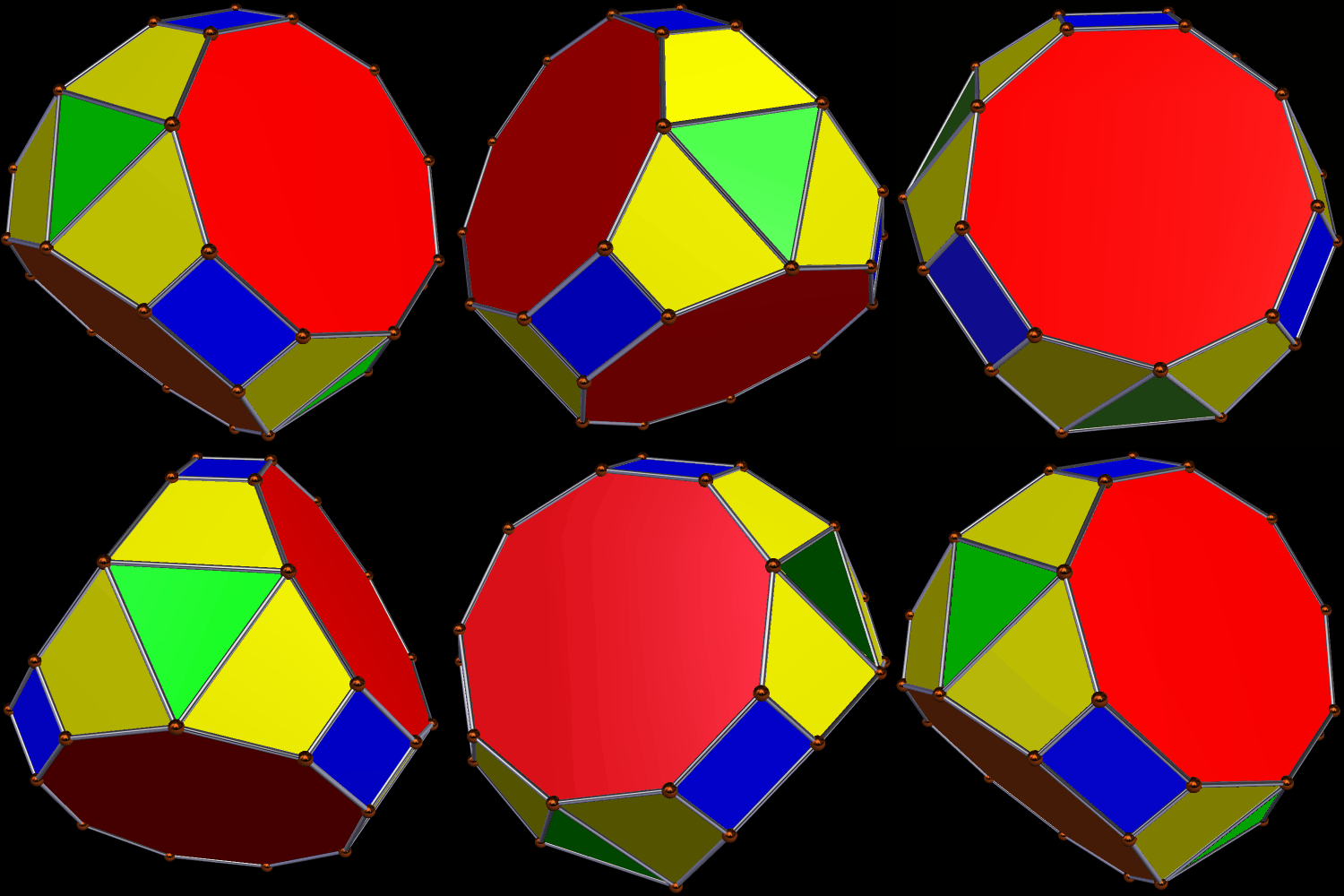
In addition to the four regular enneagons, the polyhedron above also has rhombi and isosceles triangles as faces. The next one, however, adds equilateral triangles, instead, to the four regular enneagons, along with trapezoids and rectangles.

fouR ENNEAGONS AND EQUITS AND RECTS AND TRAPS

Only the last of these three truly deserves to be called a symmetrohedron, in my opinion, for both its hexagons and enneagons are regular. Only the “bowtie trapezoid” pairs are irregular.

four reg enneagons and four reg hexagons and six pairs of bowtie hexagons

All three of these polyhedra were created using software called Stella 4d: Polyhedron Navigator, which I use frequently for the blog-posts here. You can try it for free at this website.

“Math Problems for Fun”: The Source of My Blog’s New Header-Image

cyanide and happiness without black border

I don’t usually post the work of others here, but, since I am now using this as my blog’s header-image (in slightly altered form), it seemed appropriate to make an exception for this cartoon, in its original format. I didn’t know that the cartoonists at Cyanide and Happiness monitored my life, but, clearly, that guy in the blue shirt is me!

A Euclidian Construction of the Regular Pentadecagon (from 2011)

pentadecagon construction 2011

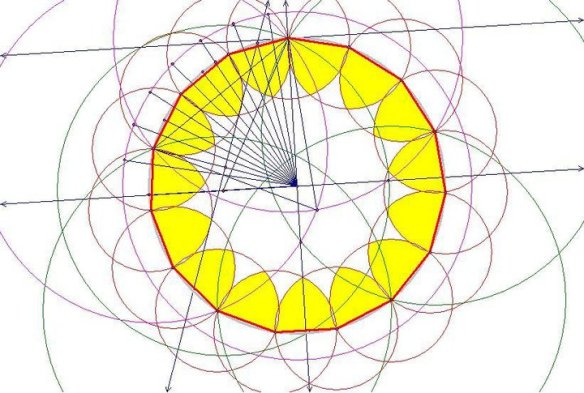
Because I did not start this blog until mid-2012, I sometimes encounter things I made before then, but have not yet posted here. I made this image in 2011, after reading that the ancient Greeks discovered how to combine the Euclidean constructions of the regular pentagon and the equilateral triangle, in order to create a construction for the regular pentadecagon. Having read this, I felt compelled to try this for myself, without researching further how the Greeks did it — and, as evidenced by the image above, I successfully figured it out, using the Euclidean tools embedded in a computer program I often use, Geometer’s Sketchpad.

What I did not do at that time was show the pentagon’s sides (so it is rather hard to find in the image above, but its vertices are there), nor record step-by-step instructions for the construction. For those who wish to try this themselves, I do have some advice: construct the pentagon before you construct the triangle, and not the other way around, and you are likely to find this puzzle easier to solve than it would be, if this polygon-order I recommend were reversed.

I also have two more hints to offer: 108º – 60º = 48º, and half of 48º is 24º. Noticing this was, as I recall, the key to cracking the puzzle.

Arch (a painting from 2003)

Arch 2003

Media used: acrylic on canvas.

Although I have not yet seen it in person, this painting is based on images I have seen of Delicate Arch, in Utah’s Arches National Park.

Discovery (a painting from 2002-2003)


discovery 2002-2003

Media used: acrylic on canvas.

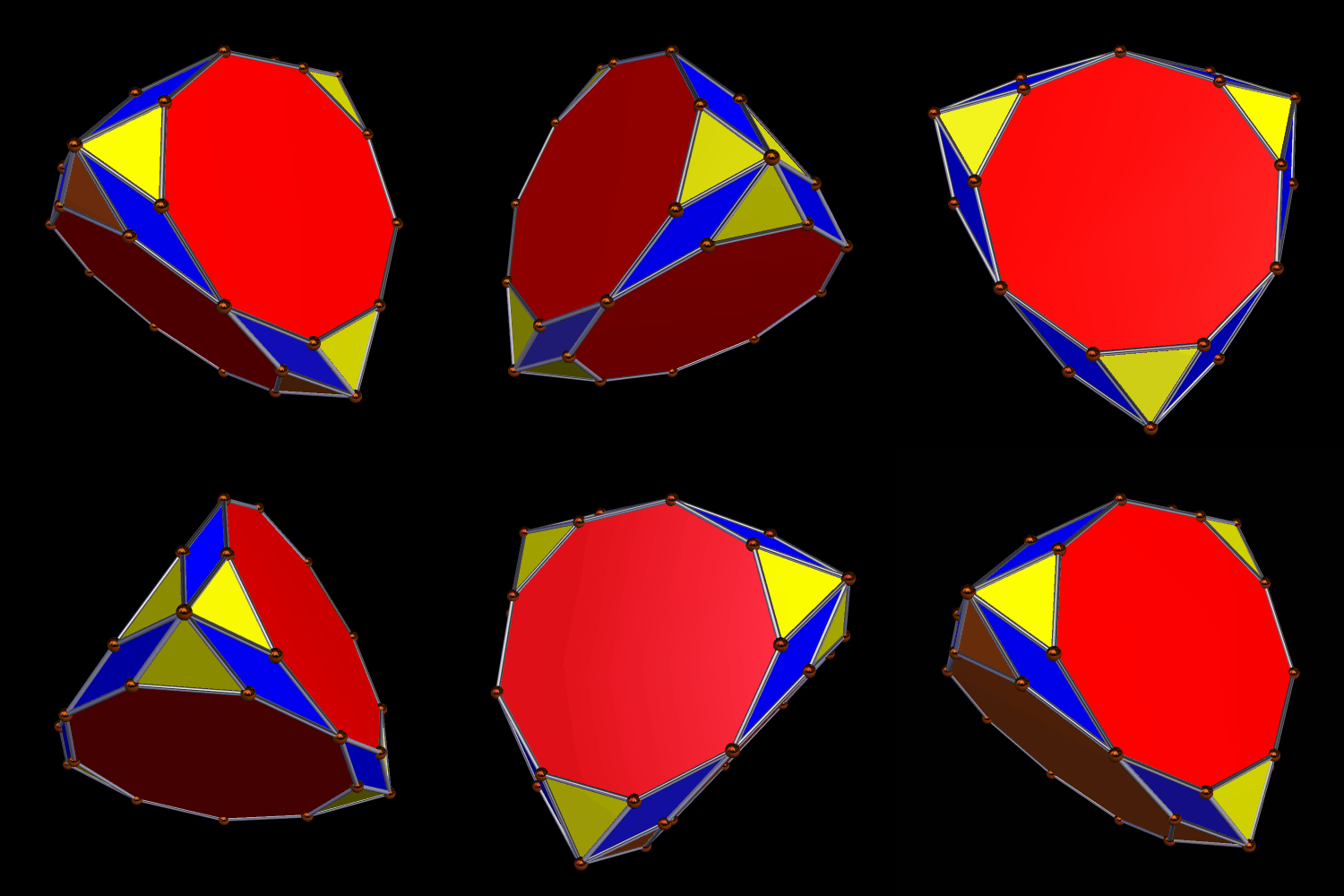
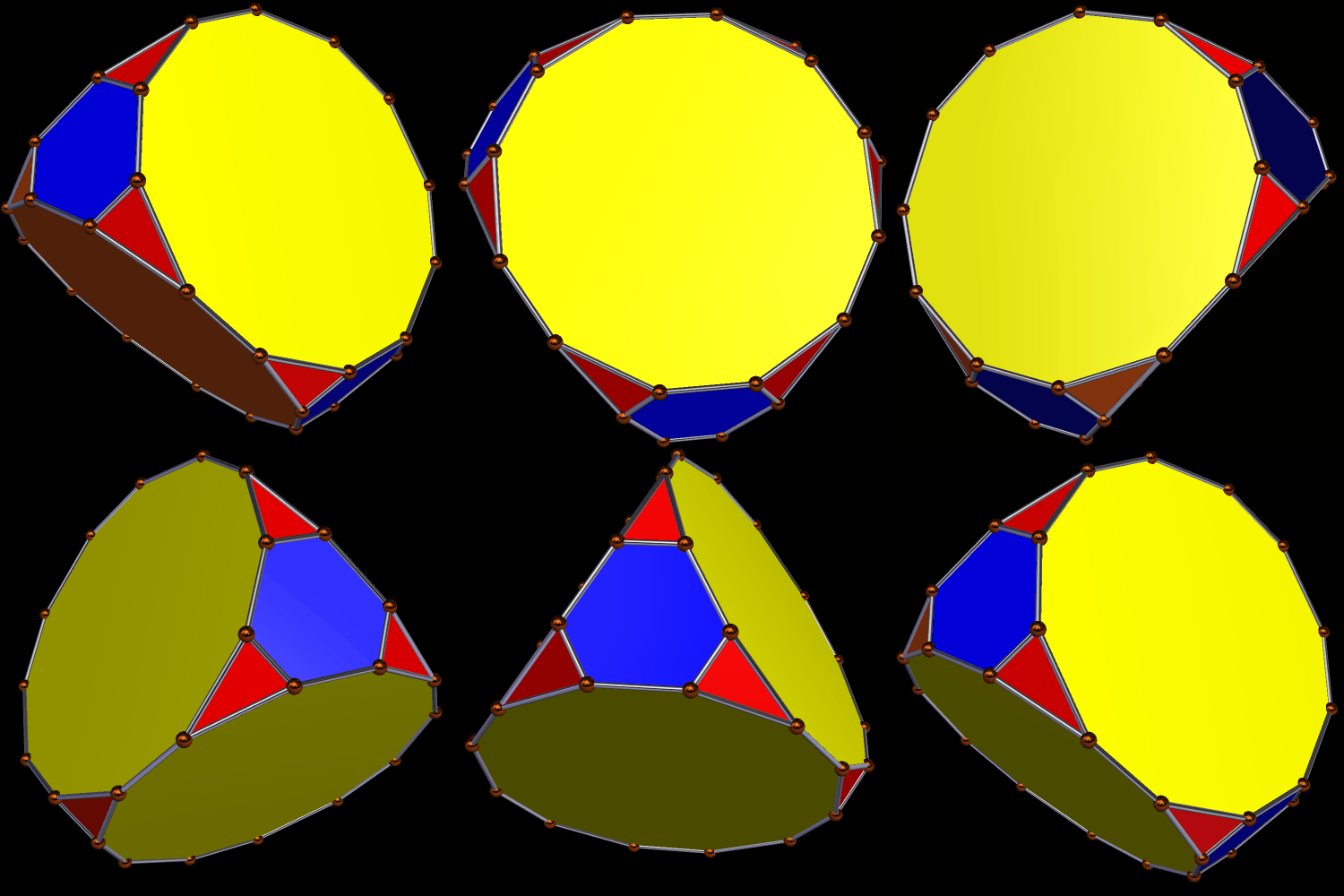
The Truncated Truncated Tetrahedron

twice truncated tet

This is the result, if one performs a second truncation to the truncated tetrahedron, in such as a way as to make the resulting dodecagons regular. To do this, however, regularity of the triangles and hexagons must be sacrificed — they are merely isosceles and equiangular, respectively.

[Image made using Stella 4d, software available here.]

Zome Hyperdodecahedron

This is one projection of the four-dimensional hyperdodecahedron, or 120-cell, rendered in Zome. All the part for this come in a single kit, and, if you want it for yourself, you can find it for sale at this website.

hyperdo

I did have student help with the construction of this, for which I am grateful. However, for legal and ethical reasons, I cannot credit the students by name.

Here’s a closer view, through the “core” of all-blue pentagons:

160114_0001

Zome is a great product. I recommend it strongly, and without reservation (and no, they aren’t paying me anything to write this).

Warning to Abortion Protesters: Obey the Traffic Laws (or Else)

Do-Not-Block-Traffic-Sign-K-1809

I just got home from a visit to my doctor’s office, but had a hard time even getting there because of anti-abortion protesters at the nearby Little Rock Family Planning Clinic. The guy who appeared to be the protest-leader was talking to a man, behind the wheel, in a truck which was blocking my path. I waited for a while. He wouldn’t get out of my way. Suddenly, I saw another vehicle coming up behind me, fast; I quickly got out of the way by zipping around the truck with the “driver” who was talking to one of the protesters, rather than driving, and getting the [bleep] out of my way, as he should have done — and probably would have done, without the distraction associated with the protest.
 
I then parked at my own doctor’s office . . . but before I went inside, I called 911, with a complaint about the abortion protesters. As I told the 911 dispatcher, I recognize that they have a Constitutional right to protest abortion, but they don’t have a right to block traffic, nor create conditions which could cause a traffic accident, as very nearly happened. If I ever catch them doing something like that again, I’ll report them again, too.
 
Want to protest? Fine — that’s your right, as an American — but don’t play in traffic while you’re doing it, or I can and will call the police to report your illegal and dangerous behavior. I’ve done it before, and I’ll likely do it again.